


Swire Buys Four Heavy-Lift Ships in Latest Strategic Shift
Project cargo business to be fully integrated under the main brand as Swire pushes deeper into end-to-end delivery


Swire Shipping announced on 7 September that its specialist project and heavy-lift cargo business, Swire Projects, will be fully integrated under the Swire Shipping brand in November. As part of the same strategic move, the company will acquire four of the six multipurpose heavy-lift vessels currently operated by Swire Projects under lease arrangements with Nordic Project & Finance, while retaining the other two vessels on charter for a further two years. The brand transition will be implemented over the coming months, with all project cargo, heavy-lift shipping and project engineering activities operating under the Swire Shipping name. The company said existing services will continue without disruption.
The adjustment reaches across Swire’s organisation, asset structure and customer interface. Swire Projects will cease to operate as a standalone brand, bringing what began as a specialist growth unit into the parent company’s core commercial system. Four vessels will move from leased capacity into Swire ownership, strengthening its long-term control over specialised tonnage, while liner shipping, landside logistics, project cargo, heavy lift and engineering support will be brought into a more unified operating structure. Swire described the move as a further commitment to project cargo customers. Chief Operating Officer Mark Celenk said the acquisition of four vessels and the extension of the remaining two charters demonstrated the company’s confidence in the project and heavy-lift market, while improving operational flexibility and preserving continuity of capacity.
A six-year standalone brand enters its next stage
Swire Projects was established in October 2020 to provide specialist shipping services to the energy, renewable energy and infrastructure sectors. In November 2021, it signed a long-term charter agreement with Nordic Project & Finance covering four 12,700-dwt and two 19,600-dwt MPP heavy-lift vessels. In July 2022, it followed with another long-term agreement with German owner R. Braren for three multipurpose vessels of about 28,000 dwt, with Swire Projects at the time targeting an operating MPP fleet of 15 vessels by the end of that year. Those moves gave the new business a core fleet, a recognisable market identity and a platform from which to build its presence in global project cargo.
A separate brand can be useful during the development of a specialist business. It allows a company to concentrate expertise, establish a clear proposition and create a dedicated point of contact for customers. Once project cargo, heavy lift and engineering support become embedded in the parent company’s wider product offering, however, the boundary between brands can begin to create friction in sales, fleet deployment and customer management. Namir Khanbabi, General Manager, Projects at Swire Shipping, said Swire Projects had built a strong reputation during its first six years and that full integration would allow closer alignment with Swire Shipping’s liner and landside logistics services, supporting more seamless end-to-end solutions for customers across Asia-Pacific.
Swire has already followed a similar integration path elsewhere. It acquired Westwood Shipping Lines, a specialist operator connecting Northeast Asia with the Pacific Northwest, in 2022 and integrated the Westwood brand into the wider Swire Shipping network in February 2024, with the original operation continuing as the Westwood service. The Swire Projects move follows the same broad logic: once a specialist business has established its market position and operating capability, it is brought into a unified brand, network and customer system, allowing Swire Shipping to present a broader range of niche transport and logistics services through one platform.
Four vessels move into ownership as Swire tightens control of core capacity
The six vessels involved comprise the 12,700-dwt sisters Pacific Endeavour, Pacific Excellence, Pacific Fortitude and Pacific Fortune, together with the 19,600-dwt Pacific Innovation and Pacific Integrity. The first four were built between 2007 and 2008, while the latter pair were built in 2011. Swire Shipping will acquire the four 12,700-dwt vessels and continue chartering the two 19,600-dwt ships for another two years. Financial terms have not been disclosed.
These vessels have been operating within the Swire Projects system since the end of 2021. The transaction will therefore not immediately increase Swire’s access to this six-ship package; it changes the way that capacity is controlled. The resulting structure of four owned and two chartered vessels gives Swire direct control over a core group of frequently deployed ships while retaining some flexibility through chartered tonnage. Having operated the vessels for several years, the company has also accumulated extensive information on their performance, cargo suitability and operating characteristics, reducing some of the technical and commercial uncertainty that would accompany the purchase of unfamiliar secondhand ships.
The age of the four acquired vessels remains an important part of the assessment. At approximately 18 to 19 years old in 2026, they are mature assets rather than fleet-renewal tonnage. Swire’s decision indicates that suitability, availability and operational continuity currently carry considerable weight in its evaluation, with age only one factor in the equation. Without disclosure of the purchase price, financing structure and expected remaining service life, it is too early to judge the transaction’s financial return. Future drydock expenditure, maintenance, energy-efficiency compliance and utilisation will all influence whether the acquisition creates the value Swire expects.
For project cargo customers, the value of specialised tonnage is closely tied to schedule certainty. Offshore wind components, mining machinery, oil and gas modules, power-generation equipment and major infrastructure cargoes are often connected to fixed loading windows, construction milestones, engineered lifting plans and specific port conditions. A shortage of suitable capacity at the wrong moment can disrupt an entire project chain. Swire’s target sectors include renewables, mining, construction and infrastructure, oil and gas, power generation, and marine and offshore. Converting part of its long-term chartered fleet into owned tonnage gives the company greater autonomy over scheduling, technical upgrades, maintenance planning and longer-term customer commitments.
Moving beyond a single sea leg towards an integrated delivery chain
Swire Shipping currently operates 14 liner services connecting more than 400 ports through its Asia-Pacific and global network. Its multipurpose fleet carries containers, project cargo, heavy lifts, breakbulk and mini-bulk commodities, while its integrated logistics offering extends into inland transport, customs clearance, warehousing and distribution. The company’s project logistics proposition also covers transport by rail, truck and barge, access to SPMTs and lifting equipment, project management, route optimisation and transport engineering.
Following the integration, the engineering capabilities developed within Swire Projects will share a common market platform with Swire Shipping’s liner network, regional port coverage and landside logistics resources. A complex shipment could draw on specialist heavy-lift tonnage for the ocean leg, liner or semi-liner services for regional connectivity, and landside teams for storage, onward movement and final delivery. Customers would face a more concentrated commercial interface, while Swire could deploy more of its own resources around the same cargo account or project, potentially improving vessel utilisation and widening its service revenue.
This is what separates the move from a simple rebranding exercise. A common name alone will not create operating synergies. The commercial result will depend on whether pricing, sales, engineering, vessel scheduling, port operations and landside execution can share information and assume collective responsibility for delivery. The organisational merger is the starting point; cross-business resource allocation, project risk management and the customer experience will determine whether the strategy works in practice.
Five different paths are converging
Swire is not moving in isolation. Recent strategic shifts at COSCO SHIPPING Specialized Carriers, G2 Ocean, NORDEN and Dajin Heavy Industry point to a similar industrial logic emerging from four very different starting points: specialised shipping, open-hatch operations, an asset-flexible operator platform and offshore equipment manufacturing.
COSCO SHIPPING Specialized Carriers is extending its role from specialist vessel operator towards that of an industrial-chain operator and integrated solutions provider. Its “Three Cores and Three Chains” strategy centres on customers in new energy, advanced Chinese manufacturing and strategic bulk commodities, while developing project logistics, pulp logistics and vehicle logistics chains. Through the linerisation of breakbulk services, domestic regional divisions, overseas nodes and the organisation of “ship-port-yard” resources, the company is strengthening end-to-end delivery. Ships remain the central assets, but the commercial product has expanded from a voyage into a package combining schedule reliability, engineering, port nodes and logistics at both ends.
G2 Ocean remains more tightly focused on specialist vessels and industrial customers. As a major global open-hatch operator, it brings cargo handling, trade management, port operations and customer relationships into one commercial system, supported by an in-house engineering team that plans, executes and monitors the movement of large, heavy and complex project cargoes. In 2025, lower cargo volumes and reduced activity were accompanied by improved freight rates and lower voyage-related costs, producing a stronger financial result. The performance illustrates how specialist operators are placing greater emphasis on earnings quality, flexible fleet deployment, engineering capability and strategic customer relationships, with cargo-volume growth becoming a less dominant measure of success.
NORDEN offers a useful counterpoint to Swire’s decision to increase vessel ownership. As Xinde Marine News noted in its 11 September analysis, “NORDEN Shows Why Ships Alone Are No Longer Enough”, the Danish company—long associated with dry bulk and product tanker operations—is using Maritime Logistics to extend its business into port transshipment, logistics engineering and cargo-flow design. NORDEN divides the offering into Consultancy, Creating, Projects and Classic, combining barges, Supramax, Panamax and Capesize vessels, floating cranes and offshore transshipment systems according to customers’ draught restrictions, port bottlenecks, carbon targets and long-term volumes. Under the Classic model, transshipment and ocean transport can be incorporated into partnerships lasting 10, 15 or even 25 years. Its strategic focus is moving upstream into customers’ logistics decisions, helping determine where cargo should move from, which vessel classes should be used, how port constraints can be overcome and how the total cost of the supply chain can be reduced.
That strategy is already visible in operating projects. In 2022, NORDEN signed a ten-year agreement with Comilog, the manganese producer owned by France’s Eramet, and committed about $40 million to a floating transshipment system around 40 kilometres offshore Gabon. Cargo is moved by barge from the terminal to the offshore transfer point and then loaded onto Capesize vessels for the voyage to Asia. In 2025, NORDEN secured another logistics project in Australia and signed a Guinea bauxite logistics agreement with Africa Oil Supply, using Panamax vessels to move cargo from the jetty to an offshore site before transfer by floating crane into Capesize ships bound for China. The company has also acquired the activities of Thorco Projects, Norlat Shipping and parts of Taylor Maritime’s Southern African freight business since 2023, gradually combining dry bulk, project cargo, breakbulk parcelling, regional customer relationships and port logistics nodes. NORDEN therefore demonstrates another form of control: underlying ships and infrastructure can remain partly chartered or partner-provided, while system design, long-term contracts and responsibility for execution allow the company to control how the cargo flow is organised.
Dajin Heavy Industry represents the reverse movement, with a cargo owner and manufacturer extending towards logistics. Overseas revenue accounted for 82.25% of Dajin’s total in the first half of 2026, making the ocean delivery of monopiles, jackets and floating foundations increasingly important to its ability to win and execute orders. Dajin has responded by developing its KING-series heavy transport vessels and the larger EMPEROR series, while building its Caofeidian deepwater offshore engineering base and establishing marshalling-port capabilities in Europe. Manufacturing, ocean transport, storage, transfer operations and downstream engineering services are gradually being connected. The immediate purpose is to control the delivery bottlenecks affecting its own products, although spare capacity could eventually support third-party project cargo business.
Swire starts with a regional liner network and landside logistics platform, into which it is embedding project cargo and heavy-lift capability. COSCO SHIPPING Specialized Carriers is extending from a diversified specialist fleet into industrial-chain organisation. G2 Ocean is raising the value of its open-hatch fleet through industrial cargo expertise and engineering. NORDEN is using an asset-flexible operating platform to move into port transshipment, cargo-flow modelling and long-term logistics systems. Dajin is building shipping and port capabilities from the manufacturing end of the chain. Their asset structures and starting positions differ substantially, yet their strategies are converging around three capabilities: access to durable cargo flows, control of specialised capacity and the ability to deliver complex projects as an integrated system.
An industry consensus is forming, but there will be more than one model
Across project cargo, breakbulk and specialised shipping, a broad consensus is taking shape. Companies are moving closer to the cargo source, seeking greater control over critical capacity and delivery nodes, and incorporating engineering, ports, warehousing, inland transport and project management into their service structures. This does not require every operator to become a large, all-purpose logistics group. Asset bases, regional networks and customer portfolios will continue to produce different combinations of ownership, chartering, partnerships and outsourced capacity, with companies drawing their own boundaries between port-to-port transport, door-to-door logistics and delivery to the project site.
NORDEN’s example also shows that supply-chain control is not the same as ownership of every asset. Swire is increasing control over its core fleet by acquiring four vessels it has operated for several years. NORDEN is gaining influence over cargo flows through long-term contracts, offshore transshipment systems, combinations of vessel classes and transport design. The two models have different levels of capital intensity, but both reduce dependence on one-off spot transactions and extend customer relationships from a single cargo or voyage into a transport system designed to operate for years. Industry competition is therefore advancing along two related axes: control of critical ships and nodes, and control over how those assets are organised around the cargo flow.
The underlying driver is the increasing project-based nature of industrial cargo. Wind foundations, offshore modules, construction machinery, mining equipment, power-generation systems and major infrastructure components cannot easily be reduced to standardised slots on a ship. Lifting, securing, route surveys, quay strength, marine warranty requirements, construction windows and final delivery need to be designed early in the project. Customers are progressively buying a delivery plan rather than a simple movement from Port A to Port B, expanding the shipping company’s role from supplying vessels and space to coordinating complex resources and reducing the risk of delay.
The broader service scope also brings greater responsibility. Companies must commit more capital, assume more complex engineering, safety, claims and performance risks, and build standards and teams across multiple regions. A higher proportion of owned tonnage increases fixed costs, while shifts in project demand, utilisation or asset values can amplify earnings volatility. The effectiveness of Swire’s latest move should therefore be assessed through the utilisation of its project fleet, cross-selling between liner and project cargo businesses, landside logistics revenue, major-project execution, and the maintenance and energy-efficiency costs of its mature specialist vessels.
Swire’s latest action can be summarised through two simultaneous changes. Its project cargo business is leaving a six-year period as a standalone brand and entering the parent company’s core operating system, while the six Nordic-linked vessels move from a fully leased arrangement to a hybrid structure of four owned and two chartered ships. The transaction does not suddenly increase the number of vessels available within this package, but it materially changes Swire’s degree of asset control and the organisational position of the business.
Competition in global project cargo and breakbulk shipping is expanding beyond fleet size and voyage freight rates into customer relationships, specialised capacity, engineering expertise, network nodes, cargo-flow design and end-to-end execution. Swire is entering that contest with a unified brand and greater control over its core project fleet. The strategies pursued by COSCO SHIPPING Specialized Carriers, G2 Ocean, NORDEN and Dajin Heavy Industry point in the same direction: the ability to move the cargo remains the foundation, while the ability to design the transport system and deliver the entire project on schedule is becoming a more powerful source of customer loyalty and value.

READ MORE
 Shipbuilding
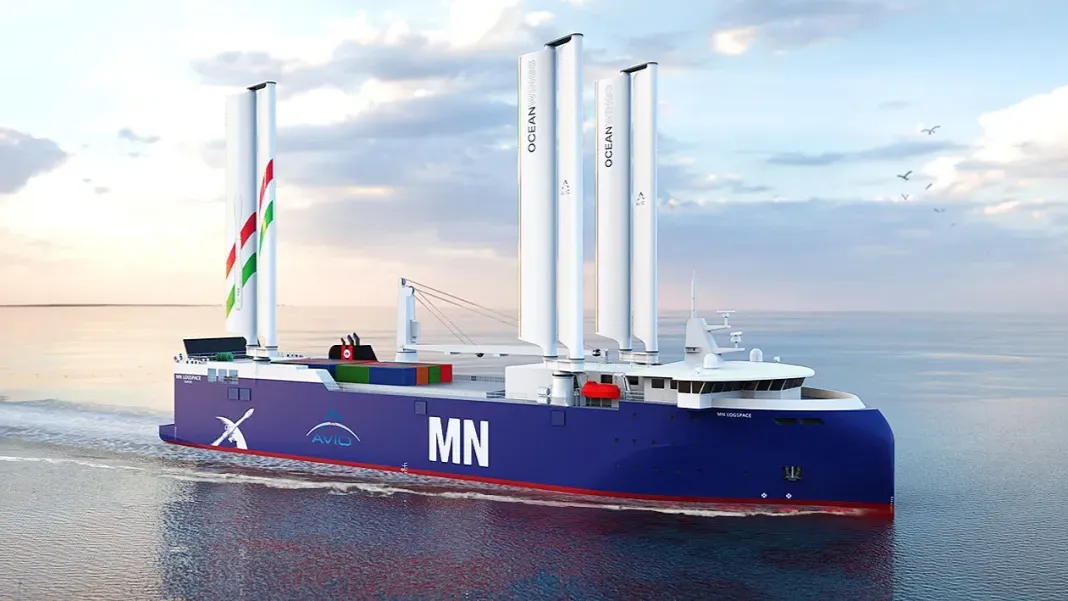
French Space Logistics Owner Selects China’s GSI for Next-Generation Ro-Ro Vessel Project
 Shipbuilding
Will Newbuilding Prices Still Be This High a Year From Now?
 Shipbuilding
Guohang Enters Tankers with RMB 2.49bn Fleet Plan
 Shipbuilding
Fujian Guohang Plans RMB2.49bn Fleet Expansion into LR2 Tankers and Heavylift
 Shipbuilding
Henghui Reportedly Orders Up to Four Heavy-Lift Ships at ZPMC
 Shipbuilding
24 Firm Orders + 16 Options: Ren Yuanlin Accelerates Yangzijiang Maritime’s ‘Financial Shipowner’ Strategy
 Shipbuilding
Hengli Heavy Industries moves five newbuildings from world’s largest dock in latest production milestone
 Shipbuilding
$3.1 Trillion in Revenue, $824 Billion in New Ships: Is Shipping Buying the Wrong Tonnage?
 Shipbuilding
Maersk’s $5bn Newbuilding Push Signals a Shift Back Toward Fleet Growth
 Shipbuilding