


Maersk’s $5bn Newbuilding Push Signals a Shift Back Toward Fleet Growth
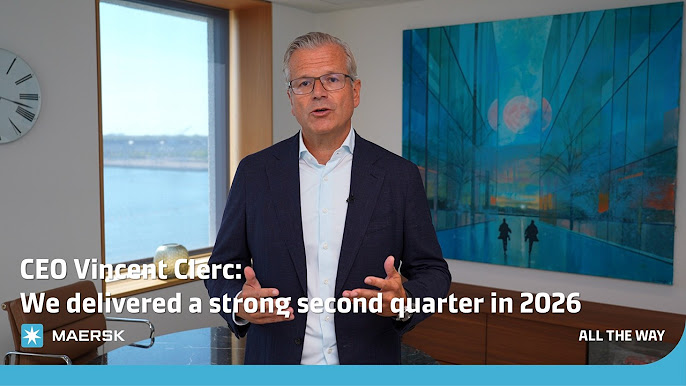

A.P. Moller - Maersk has confirmed an order for 26 LNG dual-fuel containerships of 18,600 TEU each, marking one of the carrier’s largest newbuilding commitments in more than a decade. The investment comes as Maersk reassesses the role of fleet expansion after years of prioritising efficiency, network optimisation and capital discipline.
A.P. Moller - Maersk has taken a major step toward expanding and renewing its container fleet, confirming the order of 26 large LNG dual-fuel containerships with deliveries scheduled between 2029 and 2030.
The vessels, each with a capacity of 18,600 TEU, represent a combined investment estimated by market sources at around $5.1 billion. Together, the ships will add approximately 483,600 TEU of capacity — equivalent to roughly one-tenth of Maersk’s current operated fleet capacity.
The order is significant not only because of its size, but because it marks a notable change in direction for one of the world’s most cautious major liner operators.
For much of the past decade, Maersk focused on improving utilisation, strengthening logistics capabilities and controlling capital expenditure rather than aggressively expanding its fleet. The latest order suggests that the company now sees additional owned capacity as increasingly important in a shipping market where operational disruptions and competitive fleet growth have changed the balance between efficiency and scale.
A major boost for Chinese shipyards
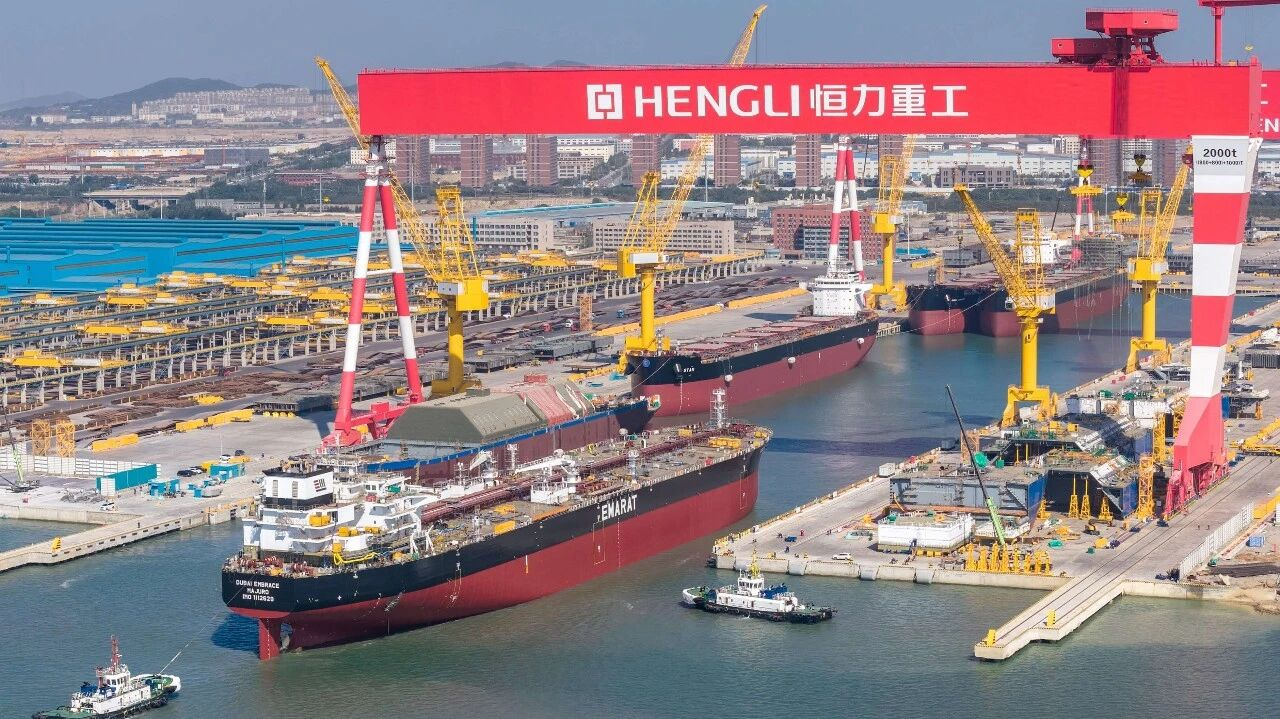
Maersk has not publicly disclosed the shipyards involved in the order. However, according to shipbuilding market sources, the 26 vessels have been allocated to Chinese yards, with Hengli Heavy Industries expected to build 20 ships and New Times Shipbuilding securing six vessels.
If confirmed, the order would represent one of the most important containership contracts awarded to Hengli Heavy Industries so far, further strengthening the yard’s position in the large commercial shipbuilding market.
For New Times Shipbuilding, the six additional vessels would expand its existing relationship with Maersk. Earlier this year, the yard secured an order for eight 18,600 TEU LNG dual-fuel containerships from the carrier, with each vessel reportedly valued at around $193 million and scheduled for delivery between 2029 and 2030.
The latest additions would bring New Times’ Maersk-related programme for this vessel type to 14 ships.
The order also reflects the growing role of Chinese shipbuilders in the construction of advanced containerships. While South Korean yards have traditionally dominated some segments of large LNG-fuelled vessels, Chinese shipyards have continued to increase their presence in high-specification container vessels as owners seek additional construction capacity.
Why 18,600 TEU instead of the largest ships?
Unlike some competitors that have invested heavily in 24,000 TEU ultra-large container vessels, Maersk has chosen a slightly smaller but highly flexible vessel design.
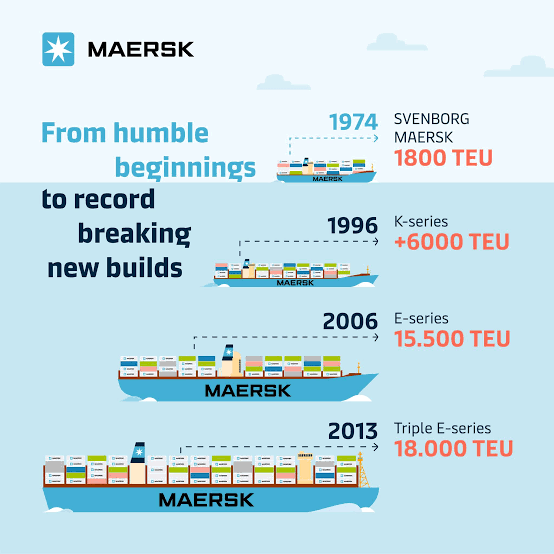
The 18,600 TEU ships are understood to have a length of around 366 metres and a breadth of approximately 58.6 metres. Their dimensions place them below the largest vessels currently operating on the Asia-Europe trades, but provide greater flexibility across different networks.
Maersk’s choice reflects an operational consideration: the largest ship is not always the most useful ship.
The carrier has previously highlighted the importance of deployment flexibility, with vessels in the 18,000–20,000 TEU range able to serve major east-west routes while retaining the ability to move between different services depending on network requirements.
The new vessels are expected to strengthen Maersk’s core Asia-Europe services, while also allowing some existing large vessels to be redeployed across other major trade lanes.
The fuel choice is equally significant. All 26 vessels will be equipped with LNG dual-fuel engines, allowing them to operate on both conventional marine fuels and liquefied natural gas.
Maersk has been one of the most visible carriers in pursuing lower-carbon shipping solutions, particularly through its earlier investment in methanol-powered vessels. However, the company’s recent newbuilding activity shows a more diversified approach, with LNG dual-fuel emerging as another practical option for large vessels where fuel availability, infrastructure and commercial considerations remain important.
From fleet discipline to fleet expansion
The scale of the order stands out when compared with Maersk’s previous major shipbuilding programmes.
In 2011, the company ordered 20 first-generation Triple-E vessels from Daewoo Shipbuilding & Marine Engineering, now part of Hanwha Ocean. Those ships, with capacity of around 18,000 TEU, represented one of the most ambitious containership projects at the time.
The latest 26-vessel programme exceeds that project in both vessel numbers and total capacity.
The timing is also notable.
Following its strategic transformation after 2016, Maersk moved away from a traditional shipping conglomerate model, selling its energy businesses and focusing on container shipping, ports and integrated logistics. Fleet expansion was no longer viewed as the primary route to growth.
Instead, the company emphasised improving asset utilisation and extracting more value from existing capacity.
That approach worked for several years. However, the operating environment has become more challenging.
Red Sea disruptions, longer sailing distances, port congestion and shifting trade patterns have reduced effective fleet capacity across the industry. At the same time, competitors including MSC and CMA CGM have continued to expand their fleets through large-scale newbuilding programmes.
Maersk’s Gemini Cooperation strategy has also increased the importance of reliability and network resilience. A highly structured hub-and-spoke network requires sufficient operational buffers, and those buffers ultimately depend on having enough vessels available.
During recent earnings discussions, Maersk CEO Vincent Clerc indicated that the company’s ability to generate further growth through efficiency improvements alone was becoming more limited, and that some degree of fleet growth would be necessary.
The latest order provides the clearest evidence yet of that adjustment.
Fleet size matters again
The newbuilding programme does not necessarily indicate that Maersk is seeking to replicate the aggressive expansion strategies of some competitors. The company has not announced a plan to pursue the largest fleet in the market.
Instead, the order reflects a more pragmatic shift.
For years, Maersk demonstrated that better network design and higher utilisation could create growth without continuously adding ships. The latest investment suggests that those efficiency gains have limits in a market where disruptions have become more frequent and fleet flexibility has regained strategic importance.
In container shipping, technology, logistics integration and operational efficiency remain critical. But after several years in which carriers focused on doing more with fewer assets, the industry is once again recognising a basic reality: having the right ships available at the right time remains a competitive advantage.

READ MORE
 Shipbuilding
Hengli Heavy Industries moves five newbuildings from world’s largest dock in latest production milestone
 Shipbuilding
$3.1 Trillion in Revenue, $824 Billion in New Ships: Is Shipping Buying the Wrong Tonnage?
 Shipbuilding
185 Ships and Counting: How Union Maritime Is Building Its Next Fleet in China
 Shipbuilding
24 Firm Orders + 16 Options: Ren Yuanlin Accelerates Yangzijiang Maritime’s ‘Financial Shipowner’ Strategy
 Shipbuilding
Ren Yuanlin: Shipbuilding Still Has 8–10 Years of Strong Growth Ahead
 Shipbuilding
CULines Steps Up Fleet Expansion with First 14,000 TEU Newbuildings
 Shipbuilding
CMA CGM linked to $3bn Yangzijiang megamax programme
 Shipbuilding
Advantage Tankers adds MR2 quartet as product tanker orderbook builds
 Shipbuilding
Seven Months, $78 Million: George Procopiou Reaps Windfall on Hengli-Built VLCC
 Shipbuilding