


Saudi pipeline attack exposes limits of Hormuz bypass strategy
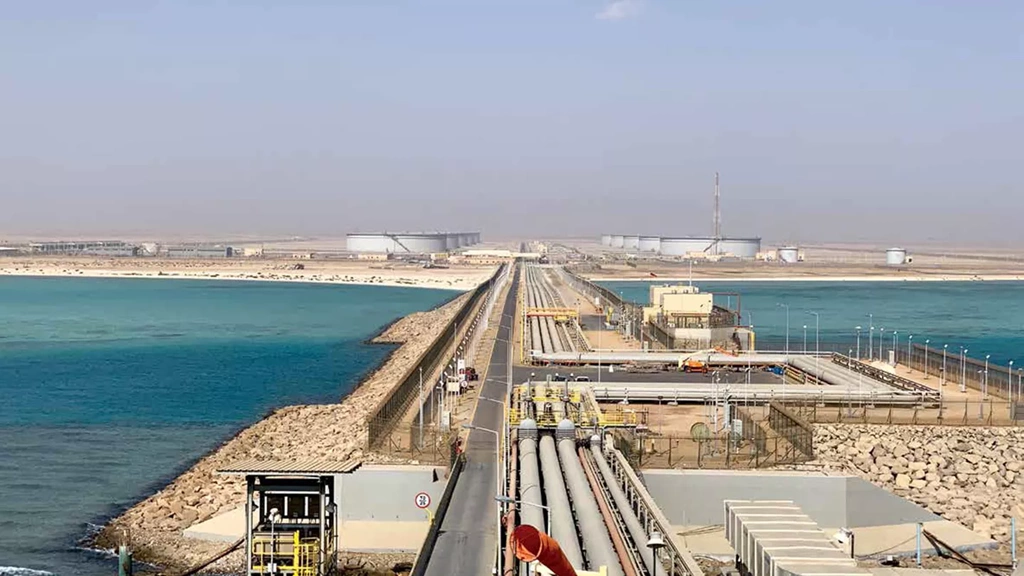

The shutdown of Saudi Arabia’s 7m-bpd East-West Pipeline has disrupted Yanbu loadings just as the Red Sea route was carrying millions of barrels per day around the Strait of Hormuz. The immediate question is how quickly flows can resume; the longer-term issue is how much effective redundancy the Gulf’s alternative export infrastructure really provides.
Saudi Arabia’s East-West Pipeline, the backbone of the kingdom’s strategy for moving crude around a disrupted Strait of Hormuz, has been shut after multiple attacks, forcing changes to September cargo programmes and sending European refiners into the alternative crude market.
Saudi Arabia’s Ministry of Energy confirmed that the pipeline was attacked in the Riyadh and Madinah regions on September 10 and shut as a precaution while technical teams assessed its integrity. The Saudi foreign ministry later said several drones launched from Iraq had caused injuries and damage that was being addressed. No official restart timetable has been announced.
The commercial impact has already spread beyond the pipeline itself. Trading and shipping sources told Reuters that some Saudi crude shipments to Europe had been cancelled and loadings at Yanbu, the kingdom’s principal Red Sea crude export hub, had been suspended. Saudi Aramco has not publicly disclosed the affected volume or duration of the disruption.
The distinction matters. A pipeline shutdown, suspended Yanbu loadings, cancelled individual cargoes and a sustained fall in Saudi Arabia’s total exports are not interchangeable measures. The first three are now visible to varying degrees; the scale of any lasting reduction in national export capacity remains uncertain.
A bypass route that became a core export artery
The East-West Pipeline runs roughly 1,200 km across Saudi Arabia, linking oil production in the Eastern Province with Yanbu on the Red Sea. Its strategic function is to allow Saudi crude to reach international markets without passing through the Strait of Hormuz.
That contingency role became operationally critical after Hormuz shipping was severely disrupted earlier this year.
Aramco said in its first-quarter results that flows through the pipeline had been sharply increased to its maximum capacity of 7m barrels per day, supporting exports from the kingdom’s west coast. Aramco President and CEO Amin H. Nasser described it as a critical supply artery during the disruption to Hormuz shipping.
In practice, therefore, the facility hit in September was not an underused emergency asset. It had become a major part of Saudi Arabia’s day-to-day export system.
Vessel-tracking data illustrate the scale of the shift. Vortexa estimated crude and condensate loadings from Yanbu at about 3.7m bpd in early September, up from 3.2m bpd in August. Kpler used a lower absolute estimate but showed the same trend, with loadings rising from around 1.5m bpd in August to 2.9m bpd in early September.
Those volumes were rising at the same time as observable traffic through Hormuz remained exceptionally low. Only seven commodity vessels were tracked through the strait on September 10, compared with a 10-day average of 14.
The outage therefore removes flexibility from precisely the part of Saudi Arabia’s logistics network that had been absorbing the shock from Hormuz.
It also highlights a wider weakness in the way energy-security redundancy is often measured.
A 7m-bpd nominal pipeline capacity is not the same as 7m bpd of effective export redundancy. The full chain requires upstream supply, functioning pumping infrastructure, available storage, operable terminals, navigable sea lanes, willing shipowners and commercially viable insurance.
The East-West system can bypass Hormuz, but crude arriving at Yanbu still has to move through the Red Sea network. European-bound barrels may travel north through the Suez system or via Egypt’s SUMED pipeline, while eastbound voyages remain exposed to the security situation around Bab el-Mandeb.
Alternative infrastructure therefore redistributes geographical risk rather than eliminating it.
European replacement buying reshapes tanker demand
Poland’s Orlen provides an early indication of how the disruption can propagate through physical crude markets.
Saudi Aramco supplies around 40% of Orlen’s crude requirements, according to Reuters. Following the disruption, the Polish refiner bought North Sea grades and sought offers for US, Kazakh, Algerian and Guyanese crude. Orlen has said its refineries continue to operate normally.
For tanker markets, the relevant variable is not simply the number of Saudi cargoes removed.
It is the origin of the replacement barrels.
A Saudi cargo delivered into Europe through the Red Sea/Suez system has a very different freight profile from North Sea crude. Substituting it with US Gulf, Guyanese or West African barrels changes sailing distance, vessel deployment and regional tonnage balances.
LSEG data cited by Reuters show just 2.1m barrels scheduled from Egypt’s Sidi Kerir to Poland in September, against 6.6m barrels in August, while tankers carrying US, Algerian and Norwegian crude have been heading towards Gdansk.
The resulting tanker effect is therefore two-sided.
Some established Middle East-to-Europe movements disappear or are deferred, while new Atlantic Basin voyages are created. Depending on cargo size and origin, that can alter employment across the Aframax and Suezmax markets and, in some cases, influence VLCC positioning.
This is why a disruption at a Saudi pipeline can tighten tonnage well outside the Middle East.
Freight was already at extreme levels before the latest outage. Baltic Exchange data cited by Reuters showed the Gulf of Oman-to-China VLCC route at around WS450 on September 11, equivalent to approximately $11.50 per barrel, the highest level since the assessment was introduced earlier in 2026. West Africa-to-Asia VLCC rates had also reached record highs as Middle East security risks reduced available tonnage.
The East-West Pipeline outage adds another layer to that dislocation by reducing Saudi Arabia’s ability to shift export flows between the Gulf and the Red Sea.
China faces a freight and sourcing issue more than an immediate supply shock
For China, the direct physical impact of suspended Yanbu loadings is currently more limited than it is for some European refiners.
Vortexa analyst Emma Li told Reuters that Chinese refiners had stopped loading crude from Red Sea outlets, including Yanbu and Egypt’s Sidi Kerir, since August because of security risks, longer voyages and elevated freight costs.
The transmission to China is therefore primarily indirect.
First, reduced westbound flexibility could force Saudi Arabia to route more crude back through Gulf export terminals and the Hormuz-linked shipping system. Reuters reported that Ras Tanura and Juaymah loaded around 22m barrels on 12 vessels during the week of September 7–13, compared with six or seven vessels in each of the previous three weeks.
That matters because Gulf-to-Asia transport is already exceptionally expensive. Higher dependence on Gulf loading, ship-to-ship transfers and war-risk arrangements raises delivered crude costs even if Saudi barrels remain physically available.
Second, European refiners seeking US, Guyanese, Algerian, North Sea and other alternative grades are competing in some of the same non-Gulf supply pools that Asian refiners can use to diversify away from Middle Eastern risk.
The result is a potential increase in both crude differentials and tonne-mile demand.
Third, China is already drawing more heavily on domestic inventories.
Official data showed Chinese refinery throughput rising to 59.07m tonnes, or 13.91m bpd, in August, up 11.2% from July. Reuters calculations suggest refiners processed around 639,000 bpd more crude than was available from imports and domestic production, implying a substantial inventory draw.
China retains significant stock buffers, so the immediate issue is not a straightforward physical shortage. The more relevant risks are the cost of replacement crude, the pace of inventory drawdowns and the freight penalty associated with sourcing barrels from more distant regions.
For Chinese refiners and shipping companies, the Saudi pipeline disruption therefore reinforces a broader shift already under way: crude-import risk is being transmitted increasingly through voyage economics and sourcing competition, rather than solely through headline availability.
Repair timing separates a logistics shock from a supply constraint
The duration of the outage is now the most important near-term variable.
US Energy Secretary Chris Wright said on September 15 that he expected the pipeline to return within days. Reuters sources, however, have provided estimates ranging from an earlier partial restart to as long as five or six weeks for repairs. Saudi authorities have yet to publish an official timetable.
Those scenarios have very different implications.
A rapid partial restart would leave the episode primarily as a scheduling and logistics disruption. Saudi storage, additional Gulf loadings and crude already in transit could absorb much of the interruption, although prompt differentials and regional tanker positioning would remain affected.
A multi-week outage would have more structural consequences.
Industry sources told Reuters that Yanbu held only enough export-ready crude to maintain shipments for around five to seven days without continued pipeline replenishment. Estimated storage capacity at Yanbu is much larger, at about 35m barrels, but tanks were not full when the pipeline stopped. Saudi Arabia also holds crude at Egypt’s Ain Sukhna and Sidi Kerir, although those stocks cannot indefinitely replace upstream pipeline flows.
A prolonged shutdown would require Saudi Arabia to make more substantial choices between higher Gulf exports, inventory drawdowns, delayed customer nominations and changes in regional allocation.
Each option has a different shipping consequence.
Higher Gulf exports increase reliance on the most disrupted maritime corridor. Reduced European allocations pull Atlantic Basin replacement barrels towards Europe. Reallocation between Asian and European customers alters VLCC and Suezmax positioning. Sustained inventory use reduces the buffer available against another disruption.
Repair timing will therefore determine whether the incident remains a short-term logistics disturbance or develops into a more persistent constraint on effective Saudi export capacity.
Energy security shifts from nominal capacity to executable capacity
Saudi Arabia retains one of the most flexible crude-export systems in the world.
The East-West Pipeline’s ability to move up to 7m bpd towards the Red Sea has already demonstrated its strategic value during the 2026 Hormuz disruption. Aramco also has substantial domestic and international storage, west-coast terminals and access to Egypt’s SUMED system.
The September attack does not negate those advantages.
It does, however, change how that redundancy should be assessed.
The relevant metric is no longer simply how much crude can theoretically bypass Hormuz. It is how much oil can be continuously and commercially exported when several components of the logistics chain are constrained at the same time.
That requires functioning pipelines, usable terminals, secure sea lanes, available tanker capacity and an insurance market willing to support voyages.
For refiners in Europe, the consequence is a wider and potentially more expensive search for replacement barrels.
For China and other major Asian buyers, it is a combination of higher freight, stronger competition for alternative crude and greater dependence on inventory management.
For tanker owners, the implications are more complex than a simple reduction in Saudi cargo volume. Supply disruptions are changing cargo origins, sailing distances and regional tonnage balances simultaneously.
The East-West Pipeline attack therefore marks a broader evolution in Middle East energy risk.
For much of 2026, the market has focused on how to bypass the Strait of Hormuz. The next question is whether those bypass routes are sufficiently independent, secure and scalable to remain effective when several nodes of the same export network come under pressure at once.


READ MORE
 Safety
Five Seafarers Reported Dead as Puntland Retakes Hijacked Tanker Honour 25
 Safety
China-U.S. Consensus Highlights Free Navigation: No Country or Entity Should Impose Transit Fees on International Waterways
 Safety
1 seafarer killed, Fatal attack in the Strait of Hormuz: Capesize bulker CAPE DAO hit by unknown projectile
 Safety
Attacked Just 42Days After Delivery: George Prokopiou’s 115,000-Dwt Tanker Hit in Hormuz
 Safety
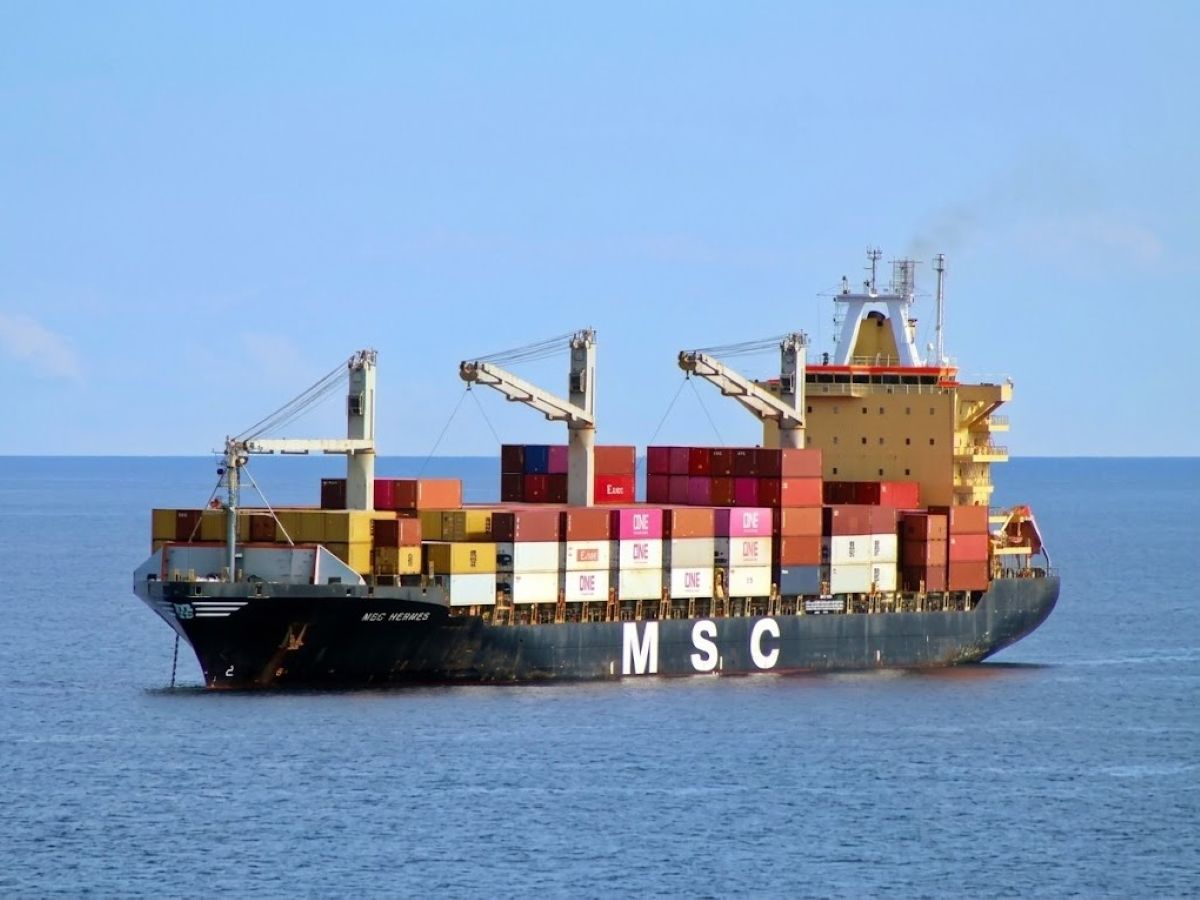
25 Crew Abandon MSC Container Ship in the South China Sea — All Rescued, Vessel Still Adrift
 Safety
MSC Hermes III Adrift Unmanned in South China Sea After 25 Crew Abandon Ship
 Safety
Dangerous Goods Container Fire Reported at NPCT1 Terminal in Jakarta
 Safety
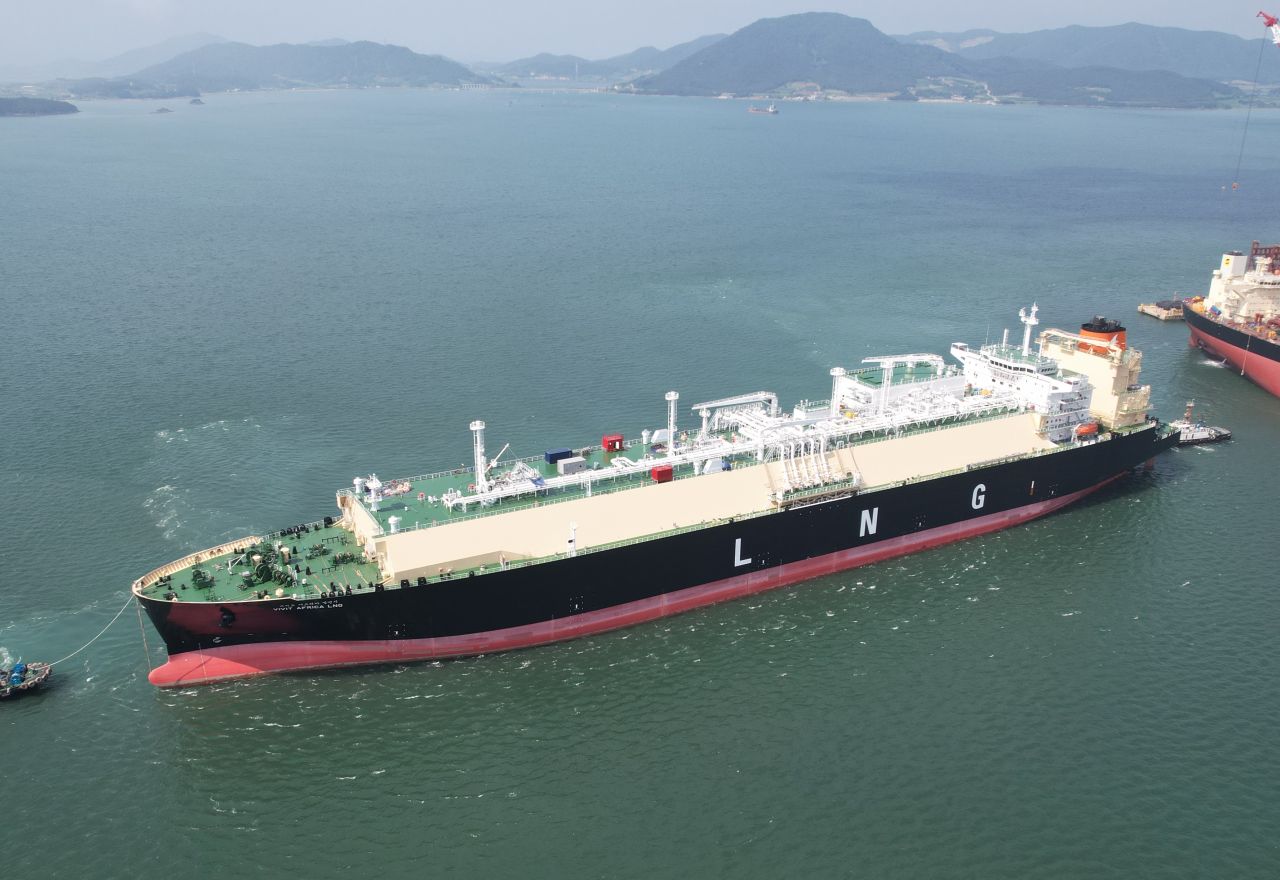
Suspected Cyber Incident Diverts LNG Carrier After Cargo-Control Failure
 Safety
Xinde Marine Forum London 2026: Shipping Moves from Lean Logistics to Resilience by Design
 Safety