


Advantage Tankers adds MR2 quartet as product tanker orderbook builds
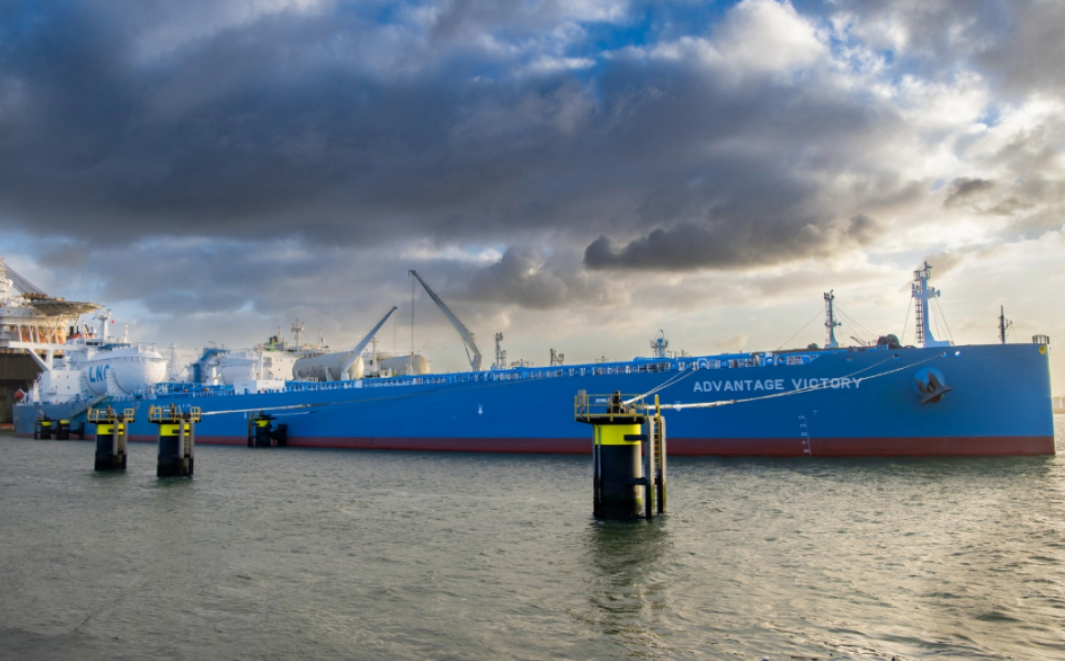

The Geneva-based owner is adding four 50,000-dwt MR product tankers at Guangzhou Shipyard International, extending a newbuilding programme previously concentrated on VLCCs and suezmaxes. The move comes as MR2 ordering accelerates, sharpening the debate over whether fleet renewal or net supply growth will dominate the 2028–2030 market.
Advantage Tankers has moved into the MR2 newbuilding market with an order for four 50,000-dwt product tankers at Guangzhou Shipyard International (GSI), broadening a capital programme that has until now been weighted towards larger crude carriers.
Shipbroking and market sources place the four vessels at the China State Shipbuilding Corporation-controlled yard for delivery through 2029. No contract price has been disclosed. Splash reported that comparable GSI tonnage has recently been contracted at around $45m per ship, although that figure should be treated as a market reference rather than the confirmed price of the Advantage deal.
Neither Advantage Tankers nor GSI has publicly released detailed technical specifications for the quartet. Main dimensions, propulsion configuration and any alternative-fuel or fuel-ready notation therefore remain unconfirmed.
The order is modest in isolation, but its timing is more significant. BRS Shipbrokers data cited by Riviera Maritime Media show that around 140 MR2 tankers were contracted globally in the first eight months of 2026, making the segment second only to VLCCs in newbuilding activity. The MR2 orderbook now stands at just over 16% of the active fleet.
Advantage is therefore entering the segment at a point when the traditional MR investment case — ageing fleet and limited replacement tonnage — is becoming more complicated.
Portfolio extension rather than a strategic pivot
The four-ship order does not represent Advantage Tankers’ first exposure to product shipping.
The company operates an active fleet of 28 tankers ranging from LR1s to VLCCs. Its latest contract instead marks its first MR newbuilding programme, adding a smaller and more flexible product-tanker class to a fleet already spanning several crude and refined-product segments.
That distinction is important.
Advantage has been particularly active at the larger end of the tanker market, with recent newbuilding commitments covering VLCCs and suezmaxes at yards in China and South Korea. Splash reported in July that the owner added two 157,000-dwt suezmaxes at Samsung Heavy Industries at $88.25m each, while its wider orderbook also includes VLCCs at Dalian Shipbuilding Industry Co.
Adding MR2s therefore looks less like a change in business model than an extension of the company’s asset spectrum.
VLCC and suezmax earnings are heavily exposed to large-volume crude flows, refinery intake and long-haul crude trading patterns. MR tankers operate in a more fragmented market, moving gasoline, diesel, jet fuel, naphtha and other clean petroleum products between a much larger number of ports and regional markets.
That deployment flexibility can have portfolio value in its own right.
For a diversified tanker owner, holding both large crude carriers and medium-range product tonnage creates exposure to different parts of the petroleum supply chain rather than relying on a single freight cycle.
MR2 ordering is no longer a low-orderbook story
For several years, one of the strongest arguments for MR investment was straightforward: the fleet was ageing while the orderbook remained relatively modest.
The first half of that argument remains valid.
BRS data indicate that around 22% of the active MR2 fleet is 15–19 years old, while a further 15% is at least 20 years old. In other words, roughly 37% of the fleet has already passed 15 years of age.
A separate public filing earlier this year put the broader MR fleet at about 1,850 ships and 89.8m dwt, with 323 vessels aged 20 years or more. At that point, the MR orderbook was equivalent to roughly 14% of the fleet by deadweight.
Those figures clearly support a replacement requirement.
But they do not mean that every vessel reaching 15 or 20 years will leave the market.
Tanker retirement depends on class costs, oil-major vetting, insurance, financing, regulatory requirements, secondhand values and alternative employment. Strong freight markets can extend the economic life of older units, while sanctioned and non-mainstream trades can absorb vessels that may no longer compete for first-tier charterers.
The relevant supply equation is therefore not simply:
old fleet versus orderbook.
It is:
new deliveries minus actual removals from economically relevant trading capacity.
That distinction becomes increasingly important as ordering accelerates.
If older tonnage exits quickly between 2027 and 2030, much of today’s 16%-plus orderbook could function as replacement capacity.
If retirement remains limited, the same orderbook would generate materially higher net fleet growth.
The MR market is consequently moving from a straightforward fleet-renewal narrative into a more conventional supply-cycle debate.
Refining geography matters more than headline oil demand
Demand presents an equally nuanced picture.
The medium-term investment case for product tankers does not require rapid growth in global gasoline and diesel consumption.
The International Energy Agency expects global refined-product demand to peak at about 86.3m barrels per day in 2027, only 710,000 bpd above 2024 levels. Thereafter, falling gasoline and diesel use is expected to outweigh growth in naphtha and jet fuel demand.
On a headline consumption basis, that is not a strong structural growth story.
The more relevant factor for product tanker shipping is the changing geography of refining.
The IEA expects around 4.2m bpd of new refining capacity to be added globally by 2030, partly offset by approximately 1.6m bpd of closures. Capacity growth is concentrated in Asia, particularly China and India, while further high-cost refinery closures are expected in Europe and on the US West Coast.
The Middle East is also expected to add around 860,000 bpd to global product supply by 2030, reinforcing its role as an export-oriented refining hub.
For tanker demand, this geographical shift can be as important as the absolute level of consumption.
A refinery closure in Europe does not automatically eliminate European diesel or jet-fuel demand. If the resulting supply gap is covered by cargoes from the Middle East, India or another distant refining centre, the same end-user consumption can generate more seaborne tonne-miles.
This is one of the central structural supports behind continued MR investment.
The counterargument is that owners are increasingly investing against the same thesis.
If a large number of modern ships are delivered just as refined-product demand plateaus, then tonne-mile growth must be sufficient not merely to absorb replacement vessels, but also any additional capacity created by slow scrapping.
The 2028–2030 delivery window will test the cycle
The timing of Advantage’s order is therefore central to its interpretation.
The ships are due by 2029, meaning their commercial performance will be determined by a market several years removed from current freight conditions.
By then, a significant portion of the current MR2 orderbook will also have entered service.
That creates a classic shipping-cycle lag: attractive earnings, high asset values and a persuasive structural demand story encourage ordering today, while the resulting supply arrives two to three years later.
The key issue is not whether the present market justifies ordering, but whether the underlying assumptions remain valid when the ships are delivered.
Three variables will be especially important.
The first is retirement intensity. The large cohort of 15- to 20-year-old MR2s creates genuine replacement potential, but actual demolition and withdrawal from mainstream trading must rise for that potential to translate into supply discipline.
The second is product tonne-mile growth. Refinery closures in mature markets and capacity expansion in the Middle East and Asia could support longer-haul clean petroleum product trades even in a low-demand-growth environment.
The third is delivery concentration. If the 2026 ordering surge continues, the orderbook-to-fleet ratio could rise further before the current wave begins to peak in physical deliveries.
Against that background, Advantage’s MR move can be viewed as a portfolio decision rather than a simple directional bet on future spot rates.
Modern MR2 tonnage offers broad port access, multiple trade options and potentially stronger acceptance among major charterers as older ships age out of premium employment.
GSI is building scale around MR production
The choice of Guangzhou Shipyard International is also significant.
GSI has a long-established position in handy-size liquid cargo vessels and has spent decades developing successive generations of MR chemical and product tankers. CSSC has previously said the yard has delivered more than 170 MR product tankers and has built a broad range of conventional and alternative-fuel variants.
Its latest proprietary platform is the 16th-generation GSI MR design.
CSSC describes that design as having a longer parallel mid-body and optimised hull form, with machinery monitoring, electric cargo pumps, biofuel capability and provision for future methanol dual-fuel propulsion.
There is no public confirmation that Advantage’s four vessels will use exactly this specification, but the platform illustrates the depth of GSI’s existing MR engineering base.
The yard’s 2026 order intake provides further evidence of series-building scale.
In February, Evangelos Pistiolis-led Central Group contracted 10 firm 50,000-dwt MR tankers at GSI in a deal reported at close to $500m. The order marked Central’s first Chinese newbuilding programme after years of favouring South Korean yards.
Pleiades Shipping followed with two 50,000-dwt MR tankers for fourth-quarter 2028 delivery.
Minsheng Financial Leasing has meanwhile expanded a Shell-backed GSI programme to 11 49,900-dwt chemical/product tankers, all of which are to be chartered to Shell Tankers under agreed long-term arrangements.
Leonhardt & Blumberg has also increased its 49,500-dwt chemical/product tanker series at GSI to six ships.
This concentration matters operationally.
Repeated construction of closely related ship types can improve design maturity, procurement efficiency, production sequencing and commissioning experience. For owners, those effects can translate into lower execution risk and more predictable delivery performance.
GSI’s competitive position in MR tankers should therefore be assessed not only in terms of headline newbuilding price, but also in terms of accumulated series-production capability.
Lloyd’s Register’s current yard profile notes that GSI added two further production lines for MR tankers and feeder vessels in 2025, reinforcing the yard’s capacity to handle repeat medium-size ship programmes.
Chinese tanker competitiveness is broadening across vessel classes
Advantage’s shipyard choices also illustrate a broader change in tanker procurement.
The owner continues to use South Korean yards, but it is simultaneously placing different vessel classes in China, including VLCCs at Dalian Shipbuilding and now MR2s at GSI.
That is more informative than a simple comparison of China and South Korea by market share.
The shift is towards a procurement environment in which international tanker owners can source multiple tanker classes from different Chinese builders rather than using China primarily for selected standardised designs.
GSI’s MR franchise sits at one end of that development, while Chinese yards have also expanded their position in aframax, suezmax and VLCC construction.
For owners, this widens competition for price, specification and delivery slots.
For yards, the competitive benchmark moves beyond winning an initial international order. The more important test becomes repeat business, delivery reliability and the ability to maintain margins as series volumes increase.
Replacement demand and net fleet growth will define the next phase
Advantage’s four ships will not materially alter MR2 supply by themselves.
What makes the order relevant is that it arrives within a much broader wave of investment.
The MR2 market still has a substantial ageing component, giving owners a credible replacement case. The redistribution of refining capacity also provides structural support for seaborne product trades and potentially longer average voyages.
At the same time, the orderbook is no longer small enough to be treated as a secondary consideration.
With more than 140 MR2 contracts reported in the first eight months of 2026 and the orderbook already above 16% of the fleet, the medium-term balance will depend increasingly on the difference between gross deliveries and actual fleet removals.
For ships delivering in 2028–2030, that calculation is more important than current spot-market strength.
Advantage’s move into MR2 should therefore be read primarily as a diversification of tanker exposure into a highly flexible product-shipping asset class.
For GSI, the contract adds to a deepening series-production position in one of the most active tanker newbuilding segments.
For the wider market, however, the central question is shifting.
The MR debate is no longer simply whether enough modern ships are being built to replace an ageing fleet.
It is whether the replacement cycle can absorb the increasingly large volume of new capacity now scheduled to arrive before the end of the decade.


READ MORE
 Shipbuilding
12 24,000TEU Ultra-large Container Ships Awarded to Yangzijiang Shipbuilding; Private Chinese Shipbuilder Lands US$3 Billion Mega Deal
 Shipbuilding
Wealth Holdings builds three-tier MPP fleet with up to 18 China newbuilds
 Shipbuilding
Schoeller Returns to Chengxi for Four More MRs as China Gains Ground on Korea
 Shipbuilding
Seven Months, $78 Million: George Procopiou Reaps Windfall on Hengli-Built VLCC
 Shipbuilding
China‘s Dajin Builds Its Own Fleet as Shipbuilding Orderbook Reaches RMB 12 Billion
 Shipbuilding
H-Line Ends Five-Year Bulker Ordering Hiatus With POSCO-Linked LNG Pair at New Times
 Shipbuilding
Chair of CSSC Xu Peng Calls for Broader Full-Value-Chain Maritime Cooperation Between China and Europe
 Shipbuilding
SAL Moves to Double Orca Heavy-Lift Series at Wuhu With Five-Vessel MoU
 Shipbuilding
Alpha Bulkers Linked to Two More Newcastlemaxes at Hengli
 Shipbuilding