


Wealth Holdings builds three-tier MPP fleet with up to 18 China newbuilds
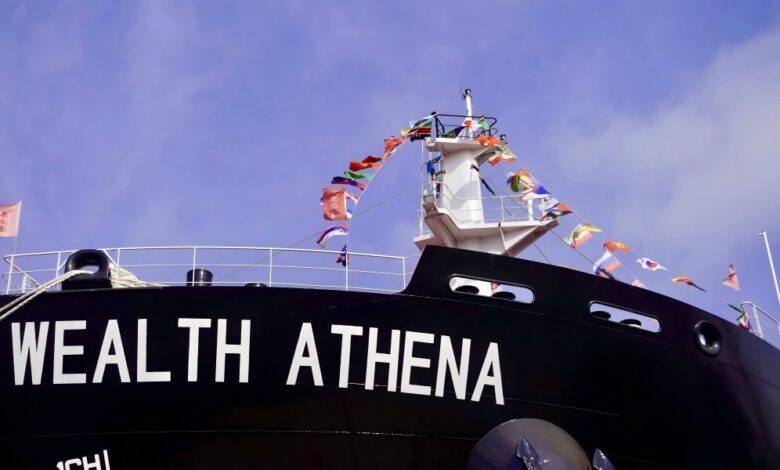

The Singapore-based shipowner has added a 25,000-dwt series to existing 17,400-dwt and 62,000-dwt programmes, creating a potential 18-vessel multipurpose newbuilding pipeline in China as project-cargo investors target an ageing heavy-lift fleet.
Singapore-based Wealth Holdings is building a three-tier multipurpose vessel portfolio in China after signing for up to six 25,000-dwt newbuildings at Hubei Guangji Green Energy Shipbuilding.
The contract, signed on September 10, covers two firm ships and two separate two-vessel options, giving a 2+2+2 structure and a maximum series of six vessels.
Designed by the Shanghai Merchant Ship Design & Research Institute (SDARI), the ships will be 159.9 metres long and equipped with three 150-tonne cranes. They are designed to carry containers, dry bulk commodities and project cargo.
Neither contract prices nor delivery dates for the 25,000-dwt series have been disclosed, while the exercise deadlines for the four optional ships also remain undisclosed.
The contract is relatively modest when viewed as two firm ships in isolation.
Its significance becomes clearer when placed alongside Wealth Holdings' other 2026 multipurpose newbuilding commitments.
Across programmes of 17,400 dwt, 25,000 dwt and 62,000 dwt, the company now has eight firm MPP newbuildings plus options for another 10 vessels. If every option is exercised, its current Chinese MPP programme would reach 18 ships.
Rather than standardising around a single design, Wealth Holdings appears to be assembling a fleet capable of addressing different ends of the project-cargo, breakbulk and conventional dry cargo markets.
Three programmes, three size classes
Wealth Holdings made its first significant move into MPP newbuildings in January, contracting four firm 17,400-dwt vessels at Jiangsu Haitong Offshore Engineering Equipment, with two additional two-ship options.
Danish shipping group NORDEN is providing time-charter cover and commercial operation for the series, giving the vessels forward employment rather than leaving the entire investment exposed to the spot market. Industry records show the ships are due to begin delivering from 2027.
The model is notable because it separates asset ownership from commercial cargo origination.
Wealth Holdings provides the ship investment, while NORDEN brings a project-cargo customer network and commercial operating platform.
NORDEN has been expanding its presence in multipurpose and project shipping since entering the segment in 2023. It said in January that the MPP sector was supported by a rapidly ageing fleet, a low orderbook and a favourable demand outlook, particularly for specialised cargoes alongside traditional dry bulk commodities.
Wealth Holdings then moved sharply up the size range.
In April, it teamed with Hong Kong-based Pusheng Shipping to place two firm plus two optional 62,000-dwt multipurpose vessels at Nantong Yahua Shipbuilding Group. Deliveries are expected to begin in the first quarter of 2028.
The latest 25,000-dwt order at Guangji therefore fills the space between those two programmes.
The current structure is:
17,400 dwt: four firm + four options
25,000 dwt: two firm + four options
62,000 dwt: two firm + two options
That produces eight firm ships and 10 optional units.
The distinction is important: 18 vessels is the potential programme size, not the number of ships currently under firm contract.
Why build three different MPP sizes?
Unlike containerships or standard bulk carriers, multipurpose shipping is difficult to reduce to deadweight alone.
Cargo intake matters, but so do crane capacity, hatch dimensions, deck loading, tween-deck configuration, draught and the range of ports a vessel can access.
A smaller MPP can offer flexibility on regional trades and at ports with infrastructure or draught restrictions. A mid-sized unit can combine greater cargo intake with relatively broad port accessibility. Large MPPs can offer economies of scale for steel, industrial equipment and project cargo on longer trades.
For Wealth Holdings, the 25,000-dwt ships therefore do more than add another six potential hulls.
They create an intermediate asset class between the smaller 17,400-dwt project carriers and the much larger 62,000-dwt ships.
That could allow the owner to match ship size more closely to cargo parcels and project requirements rather than forcing a single vessel class across very different trades.
The strategy also reflects how fragmented the MPP market itself has become.
Some vessels compete heavily with Handysize bulkers or conventional general cargo ships. Others derive their value from their ability to handle oversized, heavy or technically complex cargoes that cannot be efficiently moved by standard dry bulk or container tonnage.
Three 150-tonne cranes matter
The crane specification is therefore one of the most commercially important details of the latest design.
Each 25,000-dwt ship will carry three 150-tonne cranes.
That pushes the ships beyond the role of a basic general cargo vessel and gives them the ability to compete for a broader range of project and breakbulk cargoes.
The published specifications do not establish whether the cranes can be operated in tandem, or what their certified combined lifting capacity would be. It would therefore be premature to describe the design as having 450 tonnes of heavy-lift capacity.
But the individual 150-tonne rating is still significant.
DNV data show why.
Around 9,000 multipurpose vessels of various categories are currently operating globally, but only about 2,300 qualify as multipurpose project carriers. Of those, just 457 vessels have cranes rated above 99 tonnes.
More than 100 of those heavier-lift ships are already over 20 years old.
The supply issue is therefore more nuanced than saying that the entire MPP market is short of ships.
The more specific constraint is the availability of modern ships combining cargo flexibility with meaningful onboard lifting capability.
That is the part of the fleet in which replacement requirements are becoming increasingly visible.
MPP renewal is selective, not a simple ordering boom
The ageing profile has encouraged new investment, but it does not mean every older multipurpose ship will be replaced on a one-for-one basis.
MPP shipping is unusually heterogeneous.
A 6,000-dwt short-sea general cargo vessel and a large heavy-lift project carrier may both fall under a broad "multipurpose" label while serving very different customers.
Newbuilding economics also remain challenging.
Owners have to justify relatively specialised vessels against high construction costs, long shipyard lead times and the need to secure cargo relationships capable of supporting the ships through different market cycles.
This helps explain why charter-backed structures are important.
NORDEN, for example, has repeatedly added MPP newbuilding leases with purchase options rather than relying only on outright ownership. It has described the strategy as building a core fleet while retaining asset flexibility.
The Wealth Holdings-NORDEN arrangement for the 17,400-dwt ships fits that model.
No similarly authoritative public confirmation has been found that the new 25,000-dwt series, or the 62,000-dwt vessels, have equivalent long-term charter coverage.
Those ships should therefore not automatically be described as NORDEN-controlled tonnage.
Their eventual commercial employment will be an important indicator of how Wealth Holdings intends to balance asset investment and operating exposure.
Wealth Holdings is moving beyond its dry bulk base
Wealth Holdings itself has historically been more closely associated with dry bulk, general cargo and broader maritime investment than with the specialist MPP market.
The group's official corporate profile says its roots date to 2006, when it began as a shipbroker before expanding into ship operation, management, chartering, transport and trade.
Wealth Holdings Shipping Pte Ltd, its Singapore affiliate, began operations in 2021.
The company describes ship investment, dry bulk chartering and integrated transportation and trade as core activities, with offices in Shanghai, Hong Kong and Singapore.
Its 2026 newbuilding activity therefore represents more than routine fleet replacement.
By committing capital across three different MPP size classes, Wealth Holdings is increasing its exposure to a specialised sector where access to project cargo, industrial equipment and breakbulk business can be as important as the vessels themselves.
The 17,400-dwt partnership with NORDEN offers one way into that market: asset ownership supported by an established commercial operator.
The larger programmes may reveal whether Wealth Holdings intends to take more direct market exposure.
TradeWinds described the 62,000-dwt order as a more speculative move into the large MPP segment, highlighting the change from charter-supported investment towards a potentially more market-driven position.
A new Chinese yard moves up the complexity curve
The other side of the September order is the shipbuilder.
Hubei Guangji Green Energy Shipbuilding is not one of the Chinese yards traditionally associated with the international MPP market.
Located at Wuxue on the middle reaches of the Yangtze River in Hubei province, the state-backed yard is a relatively new entrant to export shipbuilding.
Public information on the facility shows annual steel-processing capacity of around 200,000 tonnes, 10 horizontal building berths and a 500-tonne gantry crane. The broader yard project has been developed with a planned annual capacity of around 1m dwt.
Its export orderbook has developed quickly.
In June, Guangji signed a 3+3 contract for around 900-teu feeder containerships with Dubai-based Emarat Maritime. The first three ships are firm, while the remaining three are optional. The firm vessels are scheduled for delivery in June, August and October 2028.
The following month, Arne Blystad-backed Songa Box ordered two 1,300-teu feeders at the yard with options for four more.
Those vessels are also based on an SDARI design and are to be classed by Korean Register. Delivery timing has not been disclosed.
The Wealth Holdings order now adds a 25,000-dwt multipurpose design with substantial onboard lifting capability.
In a matter of months, Guangji's export portfolio has therefore moved from small feeder containerships into a more specialised MPP product.
That progression is arguably more important than the number of firm ships in the latest order.
Design houses are helping new yards enter export markets
SDARI's involvement across several of Guangji's export projects also illustrates a broader feature of China's expanding shipbuilding base.
New or less internationally established yards do not necessarily have to develop every export design independently.
Established naval architecture houses can provide proven or market-oriented designs while newer yards contribute additional production capacity.
That division of labour can lower one of the barriers facing yards seeking their first overseas customers.
It does not eliminate execution risk.
International owners still have to assess build quality, project management, class compliance, equipment supply, delivery performance and after-sales support before a new yard can establish a sustained export reputation.
For Guangji, the crucial test will therefore come after the contracts are signed.
Successfully delivering the first feeder series and the Wealth Holdings MPPs will matter far more to its long-term international position than the headline value of its initial orderbook.
China’s shipbuilding expansion is reaching a wider group of yards
China's gains in global shipbuilding have generally been associated with large coastal groups and well-established private builders.
CSSC yards, Yangzijiang Shipbuilding, New Times Shipbuilding, Hengli Heavy Industry and other major builders continue to dominate much of the country's internationally visible order intake.
But a strong shipbuilding cycle is also creating opportunities beyond that first tier.
Guangji is an example of new capacity entering the international procurement landscape from outside China's traditional coastal shipbuilding centres.
That does not prove that orders are simply being pushed to newcomers because leading yards are full.
No public evidence establishes shipyard-slot scarcity as the reason Wealth Holdings chose Guangji, and price, design, financing, relationships and delivery requirements can all affect yard selection.
The broader point is narrower but still important: international owners now have a larger universe of Chinese shipbuilding capacity from which to source relatively specialised tonnage.
If newer yards can deliver their first export series to the required technical and commercial standards, that could gradually widen competition in ship types that previously remained concentrated among a smaller number of established builders.
Two investment trends meet in one order
The September contract therefore connects two separate changes in the shipping market.
On the shipowning side, Wealth Holdings is moving rapidly into MPP assets, building exposure across three substantially different vessel sizes rather than pursuing a single standard design.
On the shipbuilding side, a young inland Chinese yard is progressing from feeder containerships into internationally ordered multipurpose tonnage.
The two firm 25,000-dwt ships are only the starting point.
For Wealth Holdings, the next questions are whether it exercises its 10 outstanding MPP options across the three programmes, who ultimately provides employment for the larger vessels, and whether its multi-size strategy can secure enough project and breakbulk cargo to justify the investment.
For Hubei Guangji, the test is different: whether its first wave of overseas contracts can be converted into on-time delivery, repeat business and a durable position in the international newbuilding market.
If both happen, the significance of the September 10 deal will extend well beyond a 2+2+2 order.
It will mark the point at which a new shipowner investor and a new export shipyard began moving into the same increasingly specialised part of the shipping market.

READ MORE
 Shipbuilding
China‘s Dajin Builds Its Own Fleet as Shipbuilding Orderbook Reaches RMB 12 Billion
 Shipbuilding
H-Line Ends Five-Year Bulker Ordering Hiatus With POSCO-Linked LNG Pair at New Times
 Shipbuilding
Chair of CSSC Xu Peng Calls for Broader Full-Value-Chain Maritime Cooperation Between China and Europe
 Shipbuilding
Schoeller Returns to Chengxi for Four More MRs as China Gains Ground on Korea
 Shipbuilding
SAL Moves to Double Orca Heavy-Lift Series at Wuhu With Five-Vessel MoU
 Shipbuilding
Alpha Bulkers Linked to Two More Newcastlemaxes at Hengli
 Shipbuilding
From a 150-Year Greek Shipping Dynasty to Hengli: Carlova Maritime Opens a New Dry-Bulk Chapter
 Shipbuilding
China’s Shipyards Are Selling 2030 Slots as New Orders Hit Record Highs
 Shipbuilding
Leonhardt & Blumberg Adds Two More GSI MR Tankers, Taking Series to Eight
 Shipbuilding