


CMA CGM and CCCC Forge Global Partnership Across Ports, Logistics and Energy Transition
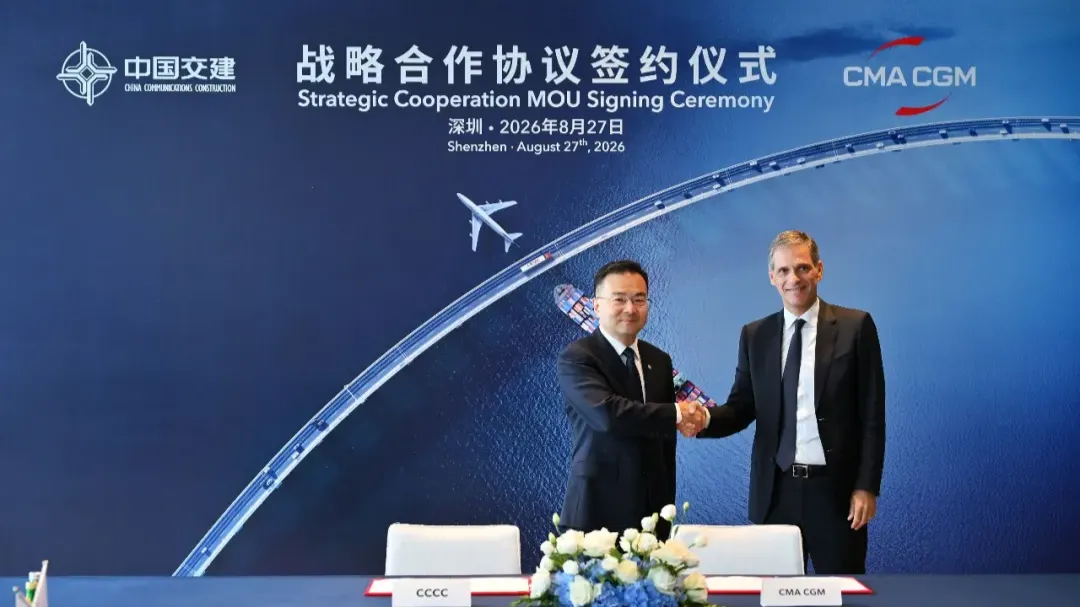
MA CGM and China Communications Construction Company have established a strategic framework covering port infrastructure, logistics, transport, digitalisation and the energy transition. By combining CCCC’s global infrastructure development capabilities with CMA CGM’s shipping network, terminal operations and CEVA Logistics platform, the partnership could connect port construction more directly with cargo flows, hinterland infrastructure and long-term supply-chain operations.
CMA CGM Group and China Communications Construction Company Limited, or CCCC, have signed a memorandum of understanding aimed at strengthening their global cooperation across port infrastructure, logistics and transport services, innovation and the energy transition.
The agreement was signed by CMA CGM Chairman and CEO Rodolphe Saadé and CCCC President Zhang Bingnan.
The MoU establishes a strategic framework under which the two groups will explore opportunities in Africa, China and Southeast Asia, the Middle East and Latin America.
CCCC will contribute its experience in developing and constructing major infrastructure projects. CMA CGM will bring its global liner network and expertise in port terminals, maritime transportation, end-to-end logistics and supply-chain operations.
The proposed cooperation extends well beyond the construction of individual quays or terminals. It could connect port development with terminal operations, committed liner volumes, hinterland corridors, project logistics, digital systems and lower-carbon energy infrastructure.
No specific project list, investment commitment, ownership structure, concession arrangement or implementation timetable has been disclosed. The agreement is therefore a framework for identifying and developing future projects rather than a final investment decision.
Connecting infrastructure construction with cargo and operations
International port projects typically require two distinct sets of capabilities.
The first involves planning, engineering, dredging, construction, equipment deployment and the wider transport infrastructure needed to bring a terminal into operation. The second concerns securing shipping services, attracting cargo volumes, managing terminal operations and connecting the port with inland logistics networks.
The CMA CGM–CCCC framework is designed to bring these capabilities closer together.
CCCC has extensive international experience in ports, waterways, roads, bridges, railways and major logistics infrastructure. CMA CGM operates more than 700 vessels and serves over 420 ports across five continents, while its terminal businesses participate in a broad portfolio of strategic gateways and transshipment hubs.
CEVA Logistics adds contract logistics, freight forwarding, warehousing, multimodal transport and project logistics capabilities.
The combination could address two fundamental requirements of port investment. Infrastructure must be delivered to the required capacity and technical standard, while the completed terminal also needs reliable cargo flows, international shipping connections and an efficient operating system.
CCCC can provide infrastructure development and engineering execution. CMA CGM can bring liner services, base volumes, terminal expertise and global customers.
The MoU also envisages opportunities for CMA CGM and CEVA Logistics to provide shipping and project logistics solutions for CCCC’s major international infrastructure developments.
This creates a two-way commercial relationship. CMA CGM could participate in ports and logistics platforms developed by CCCC, while CCCC’s overseas construction projects could generate demand for CMA CGM’s ocean transportation, heavy and oversized cargo movements, warehousing and project logistics services.
Expanding cooperation from the quay to the hinterland
The partnership is not limited to marine infrastructure and container-handling equipment.
CMA CGM and CCCC intend to explore sustainable multimodal infrastructure linking ports with their hinterlands. The areas identified include logistics corridors, dry ports, container depots, warehouses and logistics platforms.
These assets determine whether nominal port capacity can be converted into efficient cargo flows.
Deep-water berths and larger ship-to-shore cranes can increase vessel-handling capacity. Cargo leaving the terminal still requires railways, roads, barges, depots and warehouses. When inland capacity falls behind port throughput, yard utilisation rises, containers remain in terminals for longer and vessels can face additional waiting time even when sufficient berth infrastructure is available.
Recent Sea-Intelligence analysis estimated that persistent delays were absorbing approximately 5% of the global deep-sea container fleet, equivalent to around 1.7 million TEU of effective capacity.
Global schedule reliability subsequently fell to 56.4% in July 2026, while the average delay for late vessel arrivals increased to 6.06 days.
These figures illustrate why ports and hinterland infrastructure have become critical components of liner-network efficiency. Additional quay capacity increases theoretical throughput. The full value is realised when ports are connected efficiently with manufacturing centres, consumer markets and regional logistics hubs.
Africa, the Middle East, Latin America and Southeast Asia continue to experience strong growth in trade and manufacturing investment. In several markets, port and inland infrastructure expansion has struggled to keep pace with cargo volumes.
The geographic priorities identified in the MoU are therefore closely aligned with the expansion of regional and South-South trade, the internationalisation of manufacturing supply chains and rising demand for modern logistics infrastructure in emerging markets.
Existing cooperation at Lekki and Kribi
CMA CGM and CCCC already have a long-standing relationship, particularly through CCCC subsidiaries including China Harbour Engineering Company, or CHEC.
At Lekki Freeport Terminal in Nigeria, CMA Terminals and CHEC are partners in the container terminal. The project combines Chinese port-development capabilities with the operating expertise and network resources of a global container carrier.
The two companies are also working together at Kribi Container Terminal in Cameroon, supporting the development of an important gateway for Central African trade.
Lekki and Kribi provide practical examples of the model now being considered on a wider geographical and commercial scale. Both are located in regions where cargo demand is growing and where efficient port infrastructure can influence the development of entire trade corridors.
Shanghai Zhenhua Heavy Industries, or ZPMC, another CCCC subsidiary, has worked with CMA CGM since 2004. ZPMC port equipment is operating at several strategic terminals within CMA CGM’s global network.
As terminals become more automated and larger vessels place greater demands on crane productivity, equipment reliability and digital control systems, closer coordination between terminal operators and port-equipment suppliers is becoming increasingly valuable.
Previous cooperation focused largely on individual port developments, terminal partnerships and equipment supply. The new MoU raises the relationship to a group-level framework and expands its potential scope across infrastructure, operations, shipping, inland logistics, project cargo, digitalisation and energy systems.
CMA CGM accelerates its terminal strategy
The agreement with CCCC is consistent with CMA CGM’s rapid expansion in port and terminal assets.
In 2025, CMA CGM invested approximately USD 2.5 billion in expanding a portfolio of 66 terminals across 40 countries. The group described the operational control of container terminals as a strategic priority for shipping lines because it improves end-to-end supply-chain management, operational efficiency, service quality and network reliability.
In July 2026, CMA CGM completed the formation of UNITED PORTS LLC with infrastructure investor Stonepeak.
Stonepeak invested USD 2.4 billion for a 25% interest in the joint venture. CMA CGM retained a 75% stake and full operational control.
The platform initially holds nine major CMA CGM-operated terminals in the United States, Brazil, Spain, Vietnam and Kaohsiung. The structure releases capital from an established asset portfolio while preserving CMA CGM’s ability to manage critical terminal operations and support further expansion.
CMA CGM has also signed definitive agreements with Saudi terminal operator Red Sea Gateway Terminal to develop and operate Terminal 4 at Jeddah Islamic Port.
The project represents an initial investment of USD 434 million and will add up to 2.6 million TEU of annual handling capacity. It will include deep-water berths capable of serving the world’s largest container vessels and ten new ship-to-shore cranes.
Elsewhere, the group is expanding Gemalink in southern Vietnam and participating in a new deep-water terminal project in Haiphong. In Brazil, its acquisition of Santos Brasil brought a portfolio of major port and logistics assets under group control. CMA CGM is also expanding its positions in the Middle East and Europe through terminal, dry-port and multimodal investments.
CCCC’s international project network and infrastructure capabilities could therefore provide CMA CGM with access to new development opportunities, particularly in emerging markets where the demand for modern ports and logistics corridors is rising.
CMA CGM, in turn, can bring shipping services and operational expertise to CCCC-backed infrastructure. The commercial performance of a port depends heavily on throughput, service density and the industrial strength of its hinterland. Direct participation by a major liner group can improve the connection between construction, commissioning and long-term cargo generation.
Digitalisation and lower-carbon infrastructure
Innovation and the energy transition form another major part of the MoU.
CMA CGM and CCCC intend to explore the deployment of digital and artificial-intelligence solutions supporting greater automation and operational efficiency at terminals and inland logistics platforms.
Potential applications include berth and crane planning, yard optimisation, automated vehicle routing, predictive maintenance, vessel-arrival forecasting and the coordination of rail, road and barge connections.
CCCC and its subsidiaries bring infrastructure, engineering, equipment and automation capabilities. CMA CGM contributes operational data and real-world use cases involving vessel arrivals, container flows, terminal operations and inland logistics.
This combination could allow digital solutions to be designed around complete logistics networks rather than isolated terminal equipment.
Lower-carbon infrastructure will also be explored across multiple modes of transport. The MoU identifies renewable energy projects and infrastructure supporting alternative fuels for ships, barges, trains and port equipment.
The scope could include shore power, green-fuel storage and bunkering, electric or alternative-fuelled terminal machinery, lower-carbon rail and barge services, and renewable energy systems serving ports and logistics platforms.
CMA CGM has already committed almost USD 30 billion to LNG- and methanol-powered vessels. By 2030, more than 200 vessels in its fleet are expected to be capable of using lower-carbon energy sources including biomethane, biomethanol and synthetic fuels.
The emissions potential of these vessels will depend on the global availability and commercial competitiveness of lower-carbon fuels. Port storage, distribution and bunkering infrastructure will therefore need to expand alongside the fleet.
Cooperation with a major infrastructure group could help CMA CGM align vessel investment more closely with the development of port energy systems.
A broader model for international infrastructure cooperation
The potential model established by the MoU brings together infrastructure development, engineering and construction, terminal operations, liner volumes, inland logistics, project cargo, digitalisation and the energy transition.
CCCC provides global project-development and delivery capabilities. CMA CGM contributes shipping connectivity, terminal operations, supply-chain services and access to long-term customers.
For CCCC, the partnership could extend its participation beyond conventional engineering and construction into longer-term, full-lifecycle infrastructure cooperation.
For CMA CGM, the relationship provides access to engineering capabilities and a global pipeline of potential port, corridor and logistics projects without requiring the carrier to develop every element independently.
Host countries could also benefit from closer coordination between port construction, international shipping services and inland transport planning. This can reduce the risk that new infrastructure is completed without sufficient cargo, operating capability or hinterland connectivity.
The MoU remains at a framework stage. Its eventual scale will depend on specific projects, financing structures, concession terms, regulatory approvals and local partners. Future cooperation could take different forms, including joint ventures, equity investments, construction contracts, terminal concessions and logistics service agreements.
The strategic direction, however, is already clear.
Major container shipping groups are treating ports as assets that support network reliability, effective capacity and long-term resilience. Competition is expanding beyond vessels and terminal ownership into infrastructure development, hinterland connections, digital operations and lower-carbon energy systems.
Ships provide the ocean capacity behind global trade. Ports and their supporting infrastructure determine how that capacity connects with factories, consumer markets and inland logistics networks.
Through their new cooperation framework, CMA CGM and CCCC are positioning themselves to combine these capabilities across the next generation of global port and supply-chain infrastructure.

READ MORE
 Containers
RCL’s Orderbook Reach 1.6 Times Its Existing Fleet After Four-Ship Wenchong Deal
 Containers
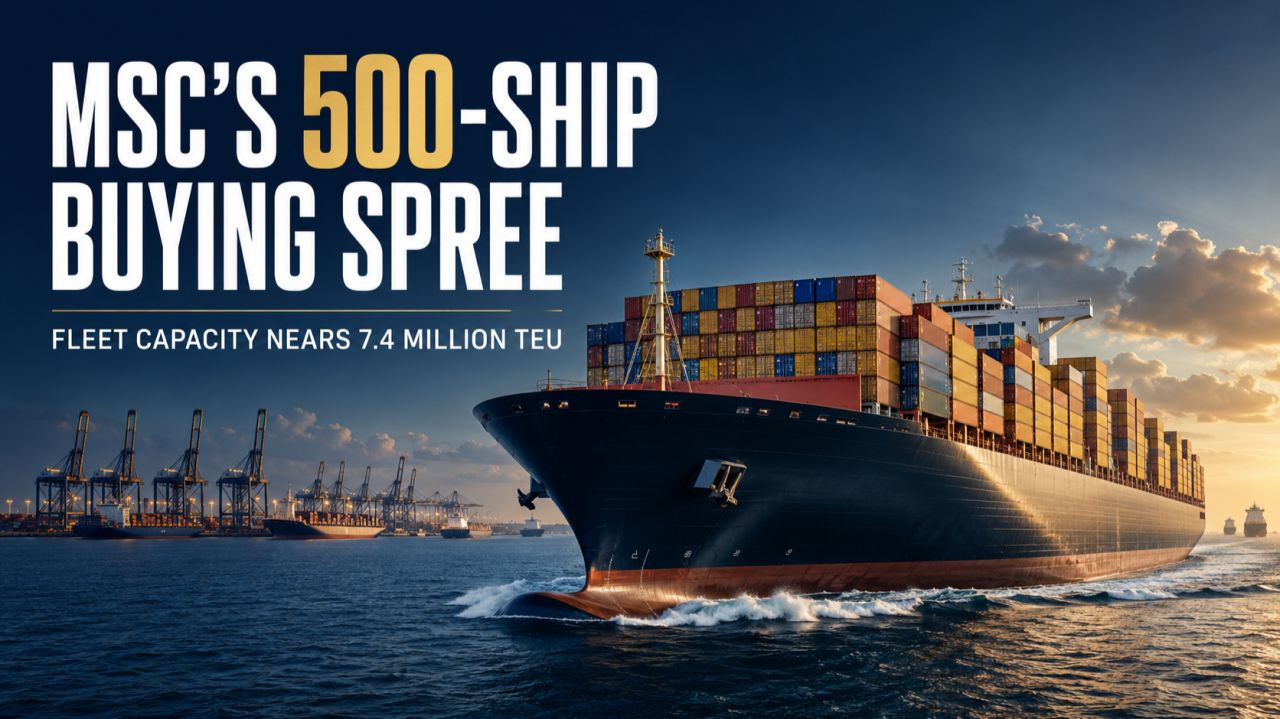
MSC’s 500-Ship Secondhand Buying Spree Pushes Fleet Capacity Close to 7.4 Million TEU
 Containers
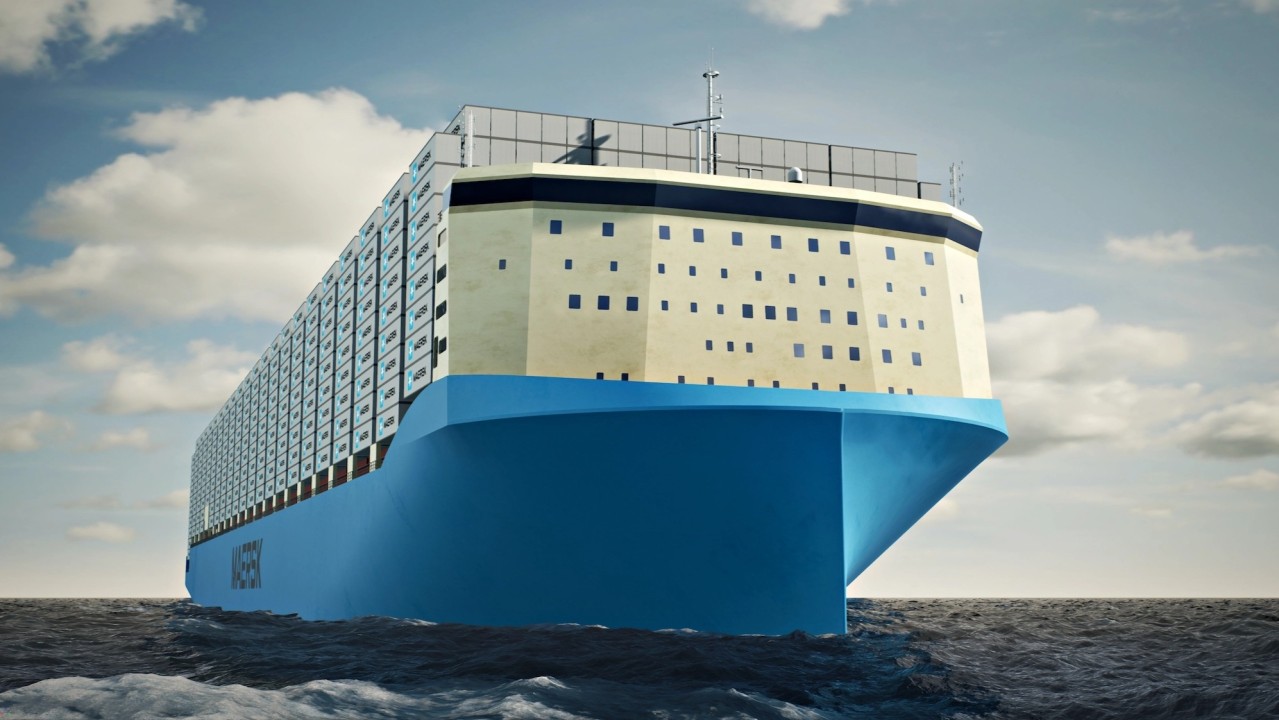
Maersk Opens the Door to Fleet Growth as 20,000-TEU Newbuilding Talks Gather Pace
 Containers
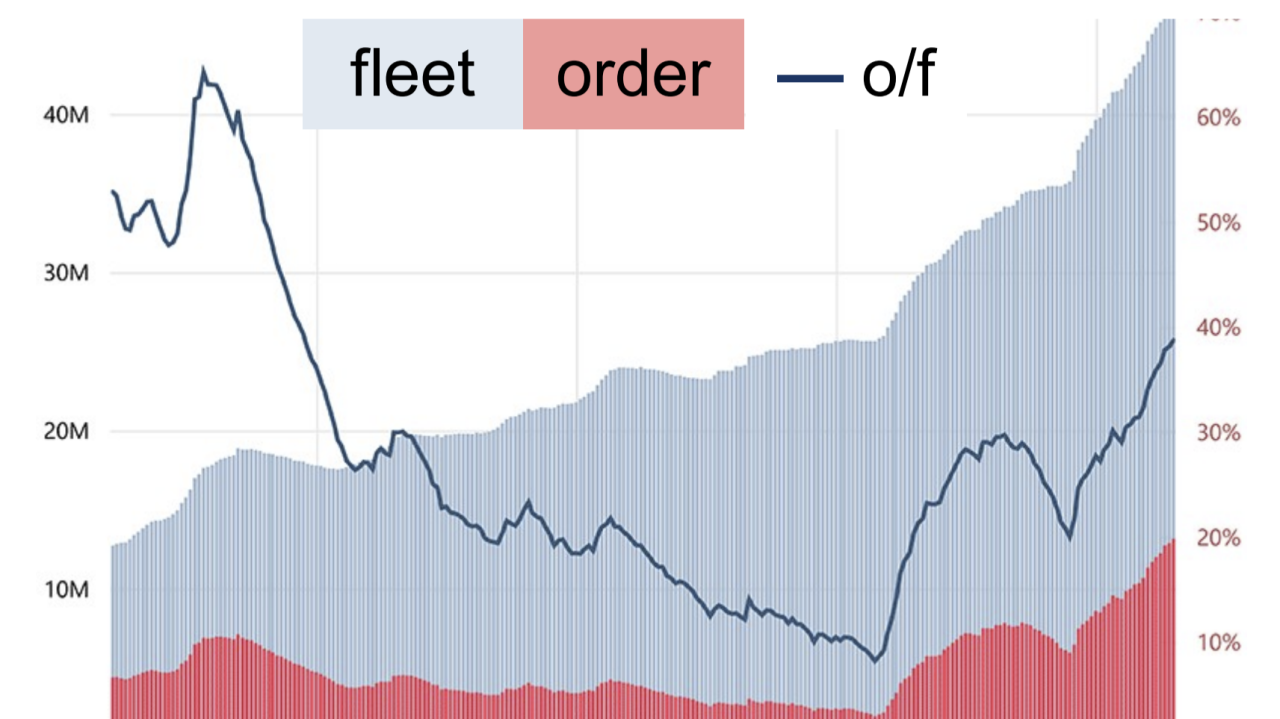
Over 40%: Global Containership Orderbook Nears 14 Million TEU, Ratio Hits Highest Level Since 2009
 Containers
When the Market Turns, Who Turns Fastest? Maersk’s Lesson in Shipping Agility
 Containers
From a $256m Loss to an $83m Profit: Hapag-Lloyd Turns the Corner in Q2 as Gemini Gains Traction
 Containers
Ningbo Containerized Freight Index Weekly Commentary Schedule Disruptions Strained Supply; Freight Rates Rose on Most Routes
 Containers
Ningbo Containerized Freight Index Weekly Commentary North America Freight Rates Rose at High Levels; Overall Divergence Pattern Remained
 Containers
Is Peak Season Really Over? Asia–U.S. East Coast Rates Reach $9,400
 Containers