


Maersk Opens the Door to Fleet Growth as 20,000-TEU Newbuilding Talks Gather Pace
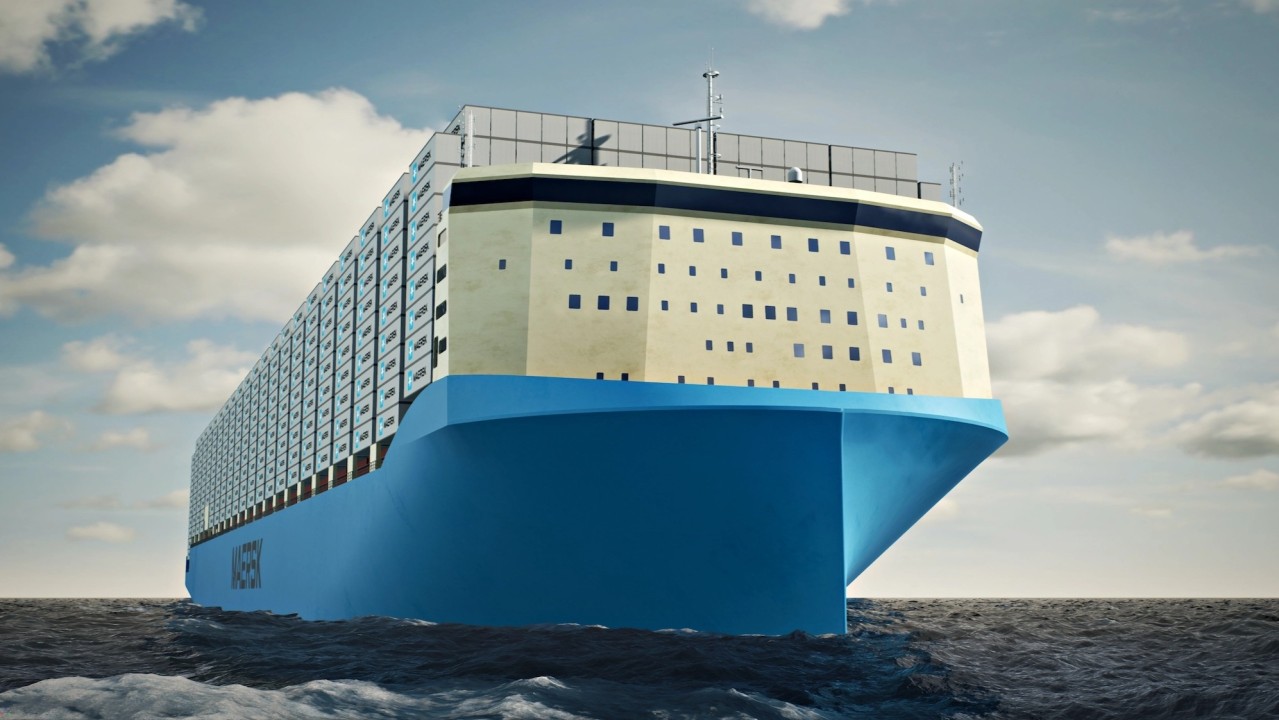

From a planned fleet ceiling of around 4.3 million TEU to an operated capacity of more than 4.72 million TEU, Maersk’s long-standing replacement-only policy is giving way to selective expansion. Meanwhile, MSC, Maersk and CMA CGM have been linked to potential projects involving 20,000–24,000-TEU containerships, with the combined requirement possibly reaching 30–60 vessels.
Maersk’s long-established approach to fleet capacity is beginning to change.
Speaking during Maersk’s second-quarter 2026 earnings call on 13 August, chief executive Vincent Clerc said the Gemini Cooperation had allowed the carrier to move more cargo while keeping fleet growth relatively restrained. However, current vessel utilisation and asset productivity indicate that the remaining capacity gains available from the existing fleet are approaching their limit.
“With the current utilisation and asset turn, we’re starting to reach the limit of what the current fleet can do,” Clerc said, adding that future investment would need to support “some level of fleet growth”.
The statement marks a significant departure from Maersk’s previous public position. For several years, the Danish group maintained that newbuildings would primarily replace ageing vessels and that deliveries would produce little or no net increase in overall capacity.
Fleet growth has now entered Maersk’s capital-allocation and competitive strategy.
The 4.3 Million-TEU Boundary Has Already Been Breached
Maersk’s policy shift has followed a gradual and increasingly visible trajectory.
Since accelerating its transformation into an integrated logistics group around 2018, Maersk has placed less emphasis on competing for the title of the world’s largest container line. The company previously indicated that it intended to maintain fleet capacity within a range of approximately 4.0 million to 4.4 million TEU.
In August 2024, Maersk outlined plans to secure 50–60 owned or long-term-chartered vessels with a combined capacity of around 800,000 TEU. The programme was described as a fleet-renewal exercise, while the total fleet was expected to remain at roughly 4.3 million TEU.
At the time, Maersk stressed that each incoming vessel would replace an existing ship reaching the end of its commercial life.
The first visible crack in that policy appeared in May 2024, when Clerc acknowledged that Maersk had ordered too few vessels. The Red Sea diversion had increased the number of ships required to maintain weekly liner services, giving competitors with larger capacity reserves a commercial advantage.
In December 2024, Maersk placed orders for 20 LNG dual-fuel containerships with a combined capacity of approximately 300,000 TEU. The package comprised two 9,000-TEU ships, 12 vessels of 15,000 TEU and six vessels of 17,000 TEU. Even then, the group continued to classify the orders as replacement tonnage.
By March 2025, Maersk’s operated fleet had reached approximately 4.52 million TEU, moving clearly beyond its previous target range. Maersk’s Greater China management later described the additional capacity as a tactical response to the Red Sea disruption and changing market conditions.
A further order followed on 9 February 2026, when Maersk contracted New Times Shipbuilding to build eight 18,600-TEU dual-fuel containerships. The vessels, totalling 148,800 TEU, are scheduled for delivery between 2029 and 2030.
At 366 metres long and 58.6 metres wide, the ships are smaller than conventional 400-metre megamax vessels and can therefore serve a wider selection of ports and trades. Maersk again presented the project as part of its fleet-renewal programme, highlighting operational flexibility.
The actual fleet has continued to grow. According to Alphaliner data as of 23 August 2026, Maersk operated approximately 4.72 million TEU, representing 13.8% of global liner capacity.
The former 4.0 million–4.4 million-TEU boundary has effectively become obsolete.
Gemini’s Efficiency Gains Are Reaching Their Limit
The second-quarter earnings call provided the clearest confirmation so far that Maersk is reassessing its fleet requirements.
UBS analyst Cristian Nedelcu observed that Maersk’s existing orderbook and fleet-age profile could reduce its global market share to approximately 12% by 2030, compared with 18%–19% before the pandemic. He asked whether the group was prepared to accept further market-share erosion or would commit additional capital to the Ocean business.
Clerc said Gemini had enabled Maersk to carry more cargo without matching that volume growth ship for ship. The network’s higher schedule reliability, improved vessel utilisation and faster asset rotation had allowed the carrier to operate beyond the constraints of its previous fleet model.
Those efficiency gains now have less room to run.
Clerc indicated that Maersk would have to continue renewing its fleet and allocate additional capital if it expected landside bottlenecks to support a relatively favourable rate environment and wanted to protect its market position. Future fleet planning would therefore include replacement capacity and a measured amount of growth.
This means Maersk can no longer rely solely on network optimisation, higher load factors and faster vessel turnarounds to accommodate rising volumes.
Alphaliner analyst Jan Tiedemann has argued that Maersk placed its large-vessel orders too late and in insufficient numbers. He estimates that the carrier may require another one to two dozen ships and could return to the market for a further series of large LNG dual-fuel vessels, with deliveries extending from 2029 to 2031.
A $1.31 Billion Quarter Changes the Investment Equation
Maersk’s change in tone follows a particularly strong quarter.
The group recorded second-quarter revenue of $15.76 billion, an increase of 20% year on year. EBITDA rose 30% to $2.99 billion, while EBIT increased 86% to $1.57 billion. Net profit more than doubled from $639 million to $1.31 billion.
Maersk earned $1.41 billion during the first half of the year, meaning the second quarter accounted for approximately 93% of its six-month profit.
The recovery in the Ocean division was even more pronounced. Ocean EBIT moved from a $192 million loss in the first quarter to a $935 million profit in the second, an improvement of more than $1.1 billion within three months.
Loaded volumes reached 3.361 million FFE, up 4.1% year on year. The average loaded freight rate increased 21.6% to $2,746 per FFE and was approximately 32% higher than in the first quarter. Vessel utilisation remained at 96%.
Maersk consequently raised its full-year guidance again. It now expects underlying EBITDA of $10.5 billion–$12.5 billion, underlying EBIT of $4.5 billion–$6.5 billion and positive free cash flow for 2026.
The result is particularly significant because nominal global containership capacity increased by approximately 5.4%, exceeding estimated demand growth of 3%–4%. Maersk nevertheless achieved a substantial recovery in rates and profitability.
The divergence illustrates the growing gap between nominal fleet capacity and the capacity that liner networks can deploy effectively.
Landside Bottlenecks Are Reshaping Supply and Demand
Clerc said exports from the Far East had now grown for three consecutive years. Head-haul volumes from Asia to major consumer markets have increased by approximately 25% over that period, while backhaul cargo has remained broadly flat or declined.
This imbalance creates a large empty-container repositioning requirement. A 4% increase in loaded cargo demand can translate into a 7%–8% increase in the total number of container moves handled by ports and terminals.
Ports, container yards, railways, road networks, barges and warehouses in Europe, the east coast of South America, West Africa and the Middle East are already operating under increasing pressure.
Electric vehicles, batteries, renewable-energy systems, power equipment, data-centre components and other industrial goods have emerged as important sources of Asian export growth. Clerc acknowledged that the strength and resilience of global container demand had exceeded his expectations, despite tariff disputes, deglobalisation concerns and fluctuations in energy prices.
Maersk expects freight rates to remain volatile. Port or inland congestion can drive rates sharply higher, followed by corrections as local bottlenecks ease. More frequent infrastructure constraints could nevertheless keep average rate levels above historical norms.
The carrier is also gradually restoring services through the Red Sea and the Suez Canal. At the time of the earnings call, around one-third of the Maersk cargo or services that would normally transit Suez had returned to the route. The company continues to assess security conditions daily.
A shorter route would reduce fuel consumption and network costs. Maersk expects the direct effect on freight rates to be limited because an increasing share of the system’s constraints has shifted from sea passages to ports and inland infrastructure.
In this environment, additional vessels also function as insurance capacity. Ships provide operational buffers when Red Sea diversions lengthen voyages, congestion slows port calls or networks need extra tonnage to protect weekly schedules and customer commitments.
New 20,000–24,000-TEU Projects Move onto the Market
Maersk’s new fleet-growth language coincides with a fresh round of ultra-large containership enquiries in China and South Korea.
Citing Alphaliner Newsletter 2026-32, Xinde Marine News reported that several top-ten liner operators were discussing series of 20,000–24,000-TEU newbuildings with shipyards.
Potential contenders include yards affiliated with China State Shipbuilding Corporation, Yangzijiang Shipbuilding and Hengli Heavy Industry, alongside South Korea’s HD Hyundai, Samsung Heavy Industries and Hanwha Ocean. Chinese builders are understood to be leading the competition, while LNG dual-fuel propulsion is emerging as the preferred configuration.
Initial contracts or letters of intent could appear around the SMM maritime exhibition in Hamburg from 1 to 4 September.
Alphaliner did not identify the carriers involved. Separate shipbroking reports have linked the discussions to MSC, Maersk and CMA CGM, with each company potentially evaluating 10–20 vessels of approximately 20,000 TEU.
At the upper end of those estimates, the three programmes could involve 30–60 ships and between 600,000 and 1.2 million TEU of new capacity.
These figures remain market intelligence. The identity of every buyer, the number of firm vessels, optional units and final specifications have yet to be confirmed through carrier or shipyard announcements.
Earlier reports indicated that Maersk and CMA CGM were separately assessing designs of approximately 19,000 TEU, 22,000 TEU and 24,000 TEU. Each company was said to be considering six to 12 ships, producing a combined potential requirement of 12–24 vessels.
Based on an estimated price of $220 million–$240 million per ship, such programmes could involve total investment of approximately $2.64 billion–$5.76 billion.
The different order ranges should be treated as competing snapshots of projects that remain under negotiation. Carriers are still comparing vessel sizes, prices, propulsion systems, shipyards and delivery positions. The estimates cannot be combined into a single confirmed order total.
MSC and CMA CGM Increase the Pressure on Maersk
MSC has already moved furthest in expanding its large-vessel fleet.
Early broking reports linked the Swiss-Italian carrier to a possible 10-plus-10 package of 20,000-TEU LNG dual-fuel ships at Hengli Heavy Industry. MSC’s wider newbuilding backlog is estimated at around 166 vessels and close to 3 million TEU.
The carrier reportedly has 99 ships of more than 20,000 TEU either on order or in its forward fleet programme, representing over 2 million TEU. It accounts for more than 40% of the global megamax containership orderbook and has already deployed 24,000-TEU vessels on the Asia–West Africa trade.
CMA CGM presents a more immediate challenge to Maersk’s ranking.
As of 23 August, CMA CGM operated approximately 4.39 million TEU, giving it a global market share of 12.8%. Its capacity gap with Maersk had narrowed to around 330,000 TEU.
Alphaliner figures from early July placed Maersk’s orderbook at approximately 1.21 million TEU, compared with about 1.77 million TEU for CMA CGM. The French carrier therefore held an orderbook advantage of roughly 560,000 TEU.
CMA CGM chairman and chief executive Rodolphe Saadé has stated that the group aims to overtake Maersk and become the world’s second-largest liner operator by the end of 2027. The company is receiving a series of ten 24,000-TEU LNG-powered vessels while continuing to expand its fleet of ships above 19,000 TEU.
Maersk still operates the larger fleet, although the difference in future deliveries is changing the competitive balance. Clerc’s reference to protecting Maersk’s market position carries a clear strategic context.
The ordering wave extends beyond the three largest carriers. Ocean Network Express has been linked to enquiries for as many as 22 LNG dual-fuel vessels of 13,000–15,000 TEU. Wan Hai has expanded its programme at Shanghai Waigaoqiao Shipbuilding to one 9,200-TEU ship and seven 11,000-TEU vessels. Hapag-Lloyd had 32 ships totalling approximately 349,000 TEU awaiting delivery at the end of June.
Major carriers are adding capacity across several fleet segments, including megamax mainline vessels, mid-sized oceangoing ships and regional tonnage.
The 2027–2031 Delivery Wave Remains a Major Risk
The global containership orderbook is already approaching 40% of the existing fleet.
Alphaliner previously counted 1,592 fully cellular containerships totalling 12.98 million TEU on order, equivalent to 38.3% of current capacity. Maritime Strategies International expects close to 5 million TEU of new capacity to be delivered in 2028 alone.
The concentration is even greater in the large-ship categories. Successive rounds of contracting for vessels above 20,000 TEU and New Panamax ships have pushed the orderbook-to-fleet ratio in the largest segments beyond 70%.
During the first half of 2026, the number of new containership orders increased by approximately 29% year on year. Contracting of ultra-large and New Panamax vessels fell by 18%, while feeder ordering remained particularly active. By the end of July, 38 ultra-large containerships and 184 feeder ships had been ordered during the year.
The 20,000–24,000-TEU projects now under discussion could produce another increase in large-vessel contracting.
The future of the Red Sea and Suez route will have a major influence on how the market absorbs these ships. Prolonged diversions consume substantial effective capacity. A full return to the shortest route would improve vessel productivity and release tonnage previously absorbed by longer voyages.
If that release coincides with concentrated deliveries between 2027 and 2030, freight rates, charter markets and vessel values could come under renewed pressure.
Maersk may therefore obtain part of its additional capacity through long-term chartering. Vespucci Maritime chief executive Lars Jensen has suggested that the company could become more active in the charter market, using a combination of owned vessels, long-term charters and selective newbuilding commitments.
Maersk Enters a Phase of Selective Expansion
Maersk has moved from a planned capacity boundary of around 4.3 million TEU to an operated fleet exceeding 4.72 million TEU. Its public position has evolved from strict replacement to a fleet plan that explicitly allows a measured level of growth.
The adjustment retains Maersk’s traditional capital discipline. Its likely strategy will combine large ships for mainline services, vessels for faster-growing regional trades, long-term-chartered capacity and replacements for ageing tonnage. A direct attempt to match MSC’s fleet size appears unlikely.
The fixed capacity ceiling is fading from Maersk’s planning framework. Market position, Gemini network requirements, landside infrastructure constraints, the future of Red Sea routing, alternative-fuel technology, shipyard availability and investment returns will collectively determine the size and composition of its fleet.
Any contracts or letters of intent emerging around SMM Hamburg for 20,000–24,000-TEU vessels would provide the first concrete test of how far Maersk is prepared to take its new policy of selective fleet growth.

READ MORE
 Containers
COSCO SHIPPING Sets Group Methanol Bunkering Record with 7,500-Tonne Delivery
 Containers
Up to 30 New Feeders: Inside Contships’ Fleet Renewal Strategy
 Containers
COSCO SHIPPING Holdings to Launch Third Far East–ECSA Service in December
 Containers
CMA CGM vs Maersk: A New Arms Race Begins!
 Containers
CMA CGM Expects Car Carrier Fleet to Reach Around 21 Vessels
 Containers
CMA CGM’s Reported French Flag Retreat Puts Shipping Taxes in Focus
 Containers
CMA CGM Chief Says Zero Carbon by 2050 May Take a Miracle
 Containers
COSCO SHIPPING Holdings Steps Up Asia-Pacific Expansion with Dual-Brand Push
 Containers
Ningbo Containerized Freight Index Weekly Commentary Overall Demand Weakened During the Holiday; Freight Rates Declined on Most
 Containers