


From a $256m Loss to an $83m Profit: Hapag-Lloyd Turns the Corner in Q2 as Gemini Gains Traction
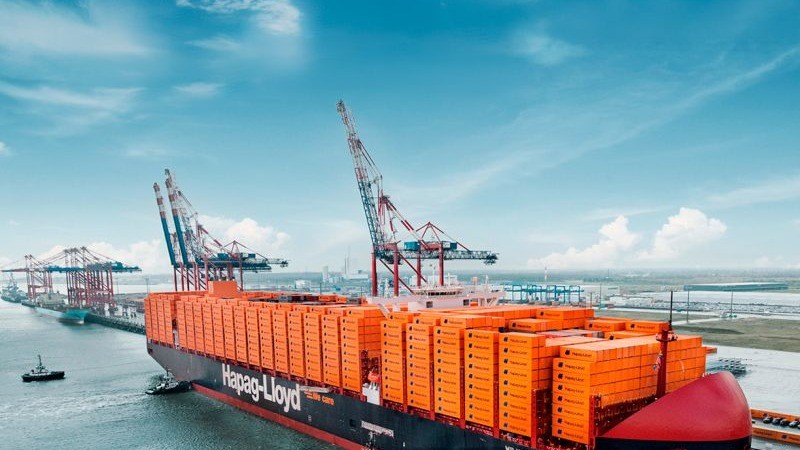

Hapag-Lloyd remained in the red for the first half of 2026, posting a net loss of $173 million, while EBIT from its core liner shipping business was almost wiped out. Yet the picture changed sharply in the second quarter. Stronger Asian exports, improving US demand and a rapid rebound in spot freight rates helped the German carrier return to profitability, even as the conflict in the Middle East imposed an estimated $600 million in additional cost headwinds. Viewed alongside Maersk’s strong Q2 results released on the same day, the two Gemini partners are sending a remarkably similar message: the earnings environment for container shipping improved materially from the first quarter.
Three months ago, Hapag-Lloyd was among the first major global liner operators to report a group-level loss in 2026.
When Hapag-Lloyd released its first-quarter results in May, Xinde Marine News described the period as a “stress test” for liner shipping, with the company caught between disruption around the Strait of Hormuz, severe weather, operational interruptions and weak freight rates. Hapag-Lloyd posted a group net loss of approximately $256 million in Q1, while EBIT from Liner Shipping fell to a loss of around $174 million.
Only one quarter later, that picture has changed significantly.
On 13 August, Hapag-Lloyd reported its results for the second quarter and first half of 2026. Group revenue reached approximately $5.84 billion in Q2, EBITDA came in at $829 million and EBIT at around $176 million, while net profit returned to a positive $83 million.

Although quarterly net profit remained well below the level recorded a year earlier, the improvement from the first-quarter loss was substantial.
The turnaround was even more visible in the core liner shipping business. Liner Shipping EBIT moved from a loss of roughly $174 million in Q1 to a profit of approximately $153 million in Q2. In just three months, EBIT at the shipping division therefore improved by more than $300 million.
The first-half numbers still carry the scars of the difficult opening quarter. Hapag-Lloyd generated revenue of approximately $10.76 billion in H1 2026, up 1.6% on a currency-adjusted basis. EBITDA fell by around 31% to $1.32 billion, while EBIT collapsed to only about $18 million. Group net income swung from a profit of approximately $775 million in the first half of 2025 to a loss of roughly $173 million this year.
On the company’s euro reporting basis, first-half EBITDA amounted to EUR1.13 billion, compared with EUR1.76 billion a year earlier, while EBIT fell from EUR619 million to just EUR16 million.
Hapag-Lloyd said the first six months of 2026 were characterised by a challenging market environment and operational disruptions. The effective closure of the Strait of Hormuz from late February was among the most significant factors, increasing transport costs and limiting volume growth.
Q2 Changed the Direction of Hapag-Lloyd’s Year
The contrast between the first and second quarters is striking.
Hapag-Lloyd transported 6.684 million TEU in the first half, up 1.5% year on year, while the average freight rate stood at $1,406 per TEU, almost unchanged from $1,411 per TEU in the same period last year.
The first-half decline in profitability therefore cannot be explained by weak volumes alone. Cargo volumes were slightly higher, while average freight rates were broadly stable. The real pressure came from higher operating costs associated with the Middle East conflict, longer sailing and transport times, rising bunker expenses, port disruptions and more complex network operations.
Liner Shipping EBIT for the first half consequently fell to around negative EUR18 million from EUR585 million a year earlier.
The second quarter looked very different.
Hapag-Lloyd carried 3.481 million TEU during Q2, up 3.5% year on year. Its average freight rate increased by 8.9% to $1,475 per TEU from $1,354 per TEU a year earlier.
The improvement was visible across several major trades. Average freight rates on Asia-Europe increased from $1,245 per TEU to $1,448 per TEU, while rates across Africa and intra-regional trades rose from $1,214 per TEU to $1,494 per TEU. Asia-America remained the company’s largest trade by volume, handling 1.283 million TEU during the quarter.
As higher cargo volumes and stronger rates came together, operating leverage began to work in Hapag-Lloyd’s favour again.
Liner Shipping generated approximately $5.68 billion in revenue during Q2, with EBITDA of about $770 million and EBIT of roughly $153 million.
Chief Executive Officer Rolf Habben Jansen said the second quarter was stronger than the first, supported by a substantial increase in spot freight rates and robust demand.
The pattern closely resembles that of Maersk, which released its own Q2 results on the same day.
Maersk’s Ocean business moved from an EBIT loss of $192 million in Q1 to a profit of $935 million in Q2. Hapag-Lloyd’s Liner Shipping business moved from an estimated $174 million loss to a $153 million profit over the same period.
Both Gemini partners therefore entered 2026 under significant pressure and both returned to profitability in their core shipping businesses during the second quarter.
The synchronised move suggests that the improvement cannot be explained solely by company-specific cost measures. Spot freight rates, strong Asian exports and the availability of effective container shipping capacity are increasingly shaping earnings across the industry.
Asian Exports Strengthen as SCFI Nearly Doubles in Six Months
Hapag-Lloyd’s half-year report provides further evidence of the market forces behind the Q2 recovery.
Citing Container Trades Statistics, the company said global container transport volumes increased by around 5% during the first five months of 2026. Growth was driven primarily by intra-Asian trade as well as higher exports from Asia to Europe and North America.
Container volumes to and from countries in the Arabian Gulf fell sharply following the disruption of the Strait of Hormuz, but growth on other major trades was sufficient to support overall global demand.
China was once again an important part of that story.
Hapag-Lloyd cited Chinese official data showing that the country’s goods exports increased by 13.4% year on year during the first half of 2026. The US and Europe remain major destinations for Chinese exports.
That observation closely mirrors Maersk’s Q2 market assessment. Maersk similarly identified Far East exports, particularly cargo originating in China, as a major driver of global container demand and said the strength could extend into the third quarter.
Spot freight rates provide an even clearer indication of how quickly the market changed.
According to Hapag-Lloyd, the Shanghai Containerized Freight Index was still below the previous year’s level at the beginning of 2026. The index began to rise from March as the Middle East conflict pushed up oil prices and transport costs, before accelerating sharply in June.
By the end of June, the SCFI had risen to $3,240 per TEU from $1,656 per TEU at the end of 2025 — almost doubling in six months.
Higher transportation costs were part of the reason, but Hapag-Lloyd also pointed to front-loading by Asian exporters seeking to reduce supply-chain risks.
For Hapag-Lloyd, the timing of this spot-rate recovery was critical. Its average freight rate for the entire first half remained almost unchanged year on year, but the Q2 average had already increased to $1,475 per TEU.
The half-year numbers still reflect the weak rate environment of the first quarter. The second-quarter results tell a very different story.
That shift was also a key reason why Hapag-Lloyd raised its full-year earnings outlook in July.
A $600m Middle East Cost Hit — and Hapag-Lloyd Still Returned to Profit
One of the most striking numbers in Hapag-Lloyd’s Q2 update is the estimated financial impact of the Middle East conflict.
The company said the disruption created approximately $600 million in significant cost headwinds during the second quarter.
For a company that generated quarterly group EBITDA of around $829 million, that is a substantial burden.
The fact that Hapag-Lloyd still returned to profitability under those conditions underlines the strength of the improvement in freight rates and demand.
The half-year report provides further detail on where the pressure came from.
Liner Shipping transport expenses reached EUR7.14 billion in the first six months. On a reported basis, the increase was relatively modest, but adjusted for exchange-rate effects, transport expenses would have risen by 8.3%.
Hapag-Lloyd attributed the increase primarily to the Middle East conflict, associated rerouting, longer transit times and additional disruptions at individual ports.
Bunker and emissions costs also increased. The company’s average bunker consumption price rose from $542 per tonne a year earlier to $592 per tonne in H1 2026.
At the same time, bunker consumption actually declined by 3.5%, indicating that fuel efficiency and fleet operations partially offset the impact of higher fuel prices. Costs for CO2 emission allowances increased from EUR67.7 million to EUR96 million.
Longer transportation times also affected other cost categories. Higher storage costs were recorded because containers remained within the transport chain for longer periods, while inland transportation costs increased as a result of the Middle East conflict. Equipment and repositioning expenses also rose.
The impact of geopolitics on container shipping therefore remains two-sided.
Rerouting, higher fuel consumption, insurance, storage and inland transportation expenses can directly erode margins. At the same time, longer sailing distances, slower vessel turnaround and network disruption absorb effective capacity and can provide support to spot freight rates.
Hapag-Lloyd’s Q2 earnings recovery emerged as the balance between those forces shifted in a more favourable direction.
Gemini Is Moving From Schedule Reliability to Financial Performance
The Gemini Cooperation was another recurring theme in Hapag-Lloyd’s latest results.
Habben Jansen said the network had remained resilient through a challenging operating environment and continued to outperform the market, setting an industry benchmark for schedule reliability.
Hapag-Lloyd’s half-year report describes the hub-and-spoke Gemini network with Maersk as offering “industry-leading schedule reliability”. At the end of June, Hapag-Lloyd’s overall service network consisted of 129 services.
There is an interesting parallel in Maersk’s Q2 reporting.
While Hapag-Lloyd emphasised service reliability and operational performance, Maersk said the cost benefits from Gemini had already come in slightly above the upper end of its previously expected range.
Taken together, the disclosures suggest that Gemini is moving beyond the initial phase in which the focus was largely on whether the new network could achieve its ambitious reliability targets.
Its operating benefits are increasingly entering the financial narrative of both partners.
For Hapag-Lloyd, the emphasis remains on schedule reliability and network resilience. For Maersk, cost savings are becoming increasingly visible.
In a market characterised by congestion, frequent rerouting and geopolitical disruption, schedule reliability also carries direct economic value. Better vessel punctuality can improve asset utilisation, reduce transshipment and storage costs and limit the cascading impact of delays across later voyages.
Whether Gemini can maintain those advantages will increasingly influence the unit costs and competitive positioning of both carriers.
Terminals Continue to Expand as Hapag-Lloyd Builds a Second Earnings Pillar
The Terminal & Infrastructure division presents a very different earnings profile from the highly cyclical liner shipping business.
In the first half of 2026, segment revenue increased to EUR308 million from EUR224 million a year earlier. EBITDA rose to around EUR88 million from EUR72 million, while EBIT remained broadly stable at EUR33 million.
In Q2, segment revenue reached approximately $191 million, with EBITDA of $55 million and EBIT of around $21 million.
The growth was supported by the first-time full consolidation of J M Baxi’s container terminal activities as well as stronger volumes in Latin America and India.
Hapag-Lloyd has accelerated its expansion into terminal infrastructure over the past several years.
As of the end of June, the company held interests in 24 marine terminals across Europe, Latin America, the US, India and North Africa through Hanseatic Global Terminals.
A new container terminal in Damietta, Egypt, in which Hapag-Lloyd indirectly holds a 39% stake, began operations in February. The facility is designed for capacity of up to 3.3 million TEU per year and significantly strengthens the company’s position in the Eastern Mediterranean.
In June, Hanseatic Global Terminals and the Imetame Group also completed the formation of a joint company to develop the new Aracruz container terminal in Brazil, which is scheduled to begin operations in mid-2028.
Hapag-Lloyd is additionally pursuing a proposed 20% stake in Eurogate Container Terminal Hamburg and plans to increase its interest in the TC3 terminal at Tangier in Morocco from 10% to 20%.
Liner Shipping still dominates Hapag-Lloyd’s revenue and earnings, but the expansion of its terminal portfolio is gradually broadening the group’s profit base.
The direction is also strikingly similar to that of Maersk, which continues to expand APM Terminals. Both Gemini partners are increasing their exposure to ports and infrastructure while maintaining their core liner businesses.
From a Possible $1.5bn EBIT Loss to a Full-Year Profit
The Q2 improvement has fundamentally changed Hapag-Lloyd’s expectations for 2026.
At the beginning of the year, management approached the market cautiously. Group EBITDA was originally expected to range between $1.1 billion and $3.1 billion, while EBIT was forecast between a $1.5 billion loss and a $500 million profit.
The first-quarter result initially made the downside scenario look increasingly plausible.
Hapag-Lloyd lost approximately $256 million at group level during Q1, Liner Shipping EBIT fell to a loss of around $174 million, and disruption in the Middle East continued to push costs higher.
As spot rates and demand improved in the second quarter, however, Hapag-Lloyd raised its full-year guidance on 13 July.
The company now expects group EBITDA of $2.7 billion to $3.7 billion and group EBIT of $100 million to $1.1 billion.
The previous downside case of a $1.5 billion EBIT loss has therefore disappeared. Hapag-Lloyd now expects to remain profitable for the full year even at the lower end of its guidance range.
The company said the revision reflected improved market demand and the positive development of spot freight rates, while stressing that the outlook remains subject to considerable uncertainty because of volatile freight rates and the continuing Middle East conflict.
The change closely mirrors what has happened at Maersk.
Maersk also entered the year with guidance that allowed for an underlying EBIT loss of as much as $1.5 billion. After two upgrades, its latest expectation is for underlying EBIT of $4.5 billion to $6.5 billion.
Both Gemini partners began 2026 preparing for the possibility of substantial losses. By the middle of the year, both had sharply raised their earnings expectations.
That is becoming one of the clearest signals from the container shipping market in 2026.
Two Earnings Reports, One Message for Container Shipping
When Hapag-Lloyd’s and Maersk’s results released on 13 August are viewed together, the pattern is difficult to ignore.
Both carriers saw their core liner businesses squeezed by weaker freight rates and higher costs during the first quarter.
Maersk Ocean recorded a $192 million EBIT loss, while Hapag-Lloyd Liner Shipping lost approximately $174 million.
By Q2, both had returned to profitability.
Maersk Ocean generated EBIT of $935 million. Hapag-Lloyd Liner Shipping produced approximately $153 million.
At group level, Maersk earned $1.31 billion in Q2, while Hapag-Lloyd moved from a first-quarter loss to an $83 million quarterly profit.
Both companies have subsequently raised their full-year earnings expectations substantially.
The similarity points to broader market forces.
Hapag-Lloyd’s half-year report shows global container volumes increasing by around 5% during the first five months of the year, while the SCFI rose from $1,656 per TEU at the end of 2025 to $3,240 by the end of June.
Strong Asian exports, front-loading and the Middle East conflict all contributed to the increase in freight rates. At the same time, the disruption of the Strait of Hormuz, rerouting, longer transit times and port interruptions raised costs while absorbing effective vessel capacity.
The container market is once again illustrating an important distinction between the number of ships available on paper and the amount of capacity that can actually be deployed efficiently.
The fleet can continue to grow, but when vessels sail longer distances, spend more time waiting at ports, reposition more empty containers and avoid critical waterways, each ship completes fewer productive transport cycles.
As long as cargo volumes remain resilient, those operational inefficiencies can rapidly tighten the effective supply-demand balance.
The gap between Hapag-Lloyd’s Q1 loss and Q2 profit — and the even more dramatic turnaround reported by Maersk — is now showing up clearly in the financial statements of two of the world’s largest liner companies.
The first half of 2026 has demonstrated once again how quickly liner shipping profitability can change.
At the beginning of the year, Hapag-Lloyd was preparing investors for the possibility of a $1.5 billion EBIT loss. Only a few months later, the company expects to remain profitable for the full year.
Spot freight rates, Asian exports, Middle East geopolitics, port congestion and the operating performance of the Gemini network will now determine how much of the second-quarter recovery can be carried into the second half.
For the wider container shipping market, Hapag-Lloyd’s next few quarters will provide an important test of whether the Q2 earnings rebound marks a temporary spike — or the beginning of a more durable shift in industry profitability.


READ MORE
 Containers
Ningbo Containerized Freight Index Weekly Commentary Schedule Disruptions Strained Supply; Freight Rates Rose on Most Routes
 Containers
Ningbo Containerized Freight Index Weekly Commentary North America Freight Rates Rose at High Levels; Overall Divergence Pattern Remained
 Containers
Is Peak Season Really Over? Asia–U.S. East Coast Rates Reach $9,400
 Containers
When the Market Turns, Who Turns Fastest? Maersk’s Lesson in Shipping Agility
 Containers
Ningbo Containerized Freight Index Weekly Commentary Freight Rate Trends Diverged Across Routes; Composite Index Continued Its Upward Trend
 Containers
Gemini Expands Red Sea Comeback: More Maersk-Hapag Lloyd Services Return to Suez
 Containers
COSCO, OOCL and ANL Launch New Weekly Qingdao–Australia East Coast Service
 Containers
Bernhard Schulte Shipmanagement has reached a new milestone, with its global managed fleet surpassing 700 vessels.
 Containers
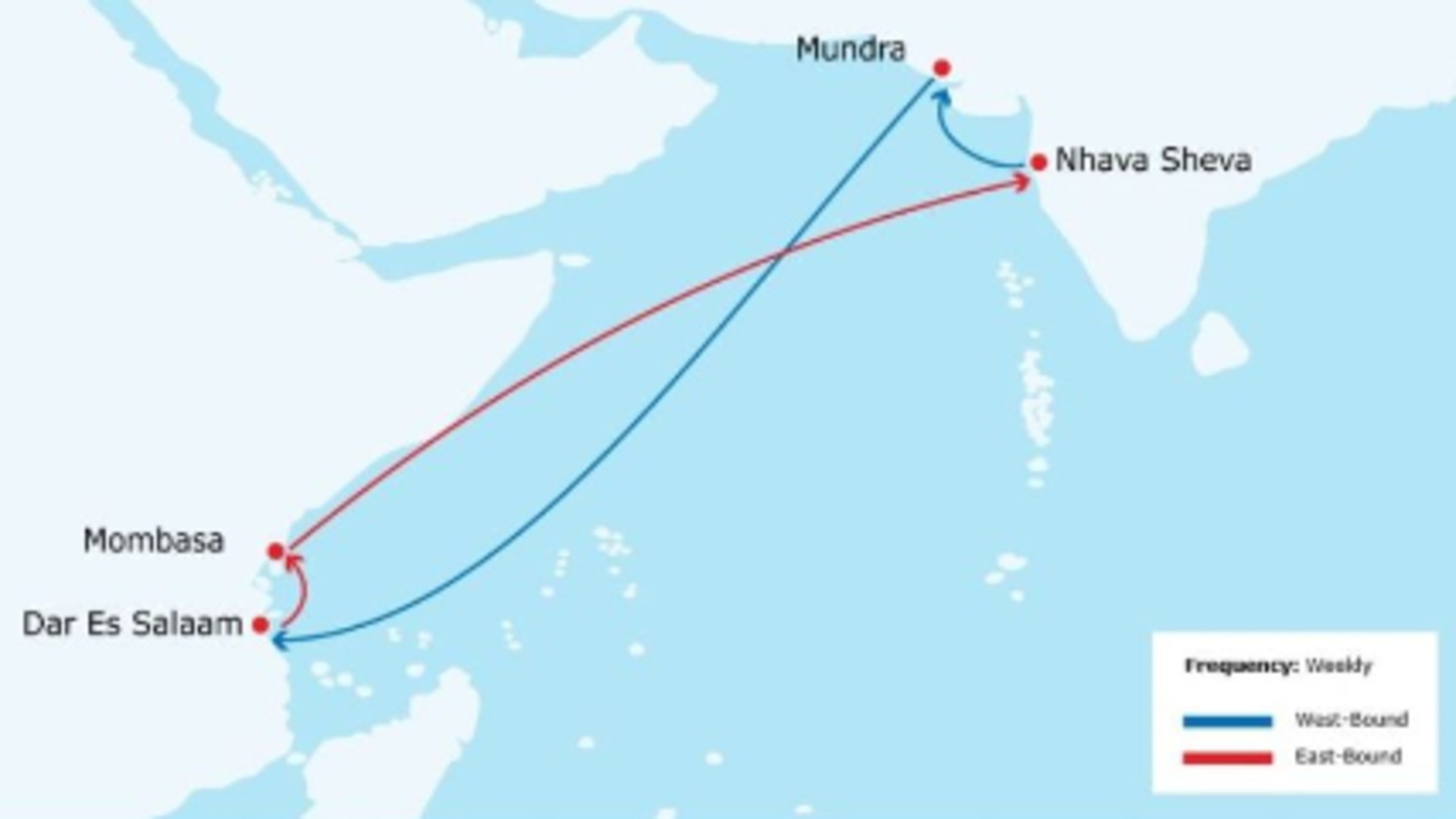
PIL strengthens India–East Africa connectivity with new Imara Express service
 Containers