


Another Chinese Chemical Shipping Company Moves into Singapore as GGT Launches Regional Platform
Genesis Global Tanker has formally launched its Singapore operations for liquid bulk chemical transportation, chartering and third-party commercial management, joining a growing group of Chinese chemical tanker companies shifting their commercial front lines into the global maritime hub.
Another Chinese chemical tanker operator has established an operating presence in Singapore as competition among China’s specialist liquid bulk carriers increasingly extends beyond the domestic coastal market.
Genesis Global Tanker, or GGT, formally launched its Singapore operation on 18 August, covering liquid bulk chemical transportation, vessel chartering and commercial management services for third-party shipowners.
The company said the Singapore platform would focus on cargo and partnership opportunities across the Asia-Pacific region. By placing chartering and commercial personnel closer to international chemical producers, commodity traders, shipbrokers and shipowners, GGT aims to accelerate market response, strengthen regional customer coverage and expand beyond its existing trading areas.
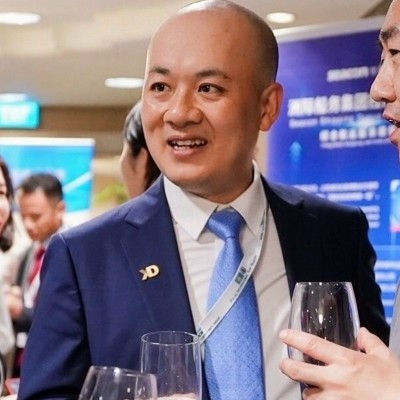
The company has appointed Tim Zhang as general manager of its Singapore operation. Zhang has more than 25 years of shipping experience and will oversee strategy, business development, fleet-related activities and regional operations.
Kahyong Ong has been named chartering manager, with responsibility for commercial negotiations and the expansion of GGT’s regional customer network. He has 15 years of experience in bulk chemical chartering and, according to GGT, has established long-standing relationships with domestic and international clients.
The new office is located at 320 Serangoon Road, #16-13 Centrium Square, Singapore 218108.
Legal entity established ahead of the operational launch
Public Singapore corporate records provide a more detailed timeline for the expansion.
Genesis Global Tanker (Singapore) Pte. Ltd. was legally incorporated on 14 March 2025 under Unique Entity Number 202511438E. It is registered as a private company limited by shares, with its principal activity listed as shipping operations, including the chartering of ships and boats with crew for freight transportation. Shipmanagement services are recorded as its secondary activity.
The 18 August 2026 announcement therefore marks the formal launch of the Singapore office and the commencement of its operating activities. The underlying Singapore legal entity had been incorporated around 17 months earlier.
GGT described the operation in its Chinese announcement as a “Singapore branch”. Legally, however, the entity is a Singapore-incorporated private limited company. “Singapore company”, “Singapore operation” or “Singapore platform” more accurately describes its corporate status.
The gap between incorporation and the launch of substantive operations is also consistent with the development path followed by several other Chinese tanker companies. Singapore entities are frequently registered well in advance of the recruitment of chartering personnel, the allocation of vessels and the formal transfer of commercial functions.
From Shenghang Times to Genesis Global Tanker
GGT’s current expansion follows nearly four years of restructuring and business development.
The company was originally established in October 2022 as Shenghang Times (Shanghai) International Shipping Co. Ltd., with Chinese-listed chemical tanker operator Nanjing Shenghang Shipping participating in the original joint venture structure.
Nanjing Shenghang withdrew from the joint venture in December 2024 as part of its own strategic adjustment. Ownership was subsequently consolidated under the original operating shareholders, while the Shanghai business was officially renamed Genesis Global Tanker International Shipping (Shanghai) Co. Ltd. in April 2025.
The Genesis Global Tanker brand was introduced across the company’s operations as the ownership and governance structure was reorganised.
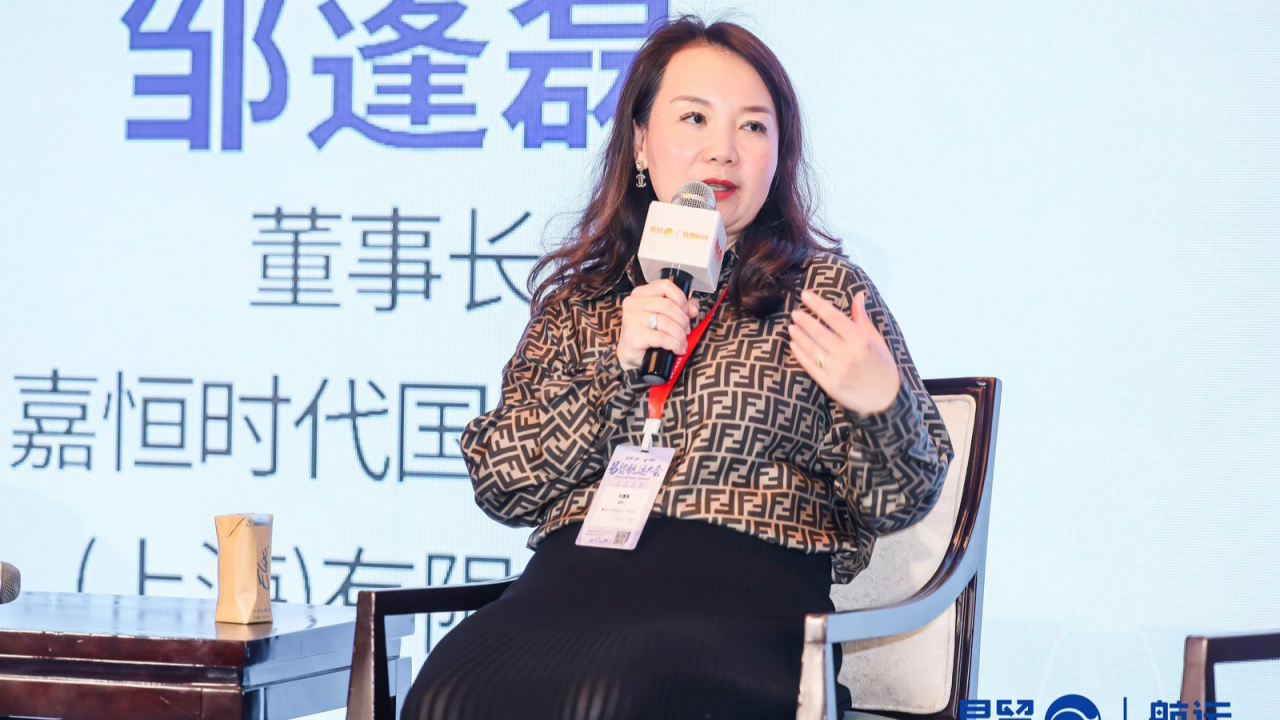
GGT chairwoman Zou Penglei previously told Xinde Marine News that she had spent a number of years living and working in Singapore. That experience provided the company with an existing understanding of the local maritime community before the new platform was formally launched.
The restructuring has produced a business model centred on three functions: technical management, commercial operations and maritime asset management.
Shanghai remains the group’s operating and technical base, while Hong Kong and other offshore entities can be used for vessel investment and asset arrangements. Singapore now places the commercial team closer to international cargo interests, traders, brokers and shipowners.
The Singapore office is expected to participate directly in cargo development, charter negotiations, freight assessments, regional fleet deployment and commercial management for third-party tonnage. The Shanghai operation will continue supporting shipmanagement, crewing, technical services and safety management.
This creates a structure combining China-based technical capabilities, an overseas commercial front office and offshore vessel-owning or investment entities.
The backgrounds of GGT’s two newly appointed Singapore executives indicate that the office is intended to perform active chartering and business development functions. Its commercial value will depend on whether the local team can enter the regular enquiry systems of international charterers, secure repeat cargoes and contracts of affreightment, and improve fleet utilisation through more efficient voyage combinations.
GGT targets a controlled fleet of 30 ships
Fleet expansion forms the second major component of GGT’s international strategy.
As of early 2026, the company said it controlled ten chemical tankers, including three chartered-in vessels operating mainly in Asian and Asia-Pacific–Middle East trades.
GGT has set a target of controlling 30 vessels by 2029. Its proposed expansion channels include newbuilding orders, time charters, bareboat charters, secondhand acquisitions and commercial cooperation with other shipowners.
The distinction between controlled and owned tonnage is significant. GGT’s 30-ship objective does not mean that every vessel will appear on its balance sheet. Combining owned, chartered and commercially managed vessels would allow the company to expand more quickly while limiting the capital and financing required for a fully owned fleet.
That approach still depends on cargo support, charterer approval and consistent safety performance. Chemical tanker capacity can be added through chartering or commercial management, but access to higher-value cargoes requires a proven operating record, appropriate vessel specifications and acceptance under the vetting systems of international energy and chemical groups.
In January 2026, GGT signed a contract with state-owned Haidong Shipyard for one firm plus one optional 13,800-dwt duplex stainless steel chemical tanker. Deliveries are scheduled to begin in mid-2027.
The company also has another stainless steel chemical tanker of the same size under construction elsewhere, with delivery expected in early 2027.
The 13,800-dwt design is intended to become one of GGT’s principal vessel classes for the Asia-Pacific and Middle East markets. It is equipped with 14 independent cargo tanks constructed from 2205 duplex stainless steel and is designed to carry multiple IMO Type II and Type III chemicals as well as refined petroleum products.
The size and tank configuration are suited to regional chemical trades characterised by multiple cargo grades, frequent port calls and comparatively small parcel sizes.
GGT also plans to develop a fleet of 25,900-dwt stainless steel chemical tankers. The larger ships would cover longer-haul routes and larger cargo parcels, complementing the more flexible 13,800-dwt regional vessels.
The company’s future fleet is therefore expected to centre on these two core sizes, using Asia-Pacific–Middle East trades as its initial foundation before expanding into longer-distance markets.
GGT has also said it holds more than 20 contracts of affreightment and maintains relationships with several major international energy and chemical groups. These figures and customer relationships remain company-reported, as GGT does not publish the detailed fleet and financial disclosures required of a listed company.
A full vessel list, including IMO numbers and the division between owned, bareboat-chartered, time-chartered and commercially managed tonnage, would provide a clearer measure of progress towards the 30-ship target.
Two Chinese chemical tanker platforms launched within 40 days
GGT’s operational launch came around 40 days after another Chinese chemical tanker company formally opened its Singapore office.
Nanjing Shenghang Shipping held the opening ceremony for Shenghang Shipping (Singapore) Pte. Ltd. on 9 July 2026. The legal entity had been incorporated on 15 November 2022, more than three years before the formal office opening.
At the end of 2025, Shenghang controlled 54 vessels totalling approximately 424,900 dwt. Its fleet included six internationally trading chemical tankers with an aggregate capacity of around 73,400 dwt.
The company’s overseas network is centred on Singapore and covers Northeast Asia, Southeast Asia and India, with services expanding towards the Middle East and Australia.
Shenghang said its Singapore platform would focus on developing higher-value chemical cargoes, opening new routes and markets, improving customer service and coordinating the regional deployment of its international fleet. The operation will also support the company’s longer-term ambition to build a fleet of 100 vessels.
Although Shenghang and GGT share a historical joint venture connection, they are now separate companies. Shenghang Shipping (Singapore) Pte. Ltd. is registered under UEN 202240680W, while Genesis Global Tanker (Singapore) Pte. Ltd. holds UEN 202511438E.
Their Singapore launches within a period of around 40 days underline how competition among Chinese specialist chemical tanker operators is shifting towards international chartering, cross-regional cargoes and higher-specification chemical transportation.
Xingtong Shipping began building its Singapore structure even earlier.
The Shanghai-listed company announced in September 2022 that it planned to invest up to $35m in a Singapore subsidiary. Xingtong Shipping (Singapore) Pte. Ltd. was incorporated on 25 November that year, with chartering and shipmanagement among its registered activities.
As of the end of June 2026, Xingtong operated 11 internationally trading vessels totalling 174,600 dwt. Its overall operating fleet comprised 40 vessels of 506,800 dwt, while another 13 vessels of 219,700 dwt were under construction.
In June 2026, wholly owned Xingtong Investment (Singapore) signed contracts with three Chinese shipyards for four 13,000-dwt stainless steel chemical tankers. The contracts were valued at a combined RMB697.3m, with deliveries scheduled between late 2027 and the first half of 2028.
Singapore now performs several functions within Xingtong’s structure, including chartering, shipmanagement, vessel investment and the establishment of single-ship owning entities.
SC Shipping provides the most mature Chinese model
SC Shipping, part of China’s Junzheng logistics group, provides the most developed example of a Chinese specialist chemical tanker company using Singapore as an international operating centre.
The company identifies 2016 as the year its SC Shipping Singapore platform was established and the point at which it formally expanded into global trading.
Singapore has since become the global operations centre for SC Shipping’s internationally trading fleet, with separate regional and deepsea teams.
The regional team operates 16 chemical tankers of between 9,000 and 22,000 dwt, totalling close to 300,000 dwt. These vessels trade between the Far East, Southeast Asia, India and the Middle East.
The deepsea team operates eight modern stainless steel chemical tankers of between 33,000 and 40,000 dwt. The vessels serve transpacific and transatlantic routes covering the Americas, Europe and Africa and carry higher-specification cargoes for international chemical groups.
SC Shipping currently says it controls 74 liquid chemical tankers ranging from 3,000 to 40,000 dwt, with combined capacity of 1.1183m dwt and annual transported volumes exceeding 10m tonnes.
Its development demonstrates how a Singapore chartering office can evolve into the central operating platform for a global fleet. The Singapore team manages cargoes, freight markets, routes and customer relationships, while China-based operations provide shipmanagement, crew and technical capabilities.
GGT, Xingtong and Shenghang are developing structures that increasingly resemble elements of this model.
Primeco Navigation represents another China-linked example. Established in 2019 as a joint venture between Singapore-based PrimCrew Global and China’s Zhoushan Dashenzhou Shipbuilding, Primeco operates through a network covering Singapore, Shanghai and Qingdao.
Its services include commercial management, vessel operations, technical management and asset management. The company took delivery of its first 13,000-dwt stainless steel chemical tanker, Prime Fortune, in February 2026, with two sisterships also progressing.
Primeco’s model combines Chinese shipbuilding, technical and seafarer resources with a Singapore commercial and asset platform, adding another structure to the growing international chemical tanker market.
Chinese owners push closer to global chemical cargoes
The international expansion of Chinese chemical tanker companies is developing against a tightly regulated domestic market and the increasingly global footprint of China’s chemical industry.
According to China’s Ministry of Transport, the country’s interprovincial coastal chemical tanker fleet stood at 295 vessels and 1.658m dwt at the end of 2025. Twenty-eight vessels of 166,000 dwt entered the market during the year, while 24 ships of 110,000 dwt were withdrawn, producing a net increase of only four vessels and 57,000 dwt.
Capacity in China’s domestic interprovincial chemical tanker market remains subject to annual reviews and macro-level controls. Growth opportunities for leading operators are therefore increasingly linked to internationally trading fleets and overseas cargo networks.
Chinese chemical producers, meanwhile, have expanded their raw material procurement, production investment and product sales across Southeast Asia, India, the Middle East and Europe.
Shipping companies seeking to follow those cargo flows must build commercial teams where chartering decisions are made. They must also meet international requirements covering TMSA and CDI assessments, vessel inspections, crew competence, emergency response and oil-major vetting.
Singapore provides a highly concentrated maritime and chemical ecosystem for this expansion. The country is connected to more than 600 ports worldwide and is home to over 200 international shipping groups, supported by a dense network of shipbrokers, banks, insurers, maritime law firms, shipmanagers and fuel suppliers.
Jurong Island also hosts more than 100 global energy and chemical companies, giving tanker operators direct access to cargo interests, traders and regional supply chains.
Singapore’s maritime incentives place an emphasis on substantive local operations. Applicants must demonstrate business spending, professional employment, additional activities and strategic or commercial decision-making functions in Singapore.
An incorporated address alone therefore provides little competitive advantage. The ability to recruit experienced chartering personnel, secure recurring cargoes, make commercial decisions and manage international tonnage determines whether a Singapore platform develops into a sustainable operating business.
Internationalisation also carries higher costs.
In 2025, Xingtong generated approximately RMB714m in overseas revenue, an increase of 19.05% and equivalent to around 43.8% of its total revenue. Its net profit nevertheless declined by 22.95% that year.
Shenghang generated approximately RMB608m in overseas revenue, representing around 42.1% of its total, but the figure fell by 7.27% year on year and net profit declined by 20.8%.
International fleets face higher port, crewing, insurance, financing, compliance, chartering and foreign-exchange expenses. Establishing new routes and gaining customer approvals can also require several years of investment.
GGT’s Singapore launch places the company in a market where SC Shipping, Xingtong, Shenghang and other internationally focused chemical tanker operators are already competing for cargoes and fleet scale.
The company has set out its preferred vessel sizes, regional focus and organisational structure. Its next phase will be measured by the cargo volumes secured by the Singapore team, the employment of its 2027 newbuildings, the expansion of international charterer approvals and the revenue generated through third-party commercial management.
Moving from ten controlled vessels towards a target of 30 would represent a substantial increase in scale. The performance of GGT’s Singapore platform will play a central role in determining how quickly that ambition can be converted into an internationally competitive chemical tanker fleet.

READ MORE
 Sustainability
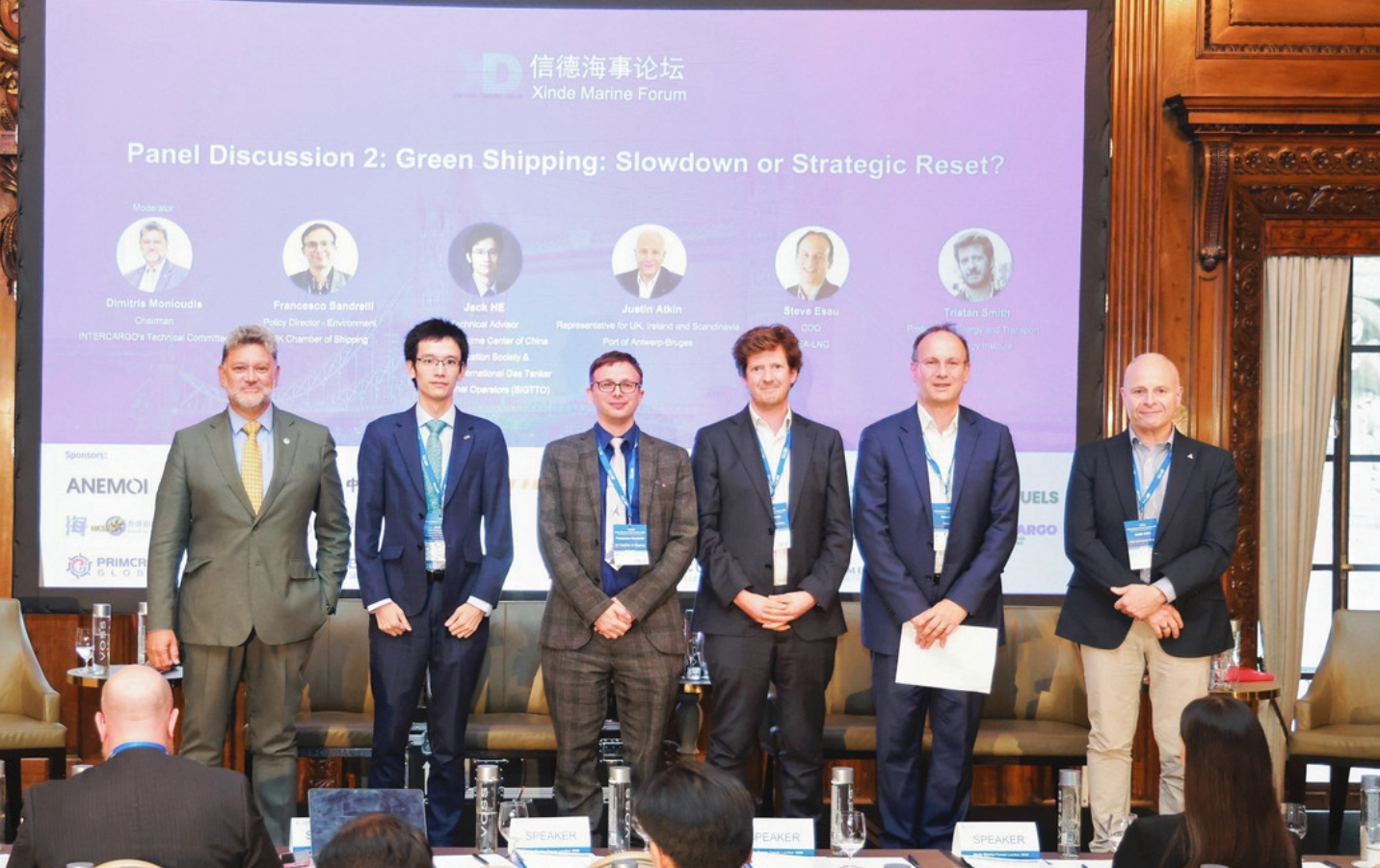
Xinde Marine Forum London 2026: Green Shipping Enters a Strategic Reset
 Sustainability
Shipping Has a Net-Zero Target — but Still Lacks the Rules to Deliver It
 Sustainability
Chimbusco completes first ammonia bunkering operation
 Sustainability
WMMF 2026 Promotional Film Debuts in London
 Sustainability
324 days ahead of schedule — another milestone for China’s shipbuilding industry
 Sustainability
The Next Shipping Race Will Be About Who Can Burn Less Fuel
 Sustainability
World’s First Wind-Assisted LNG Carrier Named, Featuring Two 49-Metre Hard Sails
 Sustainability
World’s 1st Operational Ammonia Bunkering Vessel Enters Service,Backed by CMB.TECH
 Sustainability
At SMM Hamburg I Saw Seven Changes Reshaping Global Shipping
 Sustainability