


From Coastal Carrier to Global Operator: Zhejiang Shipping Group’s Decade of Reinvention
.
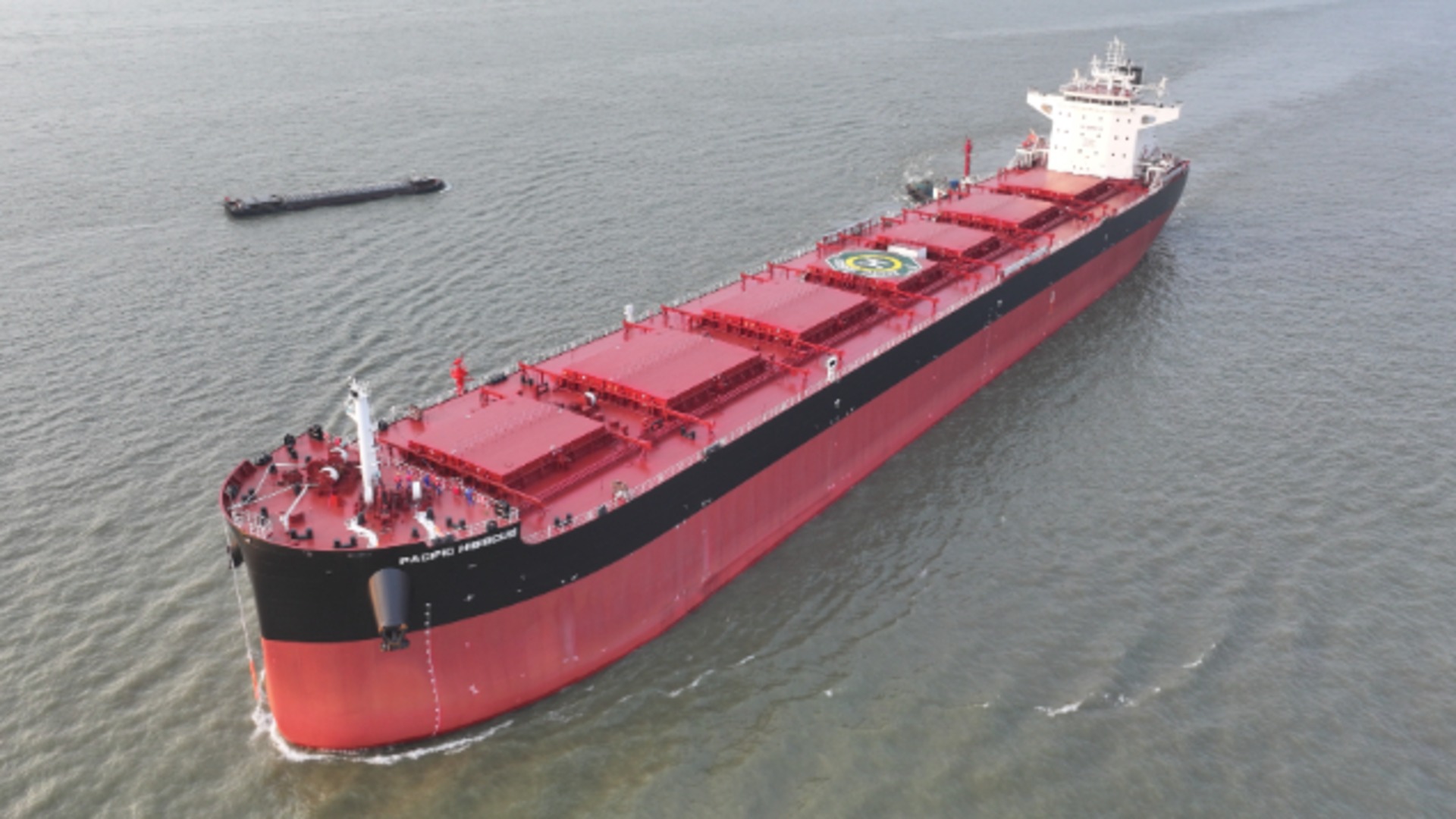

Ten years after restructuring, Zhejiang Shipping Group is moving beyond its domestic dry bulk roots. A larger controlled fleet, overseas subsidiaries in Hong Kong and Singapore, Newcastlemax exposure and a new MR tanker platform are reshaping the company’s international profile.
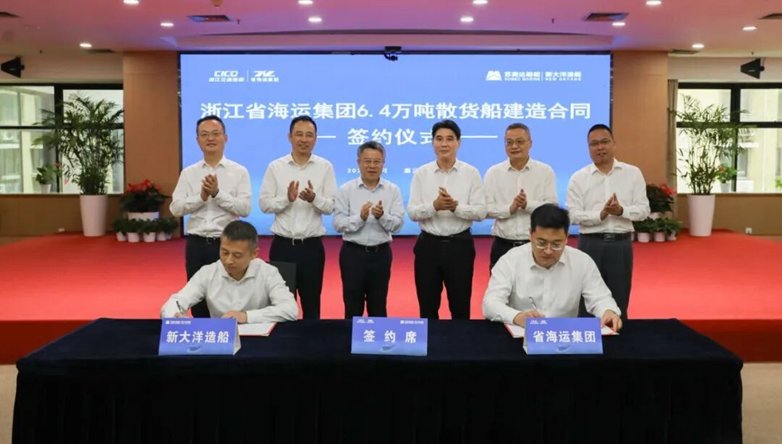
On 14 July, Zhejiang Shipping Group signed contracts with SUMEC Marine’s New Dayang Shipbuilding for two 64,000-dwt Ultramax bulk carriers, adding another layer to a fleet expansion programme that has accelerated in 2026.
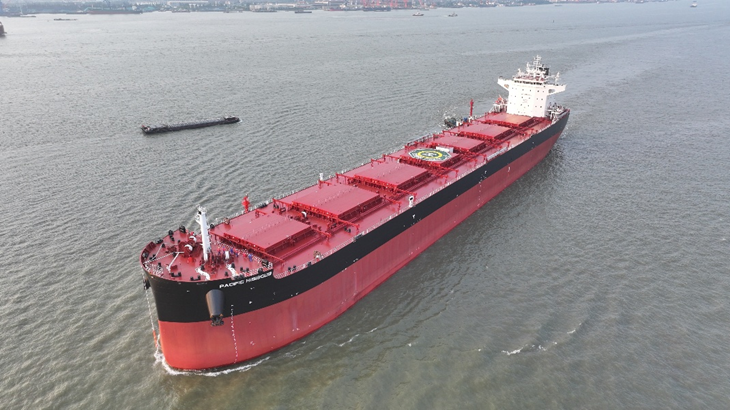
Earlier in the year, the Hangzhou-based shipowner took over its first Newcastlemax bulk carrier, the 206,392-dwt ZH Dampier. In February, its Singapore subsidiary accepted delivery of Pacific Gemini, the group’s second approximately 50,000-dwt MR product and chemical tanker.
The three developments point in the same direction. Zhejiang Shipping is renewing its medium-sized bulker fleet, entering the large dry bulk segment, expanding its overseas operating presence and establishing a foothold in liquid bulk shipping.
That is a markedly different position from a decade ago, when the company was navigating one of the deepest downturns in modern dry bulk shipping and restructuring its fleet and operating model.
A broader operating platform after restructuring
Zhejiang Shipping Group traces its history to 1950 and became a first-tier subsidiary of Zhejiang Communications Investment Group in 2001. Its activities include domestic and international shipping, freight forwarding, ship agency services, crew deployment and maritime training.
The company underwent a major restructuring in 2016. The process included changes to its fleet structure, staffing, cost base and operating model. Zhejiang Shipping subsequently returned to sustained profitability and gradually rebuilt its shipping platform.
By the end of 2025, the company owned 18 vessels totalling approximately 910,000 dwt and controlled another 33 vessels, totalling 2.49m dwt, through operating lease arrangements. Its combined owned and controlled fleet therefore reached 51 vessels and about 3.4m dwt.
The distinction between owned and controlled tonnage is important. Zhejiang Shipping is no longer relying solely on direct vessel ownership to build scale. It combines owned vessels with leased and commercially controlled tonnage, allowing the company to expand its operating footprint while retaining greater flexibility over capital deployment.
For a capital-intensive shipping business, this model can reduce the need to fund every vessel through an outright acquisition. It also allows fleet capacity to be adjusted in response to cargo demand, charter rates, asset values and market conditions.
The model places greater responsibility on commercial management. Zhejiang Shipping must secure sufficient cargo coverage, maintain vessel utilisation and ensure that lease commitments generate acceptable returns through different stages of the freight cycle.
Hong Kong and Singapore anchor the overseas expansion
Zhejiang Shipping’s internationalisation is supported by two overseas subsidiaries: one in Hong Kong and the other in Singapore.
The Hong Kong platform gave the group an early offshore base for international fleet ownership, chartering and commercial operations. Hong Kong remains an important shipping and financial centre, offering access to ship finance, insurance, legal services, brokers and international counterparties.
The Singapore subsidiary represents a more recent and more expansive phase of the group’s overseas development.
Zhejiang Shipping (Singapore) Pte. Ltd. formally opened in 2023. The company was established to expand the group’s international shipping activities, strengthen its chartering business, develop overseas customers and build closer links with global shipping and commodity markets.
Singapore provides a natural location for that strategy. It is one of the world’s largest maritime centres and a major hub for shipowners, commodity traders, charterers, banks, insurers, brokers, classification societies and marine service providers.
The subsidiary has become involved in international chartering and fleet operation, rather than functioning solely as a representative office. It gives Zhejiang Shipping direct access to third-party owners, traders and cargo interests outside China.
The Hong Kong and Singapore companies serve related but distinct roles. Hong Kong provides an established offshore structure with access to capital and professional maritime services. Singapore is developing into the group’s principal international commercial hub, covering chartering, customer development, vessel operation and new shipping segments.
Together, the two platforms give Zhejiang Shipping a broader presence across Asia’s international maritime network.
Dry bulk remains the core, but the fleet is moving up in scale
Dry bulk remains Zhejiang Shipping’s main business.
According to Clarksons fleet data used in the original analysis, the group’s bulk carriers cover several size categories, including approximately 35,000 dwt, 48,000 dwt, 54,000 to 57,000 dwt, 63,000 dwt and more than 200,000 dwt.
This range gives the company exposure to coastal trades, regional cargo movements and deep-sea commodity transportation.
The addition of ZH Dampier marked a significant step up in scale.
Built by Qingdao Yangfan in 2019, the vessel has a deadweight capacity of 206,392 tonnes, an overall length of nearly 300 metres and a beam of 50 metres. It is Zhejiang Shipping’s first Newcastlemax and gives the company direct access to large-volume iron ore, bauxite and other long-haul commodity trades.
Operating a Newcastlemax requires a different commercial and technical approach from managing smaller coastal bulkers. Cargo parcels are larger, voyage durations are longer and earnings are more closely linked to global commodity flows, port restrictions, tonne-mile demand and the Capesize freight market.
The newly contracted 64,000-dwt Ultramaxes address a different part of the portfolio.
Ultramaxes offer greater operational flexibility. They can carry coal, grain, ores, steel products, fertilisers and other dry bulk or breakbulk cargoes. Their size and geared configuration also allow them to serve a wider range of ports than Newcastlemax or Capesize vessels.
For Zhejiang Shipping, the vessels can support both fleet renewal and international expansion. They are suitable for domestic and regional trades, while also being standard tonnage in the global charter market.
The combination of Newcastlemax and Ultramax tonnage broadens the group’s commercial options. Larger ships provide exposure to high-volume long-haul commodity trades, while Ultramaxes offer cargo and geographical flexibility across a wider range of markets.
Zhejiang Shipping says its business coverage now extends from China’s coastal waters, the lower Yangtze River and the Pearl River Delta to Southeast Asia, the Gulf, Australasia, Africa, the Americas and Europe.
As a tramp shipping operator, these should be understood as trading regions rather than fixed liner routes. Vessel deployment is determined by cargo contracts, chartering opportunities, port conditions and vessel positions.
The company’s internationalisation is therefore being built around global cargo access, internationally trading vessels and a growing network of charterers, traders and shipowners.
Singapore platform opens the door to tankers
The move into MR product and chemical tankers is one of the clearest signs that Zhejiang Shipping’s overseas strategy is extending beyond dry bulk.
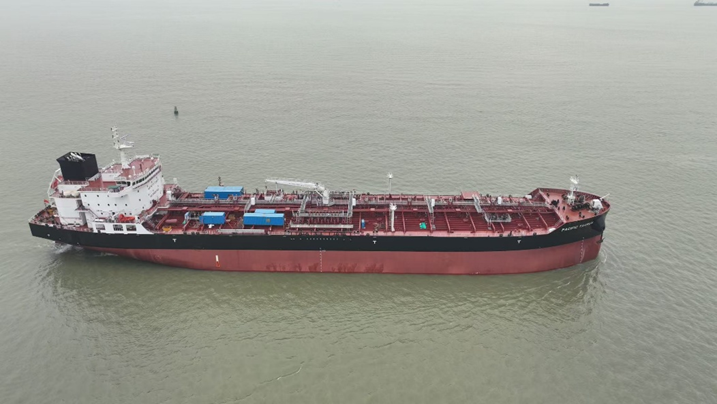
The group took delivery of its first approximately 50,000-dwt MR tanker, Pacific Taurus, in September 2025. The sister vessel Pacific Gemini followed in February 2026.
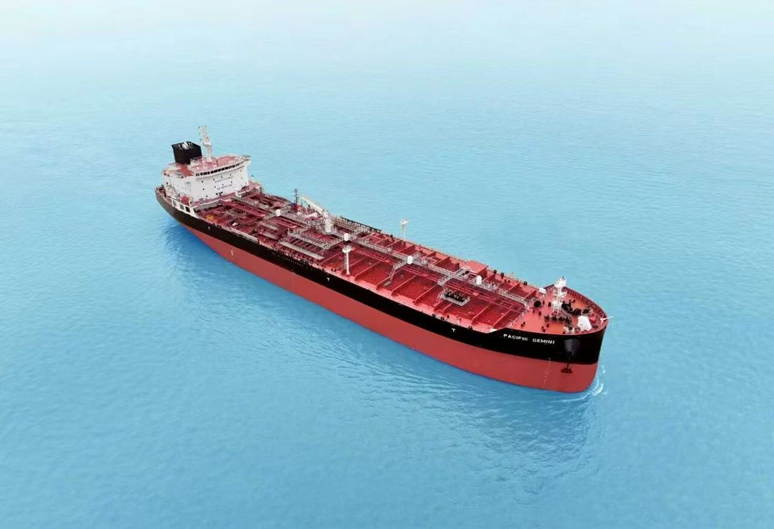
The vessels are operated through the Singapore platform and can carry clean petroleum products, vegetable oils and a range of chemical cargoes. Pacific Gemini has a full-load deadweight of 49,999 tonnes.
Two ships do not yet constitute a large tanker business. They do, however, establish Zhejiang Shipping’s presence in a second major shipping segment and connect the company with a different group of customers, including energy companies, commodity traders, chemical producers and specialist tanker charterers.
The move also increases operational complexity.
Product and chemical tanker trading requires cargo compatibility management, tank-cleaning expertise, coating control, stronger safety procedures and closer attention to charterer vetting. International oil and chemical companies often impose technical and compliance requirements that go beyond basic statutory and class standards.
Zhejiang Shipping’s ability to turn the two MRs into a credible specialist platform will therefore depend on more than fleet numbers. It will require experienced personnel, reliable technical management, access to suitable cargoes and acceptance by established international charterers.
The investment is strategically significant even at its current scale. It reduces the group’s reliance on dry bulk and allows the Singapore subsidiary to participate in both dry and liquid commodity flows.
It also demonstrates that Singapore is becoming an asset-operating and revenue-generating centre for the group.
A very different dry bulk market from 2016
The current fleet expansion is taking place against a substantially different freight market backdrop from the conditions that prevailed during the restructuring period.
In 2016, the international dry bulk market was at a historic low. The Baltic Dry Index averaged only 676 points that year, reflecting severe tonnage oversupply, weak earnings and intense competition for cargoes.
The market subsequently recovered, although it remained highly cyclical. The BDI annual average climbed to 2,931 points in 2021. Later corrections did not return the market to the extreme conditions seen in 2016.
The BDI does not measure China’s domestic coastal freight market and should not be treated as a direct indicator of earnings across Zhejiang Shipping’s entire fleet.
Its relevance to the group has nevertheless increased.
A decade ago, Zhejiang Shipping’s exposure was more heavily concentrated in Chinese coastal dry bulk. Today, the company operates Newcastlemax tonnage, is adding internationally tradable Ultramaxes and has established overseas chartering operations in Hong Kong and Singapore.
Its commercial performance is therefore increasingly connected to global dry bulk benchmarks, international time-charter rates and long-haul commodity trades.
China’s coastal market remains important and continues to respond to weather, inventories, industrial demand, cargo availability and domestic vessel supply. Zhejiang Shipping, however, now has access to a broader set of markets.
Its fleet can participate in coastal cargoes, regional Asian trades, deep-sea dry bulk and MR tanker employment.
This wider operating range does not remove shipping cyclicality. It gives management more options when allocating ships and capital across different cargoes, regions and freight markets.
The next phase is about returns, not vessel numbers
The accelerated fleet activity in 2026 points to a coordinated effort to renew medium-sized dry bulk tonnage, add larger ships and build a new liquid bulk business.
The next test will be commercial execution.
For a restructured shipowner, success cannot be measured only by the number of vessels or total deadweight under control. The more important questions concern cargo coverage, vessel utilisation, chartering returns and the earnings quality generated by overseas operations.
The Newcastlemax needs access to major-volume commodity trades and suitable port infrastructure. The Ultramaxes need a balanced cargo book across domestic, regional and international markets. The MR tankers need technical credibility and acceptance from high-quality charterers.
Internationalisation should also be judged by customer mix and recurring revenue.
Opening subsidiaries in Hong Kong and Singapore gives Zhejiang Shipping a physical presence in two major Asian maritime centres. The harder task is to turn those platforms into durable commercial relationships with global traders, cargo owners, financial institutions and international shipowners.
The support of Zhejiang Communications Investment Group gives the company a strong shareholder and access to a wider transportation, logistics and financial ecosystem. That background can provide strategic stability, but it does not guarantee profitable shipping operations.
The value of the wider group will ultimately be reflected in financing terms, cargo cooperation, risk management and the returns generated by individual vessels and business lines.
From provincial shipowner to international shipping platform
A decade after restructuring, Zhejiang Shipping Group has moved beyond the recovery stage.
Dry bulk remains the foundation of the company, but its business is no longer confined to domestic coastal transportation. Its controlled fleet has expanded, its vessel mix now stretches from medium-sized bulkers to Newcastlemax tonnage, and its Singapore subsidiary has taken the group into the MR product and chemical tanker market.
The Hong Kong and Singapore companies are central to this transition.
Hong Kong provided Zhejiang Shipping with an early offshore platform for international fleet and chartering activities. Singapore is developing into a broader commercial hub covering chartering, vessel operation, customer development and new shipping segments.
The company is beginning to resemble an internationally active shipping platform rather than a purely provincial coastal carrier.
The outlook is stronger than it was ten years ago, but the standard of execution is also higher. Larger vessels, overseas operations and tankers provide access to new markets while introducing greater commercial, technical and compliance complexity.
Zhejiang Shipping’s next stage will be defined by whether it can transform controlled tonnage into stable earnings, overseas subsidiaries into lasting customer relationships and fleet diversification into stronger returns across shipping cycles.
The fleet is already moving further into international waters. The more important question is whether Zhejiang Shipping can turn that geographical expansion into a durable global shipping business.

READ MORE
 Dry Cargo
Sell Old, Buy Cape: United Maritime Reshapes Its Fleet and Returns to Profit
 Dry Cargo
$75m for Two Six-Year-Old Bulkers: Is “Counter-Cyclical King” Oldendorff Cashing Out at the Top?
 Dry Cargo
Dry Bulk Asset Value Bubble?
 Dry Cargo
Star Bulk Walks Away From $470.5m Genco Fleet Deal, but Diana’s Takeover Bid Remains Alive
 Dry Cargo
Nearly $1 Billion: NYK Moves to Privatise NS United as Dry Bulk Consolidation Accelerates
 Dry Cargo
CMES Is Poised to Secure a Major 25-Year Simandou Shipping Contract
 Dry Cargo
26-Year-Old PCTC Fetches $42 Million at Auction, Highlighting Tight Vehicle Carrier Market
 Dry Cargo
NYK Takes Full Control of Saga Welco, Expanding Presence in Specialized Open-Hatch Shipping
 Dry Cargo
Hormuz Crisis Forces Index Reform as Baltic Exchange Drafts Back-Up Plan for Middle East Gulf Tanker Rates
 Dry Cargo