


COSCO SHIPPING Holdings is further expanding the regional shipping network centred on the Port of Chancay in Peru.
On 12 July, COSCO SHIPPING officially launched the CHX3, or Chancay Express Service 3, establishing a regular weekly connection between Paita and Chancay in Peru and Caldera in Costa Rica.
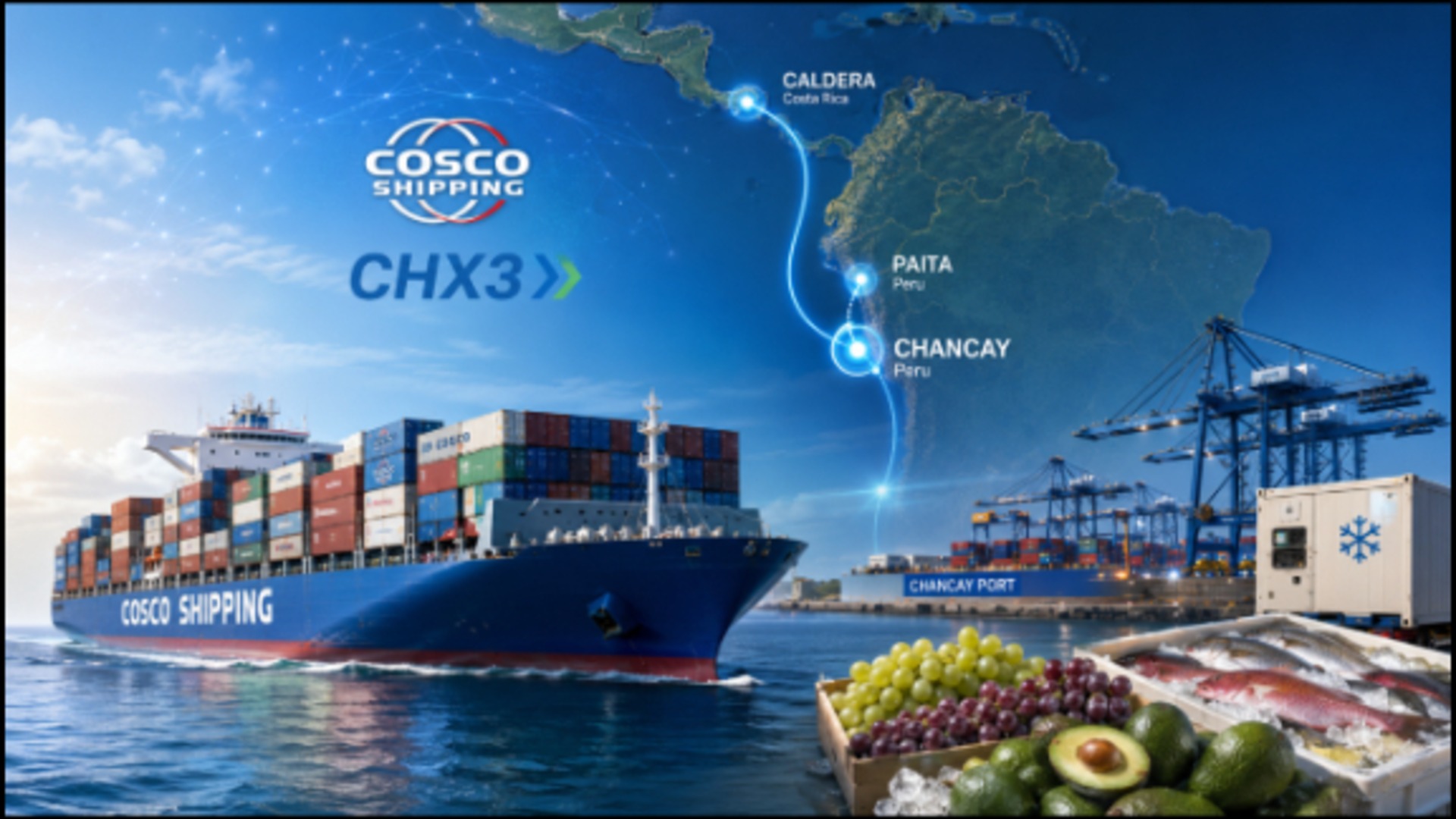

With Chancay serving as the central transshipment hub, the new feeder service links northern Peru’s key container and cold-chain gateway of Paita with Caldera on Costa Rica’s Pacific coast. Cargo from northern Peru and Costa Rica can now be consolidated at Chancay before connecting with COSCO SHIPPING’s trans-Pacific services to China and other Asian markets.
The launch of CHX3 expands Chancay’s regional reach and gives exporters in Peru and Costa Rica access to a more stable and efficient logistics route to Asia.
From direct Chancay-China sailings to a growing feeder network along the west coast of South America and into Central America, COSCO SHIPPING Holdings is steadily converting Chancay’s deepwater capacity, mainline connectivity and transshipment potential into a broader shipping and supply chain platform.
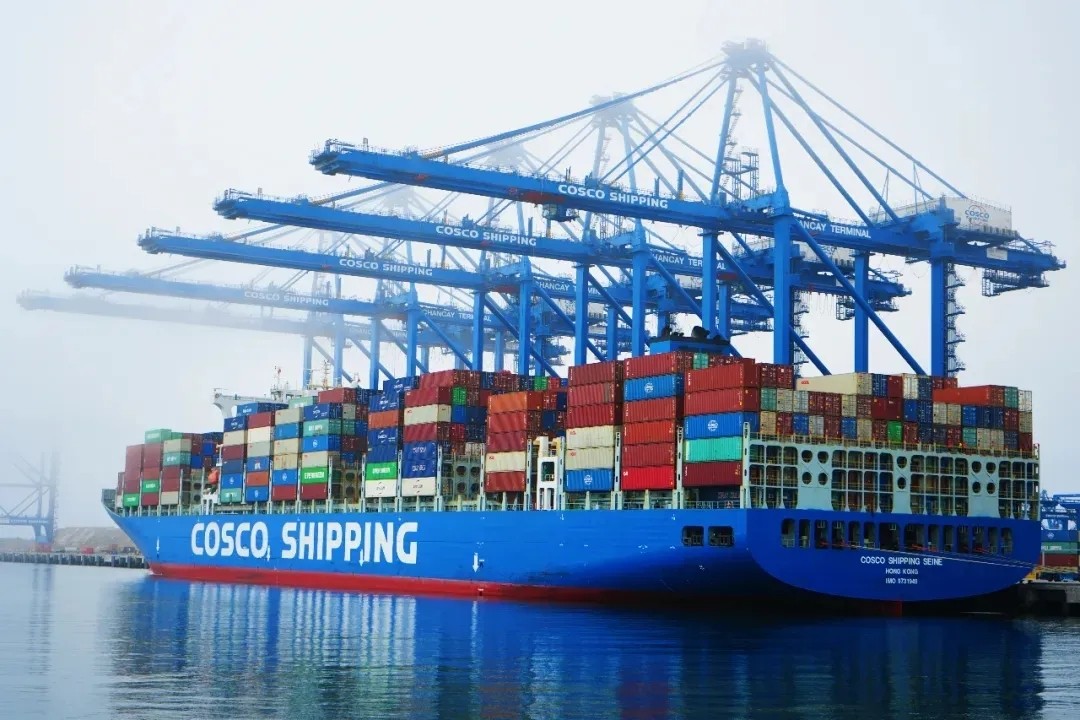
A new route for northern Peru’s agricultural exports
Northern Peru’s industrial and agricultural hinterland is expected to be one of the main beneficiaries of the new service.
Located in the Piura region, the Port of Paita is an important container and refrigerated cargo hub serving production centres including Piura, Lambayeque and Cajamarca. Its surrounding hinterland supports a large number of agricultural, seafood processing, mining, textile and foreign trade businesses.
Northern Peru is a major production area for fruit and seafood, including avocados, grapes, mangoes, blueberries and a range of aquatic products. These cargoes require reliable sailing schedules, efficient transshipment, strong cold-chain support and strict transit-time control.
With the launch of CHX3, exporters can load cargo at Paita, ship directly to Chancay and connect seamlessly with trans-Pacific services bound for China and the wider Asian market.
The new routing can reduce reliance on complex overland transfers and multiple transshipment points. It also has the potential to shorten transit times and lower overall costs related to inland transport, warehousing, container detention and cargo damage.
A Peruvian fruit exporter cited by COSCO SHIPPING Holdings said the direct Paita-Chancay connection and onward access to trans-Pacific services would shorten total transport time, reduce cargo-loss risks, lower multi-stage transshipment costs and open wider access to Asian markets.
Regular weekly sailings are particularly valuable for seasonal agricultural exports. During peak harvest periods, demand for refrigerated containers, vessel space and predictable shipping schedules can rise sharply.
CHX3 gives exporters greater visibility when planning shipments and provides COSCO SHIPPING Holdings with a stronger base for coordinating reefer equipment, rapid transshipment, warehousing and other end-to-end logistics services.
As Peruvian agricultural exports continue to expand into China and other Asian markets, Chancay is expected to strengthen its role as a regional gateway for refrigerated and time-sensitive cargoes.
Chancay’s network reaches Costa Rica
At the northern end of the CHX3 rotation, the service connects with the Port of Caldera in Costa Rica.
Caldera is one of Costa Rica’s principal Pacific ports and an important maritime gateway for trade with Asia. It handles containers, agricultural products, vehicles, grain, fertilisers and general cargo.
Through the new feeder service, cargo moving through Caldera can connect with China and other Asian destinations via Chancay, giving Costa Rican importers and exporters an additional transshipment option.
COSCO SHIPPING Holdings said the new routing would improve overall logistics efficiency, strengthen schedule and delivery reliability, and enhance service quality for customers.
From a regional network perspective, CHX3 links Chancay on the west coast of South America with northern Peru and the Pacific coast of Central America. This further strengthens the port’s ability to attract and distribute cargo from a broader geographical area.
Paita brings northern Peruvian agricultural and industrial cargo into the network, while Caldera extends Chancay’s reach into Central America.
As more regional feeder services are developed, Chancay will be able to attract a wider range of cargoes for consolidation, transshipment and distribution.
This interaction between mainline and feeder services is central to the development of an international hub port. Long-haul services connect major markets across the Pacific, while feeder routes collect cargo from regional ports and industrial hinterlands.
The launch of CHX3 therefore strengthens Chancay’s role as a cargo consolidation and distribution point within COSCO SHIPPING’s trans-Pacific network.
Chancay enters a new phase of network development
Since officially opening in November 2024, the Port of Chancay has continued to expand its shipping network and supply chain service capabilities.
Supported by deepwater infrastructure and COSCO SHIPPING’s global liner network, the port has launched several direct services to China while gradually building feeder links to other ports along the west coast of South America.
Chancay has significantly improved maritime connectivity between Peru, the wider west coast of South America and Asian markets.
As direct and transshipment services continue to increase, the port is developing from a national gateway for Peruvian trade into a regional shipping hub connecting Asia, South America’s Pacific coast and Central America.
COSCO SHIPPING Holdings has previously outlined plans to develop Chancay under an integrated “hub + corridor + network” strategy, supported by a combination of mainline and feeder services, inland transport connections and broad regional coverage.
CHX3 is the latest implementation of that strategy.
From direct China-Chancay services to feeder connections with Paita, Caldera and other regional ports, COSCO SHIPPING Holdings is increasing service frequency, geographical reach and transshipment capability around Chancay.
Modern port infrastructure gives Chancay the capacity to handle large vessels and high-volume cargo operations. Stable and increasingly dense liner services allow the port to extend its cargo hinterland and market coverage.
COSCO SHIPPING Holdings’ access to liner shipping, terminal operations and supply chain resources gives it the ability to coordinate trans-Pacific mainline services, regional feeder routes, transshipment operations and inland logistics within one network.
As CHX3 enters service, Chancay’s hub role is expected to become more prominent.
Linking China’s inland manufacturing centres with Latin American feeder networks
COSCO SHIPPING Holdings is developing supply chain connections at both ends of the Chancay corridor.
In China, the company has launched services including the Wuhan-Chancay Asia–Latin America land-sea corridor and a Chongqing-Chancay rail-sea intermodal service under a single transport document.
These products connect automotive, chemical and manufacturing cargo from inland Chinese cities with trans-Pacific services to Chancay.
In February 2025, a Wuhan-Chancay train departed Wuhan carrying vehicles and connected with a COSCO SHIPPING trans-Pacific service bound for Peru.
The subsequent launch of Chongqing-Chancay rail-sea intermodal services further strengthened logistics links between western China’s industrial base and Latin American markets, providing Chinese automotive and manufacturing companies with an additional export channel.
At the Latin American end, feeder services such as CHX3 connect Paita, Caldera and other regional ports with the Chancay hub.
Agricultural products, seafood, minerals and industrial cargo from Peru, Costa Rica and other markets along the Pacific coast can be consolidated at Chancay before moving to China and Asia.
In the opposite direction, Chinese vehicles, machinery, home appliances, telecommunications equipment and other industrial products can use Chancay as a gateway into Peru and neighbouring markets.
A two-way logistics network is therefore taking shape.
Chinese inland cities connect with ocean services through railways, roads, river transport and coastal ports. Latin American production centres connect with Chancay through feeder services and inland logistics. Trans-Pacific mainline services link both ends.
This combination of domestic cargo consolidation, ocean mainline transport, regional feeder services and local distribution can improve efficiency, provide customers with more options and strengthen the resilience and reach of the Asia–Latin America trade corridor.
Cold-chain cargo, minerals and Chinese manufacturing support network growth
As Chancay’s route network expands, its cargo base is also becoming more diverse.
Agricultural and refrigerated products represent one of the port’s strongest growth opportunities.
Peru and other countries along the west coast of South America have abundant agricultural and seafood resources, while China and other Asian markets generate strong demand for high-quality fresh produce.
Reliable direct and feeder services can shorten delivery times, reduce cargo losses and improve the competitiveness of South American fresh products in Asian markets.
By connecting Paita, CHX3 expands Chancay’s access to northern Peru’s agricultural production areas and creates opportunities for more refrigerated cargo to move through the port.
Minerals and bulk commodities are another important part of Peru’s foreign trade. The country has substantial copper, zinc and other mineral resources, and producers require stable and efficient port and shipping services.
COSCO SHIPPING Holdings said it would continue to develop tailored services for different cargo profiles, including large-scale mineral shipments and seasonal agricultural exports.
Chinese manufacturing and vehicle exports provide another source of two-way cargo growth.
As Chinese vehicles, machinery, household appliances and new-energy products gain market share across Latin America, Chancay is becoming an increasingly important entry point for Chinese manufactured goods on the west coast of South America.
The Wuhan and Chongqing logistics products already provide more efficient routes for automotive and industrial cargo moving from inland China to Peru.
Peruvian and Latin American agricultural products and minerals moving eastbound to Asia, together with Chinese vehicles and manufactured goods moving westbound, can support a more diversified and balanced cargo structure.
A stronger two-way cargo base will also improve the long-term commercial sustainability of the shipping network.
From port hub to integrated supply chain platform
Chancay’s role is extending beyond port infrastructure and ocean transport.
Alongside its route development, COSCO SHIPPING Holdings has introduced digital documentation, blockchain-based electronic bills of lading, delayed transshipment services, rail-sea intermodal products and tailored logistics solutions for specific industries.
These services can help integrate port operations, ocean shipping, regional feeder services, inland logistics, warehousing, documentation and customer support.
For agricultural exporters, COSCO SHIPPING Holdings can build transport plans around harvest seasons, refrigerated container supply and transshipment schedules.
For mining customers, capacity and port services can be organised around bulk shipment requirements.
For Chinese automotive and manufacturing customers, rail, ocean and local distribution can be combined into end-to-end logistics products.
COSCO SHIPPING Holdings said it would continue to strengthen Chancay’s role within long-term China-Peru trade development, improve full-chain supporting services and respond more precisely to the different requirements of agricultural, mining and industrial customers.
Through stable schedules and integrated services, the company aims to support local exporters, strengthen trade-corridor resilience and deepen economic connectivity between China and Latin America.
CHX3 therefore represents both an expansion of Chancay’s route network and a further extension of COSCO SHIPPING Holdings’ supply chain services into northern Peru and Central America.
Chancay’s regional hub value continues to grow
The launch of CHX3 creates a regular weekly link between Paita, Chancay and Caldera.
For companies in northern Peru, the service provides a more direct route to Asian markets. For customers in Costa Rica, Chancay offers an additional trans-Pacific connection. For the Port of Chancay, the new feeder expands its cargo collection and regional distribution network.
Within the broader regional trade structure, Chancay is helping make logistics links between Asia and Latin America more direct, efficient and diversified.
Some cargoes from the west coast of South America and Central America have traditionally relied on more complex transshipment networks before reaching Asia. As Chancay develops additional mainline and feeder services, more cargo can be consolidated on the Pacific coast of Latin America and transferred onto regular trans-Pacific sailings.
This development can improve logistics efficiency for regional companies and strengthen trade links between Peru, Costa Rica, China and the wider Asian market.
From the Shanghai-Chancay direct service to inland connections from Wuhan and Chongqing, and from serving the Peruvian domestic market to linking Paita and Caldera through CHX3, COSCO SHIPPING Holdings is steadily extending Chancay’s cargo hinterland and service network.
The port’s regional hub value is being built through each new route, industrial customer and supply chain product.
The launch of CHX3 marks another important step in the development of the shipping and supply chain network centred on Chancay.

READ MORE
 Ports & Terminals
$4 Million for a Panama Canal Slot: The Price of Time Is Surging
 Ports & Terminals
MSC’s Global Expansion Meets Regulatory Limits as Barcelona BEST Terminal Deal Is Terminated
 Ports & Terminals
China Lines Up 2026 Arctic Voyages as Six Operators Deploy Container and Bulk Tonnage
 Ports & Terminals
Why Are Two Chinese Port Groups Joining Forces? Ningbo and Beibu Gulf Build a New China–ASEAN Shipping Corridor
 Ports & Terminals
China’s First Rail Link Running Perpendicular to the Quay Opens at COSCO SHIPPING Ports’ Xiamen Ocean Gate Terminal
 Ports & Terminals
Dalian Launches Local Deep-Sea Shipping Platform, Securing 1.5 Million Tonnes of Cargo and 500,000 DWT of Capacity
 Ports & Terminals
China and Panama move toward renewing maritime transport agreement, signaling a reset in shipping ties
 Ports & Terminals
Shenzhen, Yantian and Los Angeles Deepen Green Shipping Corridor Cooperation
 Ports & Terminals
The Northern Route Is Becoming a Specialised Energy Corridor
 Ports & Terminals