


Arctic Route Opens: Two Russian LNG Carriers Head East Along the Northern Sea Route
Russia’s Arctic LNG export season to Asia has effectively begun
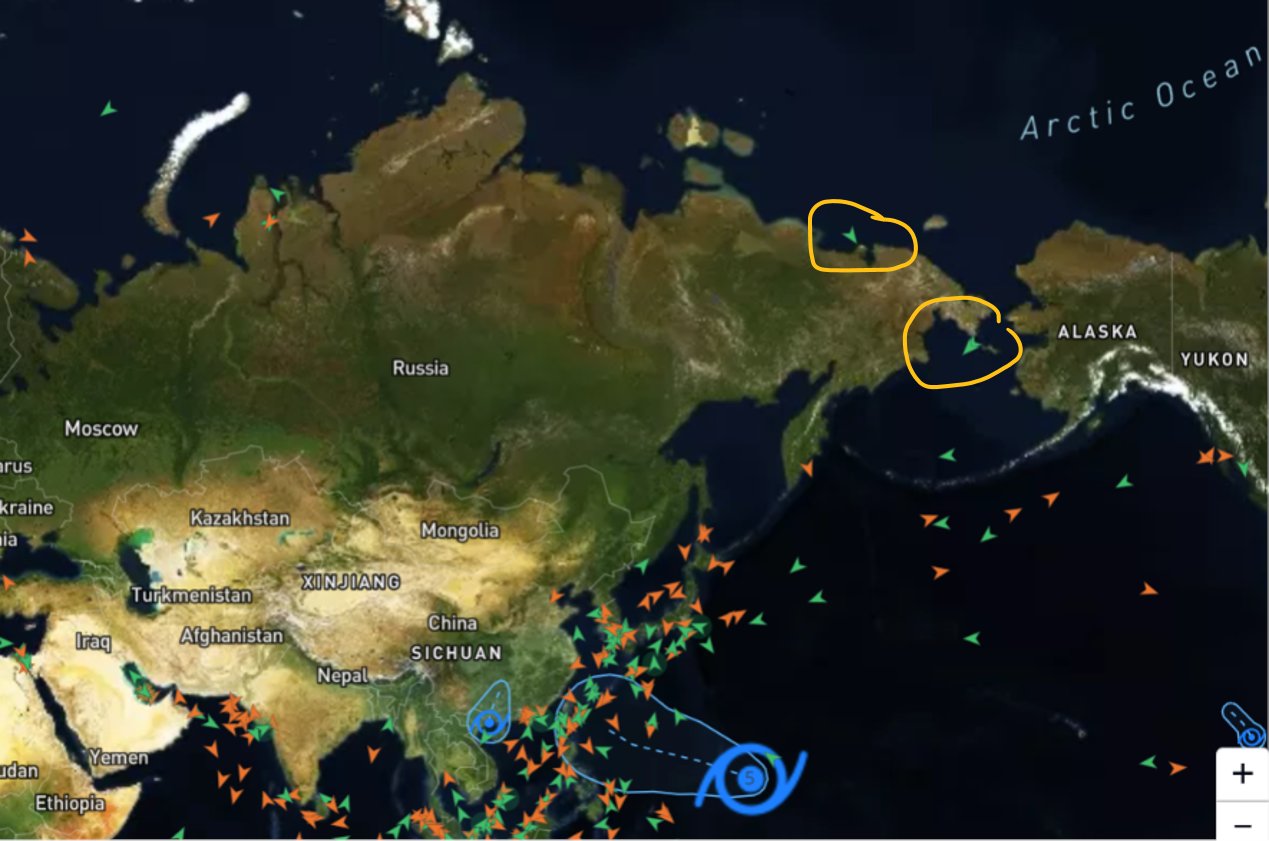

Xinde Marine News — As the summer navigation window opens in the Arctic, Russian LNG shipments to Asia via the Northern Sea Route are picking up momentum.
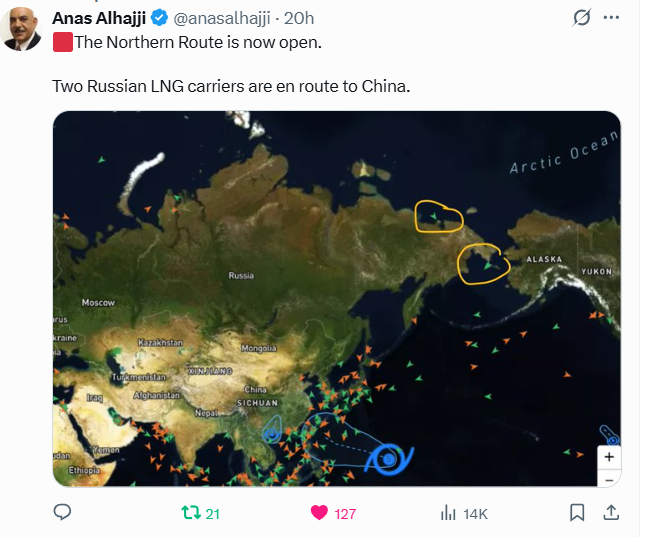
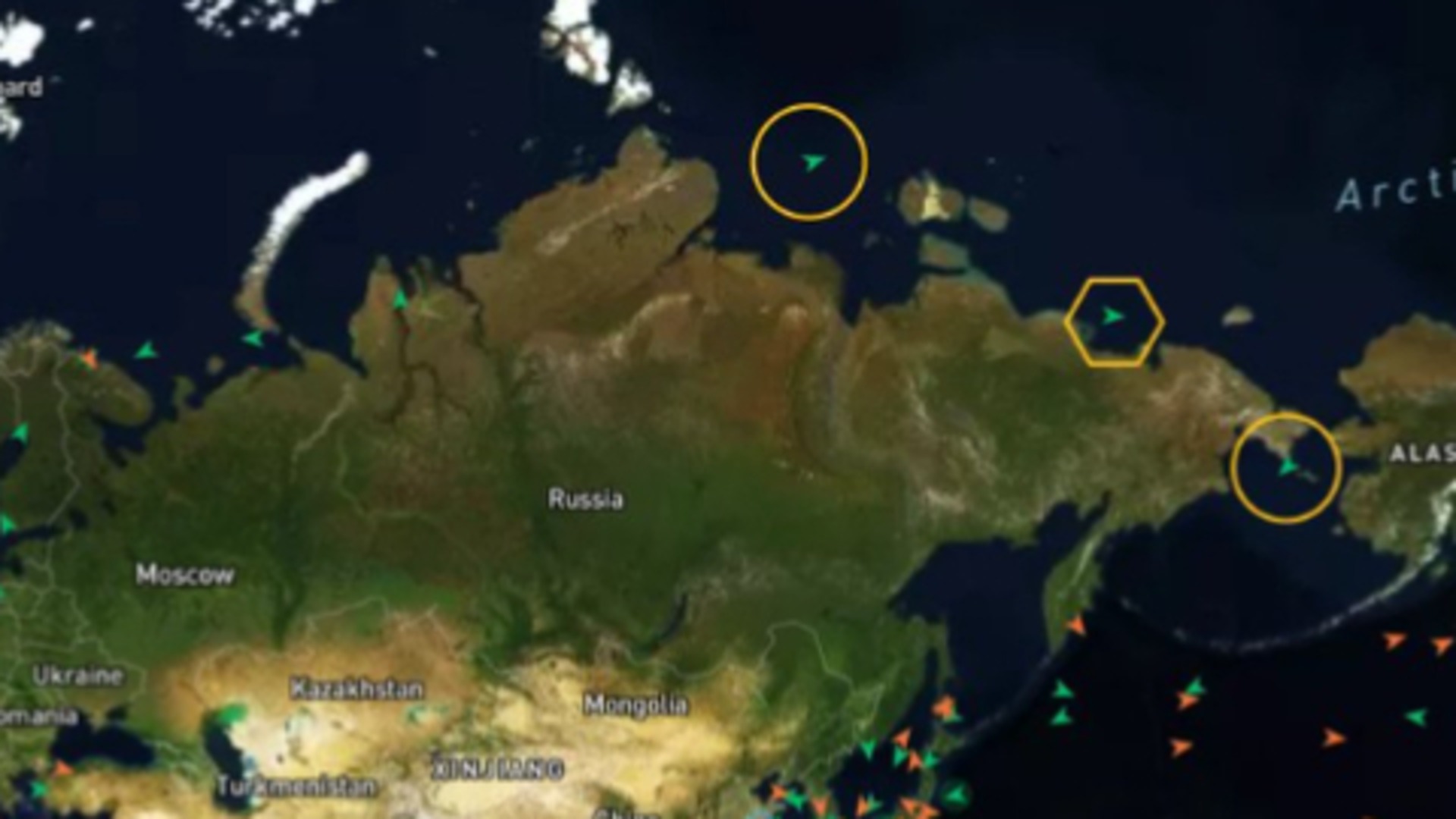
AIS tracking shows two LNG carriers sailing eastbound along Russia’s Arctic coastline. One vessel has already approached the Bering Strait area, while the other remains in the central section of Russia’s Arctic waters. This indicates that Russia’s seasonal eastbound Arctic LNG transportation to Asia in 2026 has entered active operation.
The “Northern Route” in this context refers more precisely to the Northern Sea Route, the Arctic shipping corridor running along Russia’s northern coast. The route extends from Russia’s northwestern Arctic waters through the Kara Sea, Laptev Sea, East Siberian Sea and Chukchi Sea, before entering the Pacific through the Bering Strait.
According to High North News, at least two Russian Arctic LNG cargoes are currently sailing eastward along the Northern Sea Route. The cargoes reportedly come from Russia’s Yamal LNG project and the Western-sanctioned Arctic LNG 2 project. This also marks the first time this summer that both of Russia’s major Arctic LNG projects have sent cargoes eastward through the Northern Sea Route.
One of the vessels, the Arc7 ice-class LNG carrier Christophe de Margerie, loaded at the Arctic LNG 2 project on June 26 and proceeded eastbound under escort by the Russian nuclear-powered icebreaker Arktika. Another Arc7 LNG carrier, Eduard Toll, loaded at Yamal LNG’s Sabetta terminal on June 25 and is also sailing east under escort by the nuclear-powered icebreaker Sibir. Its cargo is expected to be delivered directly to an Asian buyer, most likely in China.
This is not Russia’s first eastbound Arctic LNG movement this year. Reuters previously reported that Christophe de Margerie had already loaded a cargo from Arctic LNG 2 in late May and sailed east along the Northern Sea Route, becoming the first LNG carrier this year to head toward Asia via the Arctic route. Reuters also noted that the LNG shipping season along the route started earlier this year, compared with last year when the first eastbound LNG shipment departed in late June.
Behind this development are two key changes.
First, Russia is accelerating the eastward redirection of its Arctic LNG exports. Since the Russia-Ukraine conflict, Russia’s energy exports to Europe have faced major restrictions. Moscow has increasingly positioned the Northern Sea Route as an important alternative corridor connecting its Arctic resources with Asian markets. This route is also being promoted as an alternative to traditional passages such as the Suez Canal, especially at a time when geopolitical and navigational risks remain elevated in the Middle East.
Second, China’s receiving capacity for Russian Arctic LNG appears to be expanding. Reuters reported on June 22 that China is preparing the Longkou LNG terminal in Shandong to receive cargoes from the sanctioned Arctic LNG 2 project. Previously, the Beihai LNG terminal in Guangxi had become the main Chinese receiving terminal for Arctic LNG 2 cargoes. Since August 2025, it has reportedly received 41 cargoes, totaling around 2.6 million tonnes. Dalian LNG terminal has also been discussed as a potential future receiving point.
However, the phrase “the Northern Route is now open” should not be understood as meaning the Arctic route is freely available to ordinary merchant vessels.
At this stage of the season, when ice conditions remain challenging, operations are still mainly limited to highly specialized Arc7 ice-class LNG carriers, often supported by nuclear-powered icebreaker escorts. As sea ice retreats further in July and later in the summer, lower ice-class vessels and some conventional LNG carriers may gradually be able to participate in seasonal navigation.
Therefore, the significance of this route is not that global merchant shipping can suddenly switch to the Arctic. Rather, it shows that Russia’s Arctic energy exports are developing a more regular eastbound seasonal channel.
From an energy trade perspective, the Northern Sea Route is becoming an important supplementary pathway for Russian LNG into Asian markets. From a shipping perspective, Arc7 LNG carriers, icebreaker escort services, floating storage solutions in the Russian Far East, and Chinese receiving terminals are together forming a specialized logistics system around Arctic LNG exports.
It is also important to distinguish between Yamal LNG and Arctic LNG 2. Yamal LNG is a mature Russian Arctic LNG project with an established export track record. Arctic LNG 2, by contrast, faces far more complex constraints due to US and Western sanctions, including issues related to vessel availability, insurance, payment settlement and receiving-terminal compliance. For buyers and service providers, attractive pricing, energy security considerations and sanctions-related risks will continue to coexist.
Overall, the eastbound movement of these two LNG carriers is more than a routine voyage. It is a signal that Russia’s Arctic LNG export season has restarted. As the summer window along the Northern Sea Route opens, more Russian LNG cargoes may head toward Asia, especially China, in the coming months.
For the global shipping industry, the Arctic route is still far from becoming a large-scale replacement for Suez, the Cape of Good Hope or Malacca. But amid the restructuring of energy trade, rising geopolitical uncertainty and sustained Asian demand, it is becoming an increasingly important strategic seasonal corridor in Russia’s energy export system.

READ MORE
 Ports & Terminals
$4 Million for a Panama Canal Slot: The Price of Time Is Surging
 Ports & Terminals
MSC’s Global Expansion Meets Regulatory Limits as Barcelona BEST Terminal Deal Is Terminated
 Ports & Terminals
China Lines Up 2026 Arctic Voyages as Six Operators Deploy Container and Bulk Tonnage
 Ports & Terminals
Why Are Two Chinese Port Groups Joining Forces? Ningbo and Beibu Gulf Build a New China–ASEAN Shipping Corridor
 Ports & Terminals
China’s First Rail Link Running Perpendicular to the Quay Opens at COSCO SHIPPING Ports’ Xiamen Ocean Gate Terminal
 Ports & Terminals
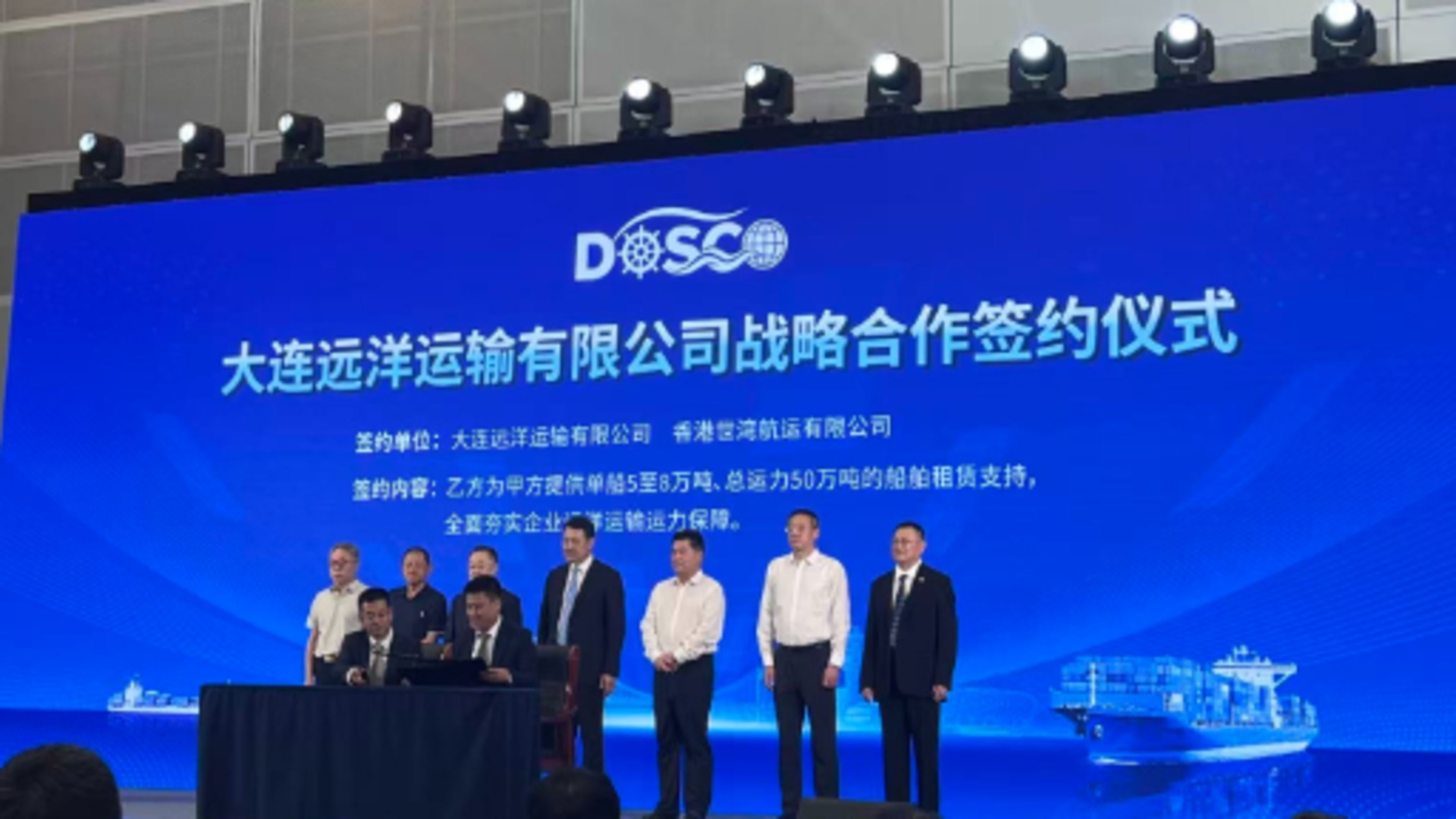
Dalian Launches Local Deep-Sea Shipping Platform, Securing 1.5 Million Tonnes of Cargo and 500,000 DWT of Capacity
 Ports & Terminals
China and Panama move toward renewing maritime transport agreement, signaling a reset in shipping ties
 Ports & Terminals
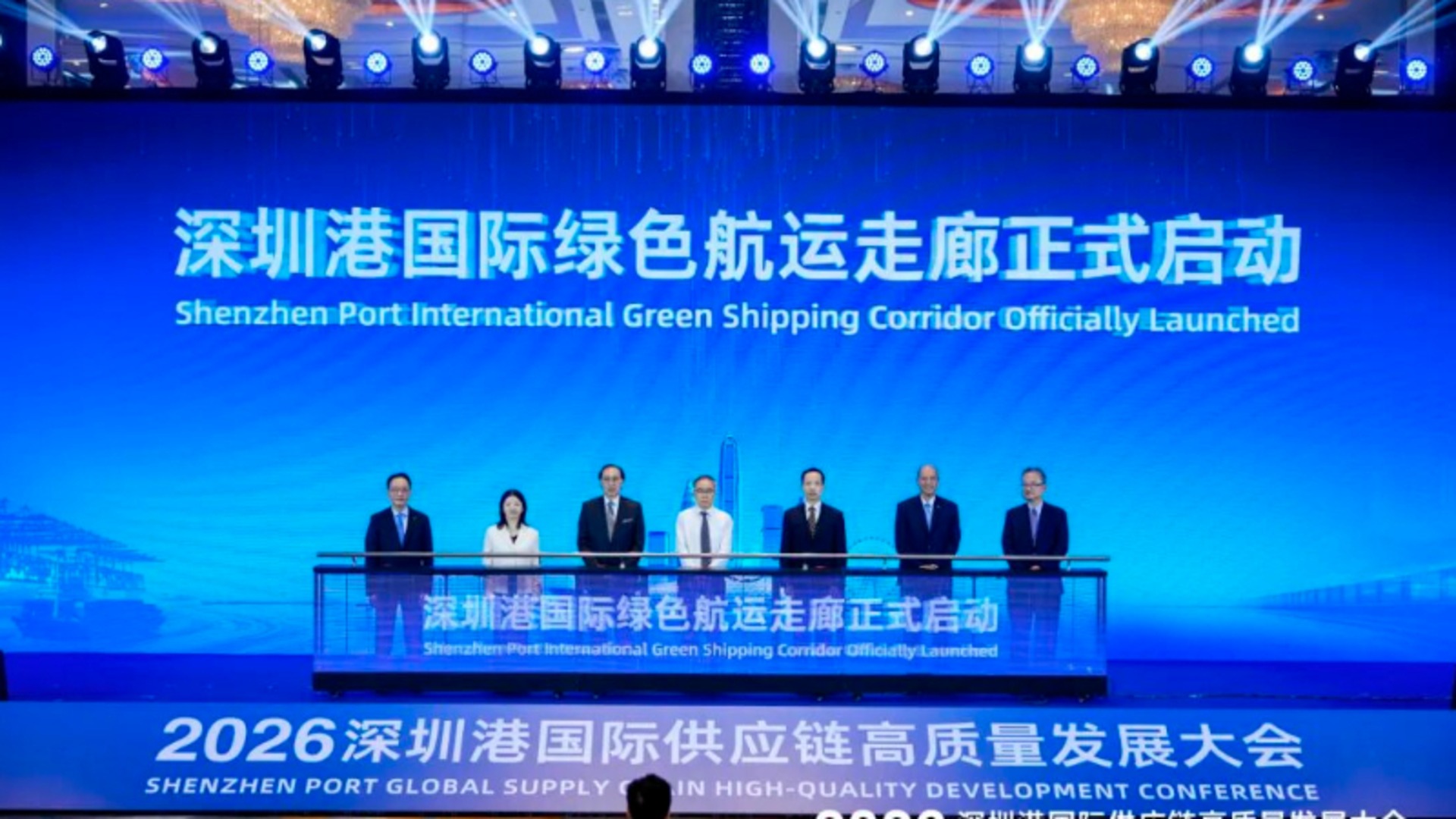
Shenzhen, Yantian and Los Angeles Deepen Green Shipping Corridor Cooperation
 Ports & Terminals
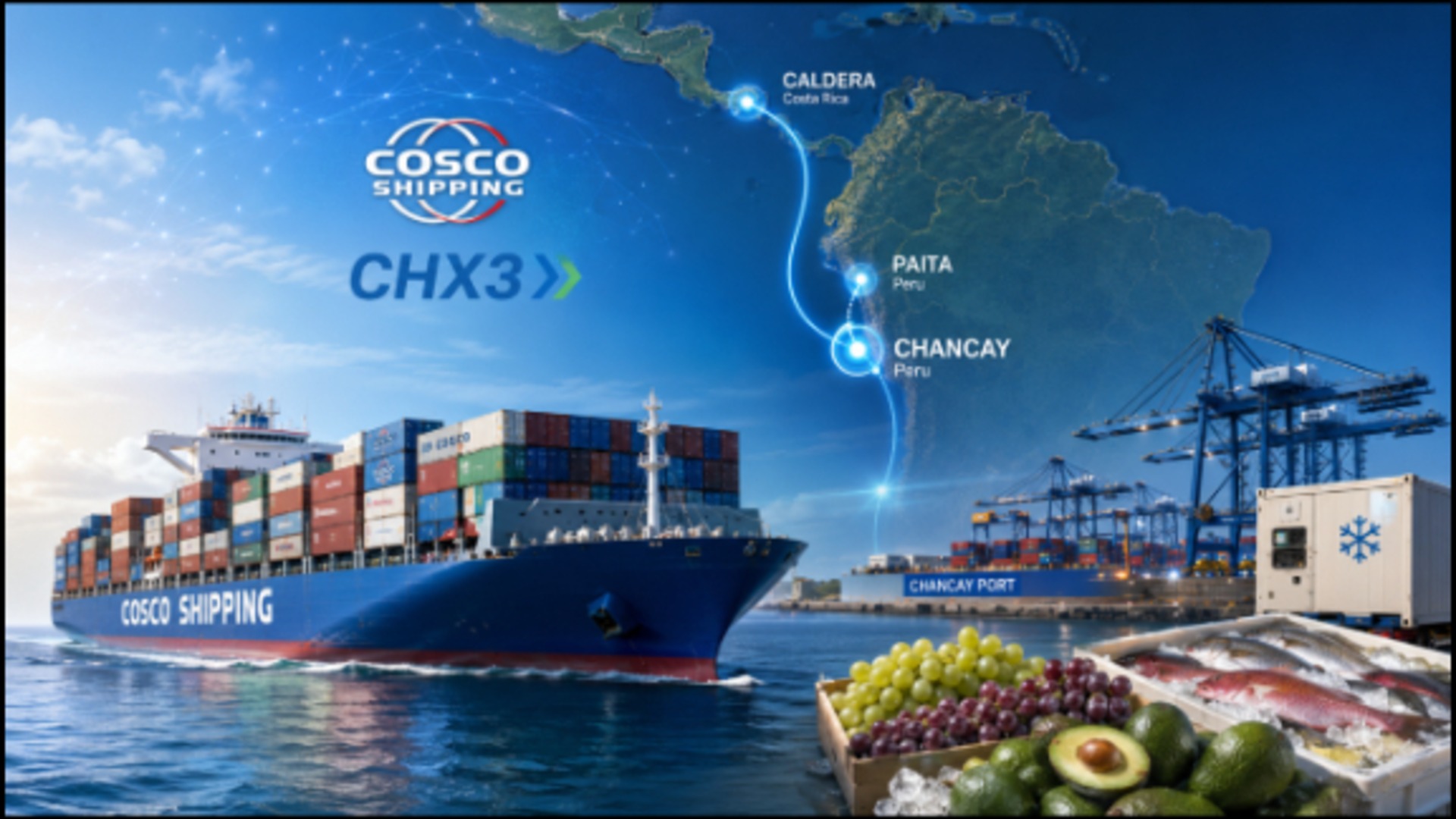
COSCO SHIPPING Holdings is further expanding the regional shipping network centred on the Port of Chancay in Peru.
 Ports & Terminals