

Vessel Traffic Returns! Transit Volumes in the Strait of Hormuz Rebound Significantly
Vessel traffic is returning, but the recovery remains fragile; outbound vessels are being released faster than inbound traffic is recovering; energy cargo flows have not yet truly returned to normal.
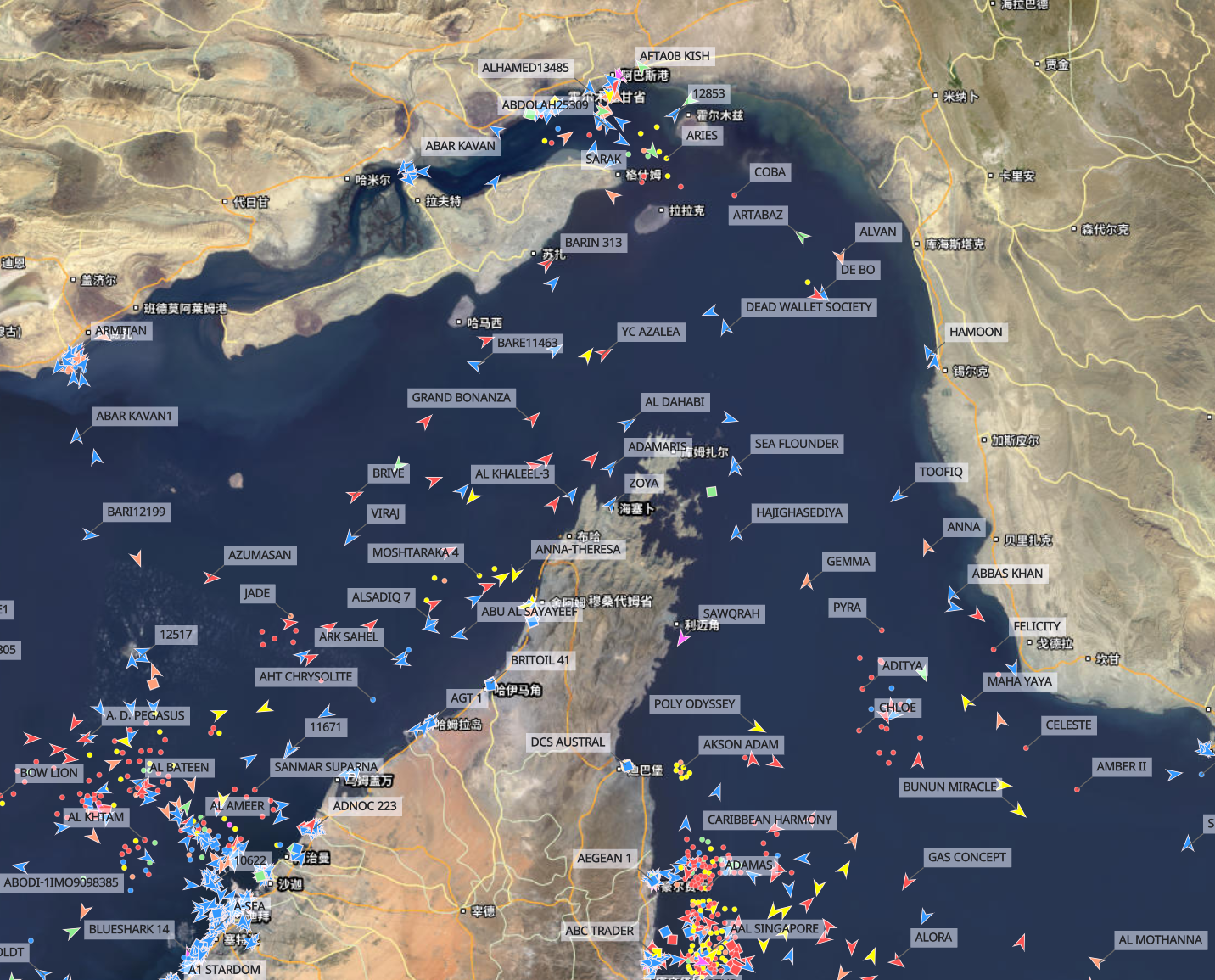

Xinde Marine News — After months of stagnation, vessel traffic is reappearing in the Strait of Hormuz.
AIS monitoring data from multiple shipping data platforms, including MarineTraffic, AXSMarine, and Kpler, show that commercial vessel transit volumes through the Strait of Hormuz have rebounded significantly over the past week from previously record-low levels. Vessels have started turning their AIS back on, and some oil tankers, LNG carriers, container ships, and dry bulk carriers are gradually passing through the strait. This indicates that the market is tentatively resuming transits following a phased US-Iran arrangement and the activation of the IMO coordination mechanism.
However, this is not yet a "return to normal." More accurately, the Strait of Hormuz is transitioning from "high stagnation" to a "controlled recovery."
Transit Volumes Rebound from Lows
According to MarineTraffic, vessel transit volumes in the Strait of Hormuz have noticeably increased over the past two weekends. Data from MarineTraffic and Kpler reveal:
June 12–14: 32 vessels were confirmed to have passed through the strait.
June 19–21: This number rose to 93, an increase of 61 vessels compared to the previous period. Another dataset from MarineTraffic recorded 71 confirmed transits during this same window, with a weekend peak of 35 vessels on June 20.

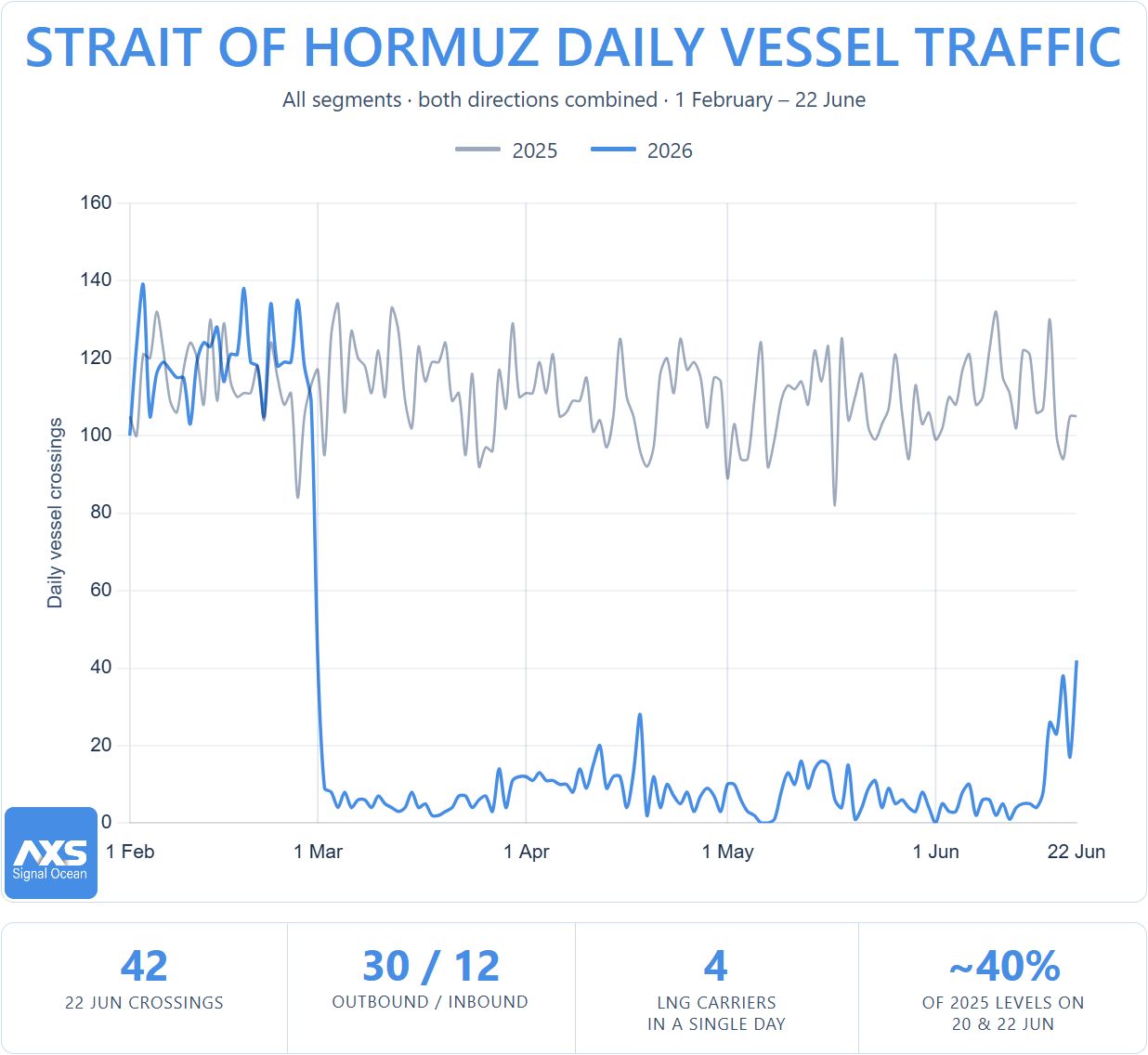
Data from AXSMarine reflects the same trend. The company stated that from June 18 to 22, the average daily commercial vessel transit volume rose to 29.2 vessels/day, compared to just 4.9 vessels/day during the first 17 days of June. On June 22, the strait recorded 42 confirmed transits (30 outbound, 12 inbound), marking a single-day high since the conflict began. However, AXSMarine noted that the current level of 29.2 vessels/day is only about 27% of the pre-war baseline of approximately 110 vessels/day.
According to a screenshot from myvessel's(船世宝) Hormuz vessel monitoring, the total vessel transit volume in the Persian Gulf on June 24 was 52 (21 inbound, 31 outbound). Vessel types included:
3 container ships
8 crude oil tankers
3 product tankers
1 LNG carrier
3 LPG carriers
34 other vessels
The daily transit volume increased by 85.71% week-over-week, but remains down 57.72% year-over-year.

(Image Source: Elane Inc.)
These figures illustrate that while "vessel traffic" in the Strait of Hormuz is indeed returning, it is doing so from a very low baseline.
Outbound Vessels Move First, Inbound Vessels Remain Cautious
The most obvious characteristic at present is that there are more outbound vessels than inbound ones.
This is easily understood. Over the past few months, a large number of vessels have been trapped within the Persian Gulf. As temporary corridors and safety coordination mechanisms are gradually activated, the most urgent priority for shipowners, charterers, and cargo owners is to evacuate the vessels already in the risk zone.
Reuters, citing data from LSEG and MarineTraffic, reported that at least 35 smaller vessels—including dry bulk carriers, general cargo ships, container ships, tankers, and tugs—are preparing to pass through the strait; meanwhile, some stranded oil tankers have also begun to sail out. Under the IMO plan, vessels will use two temporary routes for transit: one through Iranian waters and another through waters coordinated by Oman and the United States.
In contrast, the recovery of inbound traffic remains highly cautious. For shipowners and charterers, sending a ballasted (empty) vessel into the gulf means taking on the double risk of "whether it can safely load cargo and sail out again." Therefore, the market's true focus is not on whether a few vessels can leave, but rather on whether a large fleet of ballasted tankers, LNG carriers, and other energy vessels are willing to re-enter the Persian Gulf.
Reuters also pointed out that the average vessel transit volume in the Strait of Hormuz has recently risen to over 25 per day—higher than the previous 10–11 per day, but still only a fraction of the pre-conflict average of about 125 per day.
Energy Vessels Begin to Return, but Export Flows Remain Low
The reappearance of oil tankers and LNG carriers is one of the market's most closely watched signals.
Reuters reported that on June 22, four LNG carriers controlled by Qatar sailed into the Persian Gulf. On the same day, two Very Large Crude Carriers (VLCCs) capable of carrying a combined maximum of about 4 million barrels of crude oil also entered the gulf, with one indicating its destination as Basra, Iraq. Meanwhile, MarineTraffic data showed two smaller crude oil tankers exiting Hormuz into the Gulf of Oman.
Clarksons stated in a market commentary that although current daily transits remain below the pre-conflict level of around 125 vessels, the trend is positive.

AXSMarine previously noted from a cargo flow perspective that Hormuz crude oil transit volumes dropped sharply following the February 28 closure, falling from about 14.75 million barrels/day to about 2.1 million barrels/day in mid-June (an ~85% drop). Additionally, approximately 102 million barrels of Gulf crude remain stranded on 66 tankers inside and outside the strait, with nearly three-quarters concentrated on 40 VLCCs.
Information obtained by Xinde Marine News indicates that commodity exports from the Middle East trade zone remain low:
Crude Oil Arrivals: 3.08 million tons last week (down 41.89% WoW; down 81.15% YoY).
LNG Arrivals: 350,000 tons (down 43.55% WoW; down 85.66% YoY).
LPG Arrivals: 170,000 tons (down 41.38% WoW; down 88.19% YoY).
This indicates that while a rebound in vessel traffic has occurred, the energy export side has not yet truly recovered to a normal pace.
AIS Reactivation: A Signal of Restored Confidence
More vessels are starting to restore their AIS visibility.
MarineTraffic stated that more commercial vessels have turned on their AIS when passing through the strait recently, indicating an improvement in operator confidence. However, many vessels continue to use Iranian routes or "dark routes," and minesweeping operations within the strait are not yet complete.
AXSMarine pointed out that the transit rebound on June 18 occurred against the backdrop of massive AIS signal interference, during which over 200 commercial vessels in the Persian Gulf were simultaneously affected by spoofing or abnormal AIS behavior. Fortunately, these anomalies have significantly eased in the days following.
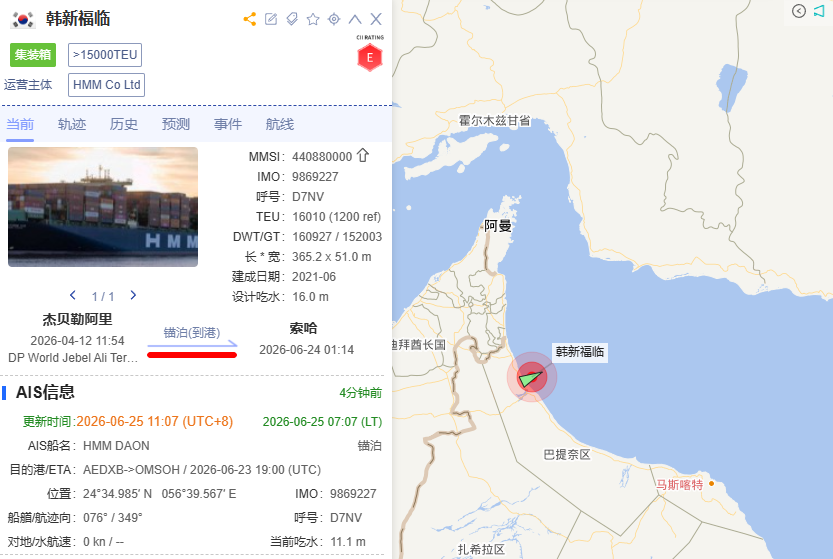
Large container ships are also beginning to re-enter the market's view. Flexport Atlas data shows that the 16,010 TEU container ship "HMM DAON" is currently located in the Gulf of Oman, with its destination set to Sohar, Oman. The renewed movement of such large container ships indicates that the liner market is also closely testing the recovery of the shipping lane.
Four Key Observation Points for a Full Recovery
Moving forward, judging whether the Strait of Hormuz has truly recovered cannot rely solely on single-day transit volumes.
First — Watch for a large-scale return of inbound ballasted tankers: The increase in outbound vessels mainly reflects the release of previously stranded capacity. An increase in inbound ballasted vessels will indicate that shipowners are willing to take on the risk of loading cargo in the Gulf again.
Second — Watch for stable LNG, LPG, and crude oil exports: Current bulk energy export volumes are still significantly below normal levels, indicating that the recovery of cargo flows is lagging behind the recovery of vessel traffic.
Third — Watch for a cooling down of war risk premiums and the chartering market: Reuters quoted Allianz Research as saying that approximately 1,150 cargo-carrying vessels (with a combined hull and cargo value of around $125 billion) are still waiting to resume operations in the Gulf. Allianz noted that for transit volumes to return to the pre-war peak of about 140 vessels per day, the market needs clear, reliable guarantees of safe passage.
Fourth — Watch for the restoration of the traditional TSS shipping lanes: As long as the main channel remains affected by the risk of mines, Hormuz will continue to rely on temporary corridors, batch releases, and controlled transits.
Overall, the Strait of Hormuz has shown clear signals of a "gradual return of vessel traffic." AIS data, the number of outbound vessels, the movements of certain energy vessels, and the IMO coordination mechanism are all helping to push the market out of extreme stagnation.
However, this recovery remains fragile. The strait has not yet returned to its pre-war open state, nor has the market returned to normal commercial logic. For shipowners, charterers, energy companies, and insurance institutions, the true turning point will depend on whether ballasted vessels dare to enter the Gulf, whether energy cargo flows steadily recover, whether war risk premiums substantially decline, and whether the traditional Traffic Separation Scheme is formally reinstated.
READ MORE
 Safety
8,500 TEU EVER LOVELY Hit Off Oman as IMO Pauses Hormuz Seafarer Evacuation Operation
 Safety
Deadly Mooring Ropes: The "Super Cycle" of South Korea's Shipbuilding Industry
 Safety
Phased Unblocking of Hormuz: Global Shipping and Oil & Gas Markets Enter a "Temporary Restart Window"
 Safety
This type of ship has been ranked the worst-performing category in port State control inspections for six consecutive years
 Safety
OFAC General License X brings tankers, insurance, class and maritime services into temporary authorization
 Safety
Is Transiting the Strait of Hormuz Really Free? A Bigger Bill May Be Waiting
 Safety
Dali Chief Engineer Faces Criminal Charge Over Baltimore Bridge Collapse
 Safety
For Seafarers, Lip Service Is Not Enough
 Safety
XIN HAI TONG 801 Rescues 41 People in the Mediterranean
 Safety