

OFAC General License X brings tankers, insurance, class and maritime services into temporary authorization
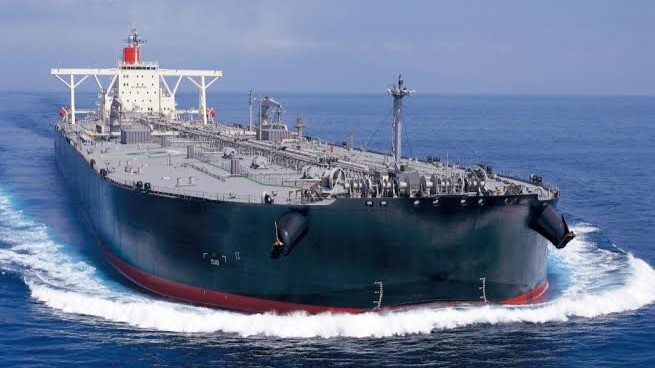
Xinde Marine News has learned that the United States has taken a major temporary step to ease restrictions on Iran-related oil trade.
On June 22, the U.S. Treasury Department’s Office of Foreign Assets Control, or OFAC, issued Iran General License X, authorizing certain transactions related to the production, sale, delivery and offloading of crude oil, petrochemical products and petroleum products of Iranian origin.

The license is valid until 12:01 a.m. Eastern Daylight Time on August 21, 2026. Based on the June 22 issuance date, this creates a roughly 60-day window for Iranian oil-related transactions.
The key point is that this is not a full removal of the U.S. sanctions regime against Iran. It is a temporary authorization for specific oil-related transactions and necessary supporting services within a defined period.
What does the license cover?
The scope of General License X is broad.
According to the OFAC document, the license authorizes transactions related to the production, sale, delivery and offloading of Iranian-origin crude oil, petrochemical products and petroleum products. It also authorizes transactions that are ordinarily incident and necessary to those activities.
For the shipping industry, the most important part is the inclusion of maritime services.
OFAC specifically refers to services and activities such as safe docking and anchoring, protection of crew health and safety, emergency repairs, environmental protection and mitigation, vessel management, crewing, bunkering, piloting, registration, flagging, insurance, classification and salvage.
This means that, during the effective period of the license, shipowners, managers, insurers, classification societies, bunker suppliers and other service providers may have a temporary legal basis to support authorized Iranian oil trades, provided that the services are necessary to the permitted production, sale, delivery or offloading of the cargoes.
The license also states that the covered Iranian-origin crude oil, petrochemical products and petroleum products may include products produced by certain entities that remain designated under Iran-related or terrorism-related sanctions regulations.
This is significant. It gives the license practical commercial value, because parts of Iran’s energy sector and shipping network have long been linked to sanctioned entities. However, it does not mean those entities have been generally removed from sanctions lists. The authorization is limited to the transactions described in the license.
Another important provision is payment. General License X allows payments owed to Iran, the Government of Iran or blocked persons for the purchase of authorized Iranian-origin crude oil, petrochemical products or petroleum products to be made in U.S. dollar-denominated funds.
For international oil trade, this is a material change. Iranian oil has for years been constrained by banking restrictions, dollar-clearing risk and secondary sanctions exposure. The temporary authorization may make certain trades easier to structure, although banks and counterparties will still need to assess their own compliance risk.
U.S. importation is included, but only under conditions
One of the most notable parts of the license is that it also authorizes the importation into the United States of Iranian-origin crude oil, petrochemical products and petroleum products.
This should be read carefully.
The authorization applies where the importation is ordinarily incident and necessary to the sale, delivery or offloading authorized by the license. In other words, the license does not represent an open-ended reopening of the U.S. market to Iranian oil. It brings certain necessary import-related activities into the temporary authorization framework.
Red lines remain
General License X also contains clear exclusions.
It does not authorize transactions involving persons located in, organized under the laws of, or ordinarily resident in North Korea, Cuba, certain covered regions of Ukraine or Crimea. It also does not authorize transactions involving entities owned or controlled by, or in joint venture with, persons from those jurisdictions.
OFAC also makes clear that the license does not authorize other transactions or activities prohibited by executive orders or by other parts of 31 CFR Chapter V unless they are specifically covered by the license.
This point matters for the maritime industry.
Shipowners, charterers, managers, insurers, classification societies, banks and traders still need to carry out sanctions screening. Cargo origin, cargo destination, vessel history, beneficial ownership, counterparties, insurers, banks and final users all remain relevant.
The license opens a short-term window. It does not remove compliance risk.
Linked to the Switzerland talks
The issuance of General License X is being viewed as one of the first practical outcomes from the latest round of U.S.-Iran talks in Switzerland.
Reuters reported that the United States linked the temporary 60-day authorization to ongoing talks toward a final peace deal. According to the report, Washington said Iran had committed to free and open transit through the Strait of Hormuz and to allowing International Atomic Energy Agency inspectors into the country.
This gives the license a wider geopolitical meaning.
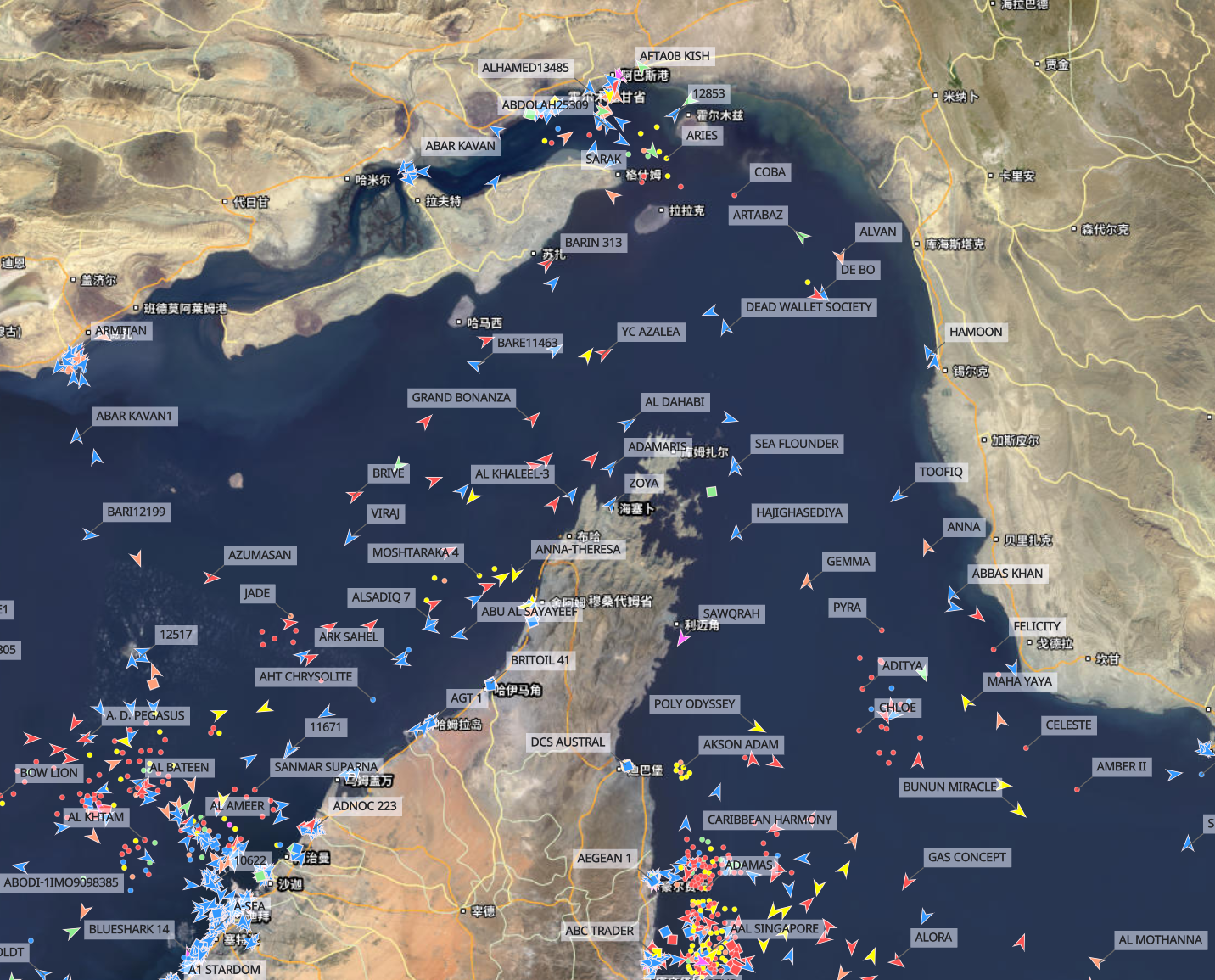
The Strait of Hormuz is one of the world’s most important energy shipping corridors. In recent weeks, its security, insurance costs and transit risk have become central concerns for tanker owners, energy traders and insurers.
The U.S. move suggests that temporary energy export relief is being used as part of a wider diplomatic framework. Oil exports, Hormuz transit and nuclear inspections are now being linked within the same negotiation track.
The next 60 days will therefore be a critical observation period.
Oil prices react, tanker market faces a new variable
Oil prices reacted quickly after the announcement. Part of the risk premium that had built up around the Strait of Hormuz and wider Middle East tensions began to unwind.
For the tanker market, the impact is not one-dimensional.
On one hand, a temporary return of Iranian crude, petrochemical and petroleum product flows to more open commercial channels may generate additional transport demand. It may also create new demand for compliant tankers, insurance, classification, bunkering and financial services.
On the other hand, the window is short. Mainstream shipowners, banks and insurers may not rush back into Iranian trades without strong legal opinions and clear contract structures.
The pace of Iranian export recovery will depend on buyer appetite, banking execution, insurance availability, vessel supply, port operations and the progress of the next phase of talks.
There is also a possible impact on the shadow fleet. If part of Iran-related trade can move through more transparent and temporarily authorized channels, some cargoes may shift away from opaque structures. This could affect the pricing of sanctioned or grey-market tonnage.
But this shift will not happen automatically. Market participants will still need confidence that the license will remain valid long enough for voyages, payments and discharge operations to be completed.
A short-term positive, not a long-term settlement
For the shipping industry, General License X has three main implications.
First, it temporarily reduces U.S. sanctions risk for certain Iranian oil-related transactions and supporting services.
Second, it gives shipping, insurance, class, banking and trading companies a defined legal framework for specific activities during the 60-day period.
Third, it connects maritime security in the Strait of Hormuz with the broader diplomatic process between Washington and Tehran.
However, the basic structure of U.S. sanctions on Iran remains in place. The license has a fixed expiry date. It has clear exclusions. The U.S. government retains the ability to tighten restrictions again if the diplomatic track breaks down.
The market now needs to watch three key issues: whether Iranian oil exports can actually increase, whether Strait of Hormuz transits remain stable, and whether the U.S. and Iran can move from a temporary arrangement to a more durable agreement.
For shipping, this is not simply a story of Iranian oil returning to the market.
It is a 60-day stress test for diplomacy, compliance, insurance, banking and tanker supply.
The window is open. How widely it can be used will depend on how much risk the market is willing to price.
READ MORE
 Safety
8,500 TEU EVER LOVELY Hit Off Oman as IMO Pauses Hormuz Seafarer Evacuation Operation
 Safety
Deadly Mooring Ropes: The "Super Cycle" of South Korea's Shipbuilding Industry
 Safety
Vessel Traffic Returns! Transit Volumes in the Strait of Hormuz Rebound Significantly
 Safety
This type of ship has been ranked the worst-performing category in port State control inspections for six consecutive years
 Safety
Phased Unblocking of Hormuz: Global Shipping and Oil & Gas Markets Enter a "Temporary Restart Window"
 Safety
Is Transiting the Strait of Hormuz Really Free? A Bigger Bill May Be Waiting
 Safety
Dali Chief Engineer Faces Criminal Charge Over Baltimore Bridge Collapse
 Safety
For Seafarers, Lip Service Is Not Enough
 Safety
XIN HAI TONG 801 Rescues 41 People in the Mediterranean
 Safety