

For Seafarers, Lip Service Is Not Enough
From geopolitics to green fuels, the Posidonia discussions showed why seafarers are once again becoming central to global shipping
Xinde Marine News, Greece — During this year’s Posidonia and the wider Greek shipping week, the global maritime industry discussed many of its biggest questions.
The IMO Net-Zero Framework. The Strait of Hormuz. The Red Sea crisis. The shadow fleet. Sanctions. Shipyard capacity. Capital cycles. AI. Alternative fuels. Fleet renewal.
These topics dominated panel after panel.
Yet when the speeches, interviews and shipowner discussions are placed side by side, one theme keeps returning: almost every major maritime issue eventually comes back to seafarers.
Ship safety is ultimately crew safety.
The growth of the shadow fleet ultimately pushes risk onto crews, the ocean and coastal states.
Green fuels can only work if seafarers are trained to operate, monitor and respond to them safely.
AI and digitalisation only create value if they genuinely support people on board and ashore.
And shipping’s long-term future depends on whether the next generation still sees a career at sea as a profession worth choosing.
That was one of the most striking messages from the Greek shipping week. Seafarers were no longer treated merely as a human resources topic, or as an annual slogan around the Day of the Seafarer. They were repeatedly discussed as a core issue for maritime safety, geopolitics, decarbonisation, digital transformation and industry competitiveness.
The Greek minister: Seafarers are part of society
In his keynote remarks at the Capital Link Maritime Leaders Summit – Greece, Vassilis Kikilias , Greece’s Minister of Maritime Affairs and Insular Policy, placed seafarers within a broader social and national context.
He said Greek shipping’s success was not built overnight. It came from a long maritime tradition, from generations of pioneers, captains, engineers and people from the Greek islands and mainland who overcame hardship, boarded ships and sailed the world.
For Greece, shipping is part of national identity.
Kikilias stressed that seafarers, captains, marine engineers, shipowners, technocrats, traders and everyone in the maritime chain are very much part of society. Decisions made by the shipping industry in difficult times directly affect society.
He also linked shipping to ordinary households. With 80% to 90% of global trade moving by sea, energy prices, supply chains and the cost of goods eventually reach the table of families in Greece, Europe, China, the United States, Japan and across the world.
This matters because it moves seafarers away from being seen simply as labour on board ships. They are the people behind global trade, energy supply, food transport and the daily cost of living.
When discussing geopolitics and the risk to key maritime chokepoints, Kikilias said preserving the security, resilience and openness of international maritime transport is a strategic imperative for the global economy and international stability. He called for shipping, global trade and vessels to be kept outside wars and conflicts as much as possible.
He said this must be done first and foremost for seafarers and their welfare.
In today’s environment, that statement carries real weight.
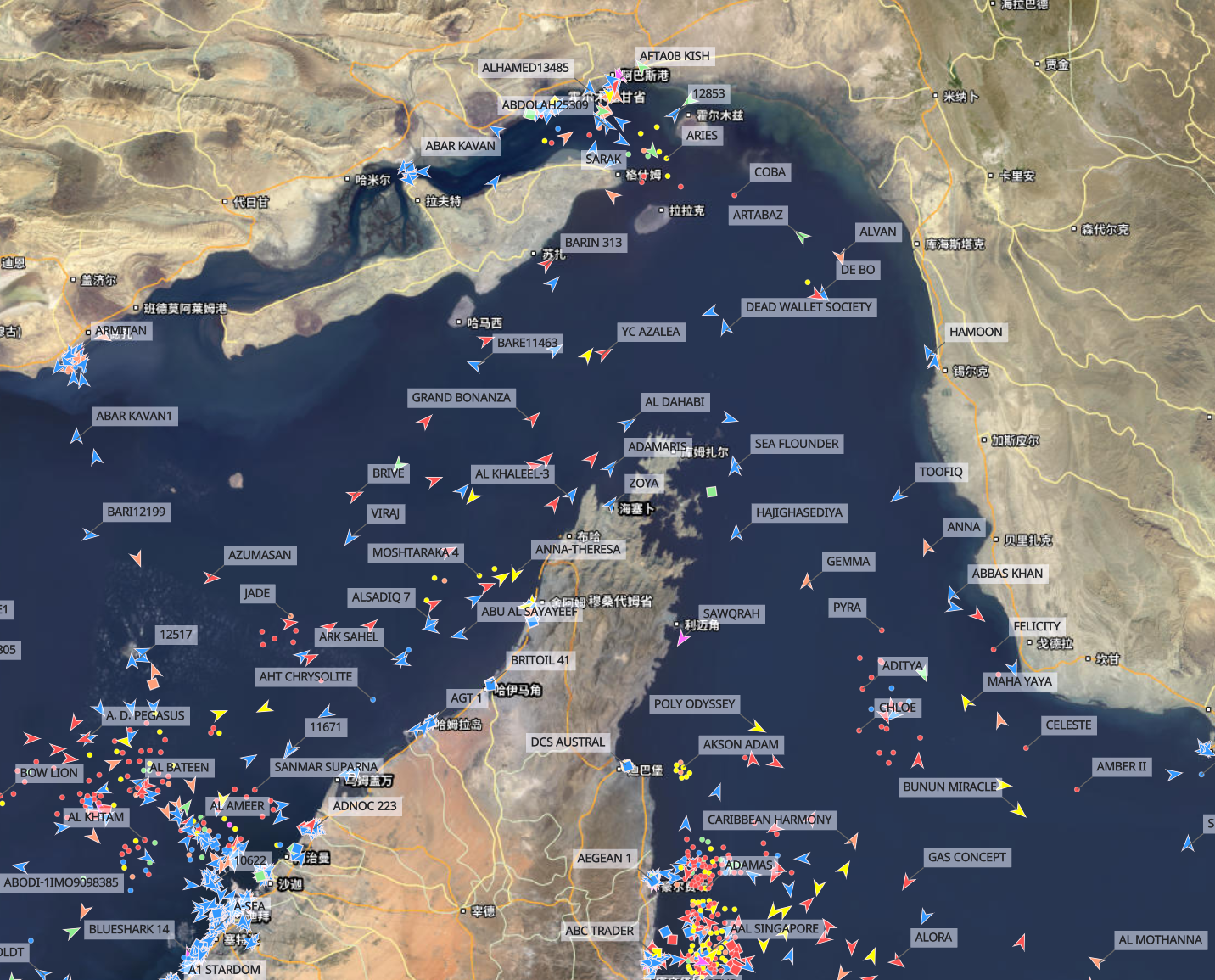
The Red Sea, the Black Sea, the Strait of Hormuz, sanctions trades, the shadow fleet and piracy risks have all pushed seafarers closer to the front line of geopolitics. Ships may appear on balance sheets as assets, but the people actually sailing through risk zones are crews.
IMO Secretary-General: We have not done enough
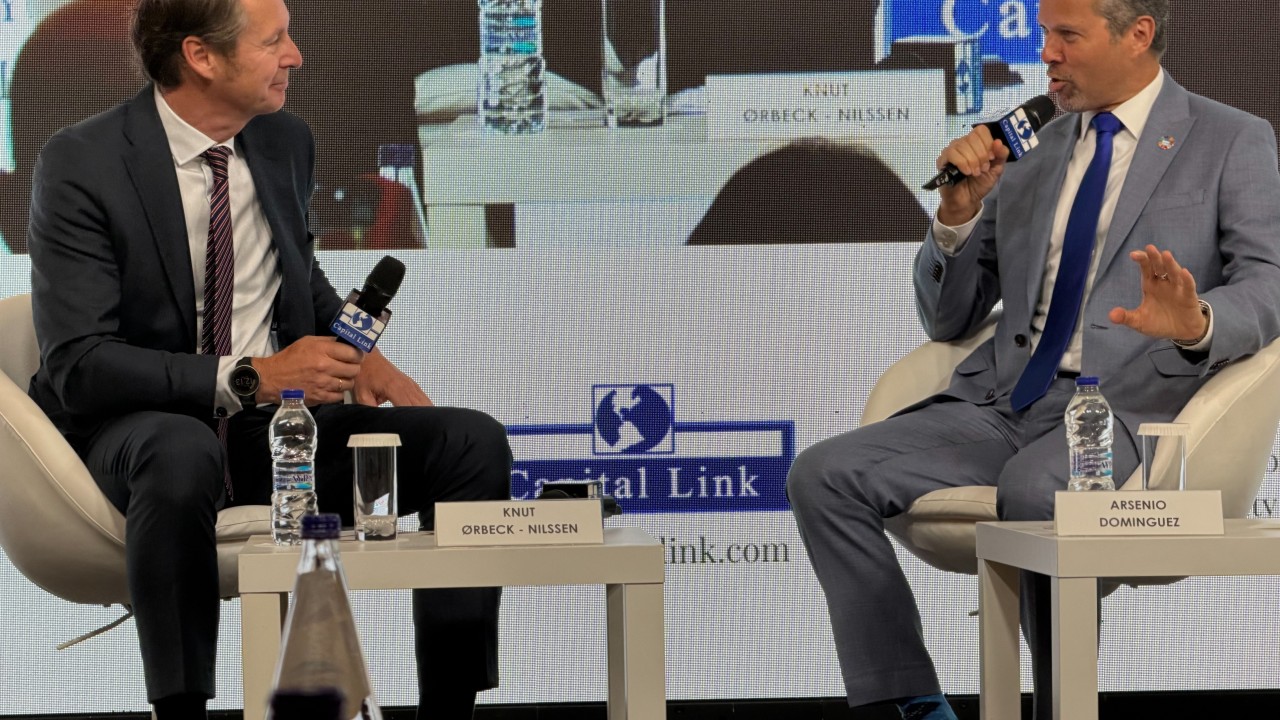
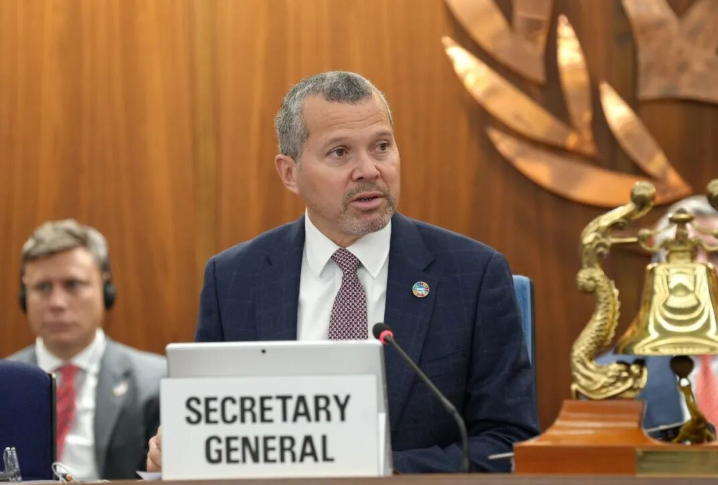
During the same Greek conference, @IMO International Maritime Organization Secretary-General Arsenio Dominguez sat down with Knut Ørbeck-Nilssen , Group President and CEO of DNV , for a keynote one-on-one discussion.
Most attention focused on the IMO Net-Zero Framework. But toward the end of the conversation, the discussion returned to seafarers.
Ørbeck-Nilssen noted that thousands of seafarers had been trapped amid the crisis around Hormuz. They had signed on to work on merchant ships, not to be exposed to bombs, drones, explosions and armed conflict.
Dominguez expressed deep concern for innocent seafarers caught up in geopolitical events that have nothing to do with them.
He also reflected on the past six years. Shipping has been hit by one crisis after another: the pandemic, the war in Ukraine, the Red Sea crisis and now the threat around Hormuz. When young people ask him how the IMO can guarantee their safety in conflict areas, he said it pains him because there is no complete answer.
Then came one of the strongest lines of the discussion: we have not done enough.
Dominguez said that after speaking with seafarers caught in these situations, he realised their concerns were not only about money. They need better recognition. They need serious investment in training and education. They need proper tools and support, instead of being left to handle complex risks alone at sea.
They also need better onboard living conditions, not least to attract more women into the industry and support gender balance. They need basic internet connectivity. They need real attention to mental health and fatigue.
He criticised the gap between words and delivery. Many seafarers do not feel valued. Some feel they are treated as disposable.
That was one of the most powerful seafarer-related messages heard during the Greek shipping week.
While the industry debates green fuels, carbon mechanisms, AI systems and asset investment, the IMO Secretary-General brought the issue back to the basics. If shipping does not truly invest in seafarers, and if it does not respond to the expectations of younger generations around work, life and dignity, it will struggle to retain existing crews and attract new ones.
Ørbeck-Nilssen also urged everyone in the room to ask what more they could do for seafarers. Those already doing a lot can do more. Those doing too little must do much more.
When ships are attacked, crews are attacked
Seafarer safety also came up repeatedly in tanker market discussions.
Jerry Kalogiratos , CEO of Capital Tankers Corp. , said that in high-risk areas, crew safety is the first priority and non-negotiable. Insurance may be available, but that does not mean a waterway is safe to transit. Until the industry has clearer rules and safety boundaries, companies may decide to avoid certain passages.
Antonis Kanellakis also warned that the market underestimates vessel operation and crew safety risks. When a ship is attacked, it is the crew that is attacked.
That point deserves emphasis.
Shipping markets often talk about “vessel risk”, “asset risk”, “insurance risk” or “cargo risk”. But the people exposed to drones, missiles, explosions, boardings, detentions or fires are seafarers.
In high-risk waters, owners and charterers may discuss routes, war risk premiums, deviation costs and demurrage. Crew members face life-and-death consequences.
This gap is becoming a moral and operational issue for the industry.
The shadow fleet pushes risk to the weakest point
The seafarer issue becomes even sharper when viewed through the shadow fleet.
Across several panels, the shadow fleet was mentioned again and again. It is no longer only a sanctions issue or a tanker market issue. It is becoming a matter of maritime safety, environmental risk and seafarer welfare.
In his TradeWinds leadership interview, Evangelos M. Marinakis argued that sanctioned vessels need a more practical disposal window. More flexible policy arrangements could help ensure that seafarers and workers receive the salaries they are owed. He also warned that vessels operating without proper insurance, standard crew arrangements and professional support create major safety risks.
In another discussion on energy and the shadow fleet, Marinakis also raised concerns about crew, maintenance, insurance and vessel condition. Many such vessels may be poorly maintained, under-insured and technically unsafe. Continuing to operate them through key routes and high-risk waters creates risks for the whole industry.
Svein Moxnes Harfjeld , President and CEO of DHT Holdings Inc. , also pointed to the scale of sanctioned or shadow tanker tonnage. Many of these vessels are old and operate below industry standards. Some seafarers may be attracted by promises of high pay, but payment arrangements and working conditions may be unclear. Certain ships may lack basic sanitary conditions, proper maintenance or transparent class status, yet still operate under permissive flag regimes.
These are seafarer rights issues.
The danger of the shadow fleet does not come only from cargo origin or sanctions compliance. A deeper problem is that many vessels are moving outside normal systems of regulation, insurance, classification, crew management and technical maintenance.
When accidents happen, seafarers are often the first to bear the consequences.
Compliant owners invest in new vessels, energy-saving technologies, crew training, maintenance systems and safety management. If lower-standard ships can carry high-risk cargoes at lower cost, the incentive for responsible operation weakens. The damage eventually reaches not only market order, but also crew safety.
Crew shortage is becoming a systemic risk
Beyond geopolitics and the shadow fleet, crew shortage was another recurring topic.
In the panel “Shipping as the Backbone of Global Trade”, George Youroukos , Executive Chairman of Global Ship Lease, pointed to a risk that is often underestimated: excessive ordering. New ships can be built in two or three years, but qualified and certified seafarers take much longer to train.
If owners order aggressively in strong markets while crew development fails to keep pace, fleet expansion may create a structural manpower problem.
Andrew McKeran , Chief Growth Officer at Lloyd’s Register, went further. He referred to BIMCO and ICS forecasts that the global industry could face a shortage of around 120,000 certified officers by 2030. The challenge goes beyond numbers. As new fuels and onboard digital systems accelerate, as many as 900,000 seafarers may require retraining over the next five years to handle new fuel types and digital technologies.
René Kofod-Olsen , Group CEO of V.Group, also identified seafarer welfare and insufficient training as key risks over the next three to five years. Concentrated newbuilding capacity already creates supply chain risk, and underinvestment in welfare and training could worsen long-term crew shortages. Improving onboard facilities and the reputation of the industry will be essential to attracting new talent.
Crew shortage is no longer just a recruitment issue.
It is linked to fleet expansion, newbuilding orders, alternative fuels, digitalisation, training systems and the industry’s image. Ships may be delivered quickly, but without qualified crews, effective capacity will be limited. Green ships may be technically advanced, but without trained seafarers, safety risks will rise.
Will the next generation still go to sea?
In the “Bridging Legacy, Leadership & Transformation” discussion, younger representatives of Greek shipping brought the issue back to talent.
Diamantis Pateras , Deputy CFO of Contships Management Inc , said one of the most important challenges facing shipping, especially Greek shipping, is the shortage of skilled seafarers. Attracting younger generations into the industry is becoming harder, both at sea and ashore.
He noted that generational differences are real. Younger candidates have different priorities and expectations. They want better work-life balance, faster development, timely recognition and clearer meaning in their work.
Shipping remains a demanding industry. Long periods away from home, pressure and responsibility are still part of life at sea. The profession requires discipline, resilience and personal sacrifice. Not everyone is ready for that lifestyle.
This is a very practical challenge.
Previous generations of owners and seafarers often accepted distance, hardship and sacrifice as part of the job. Younger generations have more choices. They value quality of life, respect, career development and purpose.
If shipping continues to attract young people in the same way as before, its competitiveness will decline.
The IMO Secretary-General’s comments about internet access, mental health, fatigue and living conditions speak directly to this issue. Recruiting seafarers today is not only about wages. It is also about onboard life, shore-sea career pathways, dignity, family connection, digital connectivity, gender inclusion and psychological support.
If shipping cannot answer these questions, other industries will.
In the AI era, people with judgement matter even more
AI was another high-frequency topic during the Greek shipping week. But the discussion rarely treated technology as a substitute for people. Many speakers pointed in the opposite direction: the more advanced technology becomes, the more important human judgement is.
Marielena Procopiou , Founder and CEO of Delos Navigation Ltd. and Akrotiri Tankers Ltd. , said the challenge is not digitalisation or AI itself. The real challenge is people and processes. AI creates value only when it is built on good data, clear procedures, robust standards and accountability.
She noted that AI makes companies focus even more on hiring people with judgement. It does not reduce the need for smart people. It quickly reveals who understands the issue and who is merely repackaging information.
Anyone can generate a polished-looking document quickly. But if nobody checks the underlying data, and nobody applies critical thinking, bad decisions can happen faster and at greater scale.
The same applies at sea.
Ships will become more digital. Onboard systems will become more complex. Smart navigation, energy management, remote monitoring, alternative fuel systems and cyber security will all require seafarers with stronger judgement.
AI can support people. It cannot replace responsibility.
In the dry bulk panel, Polys Hajioannou of Safe Bulkers mentioned that his group has two AI-related investments: one focused on technical vessel performance management and another on assessing seafarer mental health. This shows that AI is also entering the field of seafarer welfare, not only route optimisation or office workflows.
Used properly, AI can help companies detect fatigue, stress, mental health issues and operational risk earlier. But the technology must be used to support people, not simply to cut costs.
Green fuels cannot work without seafarer training
Decarbonisation also leads back to seafarers.
Across multiple panels, speakers discussed LNG, methanol, ammonia, biofuels, hydrogen, carbon capture and dual-fuel ships. But every fuel pathway depends on seafarers being able to operate, maintain, monitor and respond to it safely.
New fuels bring new risks. Methanol is toxic and flammable. Ammonia is toxic and corrosive. LNG requires cryogenic handling and gas management. Hydrogen has demanding storage and safety requirements.
If seafarers are not properly trained, green fuels could become a new safety risk.
That is why large-scale retraining is so important. Crews will need more than traditional navigation and engineering skills. They must understand new fuels, digital equipment, cyber security, energy efficiency management and compliance documentation.
In today’s regulatory environment, seafarers are no longer only responsible for safely navigating the ship and maintaining machinery. Onboard records, carbon data, energy performance, fuel origin, port inspections, charterer scrutiny and class requirements are all becoming part of vessel operations.
If the industry talks about fuel supply, shipyard construction and engine technology but neglects crew training, the green transition will not work in practice.
Ship managers: Welfare is part of resilience
Large ship management companies also returned repeatedly to seafarer welfare.
V.Group manages a large number of vessels and seafarers worldwide. René Kofod-Olsen said global shipping is now facing more than ten compliance regimes, shadow fleet risks and geopolitical conflict. During the Red Sea crisis, one vessel under V.Group management was directly attacked, with seafarers killed.
That makes risk management a daily priority.
This reminds the industry that resilience cannot be measured only by fleet size, financing strength or supply chain planning. Real resilience also depends on whether seafarers can work safely, receive support and be protected in a crisis.
In many small or lower-standard operating structures, crews may lack sufficient shore-based support. When rerouting, detention, attacks, fuel shortages, port refusals, sanctions checks or onboard accidents occur, pressure on seafarers intensifies.
Professional ship managers cannot remove every risk. But they can provide structured training, emergency support, communication and welfare systems that help crews operate in complex environments.
Shipping must tell a better seafarer story
Several speakers also touched on reputation.
Shipping faces a long-standing contradiction. The global economy depends heavily on maritime transport, yet the public knows very little about life at sea. People often hear about shipping only when there is an accident, pollution, sanctions case, detention or supply chain crisis.
This negative exposure affects how young people view seafaring careers. Incomplete or distorted narratives in mainstream media can reinforce stereotypes and make recruitment harder.
Kikilias said Greece must reach younger generations and encourage boys and girls to engage again with maritime professions. Behind that statement is the anxiety of a major maritime nation facing a potential talent gap.
If seafaring is described only as hard, dangerous, lonely and underappreciated, it will struggle to attract young talent. The industry needs to present a fuller picture: international exposure, technical skills, professional development, solid income, clear career pathways, better onboard life and stronger shore-based support.
Seafaring is not a profession of the past.
With green fuels, smart ships, remote operations, data systems and global compliance requirements, the seafarer of the future will be more technical and more professional than ever.
The question is whether the industry is willing to tell that story — and invest enough to make it true.
Seafarers have become a core part of shipping’s competitiveness
The seafarer discussions during the Greek shipping week matter because they have moved beyond moral language.
Seafarer safety affects whether ships can transit high-risk waters.
Seafarer training affects whether green fuels can be used safely.
Crew shortages affect whether newbuildings can become effective capacity.
Mental health affects vessel safety and operational quality.
Career attractiveness affects whether the industry will have enough people over the next 20 years.
The shadow fleet ultimately puts pressure on seafarers, the marine environment and coastal states.
For too long, shipping has often treated crew as a cost item. That mindset no longer fits the world shipping is entering.
Seafarers are becoming one of the industry’s most important risk-control points. They are also part of future competitiveness.
For owners, investing in seafarers is not simply corporate social responsibility. It affects charterer vetting, insurance cost, accident rates, fleet reputation, compliance capability and asset value.
For ship managers, seafarer welfare is part of service quality.
For class societies and training institutions, new fuels and digitalisation are creating major new training needs.
For governments and the IMO, protecting seafarers is part of maritime safety, freedom of navigation and supply chain stability.
For young people, the attractiveness of a seafaring career will depend on whether the industry is willing to improve working conditions and change the way it talks about the profession.
At Posidonia and the Greek shipping week, owners debated capital, vessel values, fuels, geopolitics and newbuildings. But behind all of those topics lies a more basic question:
Do we have enough capable, safe and respected people on board?
Without seafarers, a ship is just steel on a balance sheet.
With seafarers, it becomes the connector of global trade.
Shipping’s future competition will still be shaped by vessels, cargoes, capital and technology. But one point is becoming harder to ignore: the companies that survive the next cycle will also be judged by how they treat their seafarers.
READ MORE
 Safety
8,500 TEU EVER LOVELY Hit Off Oman as IMO Pauses Hormuz Seafarer Evacuation Operation
 Safety
Deadly Mooring Ropes: The "Super Cycle" of South Korea's Shipbuilding Industry
 Safety
Vessel Traffic Returns! Transit Volumes in the Strait of Hormuz Rebound Significantly
 Safety
This type of ship has been ranked the worst-performing category in port State control inspections for six consecutive years
 Safety
Phased Unblocking of Hormuz: Global Shipping and Oil & Gas Markets Enter a "Temporary Restart Window"
 Safety
OFAC General License X brings tankers, insurance, class and maritime services into temporary authorization
 Safety
Is Transiting the Strait of Hormuz Really Free? A Bigger Bill May Be Waiting
 Safety
Dali Chief Engineer Faces Criminal Charge Over Baltimore Bridge Collapse
 Safety
XIN HAI TONG 801 Rescues 41 People in the Mediterranean
 Safety