


CMES President Wang Yongxin Offers a Key Assessment of Shipping's Future

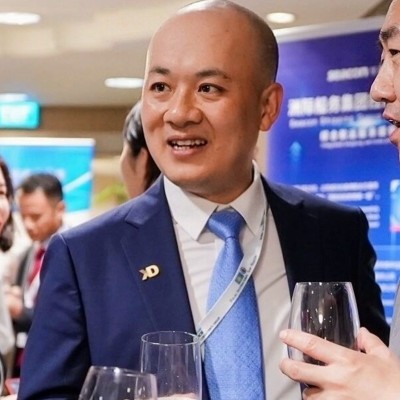
Fleet Size Is Not Enough: CMES President Wang Yongxin on Shipping's Future Competitiveness
Fleet size alone will not determine shipping companies' future competitiveness, according to Wang Yongxin, Director and President of China Merchants Energy Shipping (CMES). Speaking at Xinde Marine Forum Hong Kong 2026 on 17 November, he highlighted the importance of reliable service during disruption, disciplined investment across market cycles, and cooperation throughout the maritime value chain.
The forum, held as part of the 2026 World Maritime Merchants Forum, brought together participants from shipping, trade, energy and finance. In his keynote address, "Reshaping Global Shipping: Resilience and Value in a Changing World", Wang discussed how geopolitical risks, changing commodity flows, decarbonisation and regulation are affecting both daily operations and long-term investment decisions.
"Future competition will be about more than fleet size: it will be about reliable delivery worldwide," he said.
For Wang, operational resilience means strengthening the ability of a fleet and its global network to keep serving customers under difficult conditions. Route optimisation, vessel utilisation and cost control remain important, but customers also expect shipping companies to fulfil their commitments when supply chains are disrupted. This requires flexibility in deploying resources across regions, vessel types and markets.
He cautioned that many changes in geopolitics, trade relationships, energy systems and supply-chain structures may extend beyond temporary disruption. Even if particular risks ease, shipping may not return to the operating environment companies once knew. Adaptability and continuity of service therefore need to form part of long-term management.
CMES has adjusted fleet deployment this year in response to changes in tanker markets and energy trade, Wang said, taking account of customer requirements, route conditions and cargo flows while maintaining operational flexibility.
The ability to sustain reliable services also depends on how companies manage their assets and finances across cycles. Shipping is capital-intensive and highly cyclical, while fleets, commercial expertise and customer relationships take years to develop. Rather than relying on an ability to identify every market turning point, Wang emphasised maintaining asset quality, professional capabilities and investment discipline.
That discipline includes allowing for more than one possible future. A vessel may remain in service for twenty years or longer, while the fuel pathways, trading patterns and regulatory requirements it will encounter remain uncertain.
"We must ask not only which future is most likely, but also: if the future turns out differently from what we expect, do we have the flexibility to adapt?" Wang said.
CMES has built a diversified portfolio with tanker and dry bulk shipping at its core, complemented by LNG shipping, vehicle transportation and container shipping. Wang described diversification as a way to serve different industries and navigate different market cycles. Each business, however, must be supported by established capabilities in safety, technology, operations and customer service.
Decarbonisation introduces further considerations into those investment decisions. Fuel availability, energy efficiency, emissions performance, infrastructure readiness and regulatory compliance increasingly affect a vessel's lifetime value, Wang said. These factors require shipowners to assess the conditions under which a vessel will operate as well as its technical specifications.
He pointed to CMES's own fleet developments. Since 2025, the company has taken delivery of four methanol dual-fuel car carriers—CM HONG KONG, CM SHEN ZHEN, CM GUANGZHOU and CM WUHAN—and the methanol dual-fuel very large crude carrier NEW EXPLORER. Its vessels have undertaken methanol bunkering operations in Tianjin, Shanghai, Hong Kong and Guangzhou. CMES is also expanding its LNG shipping capacity and improving the energy efficiency of its existing fleet.
An exchange filing published by CMES on 23 December 2025 confirms that NEW EXPLORER was delivered in Dalian the previous day. The filing identifies it as the world's first methanol dual-fuel VLCC, with a propulsion system capable of switching between conventional fuel oil and methanol.
Fuel infrastructure and operational procedures are equally relevant to putting such vessels into service. According to a China Classification Society (CCS) report published on 9 March 2026, CM HONG KONG completed green methanol bunkering in Hong Kong on 5 March. The associated event was jointly organised by CMES, Sinopec (Hong Kong) and CIMC Enric. CCS's work covered technical assessments, ship-to-ship bunkering procedures, risk assessments, emergency planning and on-site safety arrangements.
Such projects illustrate the cooperation involved in using alternative fuels. Wang said commercial viability requires reliable fuel supply, port infrastructure and proven technology, alongside participation by cargo owners, financial institutions and insurers.
"The question is not only whether the technology works. The commercial ecosystem must work as well," he said.
Digitalisation can support that cooperation. Better use of operational, energy-efficiency, emissions and trade data can improve performance and make carbon outcomes, compliance costs and asset performance more transparent. Wang also stressed the importance of understanding evolving international and regional regulations and contributing operating experience to industry discussions on practical standards and solutions.
The forum's theme, "Connecting Trade, Energy and Capital", reflected these relationships. Trade determines cargo flows, the energy transition affects future fleets, and capital supports fleet renewal, technological development and decarbonisation. Shipping connects these activities to the real economy.
Wang identified Hong Kong's strengths in shipping, trade, finance, insurance, law and professional services as a basis for bringing those activities together. For CMES, the city has long been an important base for international operations and a gateway to customers, markets and partners worldwide.
CMES will continue to strengthen safety and operational resilience, maintain long-term investment discipline, advance green and digital transformation, and deepen cooperation across the value chain, Wang said.


READ MORE
 Tankers
Nearly 75% of LR2s Are Trading Dirty: Why Clean Capacity Is Shrinking Despite Fleet Growth
 Tankers
More Than 500 Ships: Trafigura's Olivi Says Middle East Oil Companies Are Building "Strategic Freight Reserves"
 Tankers
US$660 Million in Nine Months: Why TORM Remains Bullish on Product Tankers
 Tankers
Secondhand Tanker Sales Hit Record as $29.7bn Changes Hands in 2026
 Tankers
A $130 Million Charter Exit Bill: ADNOC L&S Targets Soaring Tanker Rates
 Tankers
18 Tankers, Nearly $100 Million in Average Monthly Profit
 Tankers
VLCC Spot Earnings Fall 31% in a Week as October Rally Unwinds
 Tankers
Monjasa Buys Five Sister Tankers as West Africa Expansion Continues
 Tankers
Volare Agrees $210 Million VLCC Deal as Existing Ships Outprice Newbuild Orders
 Tankers