


Wallenius Wilhelmsen Orders Four Car Carriers in China, Secures Eight Options


The 9,900-CEU LNG dual-fuel vessels will start arriving in 2030, extending the company’s fleet renewal programme as it prepares for longer-term vehicle trade demand.
Wallenius Wilhelmsen has ordered four 9,900-car-equivalent-unit (CEU) pure car and truck carriers from China’s Jinling Shipyard (Jiangsu), with options for eight more, securing additional capacity for delivery from mid-2030.

The LNG dual-fuel vessels would be followed by four optional ships in 2031 and another four in 2032. Capital expenditure for the latest project is expected to total approximately $1.5 billion if all options are exercised.
Announced on October 28, the agreement expands the Oslo-listed operator’s fleet renewal programme to 26 vessels, including options. It follows a $300 million equity placement earlier this month.
The delivery schedule places the investment beyond today’s immediate capacity pressures. Read alongside the company’s market assessments and customer agreements, the order illustrates the challenge facing car carrier operators: committing to ships several years ahead while cargo demand, fuel availability and contract coverage continue to develop.
Trade patterns strengthen the case for capacity
Wallenius Wilhelmsen’s demand outlook rests partly on changes in where vehicles are produced and sold.
In its September 24 market presentation, the company identified rising Asian exports and reduced local production in some destination markets as important drivers of shipping demand. It also highlighted an imbalance between growing outbound Asian volumes and weaker return cargo flows.
For a carrier, vehicle sales alone therefore provide an incomplete measure of capacity requirements. More intercontinental shipments occupy ships for longer, while uneven cargo flows complicate vessel positioning and reduce opportunities to fill both legs of a voyage.
The company’s recent operating experience supports that assessment. In its second-quarter results announcement, Wallenius Wilhelmsen reported full utilisation out of Asia and said it had to prioritise customers when allocating available space.
Ordering ships, however, offers no immediate relief. Its second-quarter report indicated that new orders, unless negotiations were already under way, were likely to secure delivery only from 2030.
Fleet replacement adds another consideration. In September, the company presented a scenario in which global car carrier capacity would begin declining around 2030, assuming no further orders and recycling at 30 years of age. The projection is conditional, but it helps explain why an operator can see a need for additional ships beyond the current delivery cycle.
Customer contracts provide visibility—and leave a gap
Some of Wallenius Wilhelmsen’s customer commitments already extend into the delivery period of the new vessels.
In June, the company announced an early three-year extension with a major European automaker, covering mid-2028 to mid-2031. The extension was valued at approximately $420 million, based on forecast volumes, and included the use of low-emission fuels.
Such agreements provide a commercial basis for planning future capacity. Reliable space, service flexibility and emissions performance all influence the carrier’s ability to retain business over several years.
Yet the company’s overall contract coverage is shorter than the lead time for the latest ships. At the end of the second quarter, its Shipping Services contract backlog was estimated at $6.5 billion, with a volume-weighted duration of 2.9 years.
That difference helps explain the commercial value of combining firm orders with options. Four committed vessels establish an initial investment, while the optional ships leave room to expand as customer renewals, trade patterns and fleet requirements become clearer.
This structure does not remove exposure to the shipping cycle. It allows the company to stage its commitments while preserving an opportunity to secure further capacity.
Fuel choices increasingly depend on commercial arrangements
The new LNG orders also fit a broader approach to fuel diversification.
According to Wallenius Wilhelmsen’s 2025 annual report, its preceding 14-ship Shaper Class programme comprised seven LNG dual-fuel and seven methanol dual-fuel vessels following an engine configuration adjustment during 2025. The company linked that decision to diversifying fuel sourcing and preparing for future fuels.
Its methanol plans have also progressed beyond vessel specifications. In April, the company outlined a supply agreement with Equinor for mass-balanced bio-methanol, to be delivered to Shaper Class vessels in Antwerp and Zeebrugge. The arrangement supports a pilot net-zero end-to-end service for selected customers.
The commercial connection matters: alternative-fuel capability creates a usable service only when fuel can be sourced along the trading network and its cost accommodated in customer agreements.
Wallenius Wilhelmsen has begun addressing that through contract terms. Two renewals announced in December 2025—with a European automaker and a heavy-equipment manufacturer—incorporated arrangements for multi-fuel bunker adjustment factors. These provide a contractual mechanism for adjusting charges as the fuel mix changes.
Taken together, these investments and agreements point to a fleet designed to accommodate several fuel pathways. The additional LNG vessels broaden that capacity while the company continues developing methanol supply and customer services.
Financing the next phase
Wallenius Wilhelmsen completed its private placement on October 6, raising gross proceeds equivalent to $300 million through 17.145 million new shares priced at NOK168 each. Net proceeds, together with debt financing, are intended to support the wider newbuilding programme and general corporate purposes.
The Jinling agreement converts the expansion discussed during that fundraising into a shipbuilding commitment. It also extends an established relationship: in February 2024, Wallenius Wilhelmsen exercised options for four additional Shaper Class vessels at the same yard.
For the Chinese builder, the latest agreement adds four firm vessels and a potential follow-on series. For Wallenius Wilhelmsen, it brings shipyard capacity, financing and fleet planning into closer alignment.
The remaining commercial task is to extend customer business alongside the fleet. By ordering now and retaining substantial options, the company is making an initial commitment to demand beyond 2030 while leaving the scale of subsequent investment open.

READ MORE
 Car Carriers
NYK and K LINE plan four ammonia-fuelled car carriers for 2030
 Car Carriers
GCC takes car carrier orderbook to 22 with Changhong deal
 Car Carriers
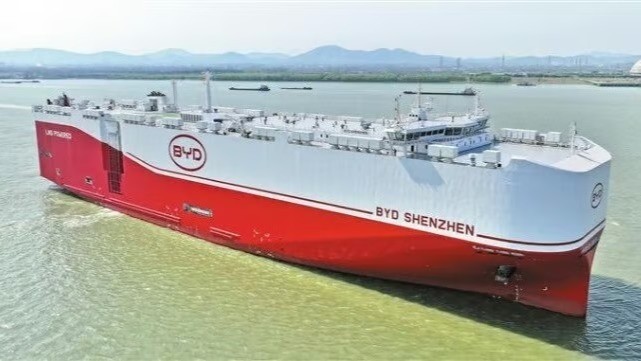
BYD Has Bought another 10 More Ships, Says Stella Li,Executive Vice President of BYD
 Car Carriers
MSC Expands Its Car Carrier Fleet and Orderbook to 43 Ships
 Car Carriers
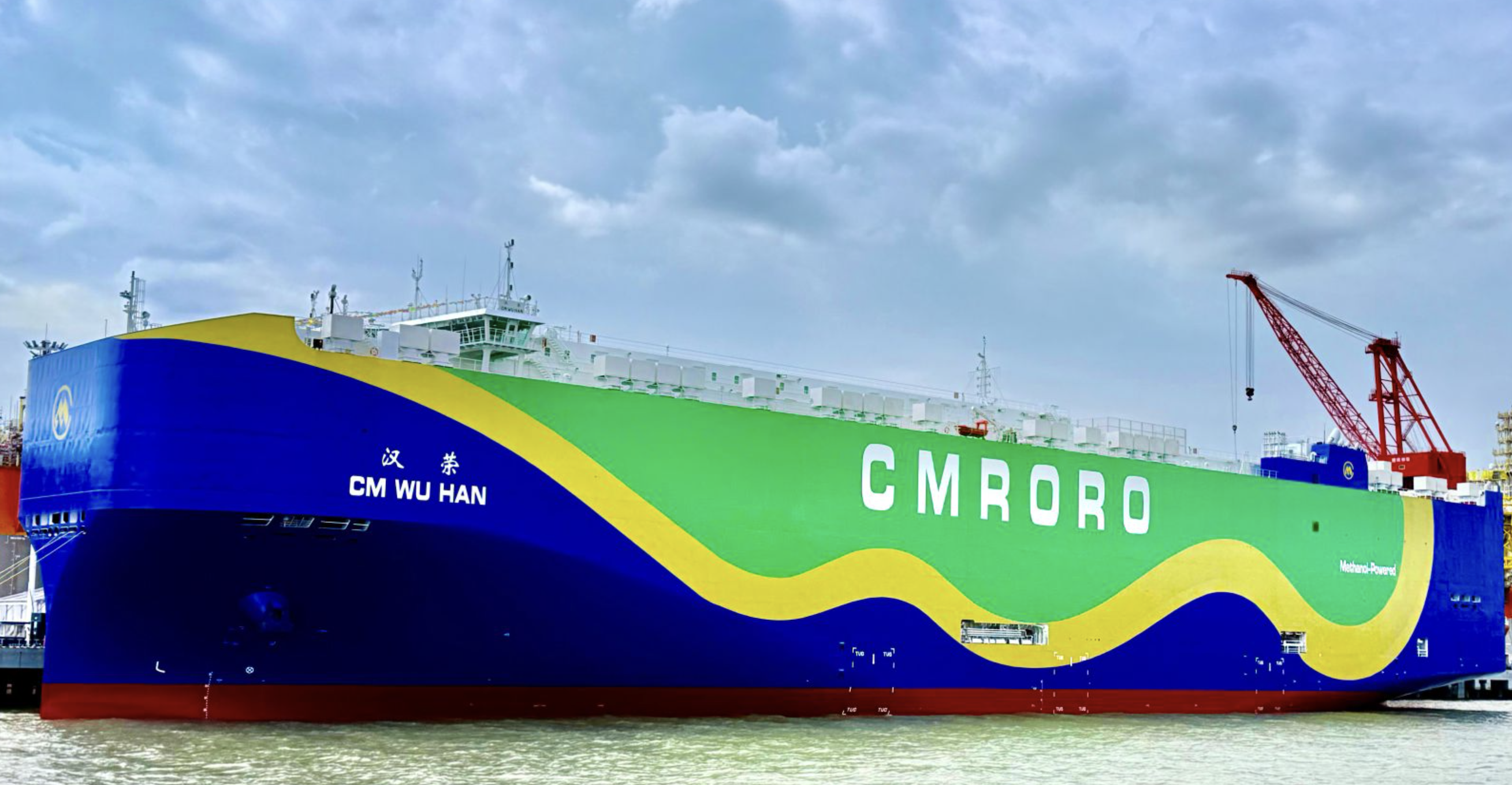
China Merchants Takes Delivery of Methanol Dual-Fuel Car Carrier CM WUHAN
 Car Carriers
Ningbo Ocean Shipping Plans Two More PCTCs to Expand Its Car Carrier Fleet
 Car Carriers
Another Chinese Shipowner Enters PCTC Market — and Another Chinese Yard Moves into 5,000-CEU Construction
 Car Carriers
Up to 26 PCTC! Höegh Autoliners Signs 6 More Aurora Car Carriers with China Merchants
 Car Carriers
917 Chinese Vehicles Arrive at Chancay as COSCO SHIPPING Expands Rack-Based Auto Logistics
 Car Carriers