


World’s Largest Car Carrier Operator Posts $212 Million Quarterly Profit

Wallenius Wilhelmsen, the world’s largest car carrier operator by capacity, reported third-quarter 2026 net profit of US$212 million on November 4, up 53% from the previous quarter, while maintaining its full-year adjusted EBITDA outlook of approximately $1.6 billion. Alongside the earnings recovery, the group has announced customer agreements worth around $1.7 billion and expanded its Chinese newbuilding programme with four firm vessels and options for eight more. Together, these developments show how the company is securing cargo for the next three years while committing to fleet capacity that will start arriving in 2030.
Earnings recover sequentially but remain below last year
Third-quarter revenue reached $1.401 billion, up 7% quarter on quarter and 5% year on year. Adjusted EBITDA increased by approximately 19% from the second quarter to $428 million, while net profit rose from $138 million to $212 million. Of that total, $192 million was attributable to shareholders of the parent company. Improved results in Shipping Services and Government Services supported the sequential recovery.

The annual comparison was weaker. Adjusted EBITDA was approximately 10% below the $477 million recorded in the third quarter of 2025, while net profit declined 24% from $280 million. For the first nine months of 2026, revenue was broadly unchanged at $3.96 billion, but net profit fell approximately 43.3% to $527 million from $929 million. The earlier period included a $135 million gain on the disposal of a subsidiary, affecting the comparability of cumulative earnings.
The results therefore reflect a recovery from the second quarter alongside continuing pressure on earnings compared with last year. Management’s decision to retain its approximately $1.6 billion adjusted EBITDA outlook also indicates that the latest improvement has not prompted an increase in full-year expectations. Understanding the quarter requires a closer look at the interaction between freight revenue, cargo mix and fuel-cost recovery.
Bunker surcharge recovery drives shipping improvement
Shipping Services remained the group’s principal earnings contributor, with adjusted EBITDA rising to $355 million from approximately $299 million in the second quarter. A roughly $47 million reduction in net bunker costs was a major factor. Fuel surcharge revenue increased by about 44%, from $153 million to $220 million, providing more effective compensation for elevated fuel expenses.
The improvement reflects the timing of cost recovery. When bunker prices rise before contractual surcharges adjust, carriers initially absorb the additional expense. As surcharge adjustments catch up, net fuel costs can return towards more normal levels. Wallenius Wilhelmsen said the third-quarter normalization had not yet fully offset the elevated net bunker costs incurred during the first two quarters. The effectiveness and timing of contractual cost pass-through therefore remain important to quarterly profitability.
The company’s own cargo volumes did not increase alongside earnings. Shipping volumes were 13.2 million cubic metres, down approximately 3% both sequentially and year on year. Net freight revenue per cubic metre rose 5% quarter on quarter to $64.4, mainly because of changes in trade and customer mix, but remained slightly below the year-earlier level. Cargo composition and cost recovery contributed to the improvement, so the profit increase alone provides an incomplete measure of changes in underlying market freight rates.
Asian exports continue to absorb vessel deliveries
In a video accompanying the results, President and Chief Executive Officer Lasse Kristoffersen described stable export demand from Japan and South Korea and continued growth from China. He said demand for services was growing faster than industry capacity, leaving the company tightly utilized. Wallenius Wilhelmsen also said its shipping capacity was fully committed for 2026 and that customers continued to show strong interest in securing capacity for longer periods.
This assessment is consistent with the trade patterns examined in Xinde Maritime’s earlier coverage of the company’s investment plans. Vehicle production and sales are becoming more geographically separated, with growing Asian exports accompanied by weaker cargo flows on some return trades. More intercontinental shipments, longer voyages and uneven utilization between outbound and return legs can increase the vessel capacity needed to move a given number of vehicles. Global vehicle sales and newbuilding delivery totals therefore offer only a partial picture of available shipping capacity.
According to Clarksons data cited in the company’s presentation, 12 car carriers were delivered during the third quarter, while 49 new orders were placed. The orderbook represented approximately 26% of existing fleet capacity. Wallenius Wilhelmsen’s assessment is that demand continues to absorb deliveries, while orders placed today are generally unlikely to enter service before 2030 or later. Customers seeking space now and owners reserving shipyard slots are consequently making decisions across very different time horizons.
Customer agreements extend business visibility through 2029
The company is working to translate that demand into contracted business. Contracting for around 40% of its 2027 shipping volumes is under way. Based on current volume assumptions, it expects the majority of its shipping capacity for 2027–2029 to be contracted by the end of 2026. At the end of September, Shipping Services had an estimated contract backlog of $5.8 billion, with a volume-weighted duration of approximately 2.8 years.
On October 29, Wallenius Wilhelmsen announced two three-year agreements with a leading equipment manufacturer, covering shipping and logistics services with a combined value exceeding $1 billion. The shipping component was valued at approximately $950 million, with rates at similar levels to the preceding three-year contract. The logistics agreement was estimated at close to $100 million over the same period. The package illustrates the company’s exposure to equipment transportation and the associated land-based services alongside its automotive business.
On November 2, the group announced a further three-year shipping agreement with a leading Asian automotive manufacturer, valued at approximately $700 million over the initial term. Rates were described as being in line with current market levels, and the agreement included a two-year extension option subject to mutual agreement. It also incorporated a multi-fuel approach across trade lanes to accommodate the gradual introduction of alternative and lower-emission fuels. Neither customer was named.
Together, the approximately $1.7 billion of customer commitments improve visibility for fleet deployment and business planning. The equipment manufacturer’s renewal at rates similar to its preceding contract also shows how long-term customer pricing can follow a different trajectory from marginal spot freight or short-term charter rates. Actual earnings will still depend on cargo volumes, fuel compensation and service costs, while contract duration provides a clearer basis for planning vessel employment.
Chinese newbuilding programme extends into 2032
Alongside customer renewals, Wallenius Wilhelmsen is expanding its investment at Jinling Shipyard in Jiangsu, part of China Merchants Group. China Merchants said the parties signed a package of four-plus-four-plus-four 9,900-car-equivalent-unit (CEU) LNG dual-fuel pure car and truck carriers in Hong Kong on October 26. Wallenius Wilhelmsen disclosed the project on October 28, specifying four firm vessels and two further batches of four options each.
The firm vessels are scheduled for delivery from mid-2030. If exercised, the optional batches would follow in 2031 and 2032. Total capital expenditure for the latest package is expected to be approximately $1.5 billion if all eight options are exercised. The ships will combine LNG dual-fuel propulsion with hoistable decks, strong ramps and adaptable cargo spaces, allowing them to carry passenger cars, trucks and heavy equipment within the company’s global network.
The agreement builds on an established relationship. China Merchants said the parties had previously contracted seven 9,300-CEU methanol dual-fuel vessels and seven 11,700-CEU LNG dual-fuel vessels since October 2023. The expanded fleet renewal programme now comprises up to 26 ships, including vessels already delivered and optional newbuildings. Two vessels from the earlier programme had been delivered by the results presentation, with the earlier series scheduled across 2026–2028 and the new phase beginning in 2030.
The delivery profile gives the investment a longer horizon than the current shortage of available space. The earlier series is entering service, while the latest agreement reserves capacity for the next phase of fleet renewal. Four firm orders establish an initial commitment, and eight options retain room for expansion as customer requirements and market conditions develop. The vessels’ cargo flexibility and fuel configurations will need to match the trades and customers they ultimately serve.
Equity funding supports expansion across a longer cycle
Financing has advanced alongside the ship orders. On October 6, Wallenius Wilhelmsen completed a private placement raising the equivalent of $300 million. It said the proceeds, together with debt financing, would support its newbuilding programme and general corporate purposes. Its largest shareholder, Wilh. Wilhelmsen Holding, participated in the placement. The equity was raised after the third-quarter balance-sheet date, adding funding for the next phase of investment.
The existing business continues to generate substantial cash. Operating cash flow was $470 million in the third quarter, up 81% from the second quarter. At September 30, net interest-bearing debt was approximately $2.119 billion, equivalent to 1.3 times adjusted EBITDA over the preceding 12 months. Cash generated by operations must accommodate vessel payments, debt repayments and shareholder distributions, making the combination of equity and debt financing relevant to a capital programme extending over several years.
The timing of customer commitments and vessel deliveries remains an important consideration. The recently announced three-year agreements primarily secure business through 2029, while the latest four firm ships start arriving in mid-2030 and the optional ships would follow later. Their eventual revenue base will require subsequent customer renewals and additional business. Current contracting supports nearer-term employment, while returns on the next generation of vessels will depend on the cargo, pricing and operating costs prevailing when they enter service.
The next concrete test is the company’s ability to complete contracting for most of its 2027–2029 shipping capacity by year-end at rates reflecting current market conditions. Beyond that, the interaction between Asian export growth and expanding vessel supply will remain central to the sector’s outlook. Changes in trade policy, shipping routes and fuel costs will help determine whether today’s strong demand develops into sustained returns on the capacity being ordered for the next decade.

READ MORE
 Car Carriers
Grimaldi Advances Ten-Ship PCTC Plan in China and Orders Another Ro-Pax
 Car Carriers
Wallenius Wilhelmsen Adds Four Firm PCTCs With Options for Eight More
 Car Carriers
Wallenius Wilhelmsen Orders Four Car Carriers in China, Secures Eight Options
 Car Carriers
COSCO SHIPPING Opens Xiaomo–Greece Ro-Ro Route for Chinese Vehicle Exports
 Car Carriers
MSC Expands Its Car Carrier Fleet and Orderbook to 43 Ships
 Car Carriers
NYK and K LINE plan four ammonia-fuelled car carriers for 2030
 Car Carriers
GCC takes car carrier orderbook to 22 with Changhong deal
 Car Carriers
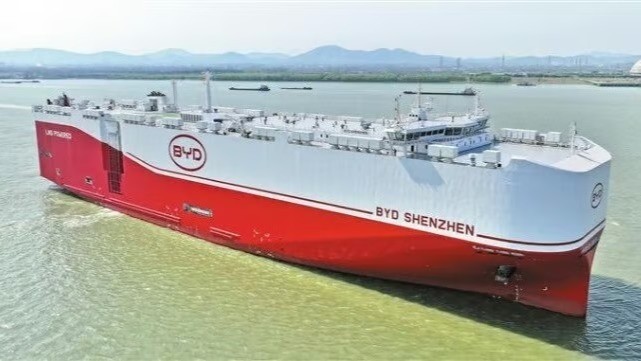
BYD Has Bought another 10 More Ships, Says Stella Li,Executive Vice President of BYD
 Car Carriers
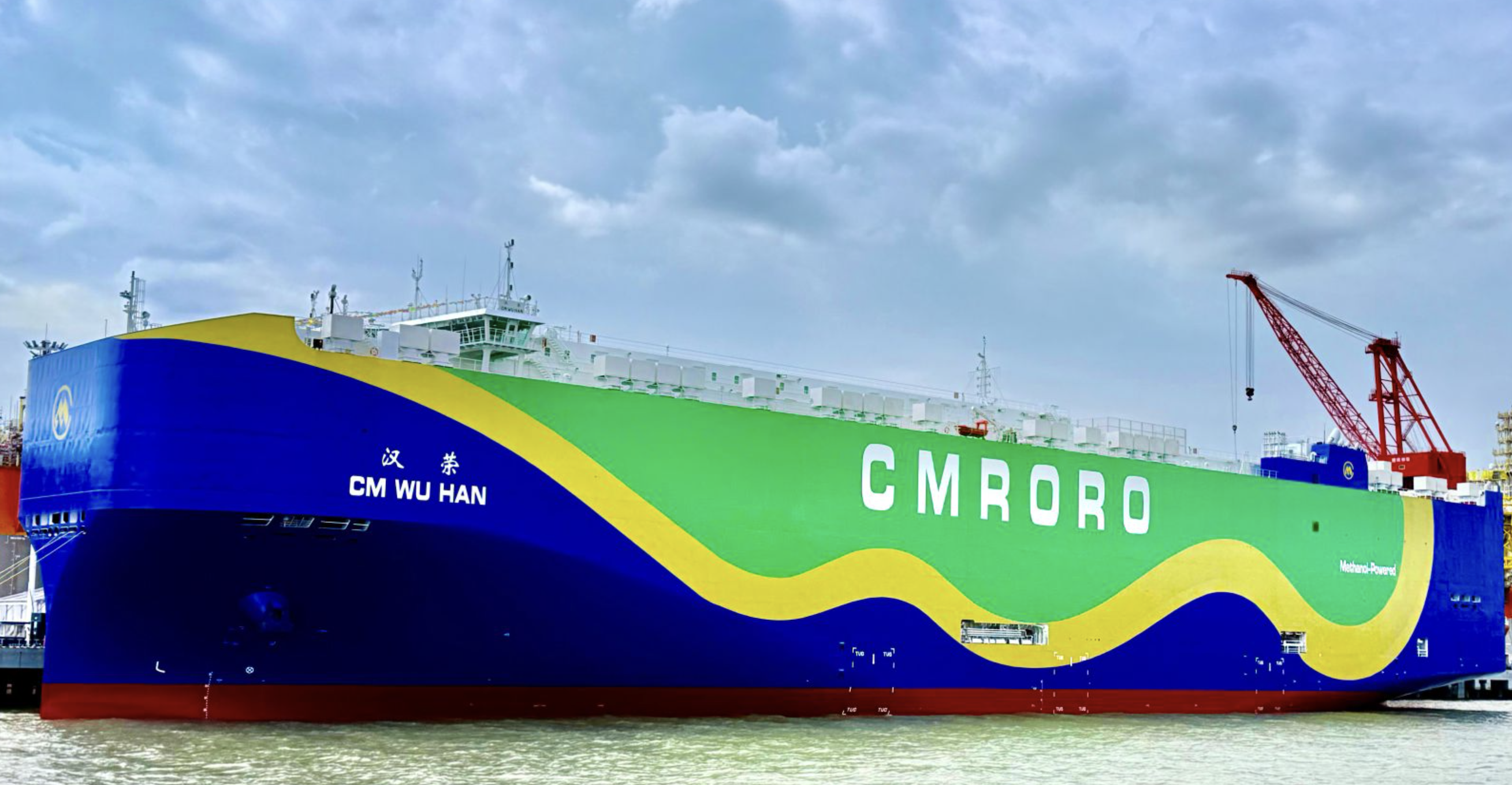
China Merchants Takes Delivery of Methanol Dual-Fuel Car Carrier CM WUHAN
 Car Carriers