


Financing Above 90%: Why Abundant Capital Is Making Shipping Lenders Wary


A ship-financing transaction offering more than 90% financing at a margin of around 245 basis points can attract an owner’s attention. It can also make an experienced lender uncomfortable.
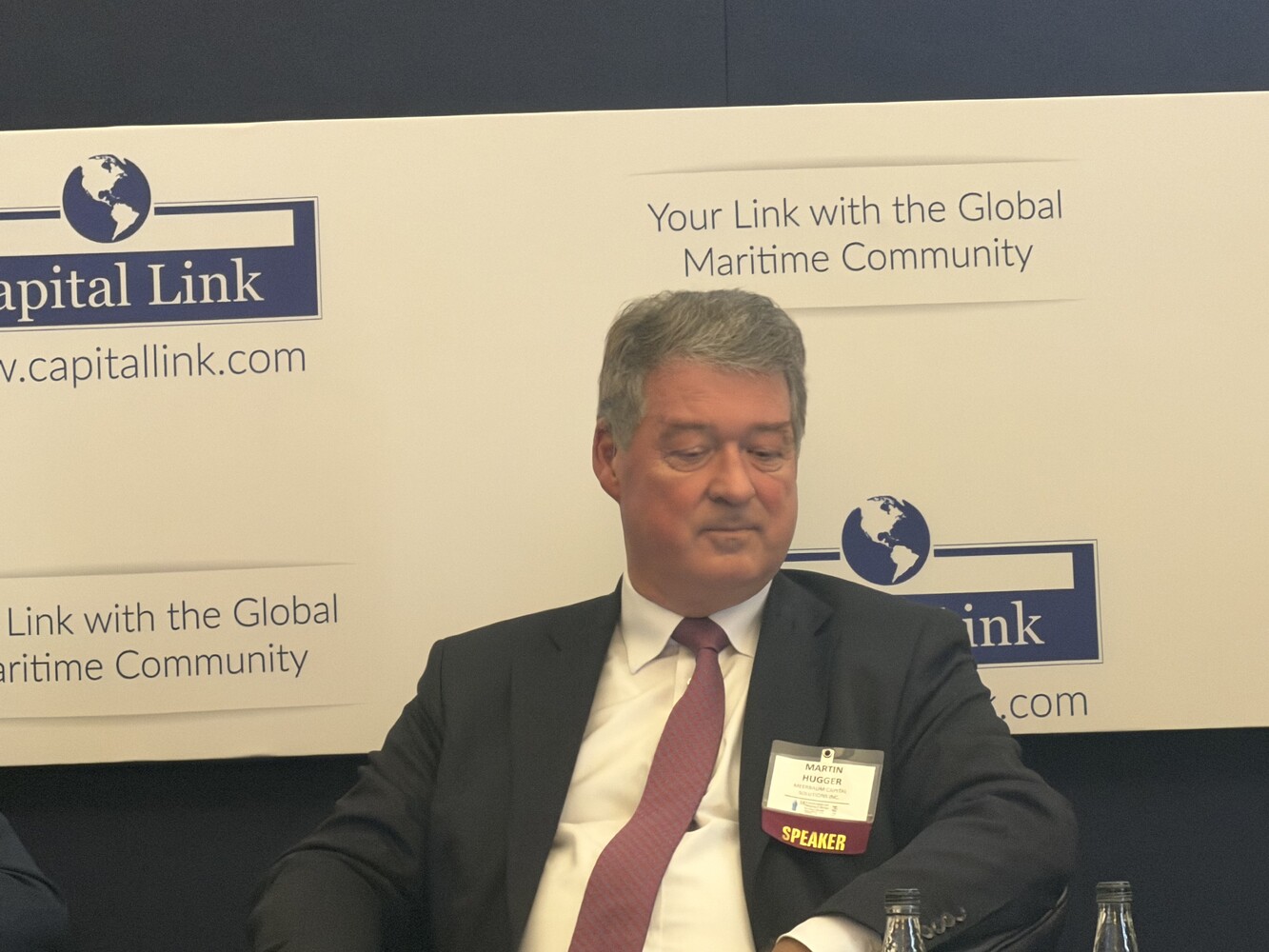
At the 18th Capital Link Shipping & Marine Services Forum in London on 15 September, @Martin Hugger , Managing Director of ship-financing provider MEERBAUM CAPITAL SOLUTIONS , described such a transaction. In his assessment, the deal also involved a questionable valuation and concerns over the vessel’s quality. The combination of high leverage, inadequate risk pricing and an asset he considered unsuitable brought back memories of 2006–2008.
Philipp Wuenschmann , Head of Shipping at Germany’s Berenberg , voiced a related concern. Falling margins were only part of the issue. More troubling was the erosion of structural protections in financing agreements, with some arrangements beginning to resemble those seen before the previous crisis.
Their comments, made during the panel “Financing Global Shipping: Opportunities, Challenges, and Strategies,” point to a tension in today’s market. Owners have substantial cash, while banks and other capital providers are competing for business. In that environment, risk can accumulate through individual transactions that still appear profitable when they are agreed.
This does not establish that shipping finance is entering a crisis. It does suggest that abundant capital requires discipline from those deploying it.
Capital Has Returned, but Borrowing Demand Is Uneven
Bank lending to shipping is expanding again.
According to @Petrofin Research ’s report published in July 2026, the world’s top 40 ship-financing banks held combined shipping loan portfolios of $300.6 billion at the end of 2025, up approximately 6% from $283.6 billion a year earlier. European banks remained the largest regional group, with around $151 billion, or 50.4% of the top 40 total.
These figures measure outstanding loan portfolios rather than new lending during the year. They nevertheless show renewed expansion after a prolonged period of adjustment. Leasing companies, export-finance providers and other non-bank lenders are also competing for business, giving owners a broader range of funding options.
Borrowing demand has not increased uniformly alongside that supply. Wünschmann noted that many owners have cash available and little immediate need to refinance existing vessels. Large projects still require substantial facilities, including syndicated loans, but across parts of the market, lenders are competing for a limited pool of suitable borrowers.
That gives strong owners greater negotiating power. Companies with sound operations, clear asset structures and good management records can compare pricing, financing levels and contractual terms. They can also decide whether borrowing is necessary at all.
For lenders, the same conditions create pressure. Lower margins can help win business while reducing the income available to absorb potential losses. Where a financing business relies on third-party capital, investors will also compare shipping returns with opportunities elsewhere. If returns fall without a corresponding reduction in risk, capital has reason to seek another destination.
Today’s favourable borrowing conditions therefore reflect both stronger shipping balance sheets and competition for good customers. They improve owners’ choices, but provide limited assurance about how risk will develop over the life of a loan.
What Is Being Conceded Beyond the Margin?
The transaction Hugger described was striking because several concerns appeared together: an asset valuation he considered too high, a very large financing proportion and pricing that, in his view, did not adequately compensate for the risk.
He did not disclose the full transaction documents, and the example cannot represent the entire market. Its significance lies in the combination of assumptions underpinning the financing.
A financing percentage needs to be understood alongside the valuation supporting it. Where the valuation reflects a strong market and borrowing accounts for most of that value, a subsequent fall in vessel prices can quickly reduce the collateral cushion. Repayment schedules, additional security and the borrower’s financial strength become particularly important.
Shipping also presents a difficult correlation. Freight earnings and vessel values can weaken together. The borrower may generate less cash at precisely the time when the lender’s collateral is losing value. Two sources of protection that looked adequate at origination can consequently come under pressure simultaneously.
That helps explain Wünschmann’s emphasis on structural safeguards. Pricing determines the lender’s return; the financing structure influences what can be done when performance deteriorates. Asset-coverage requirements, liquidity provisions, amortisation schedules and dividend restrictions can all affect how much cash remains within the business and when emerging problems must be addressed.
Vassilios Maroulis , Citi’s Global Industry Head for Shipping, Logistics & Offshore, stressed the importance of assessing the corporate borrower as a whole. Customer selection is central to that approach. A financing decision requires an understanding of the company’s business, financial position and broader requirements, extending beyond the collateral ratio on an individual vessel.
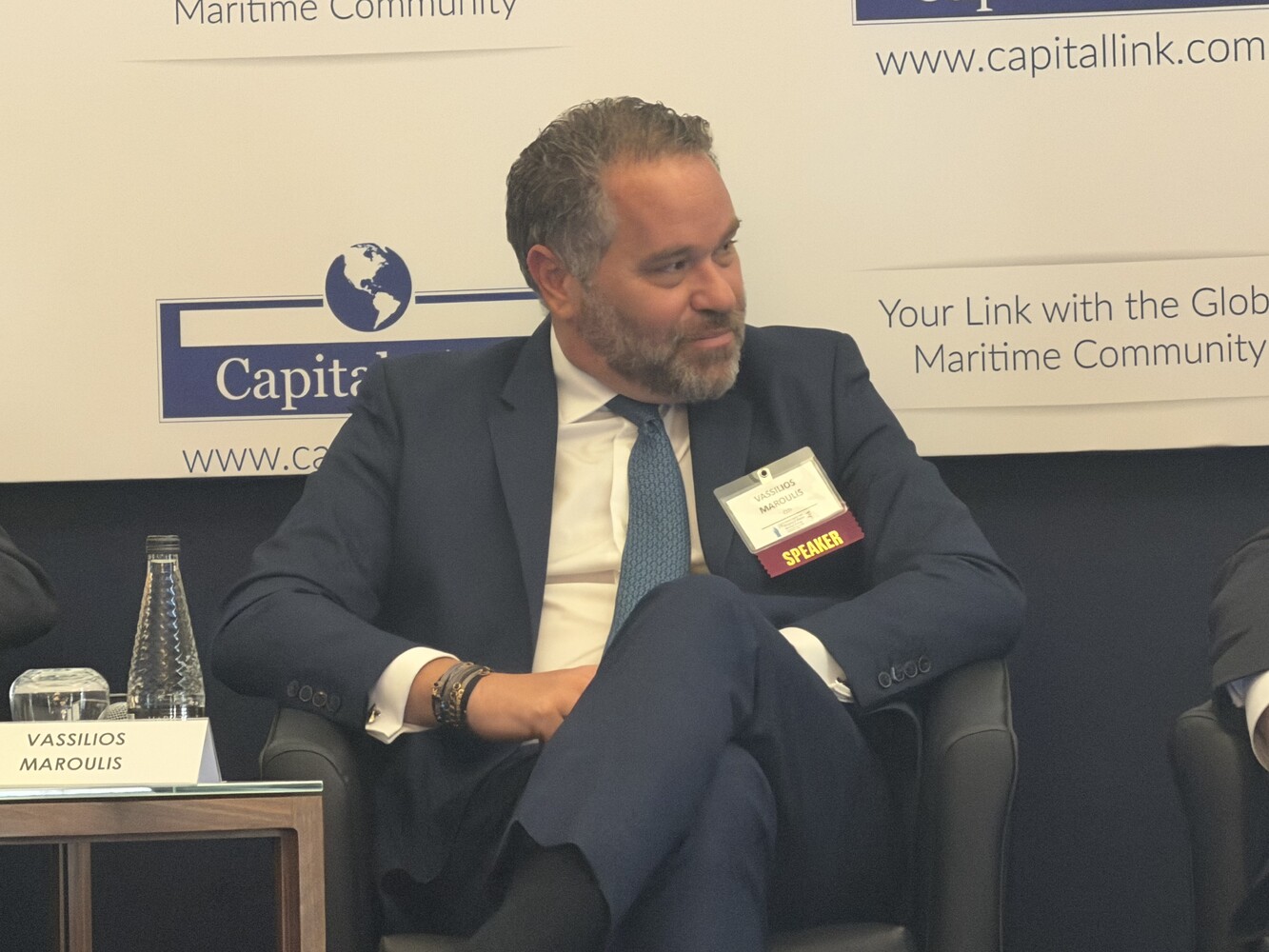
He said Citi would maintain its customer standards and financing structures despite competitive pressure. As companies and projects grow, the bank aims to provide comprehensive solutions capable of meeting substantial funding needs, building relationships around execution certainty and service.
For owners, this broadens the assessment of a financing offer. Interest savings matter, as do the operation of the agreement during a downturn and the funding provider’s capacity to remain supportive. The value of a facility emerges over its full life.
Different Owners Face Different Financing Markets
Abundant capital does not give every owner equal access.
Hugger described a segmented market: large banks tend to serve large clients, local banks tend to serve local clients, and alternative providers seek businesses with suitable assets, credible backing and growth ambitions.
Competition can be intense for larger companies with strong credit profiles. Smaller owners with access to local banking relationships may also obtain competitive funding, although additional guarantees or other conditions can accompany it. Owners operating beyond those networks, or seeking to expand beyond their existing scale, may have greater need for non-bank finance.
Alternative providers can offer different financing levels, more flexible structures or expertise in particular vessel types and ages. Their opportunity depends on understanding those assets and customers. They still need to assess vessel quality, management capability and shareholder support carefully.
Harris Antoniou , Founder and Managing Director of Neptune Maritime Leasing Ltd , explained that the company initially saw an opening created by banks withdrawing from parts of shipping. Leasing offered a way to meet owners’ funding requirements. By the time of the discussion, he said, Neptune had completed more than $1 billion in leases involving over 70 vessels.
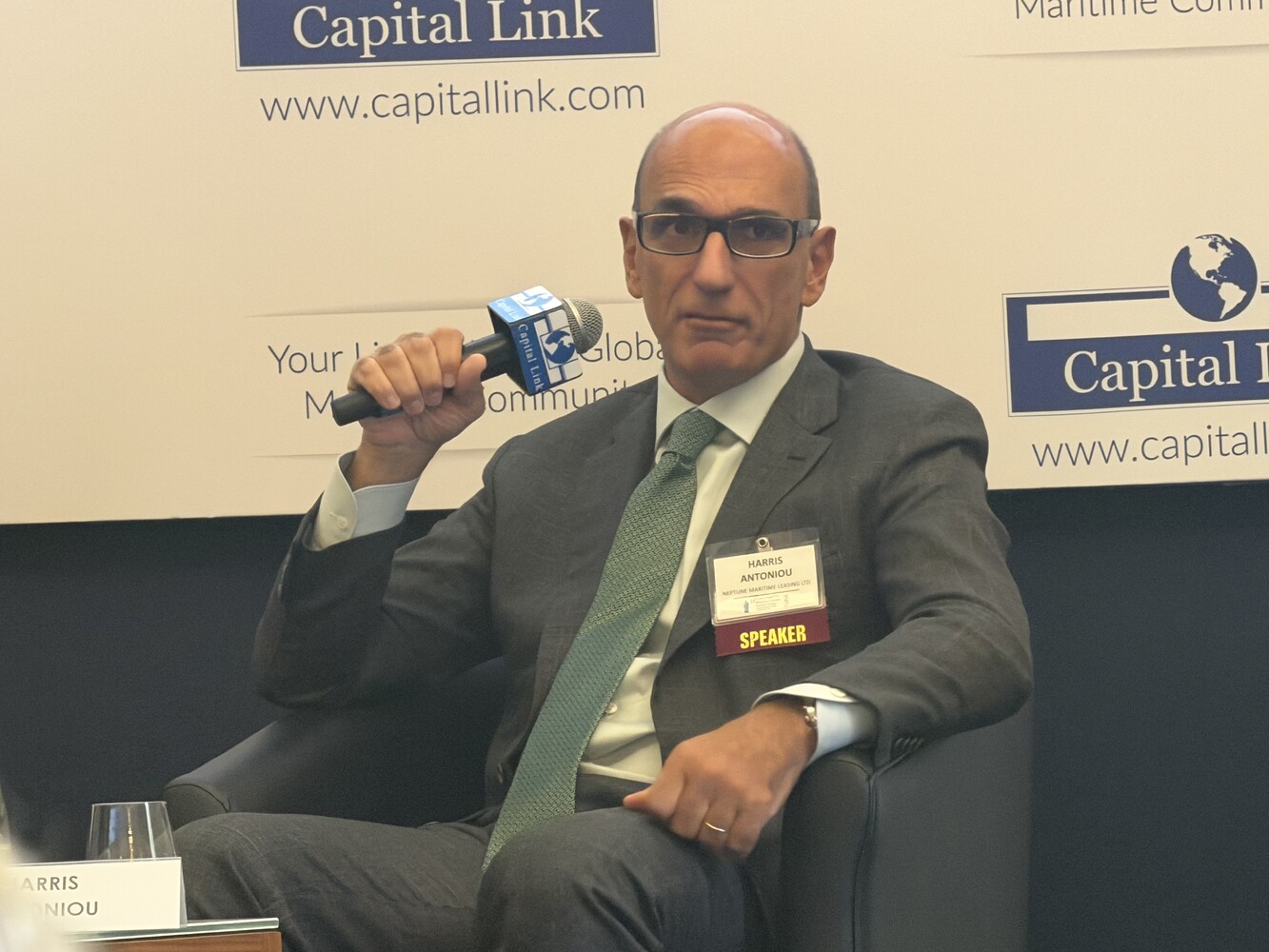
The renewed presence of banks had not removed that opportunity. Neptune deploys its own equity and also borrows from banks, using the combined funding to provide lease financing to owners. Antoniou described the relationship with banks as mutually supportive.
This creates a financing chain linking banks, specialist platforms and individual shipping projects. For the bank, the platform’s balance sheet, guarantees and management capabilities provide an additional layer of support. For the owner, the platform can deliver a structure different from a direct bank loan.
Neptune’s corporate structure also reduces the constraints associated with a fixed-life investment fund approaching its exit date. That matters when financing assets expected to operate across multiple market cycles.
A bank’s decision to lend directly to a particular owner consequently provides only part of the picture. It may still be participating in the capital structure through a specialist intermediary.
Better Financing Cannot Fix an Expensive Ship
The return of capital has tangible benefits for fleet renewal.
Antoniou noted that investment in new technologies, standards, dual-fuel propulsion and vessels with lower fuel consumption requires financial support. Active funding markets help make those investments possible.
Financing terms and the purchase price of the asset nevertheless require separate judgments.
Wünschmann identified opportunities in parts of the midsize vessel market, including dry bulk, container feeders and multipurpose heavy-lift ships. The question was whether cash flow and valuations could support a workable financing model. Berenberg continues to finance secondhand tonnage while also using newbuilding finance to improve its portfolio mix.
Hugger offered a more cautious perspective. In container shipping, he highlighted the influence of major liner companies and independent owners’ dependence on charterers. Before entering a segment, an investor needs to understand who controls chartering demand, how many realistic customer options exist and how much optimism is already embedded in the purchase price.
These differing views show why a vessel category alone cannot establish the quality of an investment. Specifications, acquisition cost, charter duration, counterparty credit and remaining operating life can produce very different financing outcomes.
Lower funding costs can improve returns. They cannot automatically compensate for an inflated asset price. A cheaply financed vessel bought near the top of the market can still leave its owner heavily dependent on freight rates remaining strong.
Hugger suggested that, in some circumstances, allowing cash to accumulate and taking no immediate investment action could be a sensible choice.
His observation also reflects the different responsibilities of owners and lenders. Owners can take risk to capture market upside. Lenders need a credible repayment case when the most optimistic assumptions fail to materialise.
Two Weeks for Documents, Six Weeks for an Account
Some financing difficulties arise after the commercial terms have been agreed.
Wünschmann offered a practical example: financing documentation can sometimes be completed in two weeks, while opening the necessary account may take six weeks—and even that can be relatively fast.
For an owner facing a payment deadline, vessel delivery or scheduled transfer of funds, account access and payment capability directly affect execution. Sanctions screening, differing internal bank policies and cross-border requirements can complicate the process. A lender’s willingness to provide money still needs to be matched by the ability to move it through the payment chain.
Wünschmann therefore emphasised the role of shipping banks in keeping money moving internationally. Increasingly regional rules add to the compliance arrangements that owners and financiers must navigate.
His concern extended to the handling of distressed transactions. During previous downturns, financiers could rely on established arrangements for refund guarantees, mortgage enforcement and restructuring. Whether those cross-border mechanisms will remain equally dependable in another crisis deserves attention before difficulties arise.
That concern does not imply that existing commitments have failed. It recognises how much shipping finance depends on cooperation across jurisdictions. A yard builds the vessel, banks provide guarantees and funding, legal systems recognise and enforce contracts, and the ship earns revenue around the world. Greater uncertainty at any point can affect the risk of the entire transaction.
Maroulis also emphasised the importance of the International Maritime Organization and a common international framework. Owners, yards and lenders need a dependable basis for assessing how vessels will operate, what costs they will face and which markets they can serve.
The willingness to commit capital ultimately depends in part on confidence that the rules supporting those commitments will remain workable.
Green Finance Requires an Understanding of Operations
The discussion of emissions measurement revealed another area where financial analysis depends on operational knowledge.
Maroulis argued that institutions need to understand the assets they finance and their emissions performance in order to allocate capital intelligently. Better measurement and data allow lenders to assess their portfolios and make more informed decisions.
Hugger supported the objectives of measurement and emissions reduction, while questioning how the resulting figures are interpreted. Strong markets can encourage vessels to increase speed, raising fuel consumption. The same ship operating at 11 knots and 15 knots can produce very different emissions outcomes.
Portfolio performance is therefore influenced by both vessel technology and operating decisions. A lender can support more efficient ships and still report higher emissions if those ships subsequently operate at greater speed.
Green-finance assessments need to bring design, actual speed, deployment and data methodology into the same analysis. A technical specification sheet alone may give an incomplete account of an asset’s future performance. Consistent operating data, accompanied by a clear explanation, can help financiers understand what is happening.
Banks need to identify durable technical improvements, while owners need to explain commercial operating requirements. Assessment frameworks need to connect the two. More data increases the importance of understanding the business that produces it.
Will Funding Be Available in the Next Downturn?
Wünschmann raised a question that tempers the confidence generated by today’s active market: financing capacity has yet to be tested under every set of conditions.
Where owners have substantial cash and fleets have reduced debt, available capital can appear plentiful. If those businesses later return to the market for borrowing—particularly against vessels then aged 10 to 15 years—the banking system’s ability to respond will depend on regulation, asset preferences and risk appetite at that time.
Some regional banks have already expanded their shipping portfolios significantly. Every institution has limits. Today’s active lenders may be unable to maintain the same rate of growth if refinancing requirements rise together.
Interest rates create another variable. A lower loan margin does not guarantee a lower total borrowing cost. If the reference rate rises, a capital-intensive shipping business can still face a larger interest bill. Leverage, amortisation and cash reserves need to accommodate that possibility.
Panellists also identified artificial intelligence and cyber threats as risks deserving greater attention. These technologies can affect efficiency, operations and market sentiment. Understanding the security of a loan increasingly requires a broader assessment of the borrower’s ability to keep operating.
Antoniou’s description of Neptune’s approach captured the choice facing specialist financiers: some flexibility on price may be acceptable, while standards for asset quality and financing protection must be maintained.
For owners, abundant capital creates an opportunity to improve funding structures, renew fleets and preserve commercial options. For financiers, intense competition increases the importance of sound valuations, careful customer selection and contractual safeguards. Both sides need to consider the market conditions a facility may encounter before it matures.
Shipping has plenty of projects capable of earning money in a strong market. The durability of their financing becomes clearer when freight rates fall, asset values adjust, payments are delayed or refinancing becomes difficult. A period of abundant capital offers the opportunity to prepare for those conditions while there is still room to choose.


READ MORE
 Finance
“We Are Buying Ships”: NORDEN Raises 2026 Profit Guidance for the Fourth Time
 Finance
Cetus Maritime Advances Oslo IPO Plans with $133.6 Million Seacon Deal
 Finance
Overtaken by Shanghai, How Can London Keep Shipowners and Capital?
 Finance
Shanghai links safety records to RMB5m maritime loan
 Finance
Shipowners Have Made a Fortune. How Will They Spend It?
 Finance
HEIDMAR - Scaling for Growth: Capitalizing on Favorable Market
 Finance
Shipping’s Risk Equation Is Being Repriced as Finance, Insurance and Contracts Adapt
 Finance
Shandong Shipping and OSM Thome Form Singapore JV
 Finance
From RMB 1.87 Billion to RMB 4.55 Billion: What Changed at COSCO Shipping Energy in One Year?
 Finance