


Cetus Maritime Advances Oslo IPO Plans with $133.6 Million Seacon Deal
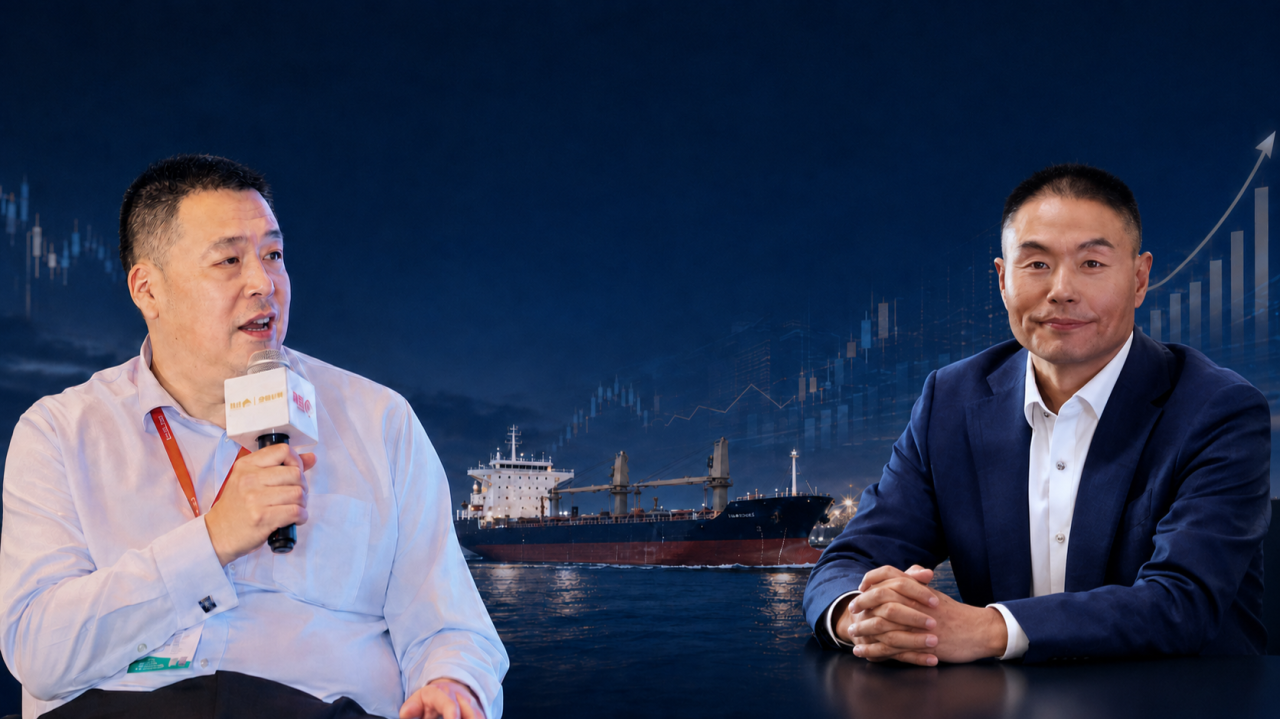
Cetus Maritime’s plans to enter the public equity market have become clearer following a $133.6 million agreement with Seacon Shipping covering interests in 10 bulk carriers and time-charter arrangements for another three vessels.
The agreement, signed on 1 October 2026, links the fleet transaction to Cetus Maritime Holdings Limited’s proposed listing on Euronext Growth Oslo. Seacon will receive 30% of the consideration in cash and 70% in newly issued Cetus shares.
The latest disclosure identifies the vessels, the number of consideration shares, Seacon’s prospective ownership interest, a share lock-up and a board nomination right. It also confirms that Cetus plans a subsequent private placement before listing.
Beyond the transaction terms, the partnership brings together complementary capabilities: Seacon’s experience in vessel investment, fleet renewal and capital recycling, and Cetus’s established strengths in cargo development, chartering and commercial operations.
Fleet Acquisition and Listing Preparations Move Together
Seacon’s initial announcement on 28 August disclosed negotiations with Cetus and an intention to pursue an overseas listing, without identifying the market.
The new agreement names Cetus Maritime Holdings Limited as the proposed listed entity and Euronext Growth Oslo as the intended trading venue.
Completion is subject to conditions including approval for Cetus’s proposed listing and admission to trading, completion of equity financing, and settlement or pre-funding of the financing proceeds in accordance with the relevant terms. Other requirements include shareholder approvals, execution of the time charters and necessary consents relating to existing financing arrangements.
The acquisition and capital raising are therefore closely connected. The Seacon transaction would help establish the fleet and ownership structure presented to investors, while the financing and listing arrangements form part of the conditions for completing the acquisition.
No definitive trading date, private-placement size or placement price has been disclosed in the announcement.
What the 13-Vessel Transaction Includes
The agreement distinguishes between the acquisition of vessel-company interests and the chartering of additional tonnage.
Seacon will sell its entire equity interests in 10 subsidiaries. These companies hold interests in delivered vessels under existing finance-lease arrangements, or in newbuildings through shipbuilding contracts.
For three additional vessels, Seacon subsidiaries will remain the owners and enter into time charters with Cetus or its designated subsidiaries on or before completion.

The five delivered vessels associated with the equity acquisition are Seacon Atlanta, Seacon Bangkok, Seacon Barcelona, Seacon Liverpool and Seacon Monaco.
The newbuilding group comprises Seacon Houston, Seacon Busan, Seacon Hiroshima, Seacon Lagos and Seacon Miami. Houston, Lagos and Miami are 64,000-dwt bulkers expected to be built in 2027. Busan and Hiroshima are 40,000-dwt and 42,200-dwt vessels respectively, expected in 2028.
The three vessels covered by the time-charter arrangements are Seacon Dubai, Seacon Nagoya and Seacon Seattle.
Based on the specifications in the announcement, the 13 vessels represent approximately 572,500 dwt, including 479,000 dwt associated with the 10 vessel-company acquisitions.
The package would give Cetus access to existing vessel interests, future newbuilding capacity and chartered tonnage. These different ownership and contractual arrangements are important when assessing its effect on the fleet.
Combining Asset Investment with Commercial Operations
The industrial rationale for the partnership rests partly on the companies’ different areas of emphasis.
Seacon has been active in newbuilding investment, vessel acquisitions and disposals, using asset transactions to renew its fleet and recycle capital. Its approach involves securing vessel resources, selling selected assets when market conditions offer an opportunity, and reinvesting in new ships and other projects.
In 2025, Seacon sold six older vessels and recorded approximately $33 million in gains. In the first half of 2026, vessel disposals generated approximately $14.8 million in gains.
These transactions demonstrate the role of asset management in Seacon’s business. Investment returns depend on more than changes in vessel prices: ship selection, construction costs, financing terms, delivery schedules and the timing of an eventual sale all influence the outcome.
Cetus has placed considerable emphasis on the commercial employment of its fleet.
During discussions reported by Xinde Marine at the EMC2026 shipping conference in May, CEO Mark Young explained that Cetus had not pursued large-scale direct ordering at shipyards in recent years. Instead, it had expanded through purchases of younger, more fuel-efficient secondhand ships and through mergers and partnerships.
Young also stressed cash flow, leverage discipline and the importance of international teams and transparent decision-making in selecting vessel employment.
That approach reflects Cetus’s focus on the earnings ships can generate in service. Cargo development, chartering, vessel and cargo matching, voyage planning and regional fleet deployment are central to the business.
For smaller bulk carriers serving varied ports and cargo markets, these commercial decisions have a continuing effect on earnings.
The Seacon agreement would connect a portfolio of young vessels and newbuilding interests with Cetus’s existing customer relationships and operating network. Cetus would gain additional vessel resources and future deliveries, while Seacon would retain exposure to the enlarged business through its equity holding.
Both companies operate across investment and shipping activities. The complementarity lies in their accumulated experience and business emphasis. Any more extensive future division of responsibilities in newbuilding development, technical management or commercial operations remains to be disclosed.
Young Tonnage and a Visible Newbuilding Pipeline
The age profile of the transaction is significant.
All eight completed vessels were built between 2024 and 2026, while the other five are scheduled for construction in 2027 and 2028.
If completed as planned, the deal would give Cetus a combination of relatively young operating tonnage and identifiable future fleet additions.
Cetus’s published fleet profile covers vessels from 8,500 to 45,000 dwt. It describes a fleet of more than 40 owned and controlled ships, supplemented by shorter-period chartered tonnage.
The approximately 40,000-dwt vessels in the Seacon package fit closely with Cetus’s existing Handysize business. The three 64,000-dwt newbuildings would provide capacity for larger cargo parcels.
For prospective investors, this combination offers a clearer view of how the fleet could develop after listing. Delivered vessels provide an operating base, while the newbuildings create a pipeline of future capacity.
Those newbuildings also bring further capital requirements. Remaining instalments, financing costs and employment after delivery will need to be managed together. The quality of the investment will ultimately depend on the cash flow and returns generated by the ships.
Seacon to Receive a Significant Equity Interest
Of the total consideration of $133,611,758, approximately $40.08 million will be paid in cash and $93.53 million through the issue of 37,341,289 new ordinary shares in Cetus.
Immediately after the consideration shares are issued, Seacon would hold approximately 22.24% of Cetus’s enlarged issued share capital.
That percentage is measured before the subsequent pre-listing private placement. The announcement explicitly states that Seacon’s interest will be diluted by that financing. Its eventual ownership percentage at admission will depend on the size and terms of the placement.
Subject to applicable law and Euronext Growth Oslo rules, Seacon will have the right to nominate one non-executive director.
The consideration shares will also be subject to a lock-up running from completion until the 183rd day after Cetus shares are admitted to trading. Disposals and other specified dealings during that period will require Cetus’s prior written consent.
The structure gives the relationship a longer horizon. Seacon would participate as a shareholder in Cetus’s future performance, with a route to board representation.
For Cetus, issuing shares reduces the immediate cash required for the acquisition. Existing financing obligations and remaining newbuilding payments will nevertheless remain important to the enlarged group’s capital planning.
An Implied Equity Value of Approximately $421 Million
The transaction provides a reference point for Cetus’s valuation.
Dividing the approximately $93.53 million share consideration by the stated 22.24% interest implies an equity value of approximately $421 million immediately after the consideration-share issue and before the subsequent private placement.
This is a calculation based on the disclosed transaction terms and a rounded ownership percentage. It is not a disclosed final IPO valuation or an enterprise-value estimate.
According to the announcement, the consideration was negotiated with reference to Cetus’s net asset value per share and the value of the relevant vessels after deducting outstanding debt and newbuilding payments.
Seacon and Cetus appointed Simpson Spence Young and Arrow Shipbrokers, respectively, to undertake independent valuations using 30 June 2026 as the valuation date.
The transaction requires an assessment of both the vessel interests being transferred and the Cetus shares being issued in exchange.
Future investors will also need to examine the enlarged company’s net debt, lease liabilities, outstanding capital commitments, charter exposure and earnings record. Cetus’s commercial network will be assessed through its ability to turn vessel capacity into sustained operating cash flow.
A Public-Market Step After Years of Consolidation
Cetus’s development has been shaped by a series of combinations.
Asia Maritime Pacific and Hamburg Bulk Carriers announced their merger in late 2022 to create Cetus Maritime. Nachipa Corp joined in 2024, followed by Rhumb Maritime in 2025, with the Australian business operating under the Cetus Maritime Australia name.
These transactions expanded the company’s fleet, regional presence, customer relationships and commercial expertise.
The Seacon agreement adds an equity-funded fleet acquisition linked to a proposed public-market listing.
If Cetus completes the listing, publicly traded shares could become an additional means of financing future acquisitions. Vessel owners joining the platform could receive a mixture of cash and shares, retaining an interest in the combined business.
The usefulness of that approach will depend on Cetus’s share price, net asset value, financing conditions and the returns available from acquisition targets.
The latest announcement also identifies Cetus’s principal existing shareholder. At the announcement date, Pacific Transportation Asia LLC owned 77.56% of Cetus. Pacific Transportation Asia was 95.8% owned by Bell Atlantic Master Trust, a corporate pension trust for eligible employees of Verizon Communications, with The Bank of New York Mellon acting as trustee.
Seacon’s entry and the subsequent private placement would change this ownership structure. The final shareholder composition remains to be disclosed.
Seacon Realises Asset Value and Retains Future Exposure
Seacon expects the transaction to generate an after-tax and after-expense gain of approximately $70 million, recognised in stages between 2026 and 2028.
Recognition remains subject to the relevant accounting requirements. The final gain will depend on factors including asset values at completion and remains subject to audit.
The expected accounting gain is separate from the cash consideration. Seacon would receive approximately $40.08 million in cash, with the balance of the consideration delivered in Cetus shares.
Net proceeds are intended for potential vessel acquisitions and general working capital.
The arrangement would therefore allow Seacon to release part of its investment while retaining exposure to a larger operating business. For Cetus, it would bring in a shareholder with experience in vessel investment, fleet renewal and maritime services.
Financing and Admission Remain the Next Milestones
Seacon has obtained irrevocable and unconditional written approval from a closely allied shareholder group holding 57.75% of its issued capital, satisfying its shareholder-approval requirement as described in the announcement.
A circular containing further details is expected to be sent to shareholders on or before 23 October 2026.
The agreement remains subject to the other applicable conditions, including Cetus-side approvals, equity financing and necessary financing and regulatory consents.
The next disclosures should clarify the placement price, capital raised, Seacon’s final ownership percentage and the enlarged company’s financial commitments.
The deal already presents a clear commercial proposition: combining Seacon’s vessel investment and capital-allocation experience with Cetus’s global operating network, while using equity ownership to maintain a shared interest in the outcome.
For the proposed listed company, the decisive evidence will come from fleet employment, newbuilding deployment, operating cash flow and returns on invested capital.

READ MORE
 Finance
Shipowners Have Made a Fortune. How Will They Spend It?
 Finance
HEIDMAR - Scaling for Growth: Capitalizing on Favorable Market
 Finance
Shipping’s Risk Equation Is Being Repriced as Finance, Insurance and Contracts Adapt
 Finance
Overtaken by Shanghai, How Can London Keep Shipowners and Capital?
 Finance
Shandong Shipping and OSM Thome Form Singapore JV
 Finance
From RMB 1.87 Billion to RMB 4.55 Billion: What Changed at COSCO Shipping Energy in One Year?
 Finance
Net Profit Jumps 42% as NJTC Reshapes Its Liquid-Bulk Shipping Network
 Finance
Capital Is Available, but Ship Finance Is Repricing the Risk of Buying the Wrong Vessel
 Finance
Plenty of Capital, Yet Ships Still Struggle for Financing: The Structural Mismatch Reshaping Ship Finance
 Finance