


From RMB 1.87 Billion to RMB 4.55 Billion: What Changed at COSCO Shipping Energy in One Year?
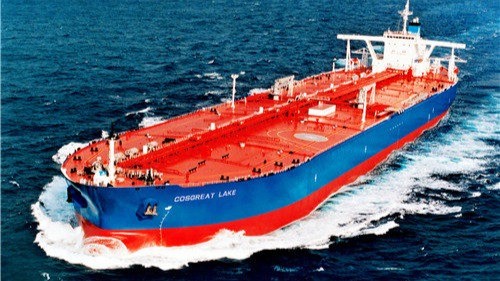

The international tanker market is delivering one of the strongest earnings environments seen by large crude carriers in years, and COSCO Shipping Energy Transportation is among the clearest beneficiaries.
On August 29, COSCO Shipping Energy Transportation Co., Ltd. released its 2026 interim results. For the first half of the year, the company reported operating revenue of RMB 15.15 billion, or approximately US$2.23 billion, up 30.03% year on year.
Net profit attributable to shareholders reached RMB 4.55 billion, or about US$670 million, an increase of 143.21%, while adjusted net profit rose 150.88% to RMB 4.45 billion, equivalent to approximately US$656 million.
Operating cash flow climbed 128.54% to RMB 6.96 billion, or around US$1.03 billion, while EBITDA increased 72% to RMB 8.64 billion, approximately US$1.27 billion.
The scale of the earnings recovery becomes even clearer when compared with last year.
COSCO Shipping Energy generated RMB 4.04 billion, or about US$595 million, in net profit for the whole of 2025. In other words, the company earned more in the first six months of 2026 than it did during the entire previous year.
The quarterly trajectory also remained positive.
Based on the difference between the first-half figures and the company’s first-quarter results, COSCO Shipping Energy generated approximately RMB 7.84 billion, or US$1.16 billion, in revenue during the second quarter alone.
Attributable net profit in Q2 reached approximately RMB 2.37 billion, or US$350 million, compared with RMB 2.17 billion, or about US$320 million, in the first quarter.
Q2 revenue increased by about 7.4% sequentially, while net profit rose by around 9.1%. Adjusted net profit increased by approximately 17.1% quarter on quarter.
This matters because it shows that the earnings surge was not simply a one-quarter spike. The recovery in tanker profitability that began to emerge during the second half of 2025 accelerated sharply in early 2026 and remained strong through the second quarter.
Less cargo, much more profit
One of the most striking features of COSCO Shipping Energy’s interim report is the divergence between transport volumes and financial performance.
During the first half of 2026, the company transported 82.39 million tonnes of cargo, down 12.79% year on year. Transport turnover fell even more sharply, declining 22.05% to 267.2 billion tonne-miles.
Yet revenue increased by more than 30%, while net profit rose by 143%.
That contrast explains much of the current tanker market.
The company’s main shipping revenue reached RMB 15.13 billion, approximately US$2.23 billion, up 30.2%, while its main shipping costs fell 0.89% to RMB 8.85 billion, or roughly US$1.31 billion. Gross margin therefore expanded sharply.
The most powerful contribution came from international oil transportation.
Revenue from the company’s international tanker fleet rose 43.9% to RMB 10.52 billion, equivalent to approximately US$1.55 billion, while gross profit surged 262.4% to RMB 4.67 billion, or about US$689 million.
Gross margin reached 44.4%, up 26.8 percentage points from a year earlier.
Within that segment, international crude oil transportation revenue increased 58.4% to RMB 8.27 billion, or approximately US$1.22 billion.
Remarkably, the corresponding operating costs declined slightly, by 0.2%.
As a result, gross margin for international crude transportation rose to 44.9%, an increase of 32.3 percentage points year on year.
These figures go a long way toward explaining COSCO Shipping Energy’s earnings performance.
Tanker shipping is a highly operationally leveraged business. Once a VLCC is trading, many of its major costs — crew, depreciation, insurance, management and a large share of vessel operating expenses — are relatively fixed.
When TCE earnings move from US$40,000 or US$50,000 per day to US$100,000, US$150,000 or more, a large proportion of the additional revenue can flow through to operating profit.
That is exactly what has happened in 2026.
The company’s first-half results show how quickly stronger freight rates can translate into significantly higher margins and cash generation.
There is another useful comparison.
COSCO Shipping Energy earned RMB 4.04 billion, approximately US$595 million, in net profit for all of 2025. In the first half of 2026 alone, gross profit from international oil transportation reached RMB 4.67 billion, or about US$689 million.
International tanker shipping has therefore re-emerged as the company’s principal source of earnings upside.
What kind of VLCC market is this?
COSCO Shipping Energy’s interim report also provides important context for the extraordinary improvement in tanker profitability.
During the first half of 2026, average TCE earnings on the Baltic Exchange’s TD15 West Africa-China VLCC route reached US$117,773 per day, up about 180% year on year.
Average TCE earnings on the TD22 US Gulf-China route reached US$111,083 per day, an increase of approximately 170%.
The company described crude tanker freight levels during the period as being at historically high levels.
The reasons behind this strength are more complex than a simple increase in crude demand.
China’s crude oil imports actually declined during the first half of the year, while global crude flows were disrupted by geopolitical instability around the Strait of Hormuz.
Yet tanker earnings remained exceptionally strong.
The key change has been in the structure of trade flows and in the availability of vessels that can participate in compliant mainstream business.
Following the escalation of the US-Iran conflict, commercial traffic through the Strait of Hormuz fell materially, disrupting crude exports from within the Gulf.
COSCO Shipping Energy said around 15 million barrels per day of crude exports were affected by the disruption.
Saudi Arabia was able to redirect part of its production through its East-West crude oil pipeline toward Yanbu, with potential capacity of around 7.2 million barrels per day, while ship-to-ship transfers in the Gulf of Oman reached peak levels of around 1.8 million barrels per day.
But these alternatives were not sufficient to fully replace normal Gulf export capacity.
Asian buyers consequently increased purchases from the US Gulf, West Africa and South America.
The company estimates that crude exports from the Atlantic Basin to destinations east of Suez increased by around 3.5 million barrels per day.
This has direct implications for tanker demand.
A barrel moving from the US Gulf, Brazil or West Africa to Asia occupies a VLCC for substantially longer than a barrel moving from the Middle East to Asia. Longer voyages reduce vessel turnover and increase tonne-mile demand, even if the underlying volume of crude traded does not rise.
This is one of the defining features of the 2026 tanker market.
Another is the growing importance of effective, rather than nominal, fleet supply.
During the first half of 2026, 19 VLCCs were delivered globally while only two were scrapped. On paper, the VLCC fleet continued to grow.
But COSCO Shipping Energy cited Clarksons data indicating that non-compliant tonnage now accounts for close to 20% of the global tanker fleet.
Sanctions, insurance restrictions, flag and class considerations, vessel age, crew availability, charterer approvals and risk tolerance are all increasingly separating the headline fleet from the portion of the fleet that can actually compete for mainstream oil-company cargoes.
Recent VLCC market activity tracked by Xinde Marine News has illustrated this shift clearly.
In late August, average VLCC spot earnings briefly moved above US$300,000 per day. In some extreme Gulf-related fixtures, implied earnings climbed much higher.
Sinokor’s VLCC Angola Prosperity, for example, was reported to have achieved an implied daily return of more than US$510,000 on a Gulf cargo for CNOOC, while the TD3C Middle East-China route briefly moved to levels corresponding to almost US$481,000 per day.
These extreme voyages should not be treated as representative of the broader market. They contained very high geopolitical and operational risk premiums.
But they reveal an important change in tanker pricing.
The relevant question is no longer simply how many VLCCs exist globally.
It is increasingly about how many ships are actually available, compliant, positioned correctly and willing to trade in a specific region during a specific loading window.
At one point, Xinde Marine News noted that while hundreds of VLCCs were technically in ballast globally, only a small number were realistic candidates for certain Gulf cargo windows.
This is why the 2026 VLCC rally has been driven by a combination of longer voyages, lower fleet efficiency, geopolitical risk premiums, trade-flow restructuring and tighter availability of compliant tonnage.
Fourteen VLCCs rerouted: operational execution matters more in a volatile market
High freight rates do not automatically translate into high profits for every shipowner.
In a highly volatile tanker market, vessel positioning, chartering strategy, customer relationships, bunker procurement, voyage planning and risk management become increasingly important.
COSCO Shipping Energy disclosed several operational details that illustrate how a large tanker owner can capture value during extreme market conditions.
Following the sudden increase in security risks around the Strait of Hormuz, the company adjusted the voyage arrangements of 14 VLCCs that had already been fixed outside the Gulf.
It worked with customers to reorganise routing and maintain continuity of operations.
The company also took advantage of volatility in bunker markets and made fuel purchases in multiple batches.
During the first half of the year, the weighted average price paid by its VLCC fleet for high- and low-sulphur fuel in Singapore was 6.23% below the corresponding Platts average.
For a fleet of this scale, even relatively small percentage savings in bunker costs can translate into meaningful earnings.
COSCO Shipping Energy also continued renewing COAs with major international oil companies and trading houses while developing new customers and cargo sources.
Its tanker business combines spot employment, time charters, COAs and pool arrangements, while also coordinating across domestic and international trades, vessel sizes and different oil-product segments.
This diversified commercial model partly explains why COSCO Shipping Energy behaves differently from highly spot-exposed tanker companies such as DHT or Okeanis Eco Tankers.
In an extreme bull market, a pure spot operator may capture greater short-term upside.
But when freight rates fall sharply, a company with long-term customers, COAs, domestic trades and LNG contracts can have a more resilient earnings base.
COSCO Shipping Energy has increasingly structured its business around this balance.
International oil transportation provides cyclical upside. Domestic oil transportation and LNG contribute greater earnings stability, while LPG and chemical shipping broaden the company’s exposure across the energy logistics chain.
Beyond 153 tankers
By June 30, 2026, COSCO Shipping Energy owned or controlled 153 tankers with a combined capacity of 21.9 million dwt.
Another 38 tankers totalling 4.28 million dwt were under construction, while six chartered-in VLCCs with combined capacity of 1.842 million dwt were awaiting delivery.
This is not simply a fleet expansion story.
Over the past two years, the company has been systematically renewing and reshaping its tanker portfolio.
Its investment plans have included six new VLCCs with a combined contract value of RMB 5.75 billion, equivalent to approximately US$848 million, together with new Aframax tankers and LNG carriers.
The timing of these investments is important.
Only 19 VLCCs were delivered globally during the first half of 2026. COSCO Shipping Energy expects a further 18 VLCCs to be delivered during the second half, equivalent to only around 1.9% of the existing fleet.
Against the backdrop of historically strong freight rates and the increasing segmentation of the tanker fleet by sanctions, age, insurance and compliance, modern tonnage approved by major oil companies is becoming increasingly valuable.
COSCO Shipping Energy is therefore pursuing a fairly clear tanker-asset strategy: continue renewing core capacity, maintain a global operating network, and supplement owned tonnage with chartered-in VLCCs where appropriate.
Its expansion, however, extends well beyond crude oil shipping.
LNG is becoming a larger earnings stabiliser
By the end of June, COSCO Shipping Energy was involved in 97 LNG carriers, including 66 already in operation and 31 under construction.
The operating fleet had aggregate cargo capacity of around 11.18 million cubic metres.
Most of these vessels are tied to long-term contracts, giving the business a significantly different earnings profile from spot tanker shipping.
During the first half of 2026, LNG transportation revenue increased 22.2% to RMB 1.52 billion, or approximately US$224 million.
Investment income from the segment rose 17.81% to RMB 463 million, equivalent to about US$68 million, while attributable net profit from LNG transportation reached RMB 512 million, or approximately US$76 million, up 20.75%.
In June, the company also signed contracts for four new 175,000-cbm LNG carriers with total investment of around RMB 6.4 billion, equivalent to approximately US$944 million.
The vessels are scheduled for delivery between 2029 and 2030 and are backed by seven-year charters with Shell Tankers Singapore.
These projects illustrate the two different earnings engines now operating within COSCO Shipping Energy.
VLCCs provide substantial upside when tanker rates surge.
LNG long-term contracts provide a more predictable stream of cash flow over a much longer period.
The company is applying a similar diversification strategy to LPG and chemical shipping.
In 2025, a COSCO Shipping Energy subsidiary acquired Shanghai Liquefied Gas for approximately RMB 598 million, or around US$88 million, further consolidating LPG assets.
By mid-2026, the company owned or controlled 14 LPG carriers with another five under construction, as well as nine chemical tankers with one additional vessel on order.
Oil, LNG, LPG, chemicals and related energy-logistics activities are gradually forming a broader integrated transportation portfolio.
Peers are also making extraordinary money
COSCO Shipping Energy is far from alone in benefiting from the 2026 tanker market.
Across the global sector, major crude tanker owners have reported dramatic increases in profitability.
The most direct domestic comparison is China Merchants Energy Shipping.
For the first half of 2026, CMES reported revenue of RMB 19.65 billion, approximately US$2.90 billion, up 56.15%, and attributable net profit of RMB 6.96 billion, or about US$1.03 billion, an increase of 227.57%.
Its tanker business generated RMB 9.58 billion, or approximately US$1.41 billion, in revenue, up 115.66%, while segment net profit surged 378.62% to RMB 6.19 billion, equivalent to about US$913 million.
Second-quarter net profit reached RMB 4.20 billion, or approximately US$619 million, a record quarterly result for the company.
CMES reported 51 VLCCs in its interim fleet table and signed orders for another 10 VLCCs during the reporting period.
International tanker owners show similar operating leverage.
Frontline reported second-quarter net income of US$659.2 million, a company record, with adjusted profit of US$580.2 million.
Its VLCC spot TCE averaged US$152,700 per day in Q2, compared with US$103,500 in Q1. The first-half average was US$124,600 per day.
By the time Frontline reported its results, it had already covered 86% of its third-quarter VLCC spot days at approximately US$156,900 per day.
DHT, one of the purest publicly listed VLCC operators, reported second-quarter spot VLCC earnings of US$162,600 per day, while time-chartered vessels earned around US$90,800 per day.
Okeanis Eco Tankers achieved an even stronger second-quarter VLCC TCE of US$213,600 per available spot day. Its first-half net profit reached US$318.6 million, compared with only US$39.4 million a year earlier.
Saudi Arabia’s Bahri also reported an extraordinary first half.
Group revenue rose 144% to SAR11.27 billion, while net profit surged 421% to SAR4.9 billion. Second-quarter net profit alone reached SAR2.75 billion, up 574% year on year.
These companies are not directly comparable on a simple net-profit basis.
Their fleets, chartering strategies, spot exposure, asset-sale gains and accounting structures differ significantly.
Frontline, DHT and Okeanis disclose direct VLCC TCE figures. COSCO Shipping Energy operates a broader mix of spot contracts, COAs, time charters, pools, domestic oil trades and LNG shipping.
Yet the common direction is unmistakable.
In 2026, the cash-generating power of large compliant crude tanker fleets has increased dramatically.
Higher VLCC rates are feeding through into profits, cash flow, asset values, dividends and renewed fleet investment across the industry.
From tanker owner to broader energy transportation platform
COSCO Shipping Energy’s recent asset moves and its own strategic language suggest a broader evolution in the company’s business model.
International tanker shipping remains the core source of cyclical earnings.
With 153 operating tankers, 38 tankers under construction and another six chartered-in VLCCs awaiting delivery, the company can deploy capacity across VLCC, Suezmax, Aframax, LR and MR segments.
When international tanker markets strengthen, fleet scale can translate very rapidly into higher profitability.
At the same time, the LNG portfolio is expanding a more stable earnings base.
A 97-vessel LNG project portfolio, including 31 ships still under construction, means this segment should continue increasing its contribution as new vessels enter service.
LPG, chemical transportation and wider energy logistics expand the customer base further.
The company is gradually extending from maritime transportation alone toward a broader energy-product logistics chain, while also drawing on COSCO Shipping Group capabilities in ports, logistics, ship finance, shipbuilding and repair, and digitalisation.
In its interim report, COSCO Shipping Energy described its ambition as moving toward the role of both a “resource integrator” and a “solution provider”.
That description captures the changing structure of the company relatively well.
Its earnings model is increasingly built around three layers.
International oil transportation provides the greatest cyclical upside.
Domestic tanker shipping and LNG offer greater stability.
LPG, chemicals and broader supply-chain services widen the company’s long-term strategic perimeter.
The RMB 4.55 billion, approximately US$670 million, earned in the first half of 2026 was driven mainly by the first layer.
The second and third layers will become more important in determining how resilient the company remains when the tanker market eventually moves into a weaker phase.
The second half may tell an even bigger story
There is one important timing issue when considering COSCO Shipping Energy’s first-half result.
The interim report only covers January through June.
Some of the most extreme VLCC market conditions of 2026 occurred in July and August.
Xinde Marine News tracked periods in August when average VLCC spot earnings moved above US$300,000 per day, while some Gulf-related voyages briefly exceeded US$500,000 per day.
Those market conditions are not reflected in the RMB 4.55 billion, or approximately US$670 million, first-half profit.
That does not mean the company’s third-quarter earnings can simply be extrapolated from extreme spot fixtures.
COSCO Shipping Energy operates through a mix of COAs, pools, time charters and spot contracts, and higher geopolitical risk can also increase insurance, safety and operational costs.
Rates of US$500,000 per day are better understood as marginal market signals than as sustainable fleet-wide earnings assumptions.
Still, the supply picture remains relatively supportive.
COSCO Shipping Energy expects only around 18 VLCCs to be delivered globally during the second half of 2026, representing about 1.9% of the existing fleet.
The company has also noted that even during periods when geopolitical disruption reduced cargo volumes, core VLCC routes such as TD15 were able to remain above US$80,000 per day.
Sanctions limiting non-compliant tonnage, longer-haul crude sourcing, possible inventory rebuilding and the continuing diversification of Asian crude supply could all continue supporting demand for compliant VLCC capacity.
The risks are equally clear.
If the Strait of Hormuz returns to normal operations, geopolitical risk premiums could fall rapidly.
Higher returns may encourage more owners to send ships back into the region, increasing effective supply.
Newbuilding deliveries will also rise gradually over the coming years.
Tanker shipping remains a deeply cyclical and highly volatile business.
COSCO Shipping Energy’s advantage is that its earnings structure is no longer dependent on a single part of that cycle.
In 2025, the company earned RMB 4.04 billion, or around US$595 million, for the full year.
In the first half of 2026, it earned RMB 4.55 billion, or approximately US$670 million.
Second-quarter net profit of approximately RMB 2.37 billion, around US$350 million, exceeded the first quarter’s RMB 2.17 billion, or about US$320 million.
International tanker gross profit rose 262.4% to roughly US$689 million.
LNG segment net profit increased another 20.75% to approximately US$76 million.
Beyond its 153 operating tankers, the company has 38 tankers under construction, six chartered-in VLCCs awaiting delivery, and a 97-vessel LNG project portfolio.
Taken together, the numbers point to a company benefiting from two developments at the same time.
The first is the extraordinary strength of the tanker cycle.
The second is the result of several years of fleet renewal, global commercial expansion and diversification across the energy transportation chain.
International tanker shipping is providing the strongest earnings momentum in 2026.
Investment in VLCCs, LNG, LPG, chemical shipping and related energy logistics is shaping the longer-term structure of the business.
As global energy trade becomes increasingly influenced by geopolitics, sanctions, supply security and changing trade routes, the value of a large energy shipping company is also becoming more complex.
Fleet size still matters.
But so do the ability to reposition ships, manage geopolitical risk, maintain access to major customers, secure compliant tonnage, control operating costs and provide transportation solutions as global energy flows are reshaped.
The extraordinary VLCC market of 2026 is turning those capabilities into profit at exceptional speed.
Currency conversions in this article are approximate and are based on an exchange rate of US$1 = RMB 6.7804 as of September 8, 2026.

READ MORE
 Finance
Overtaken by Shanghai, How Can London Keep Shipowners and Capital?
 Finance
Shipowners Have Made a Fortune. How Will They Spend It?
 Finance
HEIDMAR - Scaling for Growth: Capitalizing on Favorable Market
 Finance
Cetus Maritime Advances Oslo IPO Plans with $133.6 Million Seacon Deal
 Finance
Shipping’s Risk Equation Is Being Repriced as Finance, Insurance and Contracts Adapt
 Finance
Shandong Shipping and OSM Thome Form Singapore JV
 Finance
Net Profit Jumps 42% as NJTC Reshapes Its Liquid-Bulk Shipping Network
 Finance
Capital Is Available, but Ship Finance Is Repricing the Risk of Buying the Wrong Vessel
 Finance
Plenty of Capital, Yet Ships Still Struggle for Financing: The Structural Mismatch Reshaping Ship Finance
 Finance