


DNV’s Norbert Kray: China’s Shipbuilding Edge Now Extends Far Beyond Cost and Scale
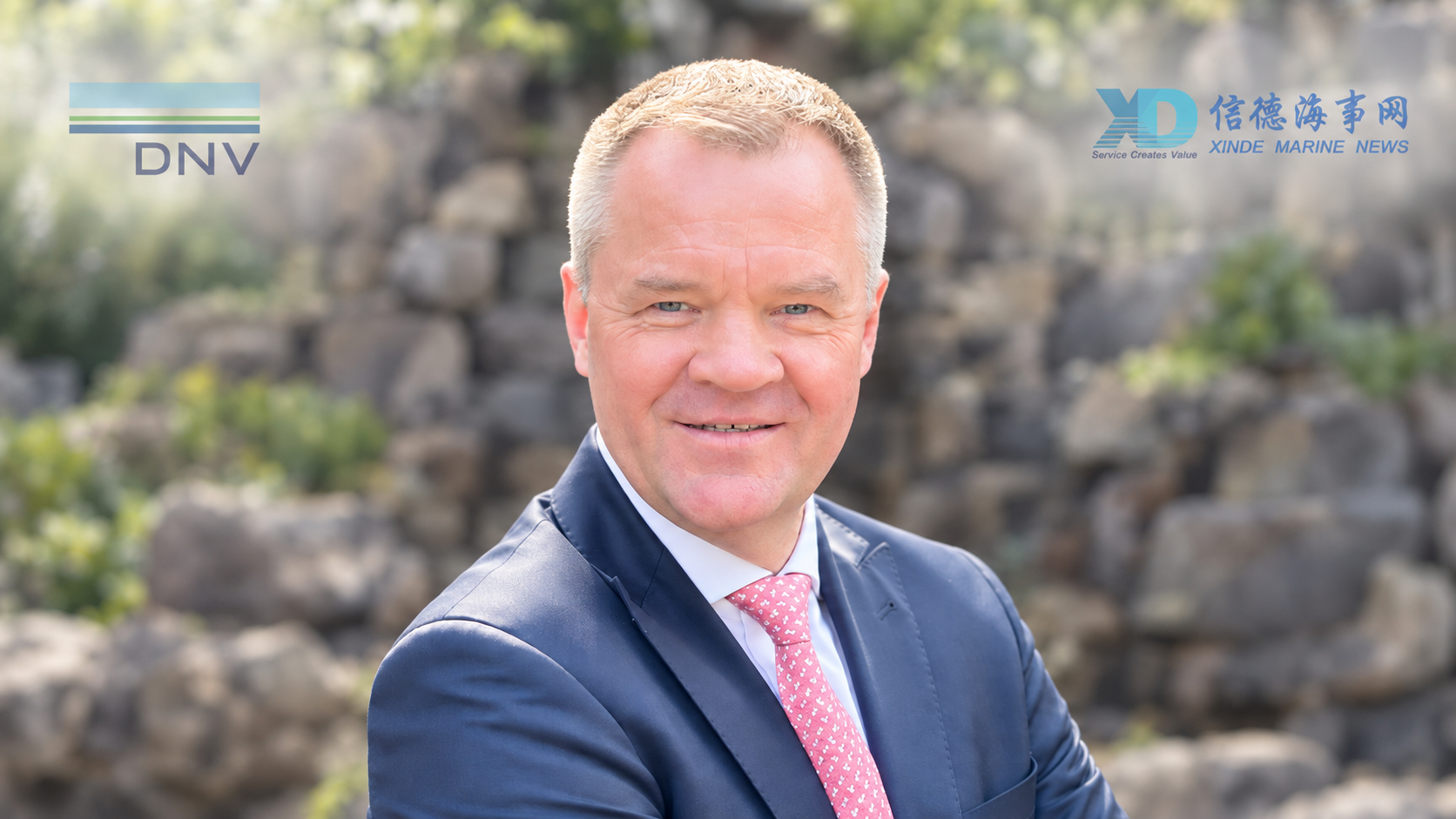

In an exclusive interview with Xinde Marine News, DNV Greater China chief Norbert Kray discusses the classification society’s 138-year history in China, the country’s move into higher-value shipbuilding, Chinese owners’ growing appetite for alternative-fuel vessels, and how artificial intelligence is reshaping surveys and technical assurance.
China’s shipbuilding advantage can no longer be explained simply by lower costs or greater capacity, according to Norbert Kray, DNV’s Regional Manager for Greater China.
The country’s yards have moved decisively into large containerships, LNG carriers and pure car and truck carriers, while their willingness to customise designs gives them an important competitive edge over more standardised shipbuilding models, Kray told Xinde Marine News.
He also sees Chinese shipowners taking a more proactive approach to shipping’s energy transition. In several major vessel segments, they are increasingly moving directly to LNG or methanol dual-fuel propulsion instead of ordering conventionally fuelled ships that are merely “ready” for later conversion.
At the same time, DNV is expanding its technical capabilities in China. Its Shanghai-based artificial intelligence centre is developing tools for weld inspection, corrosion detection and other survey applications, while the classification society’s Greater China workforce has grown from about 900 people in 2021 to approximately 1,300, according to Kray.
Kray has headed DNV Maritime’s operations in Greater China since January 2018 and also chairs DNV’s Greater China organisation. Based in Shanghai, he previously led DNV Maritime in Japan from 2014 to 2017.
A naval architect by training, Kray began his career at Germany’s Bremer Vulkan shipyard and joined DNV in 1997. His subsequent roles covered structural and casualty analysis, damage and repair management, emergency response, transfer of class, ship surveys and survey quality. He also represented DNV at the International Association of Classification Societies.
A 138-year relationship with China
Xinde Marine News: Before discussing the major issues facing the industry, could you take us through DNV’s long history in China?
Norbert Kray: DNV’s relationship with China is much older than many people realise.
If you visit Gulangyu in Xiamen, you can still find a beautiful white historic building associated with the beginning of our presence in China in 1888. In Chinese culture, a date containing three eights is, of course, considered a very fortunate beginning.
We have maintained our presence here ever since. In recent years, DNV China has expanded rapidly alongside the growth of the country’s maritime industry. We had about 900 employees in 2021, and that figure has now increased to approximately 1,300.
Our regional headquarters is in Shanghai, and our activities extend well beyond traditional ship classification. DNV’s operations in China now cover areas including maritime, energy systems, business assurance and life sciences.
The pace of development in the Chinese market is remarkable. That “China speed” has become an important contributor to DNV’s global growth.
DNV has said its roots in China date back to 1888. The company has continued to expand its specialist maritime capabilities in Shanghai, including dedicated teams for gas carriers, alternative fuels, tankers and bulk carriers.
Xinde Marine News: As Regional Manager for Greater China, how do you define DNV’s role in the country’s shipbuilding value chain today?
Kray: In the past, a classification society might have been seen primarily as a certification body: the yard built the ship and class issued the certificate. That traditional model is no longer sufficient.
DNV’s role today is closer to that of a trusted technical adviser and project partner. We are concerned not only with conventional safety and quality requirements but also with emerging areas such as decarbonisation, cybersecurity and artificial intelligence.
We want to become involved at an early stage of a project and work with shipowners, shipyards and design institutes to solve technical problems. Our contribution should go well beyond approving a completed design or issuing a certificate at the end of the process.
China’s advantage is no longer limited to cost and scale
Xinde Marine News: China, Japan and South Korea continue to dominate global shipbuilding, but the industry’s centre of gravity appears to be shifting. How do you assess the competitiveness of Chinese yards?
Kray: The centre of global shipbuilding is shifting from Japan and South Korea towards China. The change can be seen not only in order volumes but also in the technical sophistication of the vessels being built.
The most significant development over the past decade has been China’s progression from relatively conventional vessel types into higher-value and more technically demanding segments.
Chinese yards were once associated primarily with straightforward bulk carriers, tankers and multipurpose vessels. Today, they have secured substantial orderbooks for ultra-large containerships, LNG carriers and pure car and truck carriers. These are complex, high-value vessels.
The scale of the shift is already visible in market data. DNV reported that Chinese yards secured nearly 60% of global newbuilding orders in 2023, including more than 70% of tanker and bulk carrier orders.
Xinde Marine News: Japanese shipbuilding is known for craftsmanship, standardisation and dependable delivery. Having worked in Japan, where do you see China’s principal advantage? What can Chinese yards still learn from Japan?
Kray: I worked in Japan for several years and developed a strong appreciation for its industrial culture. Japanese shipbuilding is characterised by extremely high levels of standardisation and punctuality.
A Japanese yard will often concentrate on a particular standard design, such as a Capesize bulker. The design is mature and the production process runs with clockwork precision. This produces very stable and consistent quality.
The trade-off is limited flexibility. When an owner requests substantial design changes or vessel-specific customisation, it may be difficult to accommodate those requirements within a highly standardised production system.
China’s strength, by contrast, is flexibility.
Chinese design institutes and shipyards are generally willing to listen closely to owners and adapt vessels to their specific operational requirements. At the same time, construction quality has advanced considerably and can now compete with that of Japan and South Korea.
Labour availability is another important factor. Shipbuilding remains labour-intensive, and several competing markets face ageing workforces and shortages of skilled personnel. Those constraints increase costs and limit production capacity.
China still has a relatively deep pool of well-qualified engineers and technical workers. This allows its yards to combine quality with competitive pricing and shorter delivery periods. In some cases, vessels are delivered ahead of the contractual schedule.
Chinese owners move beyond “fuel-ready” ships
Xinde Marine News: Uncertainty over future fuels has made many owners reluctant to order ships. Do Chinese shipowners approach this problem differently?
Kray: Uncertainty is the critical issue.
International Maritime Organization regulations and European Union requirements are developing, while the long-term roles of methanol, ammonia, hydrogen and other energy carriers remain unsettled. This makes many owners cautious.
One response has been to order an “LNG-ready” or “methanol-ready” vessel. Such a ship may initially operate on conventional fuel, but space and certain technical provisions are reserved for a possible future conversion.
Chinese owners, however, are showing considerable determination and foresight.
From what we observe, a significant share of Chinese owners are moving beyond the readiness stage and choosing alternative-fuel capability from the outset. In the PCTC and large containership segments, almost all of the Chinese owners’ newbuilding projects we are seeing involve dual-fuel propulsion, particularly LNG or methanol.
They are not simply waiting for the transition to happen. They are helping to drive it.
Methanol-fuelled projects placed at yards such as Dalian Shipbuilding Industry Co and Guangzhou Shipyard International illustrate this willingness to commit to new propulsion technologies.
China is now both the world’s largest shipbuilding country and one of its largest shipowning nations. When owners controlling such a substantial fleet move towards alternative fuels, the effect extends across the global maritime supply chain.
Xinde Marine News: How does DNV help owners choose between increasingly complex fuel pathways?
Kray: There is no universal fuel solution.
The appropriate choice depends on a vessel’s type, trading pattern, operating profile and the expected availability of fuel along its routes. We analyse those factors in detail.
The final decision always rests with the shipowner, but our data, modelling and technical insight can help reduce the risks surrounding that decision. This is fundamentally a trust-based service.
DNV has reinforced this work by establishing a gas carrier and alternative-fuels expert team in China, connecting local specialists with its international technical network.
Why DNV put its AI centre in Shanghai
Xinde Marine News: What is the greatest digitalisation challenge now facing shipping?
Kray: Ship design and operation are becoming increasingly complex. Alternative-fuel systems are only one part of that development. A growing number of digital and automated systems must be integrated, verified and tested aboard each vessel.
Cybersecurity is consequently becoming much more important. As ships incorporate more connected systems, their exposure to cyber threats also increases.
DNV has built substantial cybersecurity capabilities. We have more than 500 specialists worldwide and strengthened the business through the acquisition and subsequent integration of the Finnish cybersecurity company Nixu.
DNV Cyber was formed by combining Nixu, Applied Risk and DNV’s existing capabilities in 2024. It now brings together more than 500 specialists in information technology and operational technology security.
These resources allow us to advise shipowners, yards and designers on improving cyber resilience. DNV has also introduced cybersecurity class notations and related assurance services.
Digitalisation has become a central part of the industry’s development, and its importance will continue to grow.
Xinde Marine News: DNV has also invested heavily in artificial intelligence. What is driving that strategy?
Kray: AI remains at an early stage, but its potential is enormous.
For DNV, it can improve internal processes by making document handling and technical reviews more efficient. It can also support new services for customers.
China is highly advanced in applied AI, big data and 5G infrastructure. It has a mature technology ecosystem and an unusually broad range of industrial use cases. This is why DNV established its artificial intelligence centre in Shanghai: to draw on China’s innovation capabilities and accelerate the application of AI in shipping and shipbuilding.
The Shanghai AI research centre was established to develop technologies capable of strengthening audit, inspection and survey services.
Some of the tools are already highly practical. In newbuilding projects, for example, AI-supported image recognition can be used to identify welding defects. By analysing digitised radiographic images, an algorithm can detect indications such as pores or cracks.
For vessels in operation, we have developed algorithms that can help identify corrosion, deformation and coating damage.
These tools can improve survey efficiency, but consistency is equally important. Individual surveyors inevitably bring different levels and areas of experience. A properly trained and validated algorithm applies the same assessment criteria each time, supporting more consistent inspection results.
Surveyors will become data analysts, not disappear
Xinde Marine News: As AI and remote technology advance, could the traditional marine surveyor eventually disappear?
Kray: Surveyors will not disappear, but their role will change substantially.
In future, a surveyor may no longer need to fly halfway around the world simply to inspect a small structural detail. Drones, remote surveys and digital inspection technologies will be used more extensively.
The surveyor will increasingly move from being primarily an on-site inspector to becoming a data analyst.
That means maritime professionals will need to understand not only ship structures and onboard systems but also data and digital tools. This is why digital competence has become an important consideration in our recruitment.
Nevertheless, surveyors will still need to perform a considerable amount of physical work in shipyards and aboard vessels, particularly during new construction. I encourage young people to consider surveying as a career because the work will become more complex and technically demanding, not less important.
China’s engineering talent remains a strategic asset
Xinde Marine News: The maritime sector is struggling to recruit people in many parts of the world. What is the situation in China?
Kray: This is a global challenge. In Europe, fewer young people are choosing to study naval architecture or marine engineering. The outlook in China is more encouraging.
China has a very large and highly educated engineering graduate population. We maintain close relationships with universities including Shanghai Jiao Tong University, Harbin Engineering University, Dalian Maritime University and Shanghai Maritime University.
DNV China depends heavily on local talent. We recruit both experienced industry specialists and significant numbers of recent graduates.
Younger employees tend to be highly receptive to digitalisation and AI. Their skills complement the experience and technical knowledge of senior maritime professionals.
“We Care” beyond the maritime business
Xinde Marine News: DNV has participated in community projects in areas including Yunnan and Jilin. That may not be what people ordinarily associate with a foreign classification society. Why is this important to the company?
Kray: It comes from one of DNV’s core values: “We Care”.
DNV was established in 1864 and is owned by a foundation. We do not face the same short-term earnings pressures as a publicly listed company, which allows us to take a longer-term view of the relationship between business and society.
We have achieved commercial success in China and received support from its government and maritime community. We therefore believe we have a responsibility to contribute to Chinese society.
Our activities have included supporting education for disadvantaged children in Yunnan, participating in water-related projects in Jilin and making donations to the Red Cross.
As Chairman of DNV Greater China, I regard corporate social responsibility as being as important as business growth. It is not simply an ESG requirement; it reflects the values of the organisation.
China must guard against complacency
Xinde Marine News: What is your outlook for China’s maritime industry over the next three to five years?
Kray: We expect China’s shipbuilding industry to continue consolidating its leading position.
New private-sector yards are entering production or expanding capacity, while state-owned shipbuilders are working to improve efficiency.
The greatest danger, however, is complacency.
China currently holds a leading position, but emerging shipbuilding nations such as Vietnam and India are developing their capabilities and competing for less complex vessel types.
China’s maritime sector must retain a sense of urgency. Continued technological innovation and productivity improvements will be essential if it is to maintain its global leadership through the next decade.

READ MORE
 People
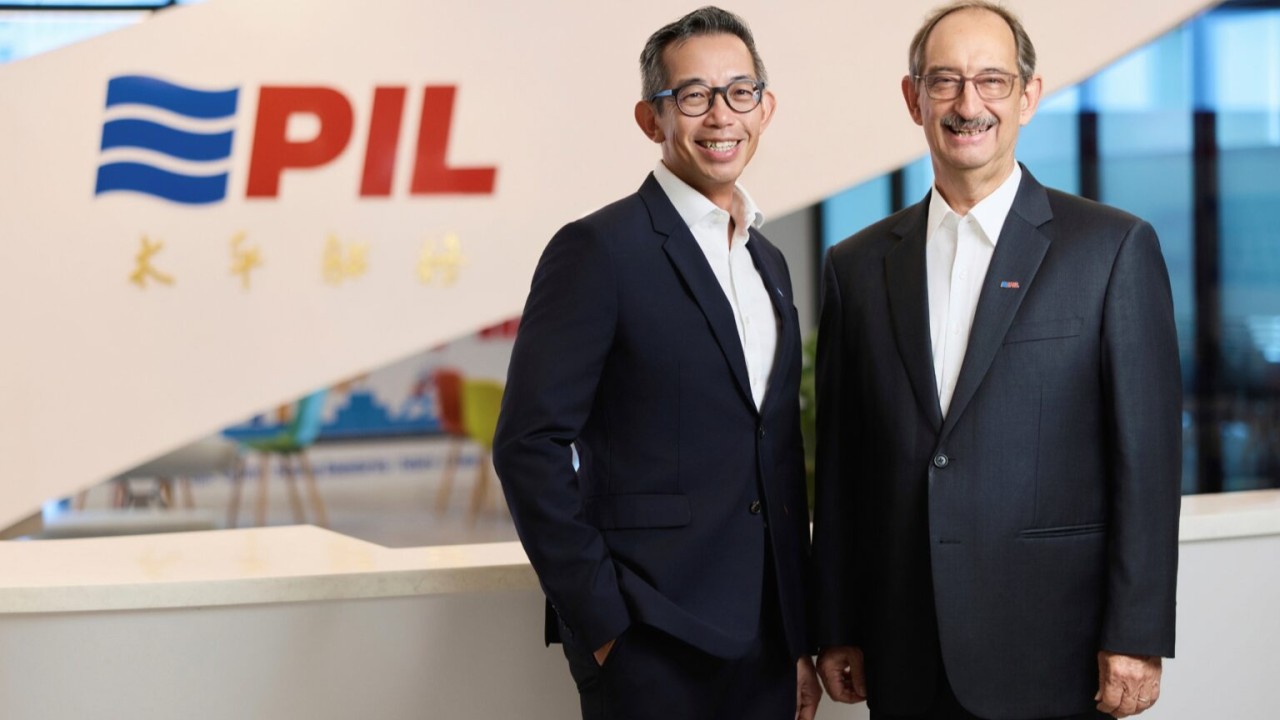
PIL Names Wan Chee Foong as Next CEO: A New Chapter Driven by Ports, Logistics and Strategy
 People
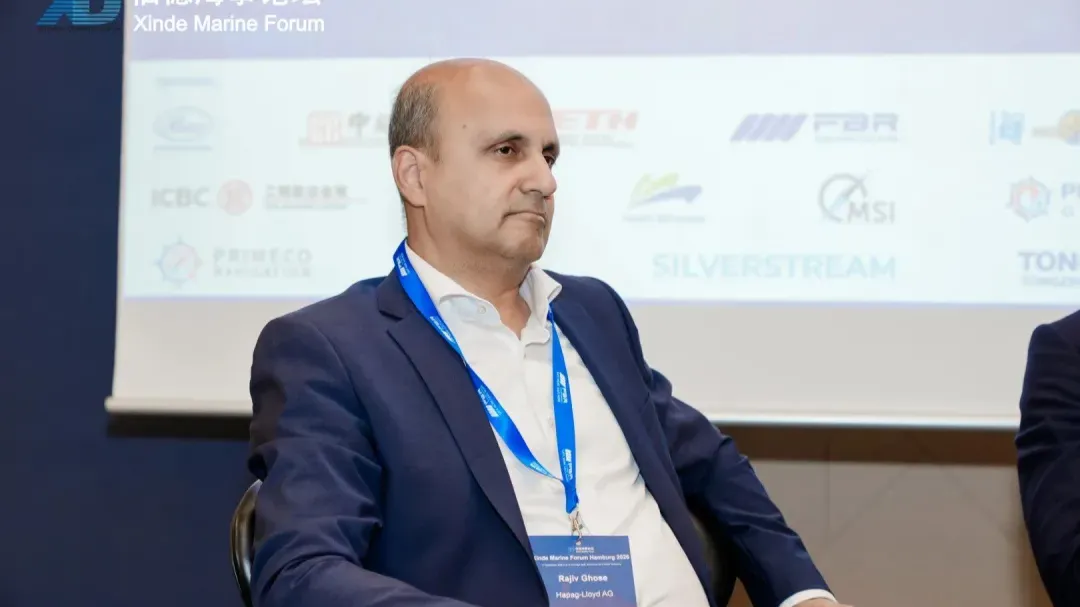
Exclusive Interview with Hapag-Lloyd’s Rajiv Ghose: How Gemini’s 90% Schedule Reliability Is Reshaping Shipping Resilience
 People
Martin Roolvink has been appointed Managing Director of Bernhard Schulte Shipmanagement (Deutschland),
 People
What John Lee’s Speech Signals for Hong Kong’s Maritime Industry over the Next Five Years
 People
Tung Chee-hwa Dies at 89: From Shipping Executive to Hong Kong’s First Chief Executive
 People
India Declares Its Maritime Ambition in Hamburg: Becoming a Global Shipping and Shipbuilding Power
 People
Euroseas Ltd.: Sustained Earnings, Disciplined Growth and Further Upside
 People
Nautical Institute (Singapore) Conference 2026 Brought Seaworthiness and the Future of Seafarers to Centre Stage
 People
Klaus-Michael Kühne, one of the most influential figures in global shipping and logistics, has died at the age of 89
 People