


PIL Names Wan Chee Foong as Next CEO: A New Chapter Driven by Ports, Logistics and Strategy
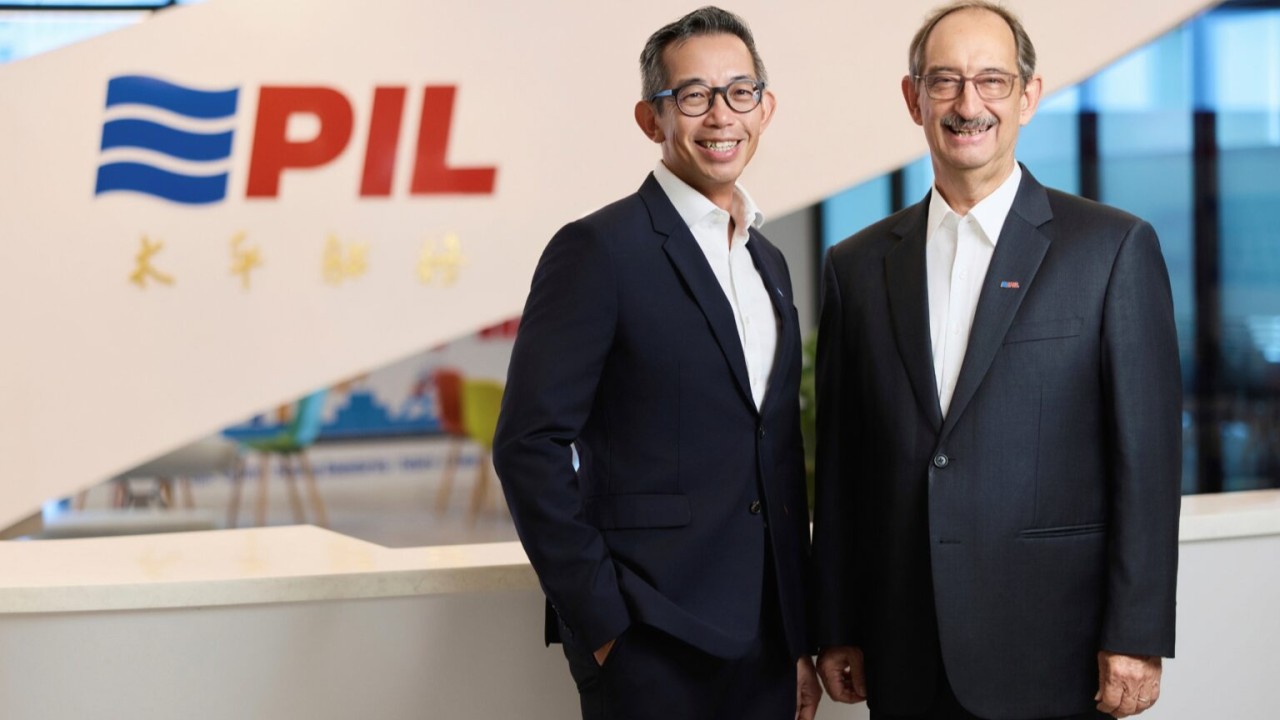
A New CEO for PIL’s Next Stage of Growth
Pacific International Lines (PIL) is preparing for a significant leadership transition as the Singapore-based container carrier enters the next phase of its development. The company announced that Wan Chee Foong will be appointed Deputy Chief Executive Officer from 5 October 2026 and will succeed Lars Kastrup as Chief Executive Officer in April 2027. Kastrup, who has led PIL through a period of financial recovery, fleet expansion and operational transformation, will remain with the company as Advisor to the Board following the transition.
The appointment comes at an important moment for PIL. After several years of rebuilding its financial foundation and accelerating fleet renewal, the company is moving into a new stage where the key question is no longer simply how to strengthen its shipping capacity, but how to create greater value from its global network, assets and customer relationships.
The choice of Wan Chee Foong is therefore notable. His career has not followed the traditional path of a container shipping executive. Instead, his experience covers ports, logistics, investment and strategic development — areas that increasingly define the future competitiveness of global shipping companies.
From Ports to Shipping: A Career Built Across the Maritime Value Chain
Wan Chee Foong brings nearly three decades of experience across transportation, logistics and infrastructure-related industries. His career provides him with a perspective that extends beyond vessel operations and freight markets.
At PSA International, one of the world’s largest port operators, Wan held several senior leadership positions, including Regional CEO for Middle East and South Asia, Group Business Development Director, and Chief Executive Officer of PSA BDP, PSA’s global supply chain solutions business.
These roles gave Wan direct exposure to some of the most important elements shaping global trade: port efficiency, cargo flows, supply chain design and international logistics networks. PSA BDP, in particular, operates at the intersection between traditional shipping and modern supply chain management, providing services that go beyond terminal operations.
Before and during his time at PSA, Wan also developed a strong investment background through Temasek. From 2003 to 2012, he focused on transportation and logistics investments and was involved in the establishment of SeaTown Holdings. He currently serves as Managing Director of Corporate Strategy at Temasek.
This combination of operational and investment experience is increasingly relevant as shipping companies face a more complex competitive environment. The industry is no longer only about owning ships or operating liner services. Control over logistics networks, infrastructure assets, technology platforms and customer ecosystems has become an important part of long-term strategy.
PIL’s Transformation Under Lars Kastrup Created the Foundation
Wan will inherit a company that has undergone significant transformation under Lars Kastrup.
Kastrup joined PIL in 2020 as Senior Advisor, became Co-President and Executive Director in 2021, and took over as CEO in July 2022. His tenure coincided with a major rebuilding period for the company following years of challenges faced by many traditional container carriers.
During his leadership, PIL strengthened its financial performance and significantly improved its resilience. According to company data, EBITDA increased from US$558 million in FY2023 to US$1.5 billion in FY2025. In FY2025, PIL recorded revenue of US$4.27 billion and profit after tax of US$1.04 billion.
At the operational level, PIL accelerated the modernization of its fleet. The company’s container fleet capacity has grown by more than 50% to approximately 500,000 TEU. By the first half of 2026, PIL had received 10 LNG dual-fuel container vessels, with another 18 LNG dual-fuel newbuildings and 14 long-term chartered vessels expected to be delivered by 2029.
These investments represent more than fleet expansion. They reflect the broader transition of liner shipping toward more efficient, lower-emission and more resilient operating models.
Kastrup also strengthened PIL’s commercial control by expanding its own and controlled agency network. Around 98% of PIL’s cargo volume is now handled through these channels, giving the company stronger control over customer relationships and service delivery.
With these foundations in place, the timing of the leadership transition is significant. The company has moved beyond immediate restructuring and is now positioned to consider how to maximize the value of its assets and network.
Why a Supply Chain Executive Matters for the Future of Container Shipping
The appointment of Wan Chee Foong reflects a broader transformation taking place across the container shipping industry.
Over the past decade, leading carriers have increasingly expanded beyond traditional ocean transportation. Companies such as Maersk, CMA CGM and MSC have invested heavily in terminals, logistics, inland transportation and integrated supply chain solutions.
The reason is straightforward: container shipping has become increasingly connected with the wider global trade ecosystem. Cargo owners are looking for reliability, visibility and integrated solutions rather than transportation capacity alone.
For PIL, this trend is particularly relevant. The company has historically built its strength through specialized regional expertise, especially in markets connecting Asia with Africa, the Middle East, Latin America and emerging economies.
Rather than competing purely through scale against the largest global carriers, PIL’s strategic opportunity lies in strengthening its unique network advantages and developing deeper customer relationships in these markets.
Wan’s background could provide additional perspective on how to connect shipping operations with broader supply chain solutions. His experience across PSA, PSA BDP and Temasek gives him exposure to both operational execution and long-term strategic investment decisions.
A New Chapter as PIL Approaches Its 60th Anniversary
Founded in Singapore in 1967, PIL will celebrate its 60th anniversary in 2027. Over six decades, the company has grown from a regional carrier into one of the most recognized shipping companies from Southeast Asia, operating more than 100 container vessels and serving markets across Asia, Africa, the Middle East, Latin America, Oceania and the Pacific Islands.
The leadership transition from Lars Kastrup to Wan Chee Foong represents a change in emphasis. Kastrup’s leadership was focused on strengthening the company’s financial position, modernizing its fleet and rebuilding operational capabilities. Wan’s next challenge will be how to transform those foundations into sustainable growth opportunities.
The future competitiveness of shipping companies will increasingly depend on how effectively they integrate ships, ports, logistics networks and customer solutions. In this environment, PIL’s choice of a CEO with experience across the maritime value chain provides a clear indication of the company’s strategic priorities.
As PIL enters its seventh decade, the company is not simply preparing for a change of leadership. It is positioning itself for a changing maritime industry where shipping and supply chain management are becoming increasingly inseparable.

READ MORE
 People
DNV’s Norbert Kray: China’s Shipbuilding Edge Now Extends Far Beyond Cost and Scale
 People
Exclusive Interview with Hapag-Lloyd’s Rajiv Ghose: How Gemini’s 90% Schedule Reliability Is Reshaping Shipping Resilience
 People
Martin Roolvink has been appointed Managing Director of Bernhard Schulte Shipmanagement (Deutschland),
 People
What John Lee’s Speech Signals for Hong Kong’s Maritime Industry over the Next Five Years
 People
Tung Chee-hwa Dies at 89: From Shipping Executive to Hong Kong’s First Chief Executive
 People
India Declares Its Maritime Ambition in Hamburg: Becoming a Global Shipping and Shipbuilding Power
 People
Euroseas Ltd.: Sustained Earnings, Disciplined Growth and Further Upside
 People
Nautical Institute (Singapore) Conference 2026 Brought Seaworthiness and the Future of Seafarers to Centre Stage
 People
Klaus-Michael Kühne, one of the most influential figures in global shipping and logistics, has died at the age of 89
 People