


Rescued From One Drone Attack, Turkish Cook Dies in Second Black Sea Strike
A Turkish seafarer who survived a drone strike on the bulk carrier Necibe was killed days later when the Ro-Ro vessel that had rescued him was itself attacked near Novorossiysk, underscoring the growing danger facing merchant crews operating around Russia’s Black Sea ports.
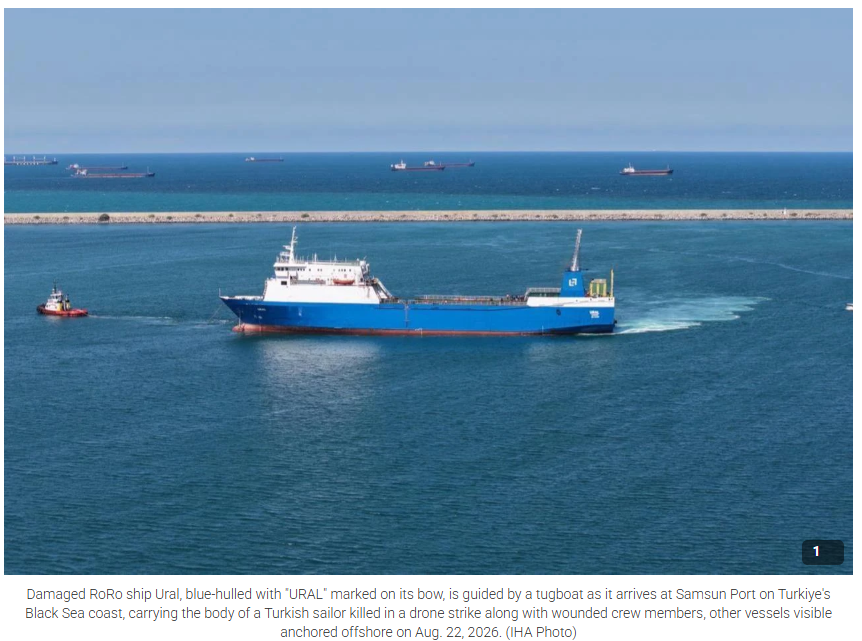

A Turkish ship’s cook who survived a drone attack on one merchant vessel was killed just days later when the ship that had rescued him came under attack in the Black Sea.
İlker Lazoğlu, 47, was serving as chief cook aboard the Necibe, a 21,461-dwt bulk carrier, when the vessel was struck while loading wheat near the Russian port of Tuapse on August 18.
All 18 crew members abandoned the vessel and were picked up by the Cameroon-flagged Ro-Ro cargo ship Ural.
On August 21, however, the Ural was itself struck near Novorossiysk. Turkish media reported that Lazoğlu was killed and eight other people were injured in the second attack. The damaged vessel subsequently sailed back to Samsun on Türkiye’s Black Sea coast, carrying the dead seafarer and the wounded.
The sequence of events has added a particularly stark human dimension to the recent escalation of attacks on merchant shipping around Russia’s Black Sea export ports.
For crews trading in the region, the case also raises a difficult question: when a vessel has rescued seafarers from an attack, how quickly can it get them out of the high-risk area — and where does a rescue effectively end?
Two attacks in three days
The first incident involved the San Marino-flagged Necibe (IMO 9548732), a 2009-built bulk carrier of 21,461 dwt and about 168 metres in length. Vessel databases identify the ship as a Turkish-linked vessel operated in the regional dry bulk trades.
The ship was loading wheat at Tuapse when it was hit on August 18, during a sharp escalation in attacks on commercial shipping around Russia’s Black Sea ports.
Reports compiled a day later indicated that as many as five bulk carriers had been struck in or near Novorossiysk and Tuapse within roughly 24 hours, including Necibe. Other vessels reported in the same wave of incidents included Fehu and Victoria V.
The 18 people aboard Necibe were evacuated and taken aboard Ural.
That distinction is important: Ural was not a dedicated rescue ship. It is an elderly commercial Ro-Ro cargo vessel that happened to assist the stricken crew.
The Cameroon-flagged ship (IMO 7725386) was built in 1980 and is listed at 3,573 dwt and 4,994 gt. Vessel databases show Turkish management connections and regular operations in the Black Sea.
The second attack followed only three days later.
Industry and Turkish reports said Ural was struck near Novorossiysk on August 21 while Lazoğlu and other survivors from Necibe were still aboard.
Lazoğlu was fatally injured. Eight others were reported wounded by IHA-sourced Turkish media, Türkiye Today and The Maritime Executive.
A rescue did not mean safety
The chronology makes the casualty different from a conventional report of another vessel damaged in a war-risk area.
Lazoğlu had already survived one attack, evacuated his ship and reached another merchant vessel.
According to his family, he contacted relatives after the first strike to reassure them that he was alive and that another ship was coming to take the crew off Necibe. His family later learned that the vessel carrying him had also been attacked.
The Ural eventually reached Samsun on August 22 with tug assistance.
Lazoğlu’s body was handed over to his family, while injured crew members were taken by ambulance to hospitals in the city, according to IHA-sourced reports. He was buried in Samsun the following day.
The incident illustrates how the risk surrounding Black Sea merchant shipping is increasingly extending beyond physical damage to vessels and cargo.
For seafarers, the danger can persist after abandoning a damaged ship. A commercial vessel conducting a rescue may itself remain inside the same threat environment, particularly around ports where repeated drone operations are taking place.
That complicates decisions for masters, owners and managers responding to a casualty: ships have long-standing obligations to assist people in distress at sea, but vessels providing that assistance may themselves be exposed to the same conflict risk.
Commercial shipping caught in an expanding threat zone
The attack came amid a broader deterioration in security around Russia’s principal Black Sea ports.
Novorossiysk is a major Russian export hub for crude oil, refined products, grain and other commodities, while Tuapse is also an important energy and dry bulk gateway.
Commercial vessels operating around the ports have increasingly been exposed to drone and missile activity as the Russia-Ukraine war extends further into maritime logistics.
Days before the Necibe incident, a Greek-managed tanker was reported hit near Russia’s Black Sea terminals. Earlier in August, operators had already suspended some services to Russian Black Sea ports following a series of attacks on merchant vessels.
The intensification has also drawn concern from Ankara.
Turkish Vice President Cevdet Yılmaz said on August 24 that rising attacks in the Black Sea posed risks to the safety of life and property, freedom of navigation and global food security, and said Türkiye was working to restore safer navigation in the region.
That concern is particularly relevant because Turkish-controlled and Turkish-crewed short-sea vessels are deeply involved in regional Black Sea trade, connecting Turkish ports with Russia, Ukraine and other markets around the basin.
Responsibility requires cautious attribution
Reports on the two attacks have widely pointed to Ukrainian drone operations, and The Maritime Executive explicitly attributed the strikes on Necibe and Ural to Ukrainian drones.
However, the publicly available information does not provide sufficient independent evidence to identify the specific attacking unit, establish the targeting process, or determine what information the attacker had about the vessels’ civilian and rescue-related circumstances.
Some Turkish reporting based on IHA did not independently identify the attacker. For that reason, the attacks are best described at this stage as drone strikes, with attribution treated separately from the confirmed casualty and vessel details.
What is clear is the sequence.
A merchant ship carrying wheat was attacked. Its 18 crew members escaped and were taken aboard another commercial vessel. Three days later, that ship was hit as well.
For one of those seafarers, surviving the first attack was not enough.
The Necibe-Ural case therefore marks more than another entry in the growing list of Black Sea shipping casualties. It demonstrates how the security problem is moving closer to the people aboard the ships — and how the interval between being rescued and reaching safety can itself become part of the risk.
For shipowners and crews continuing to call at Russian Black Sea ports, that may now be one of the most important variables to assess.

READ MORE
 Safety
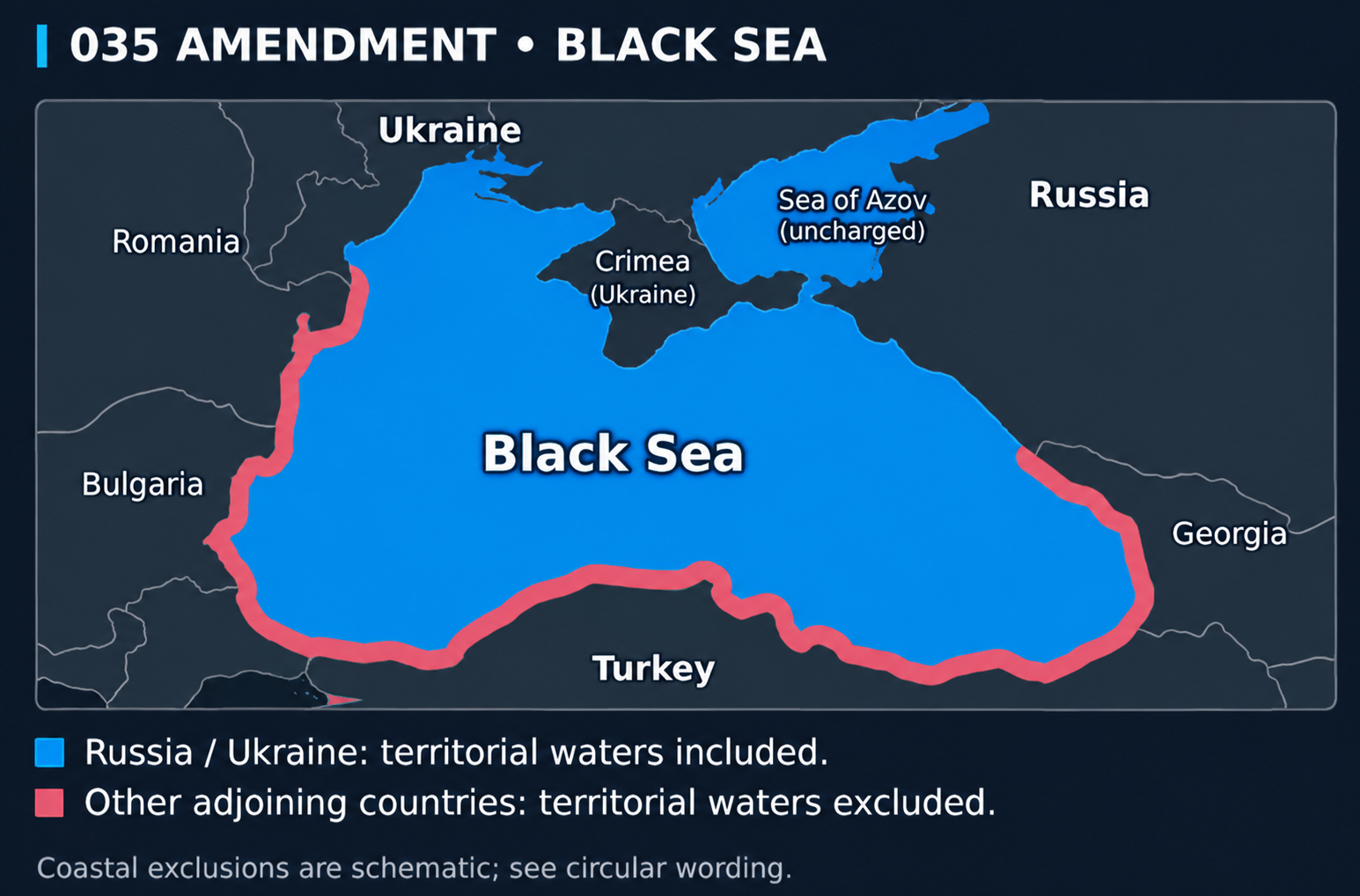
Almost the Entire Black Sea Is Now a War-Risk Listed Area
 Safety
Saudi pipeline attack exposes limits of Hormuz bypass strategy
 Safety
Engine Room Fire Epidemic Prompts Global Safety Alert After Qingdao Shipyard Tragedy
 Safety
Xinde Marine Forum London 2026: Shipping Moves from Lean Logistics to Resilience by Design
 Safety
Major Collision Off India: 21 Crew Evacuated After KMAX EMPEROR Suffers Heavy Damage
 Safety
Houthis Seize Mocha as Bab el-Mandeb Risks Rise — but Signal “Safe Passage” for Non-Saudi Shipping
 Safety
Shipping’s New Risk Equation: Flexibility Becomes the Premium Asset
 Safety
25 Killed in Fire Aboard Ocean Melody at Qingdao Beihai Shipyard
 Safety
Hormuz Crisis Exposes Shipping’s Three Fault Lines. Shipping Leaders Confront the Lessons of the Hormuz Crisis
 Safety