


ClassNK offers human perspective on the future of maritime safety
The future of maritime safety will not be determined by a choice between people and technology but will instead depend on how effectively the industry combines them, according to a senior ClassNK executive.
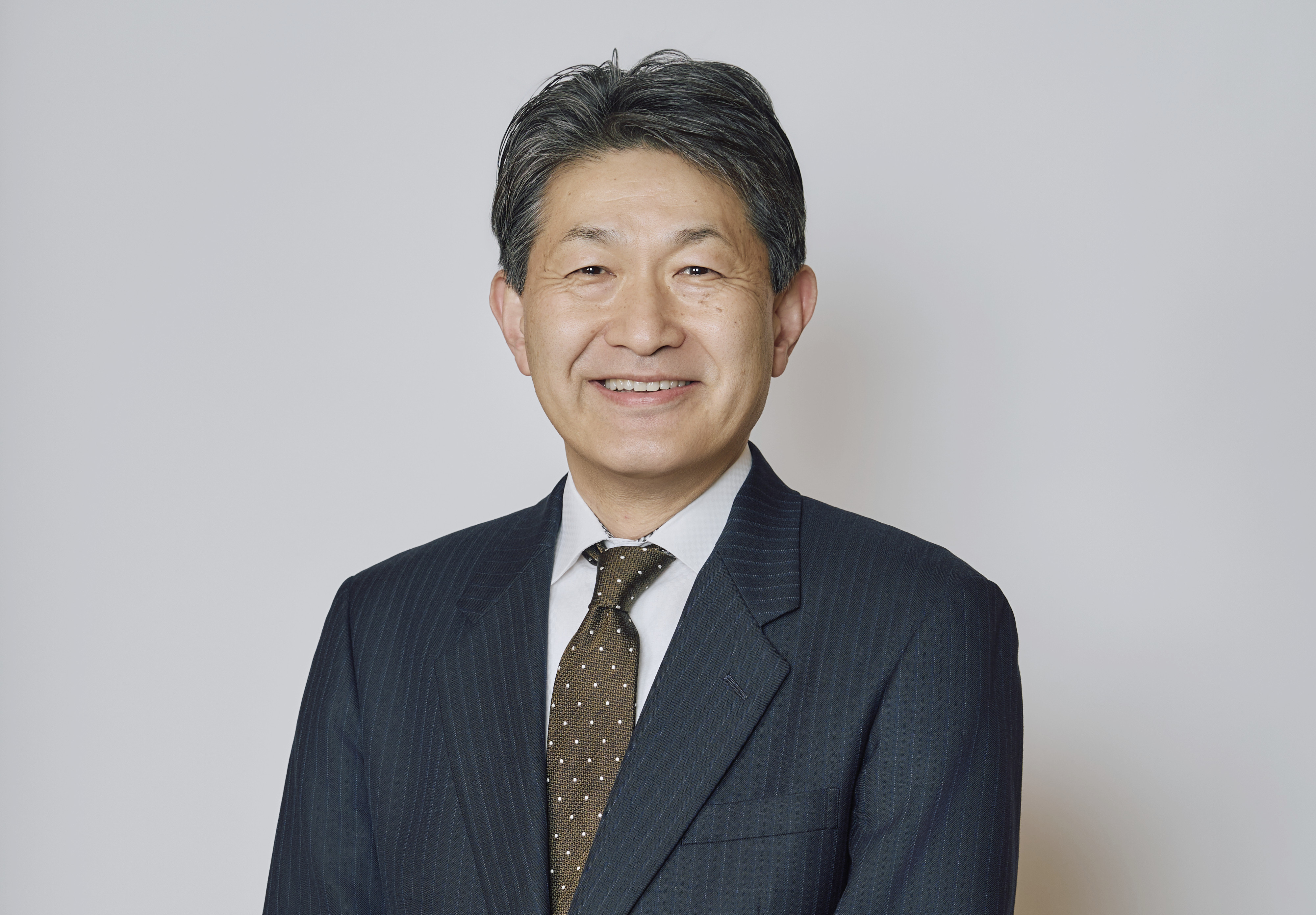
The future of maritime safety will not be determined by a choice between people and technology but will instead depend on how effectively the industry combines them, according to a senior ClassNK executive.
Capt. Naoki Saito, General Manager and Head of the Cyber Security Ship Management Systems Department fully acknowledges the critical place mandatory procedures occupy in upholding consistent maritime safety, and their role in preserving knowledge from operational experience. Mandatory procedures also ensure clarity on who is responsible for what, he says.
In real operating conditions, ships and personnel need to be ready to respond when things don’t go as anticipated. Changing weather conditions, anomalies in equipment behavior, incomplete information and conflicting commercial and operational priorities can bring safety challenges.
While procedures provide structure, having the competence and resilience to respond to unpredicted events remains a matter for seafarers, superintendents and shore-based managers, says Capt. Saito. “After all, a vessel can satisfy formal requirements and yet performing poorly, while a company can satisfy requirements on documentation without identifying weaknesses in its actual operations.”
The wider use of real-time data is benefiting safety by making operational performance more visible, with AI strengthening the industry’s ability to identify risks and recognize emerging patterns, he adds. “Patterns in equipment performance, alarm management, maintenance, route execution and safety-related activities can provide early indications of emerging risks, to support better planning.”
Cultural change
This demands a safety culture which drives steps to identify and address recurring problems, ensures lessons from incidents and near misses are reflected in daily operations, and makes sure personnel understand not only what they need to do, but why.
Safe operations will continue to depend on competent people, resilient organizations and a culture in which technology supports - rather than replaces - professional judgment, Capt. Saito emphasizes.
Maritime safety discussions often primarily focus on the human element as a source of risk, where fatigue, misunderstandings, insufficient communication and poor decision-making are acknowledged areas for continuing concern, he acknowledges.
“But people are also the reason many abnormal situations do not develop into accidents. Safe performance is about more than passing an audit. A company may be procedurally compliant while still failing to manage operational risks effectively.
“Experienced personnel identify subtle changes, challenge unexpected information, adapt when procedures are insufficient and respond to situations that could not have been anticipated by system designers. People should therefore be regarded not only as a potential source of error, but also as a vital source of resilience. Procedures provide consistency. Human judgment provides adaptability.”
Anticipate, respond and recover
The ability of personnel to anticipate, respond, recover and learn is a measure of organizational resilience. “A mature organization is not necessarily one with the greatest volume of documentation. It is one in which personnel understand the purpose behind the procedures, recognize when circumstances are changing and can respond without losing sight of the underlying safety objective,” says Capt. Saito.
Frameworks such as the Tanker Management and Self-Assessment (TMSA) and the Dry Bulk Management Standard (DryBMS) recognize the benefits to safety of moving beyond simply establishing whether procedures are in place towards inquiring whether they support effective decision-making.
“It is no longer sufficient to confirm that a Safety Management System exists,” says Capt. Saito. “Auditors, vetting organizations and other stakeholders increasingly need to understand whether the system is producing the intended outcomes. To exhibit maturity, an organization should be able to demonstrate effective safety management through operational behavior and learning - not only documentation. It should be in a position to identify early warning signs before they are serious incidents and see measurable improvements after corrective actions.
“Rather than evaluating the documentation of an SMS, for example, the approach taken in TMSA and DryBMS involves evaluating maturity and operational effectiveness. It places greater emphasis on how deeply safety management is embedded in daily operations, how personnel behave in practice and how effectively the organization responds when conditions depart from the expected.”
Digitalization subject to inspection
The use of real-time data and continuous monitoring has provided the means of capturing trends that standalone vessel inspections would otherwise overlook, adds Capt. Saito.
Greater transparency on operational data should strengthen trust among shipowners, ship managers, charterers, insurers, regulators, classification societies and other stakeholders, so that industry-wide risks can be better identified and mitigated.
“One possible direction is the development of standardized performance indicators, clearly defined access rights and greater use of anonymized or aggregated data,” he says.
“But continuous visibility alone cannot create safety,” he adds. “Information must be interpreted. Conflicting priorities must be resolved. Decisions must be made, communicated and owned. While AI and digital technologies can provide better information, detect patterns and reduce uncertainty, they cannot define every possible operational situation in advance; furthermore, responsibility for safety does not transfer to the algorithm.”
For these reasons, human judgment and human accountability should never be replaced, Capt. Saito contends. “The ability to respond to unexpected conditions, understand the wider context and accept responsibility for a decision remains fundamentally human,” he says.
A well-designed SMS is therefore one which helps personnel understand any given situation more clearly and whose purpose is to ensure operators intervene when necessary.
“When personnel become overly dependent on automated recommendations, their ability to interpret situations independently may gradually decline,” says Capt. Saito. “Skills that are not regularly exercised can weaken. Operators may also become less willing to challenge a system, even when their professional experience suggests that something is wrong. A poorly designed system may encourage passive acceptance, reduce operational ownership and create the impression that responsibility has been transferred to technology.”
As digital systems become more capable, the maritime industry must place even greater emphasis on training, simulation, competency assessment and practical experience, adds Capt. Saito. “Advances in technology do not reduce the importance of human competence; they make upholding that competence even more important.”
Human-machine combination
For the same reason, physical vessel inspections will remain essential – to understand context, but also as the basis for challenging assumptions and identifying issues that may not be visible from data alone.
Here too, the maritime industry will benefit by bringing together the strengths of formal procedures and data-based analytics while still ensuring human oversight.
“Regulations, standards and procedures establish a common minimum level of safety, providing the consistency, comparability and accountability our industry needs,” says Capt. Saito. “However, formal compliance should be viewed as the baseline rather than the final objective.”
Vessel performance also changes between inspections, demanding evolution in another area of safety management: crew composition; equipment condition changes; workload; trading patterns; and management priorities – all of these are dynamic.
“A single inspection cannot capture every operational development. The development of SIRE 2.0 and RightShip’s RISQ 3.2 reflect how this aspect of safety governance has needed to adapt. Their increased emphasis on human factors, competency and behavior-based assessment represents an important step - away from traditional point-in-time inspection and toward a more comprehensive evaluation of operational performance.”
The coming decade may see the concept of the audit change significantly, Capt. Saito believes. With periodic inspections and document reviews increasingly supplemented by continuous observation of operational performance, they may evolve from confirming that documentation is complete toward evaluating whether safety is being delivered consistently in practice.
“The objective should not simply be to create ships that are more closely monitored. It should be to build an industry that understands risks earlier, responds more effectively and learns continuously. Rather than applying the same routine inspection approach to every vessel, this may allow the industry to evolve toward more risk-based and exception-based models, where the strengths of physical inspections and digital monitoring work together more intelligently,” Capt. Saito suggests.
“Vessels demonstrating stable performance could be treated differently from vessels showing unusual trends, deteriorating indicators or repeated deficiencies, with inspection resources focused where evidence suggests closer attention is required. A growing distinction may emerge between operators that use compliance as the foundation for continuous improvement and those that regard compliance itself as the end goal.”
ENDS


READ MORE
 Safety
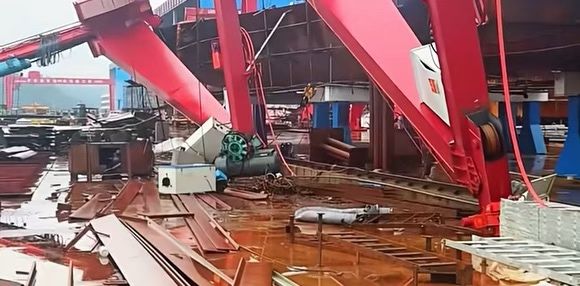
Gantry crane collapses at shipyard in China’s Zhejiang Province following Typhoon Dolphin
 Safety
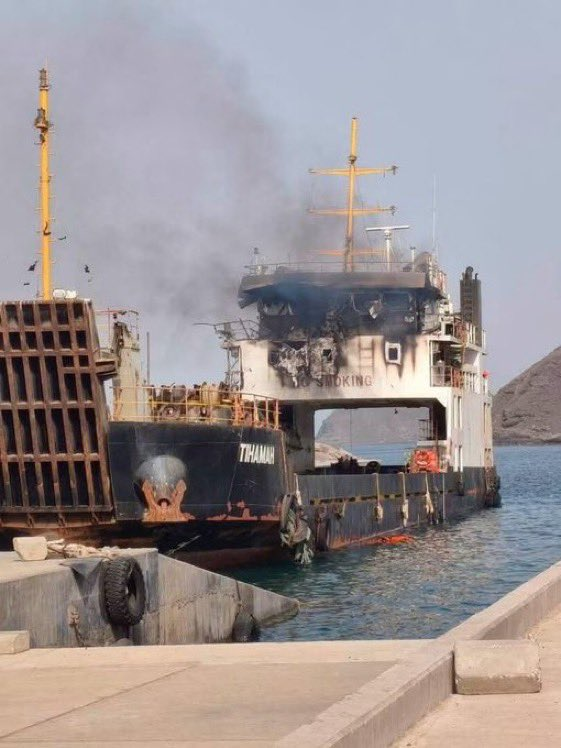
Cargo Ship Struck Twice in Bab el-Mandeb, 6 Killed
 Safety
Pilot Was on a 39-Minute Personal Call Before Fatal Tug Collision, NTSB Finds
 Safety
Explosion at a shipyard in Fujian, China leaves 12 injured
 Safety
One Killed, Three Injured As Grain Ship MERA QUEEN Attacked in Black Sea
 Safety
World Shipping Council presents Cargo Safety Program at China MSA forum
 Safety
China PSC: Detention Rate Hits 13.51% in H1 2026
 Safety
Global shipping industry voices concern over potential Strait of Hormuz tolls
 Safety
Indian Cargo Ship Sinks After Attack in Red Sea, All 14 Crew Rescued
 Safety