


16 LNG Carriers for 12 Tankers and $300 Million: How K-LNG Could Reshape Asia’s Gas Shipping Market
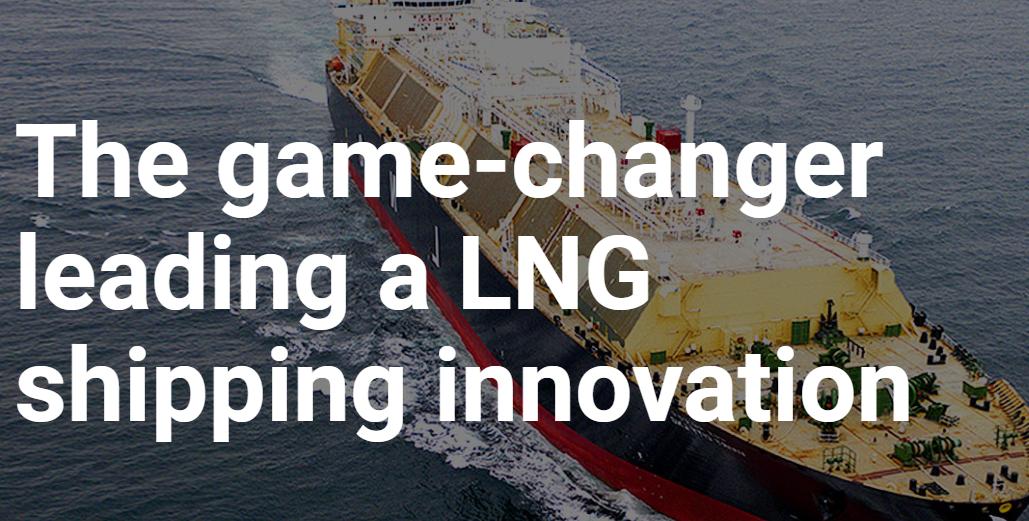

This is not a conventional sale-and-purchase deal. South Korean private equity firm Hahn & Company is swapping vessels, long-term contracts and associated financing between two portfolio companies to create a specialised gas-shipping platform with 32 LNG carriers.
SK Shipping is set to receive 16 LNG carriers and their associated long-term transportation contracts from H-Line Shipping. In return, it will transfer 12 tankers, their contracts and approximately $300 million in cash to H-Line, according to Reuters.
Further industry disclosures indicate that the tanker package comprises 11 very large crude carriers and one medium-range product tanker. Financing linked to the vessels is also expected to move with the assets.
| Company | Assets Received | Post-transaction Focus |
|---|---|---|
| SK Shipping | 16 LNG carriers and related contracts | LNG and LPG transportation |
| H-Line Shipping | 12 tankers, related contracts and about $300 million | Tankers, dry bulk and car carriers |
Upon completion, SK Shipping is expected to operate 32 LNG carriers and 14 LPG carriers. The company will be renamed K-LNG, reflecting its transformation into a dedicated gas-shipping business.
H-Line, meanwhile, will add crude and product tankers to its existing dry bulk and pure car and truck carrier operations. Korean reports estimate that the two companies will have post-transaction assets of approximately KRW11 trillion ($7.8 billion) and KRW5 trillion ($3.5 billion), respectively.
The deal has not yet closed. Approvals are still required from relevant charterers and lenders, meaning the 32-vessel LNG fleet represents the intended post-completion structure rather than K-LNG’s current operating position.
The Real Exchange Is Not Ships, but Cash Flow
On the surface, the transaction is an exchange of 16 LNG carriers for 12 tankers and cash. Economically, however, Hahn & Company is reallocating two different portfolios of contracted future income.
H-Line’s LNG business has long-term relationships with customers including Korea Gas Corporation, Vitol, ExxonMobil, Petronas, QatarEnergy and POSCO International. Its vessels serve trades linking LNG export projects in Qatar, Oman and Australia with Asian importing markets, according to H-Line’s corporate disclosures.
Moving these contracts together with the vessels gives K-LNG more than additional steel. It gains customer relationships, committed employment and future revenue streams that can support vessel financing and debt repayment.
That distinction is particularly important in the present LNG shipping market.
Drewry expects approximately 85 LNG carriers to be delivered in 2026, with fleet growth continuing to outpace the commissioning of new liquefaction capacity. Although charter rates are expected to recover from their multi-year lows, the consultancy sees limited scope for a dramatic rebound while so much new tonnage enters service.
In this environment, capital is likely to place a higher value on vessels backed by creditworthy, long-duration contracts than on ships dependent on volatile spot employment. Long-term charter coverage does not remove operational, refinancing or counterparty risks, but it makes cash flow considerably more predictable.
Hahn & Company is therefore not simply betting on higher LNG carrier rates. It is concentrating contracted infrastructure assets into a larger and more clearly defined platform.
The “Largest in Asia” Claim Requires a Clear Definition
Hahn & Company describes the enlarged business as Asia’s largest and the world’s third-largest LNG carrier operator. That claim should be presented with an important qualification: LNG fleet rankings vary substantially depending on whether they include wholly owned vessels, joint ventures, equity interests, commercially managed ships or technically managed vessels.
A fleet comparison published by NYK, based on ships delivered by March 2024, listed MOL with 97 LNG carriers, NYK with 91 and “K” Line with 46. “K” Line’s own fleet disclosure showed 53 LNG carriers as of June 30, 2026.
A 32-vessel fleet therefore would not rank first in Asia under a broad group or equity-fleet definition. Hahn & Company appears to be applying a narrower operating-company or specialist-operator methodology, but the detailed basis for that calculation has not been publicly disclosed.
The most accurate formulation is consequently that K-LNG is expected to become Asia’s largest and the world’s third-largest LNG carrier operator under Hahn & Company’s operating-fleet definition.
The ranking issue does not diminish the transaction’s industrial significance. Concentrating 32 LNG carriers and 14 LPG carriers in one company would still create one of Asia’s most substantial specialist gas-shipping platforms.
A More Powerful Competitor for Asian LNG Contracts
Greater scale can allow K-LNG to consolidate vessel scheduling, crewing, maintenance, procurement and financing. It will also be able to offer major energy companies a broader portfolio of vessels when competing for project-linked and long-term charter contracts.
Scale alone will not give the company control over LNG freight rates. It can, however, strengthen its negotiating position with charterers, banks, shipyards and equipment suppliers while reducing certain operating costs across a larger fleet.
The consequences will extend beyond South Korea.
Chinese shipping groups are expanding their participation in long-term LNG transportation, particularly through QatarEnergy’s fleet programme. Companies including China Merchants Energy Shipping and Shandong Marine have secured project-linked charter packages, while Chinese yards are rapidly building their capabilities in conventional and ultra-large LNG carriers.
K-LNG will therefore become a stronger competitor for the same long-term contracts sought by Chinese, Japanese and other Asian owners. Its future renewal and expansion requirements could also become a valuable source of orders contested by South Korean and Chinese shipbuilders.
The transaction itself contains no announced newbuilding commitment. Its immediate significance lies instead in the creation of a larger charter-backed platform capable of competing across LNG routes from Qatar, the United States and Australia to China, Japan and South Korea.
Hahn & Company’s restructuring reflects a wider shift in LNG shipping. Competitive strength is no longer measured simply by how many vessels a company owns. Increasingly, it depends on whether those vessels can be combined with long-term contracts, financing, operating expertise and customer relationships inside a scalable platform.
If the transaction receives the required approvals, K-LNG will not merely add another large gas carrier company to the South Korean market. It will introduce a more concentrated and financially structured competitor into Asia’s increasingly crowded contest for LNG transportation.

READ MORE
 Finance
Plenty of Capital, Yet Ships Still Struggle for Financing: The Structural Mismatch Reshaping Ship Finance
 Finance
COSCO SHIPPING Specialized Posts $202 Million H1 Profit as Second-Quarter Earnings Double
 Finance
Revenue Tops $200m as Seacon Shipping’s Attributable Profit Jumps 44.7%
 Finance
Capital Is Available, but Ship Finance Is Repricing the Risk of Buying the Wrong Vessel
 Finance
Hengli Heavy Industries Posts RMB 23.5bn Revenue and RMB 3.6bn Net Profit as H1 Orders Reach 207 Ships
 Finance
Sinotrans underlying profit rises 17% as revenue contracts
 Finance
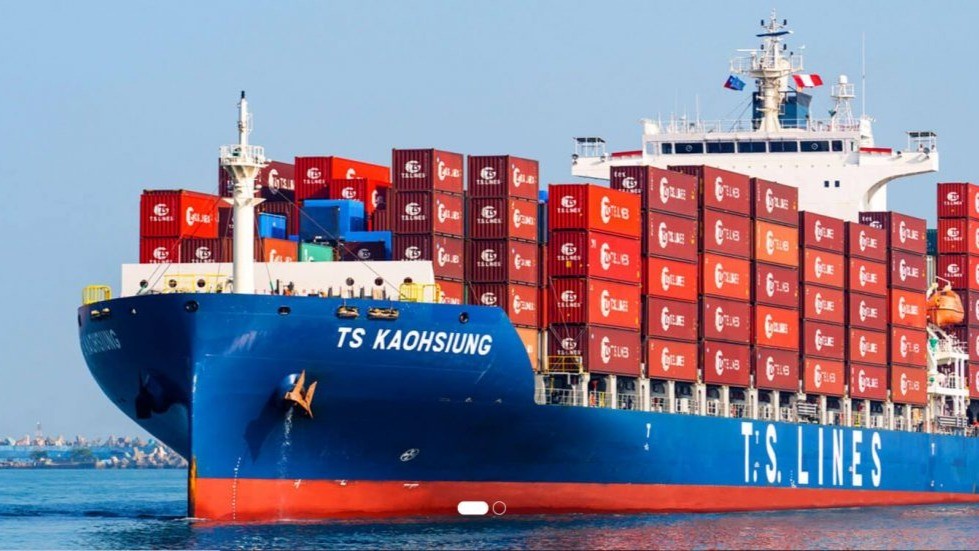
Volumes Fell 0.9%, Yet Profit Rose 23.3%: T.S. Lines Earns US$233 Million in Six Months
 Finance
The Swedish Club delivers strong H1 2026 performance as underwriting profit rises 38%
 Finance
Global Ship Lease: First-Half Revenue, Strong Margins and 15 New Ships on Order
 Finance