


Why Uni-Asia Still Chose Japan for Its Return to Newbuilding
Chinese shipyards now dominate global dry bulk contracting, but Japanese builders continue to retain a loyal customer base in the high-specification 40,000-dwt Handysize segment. Uni-Asia Group’s two recent orders offer a useful case study of why.
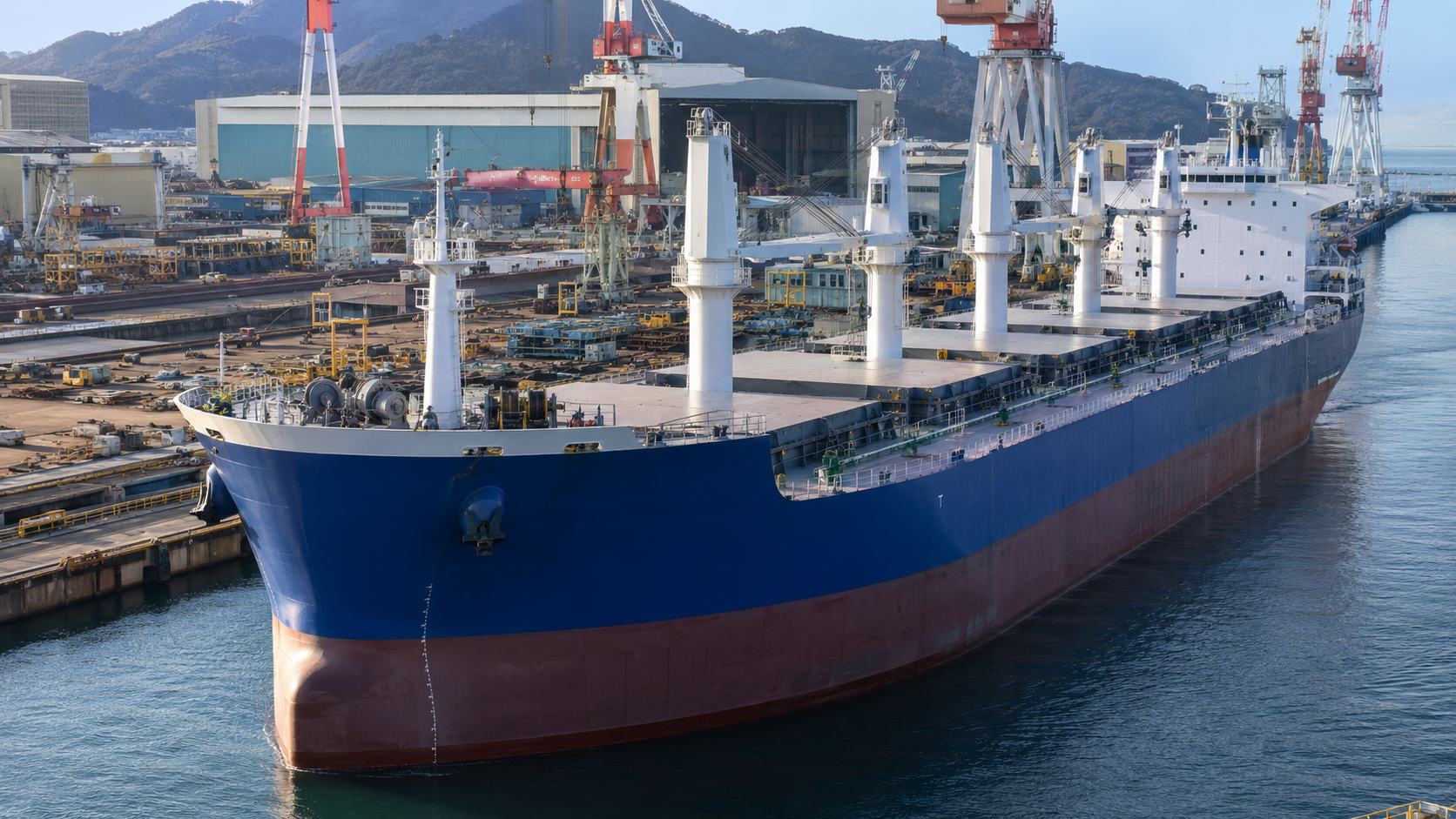

Singapore-listed shipping and alternative asset investment company Uni-Asia Group announced on 6 August that it had signed a contract with Nihon Shipyard for a new 40,000-dwt eco-design Handysize bulk carrier.
The vessel will be built by Imabari Shipbuilding at its Imabari Shipyard and is scheduled for delivery between the fourth quarter of 2029 and the first half of 2030.
It is Uni-Asia’s second order for a similar vessel in five months. In March, the company contracted its first 40,000-dwt Handysize, which will be built at Imabari-controlled Shimanami Shipyard for delivery in the second half of 2028.
According to Uni-Asia’s official announcement, both vessels will feature double-hull construction, eco-type engines and dual-fuel-ready designs, allowing them to be retrofitted with dual-fuel engines and alternative-fuel systems in the future.
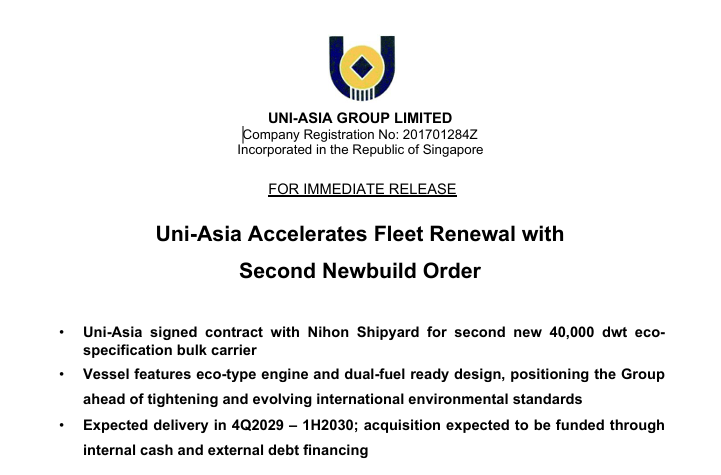
Contract prices have not been disclosed. Uni-Asia said the vessels would be financed through a combination of internal cash, external debt and other financing arrangements.
TradeWinds described the orders as ending a 13-year newbuilding drought for Uni-Asia. The company itself has used the more cautious wording that its March contract was its first newbuilding order in “more than a decade”. As some of its earlier projects involved joint investment structures, the company’s official wording provides the safer reference point.
A continuation of Uni-Asia’s Japanese-built fleet strategy
Uni-Asia’s decision to return to Japanese shipyards is hardly surprising.
As of the end of March 2026, the company’s publicly listed fleet comprised nine wholly or majority-owned vessels and three joint-investment vessels. All 12 were built in Japan, by shipbuilders including Imabari Shipbuilding, Oshima Shipbuilding, Onomichi Dockyard and Tsuneishi Shipbuilding.
Its existing Handysize fleet is centred on Japanese-built vessels of between 36,000 dwt and 38,000 dwt delivered from 2013 to 2020. These include Island Bay, Inspiration Lake, Uni Bulker, Uni Sunshine, Uni Horizon and the 2018-built Uni Blossom.
The company also controls two 57,800-dwt Supramax bulkers built by Tsuneishi in 2015.
Uni-Asia has therefore developed a highly Japan-oriented fleet in terms of vessel design, machinery, technical management and asset profile.
Since 2023, the group has been implementing a structured fleet renewal programme. It has gradually disposed of its older 29,000-dwt Handysize vessels and, during 2025, acquired four younger Japanese-built bulkers for approximately $84.6m.
The acquisitions comprised two 2018-built Handysize vessels of around 36,800 dwt and two 2015-built Supramaxes of approximately 57,800 dwt. According to Uni-Asia’s 2025 annual report, the company had exited all of its remaining 29,000-dwt vessels by the end of the year.
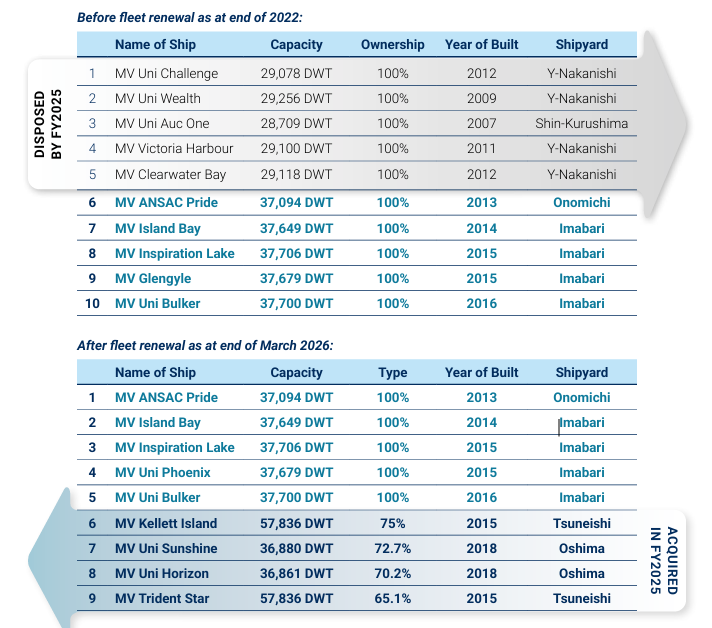
The two 40,000-dwt newbuildings represent the next stage of that renewal programme. They will increase cargo-carrying capacity compared with Uni-Asia’s existing 37,000-dwt core fleet while retaining the port flexibility, onboard cargo-handling capability and trading versatility associated with Handysize bulkers.
Continuing with familiar Japanese designs and equipment could also simplify crew training, spare-parts management, maintenance and technical operations. Uni-Asia has not explicitly cited standardisation as a reason for placing the orders, but its existing fleet profile suggests that it is likely to have influenced the decision.
Japan is defending a mature Handysize product
The 40,000-dwt Handysize is a product category that Japanese shipbuilders have refined over many years.
Comparable vessels recently delivered by Shimanami Shipyard have typically featured double-hull construction, box-shaped cargo holds, wide hatch openings and four deck cranes. Such vessels can carry a broad range of cargoes, including grain, coal, ore, cement, steel coils and long steel products.
They also incorporate energy-saving devices, high-efficiency propellers and low-friction hull coatings to reduce fuel consumption.
The 40,099-dwt Ken Forest, for example, was built with these characteristics and has a design speed of approximately 14 knots. The vessel measures around 182.9 metres in length and 31 metres in breadth, providing a useful indication of Imabari’s established 40,000-dwt product platform.
The vessel’s delivery specifications should only be regarded as a reference, however. Full cargo-hold, crane and energy-efficiency specifications for Uni-Asia’s two vessels have not yet been disclosed.
Japan’s strength in this segment comes from the long-term integration of ship design, marine equipment and production processes.
The OECD’s 2026 review of the Japanese shipbuilding industry found that Japanese builders face significant structural pressure from labour, land and energy costs. Japanese shipbuilding labour costs in 2024 were estimated at around 2.2 times those in China.
 Despite this disadvantage, Japan continues to perform strongly in engineering, quality control and delivery reliability.
Its domestic marine equipment ecosystem is another important factor. In 2022, approximately 92% of the equipment installed on Japanese-built vessels was produced domestically.
This allows engines, generators, deck machinery, pumps, valves, navigation systems and energy-saving technologies to be integrated at an early design stage. It can also give shipowners more consistent access to technical support and spare parts throughout a vessel’s operating life.
These strengths are particularly relevant to Handysize bulkers, which trade across a wide range of ports and carry highly varied cargoes. Owners must consider fuel consumption, maintenance availability, off-hire risk, trading flexibility and resale value alongside the initial contract price.
Resale value matters to Uni-Asia
Uni-Asia is not a conventional shipowner focused solely on generating long-term charter income. It describes its shipping model as an asset investment and management business, combining recurring earnings with the acquisition and disposal of vessels at different points in the market cycle.
The liquidity and resale value of Japanese-built ships are therefore directly relevant to its strategy.
In 2026, a Uni-Asia joint venture proposed acquiring the 2016-built, 37,655-dwt Uni Harmony for $20.53m. The vessel’s original newbuilding contract price was $24.18m, while broker valuations in July 2026 placed its open-market value between $19.95m and $22.05m.
When identifying comparable vessels for the transaction, Uni-Asia and its independent financial adviser concentrated primarily on Japanese-built or Japan-linked Handysize bulkers.
The company explained that a vessel’s country of construction could affect its market price because of differences in construction quality, technology and market demand. The transaction circular included comparable vessels built by Oshima, Imabari, Shikoku Dockyard, Namura Shipbuilding and Kanda Shipbuilding.
The fact that the market valuation of a nearly 10-year-old vessel remains relatively close to its original contract price should not be interpreted as evidence that Japanese ships depreciate by only about 15% over a decade.
Dry bulk market cycles, inflation, vessel condition, survey schedules and charter employment can all materially affect valuations. Nevertheless, the data indicate that Japanese-built Handysize bulkers continue to command strong acceptance in today’s secondhand market.
For an asset-oriented owner such as Uni-Asia, that acceptance can improve exit liquidity, financing availability and residual-value management. A higher initial investment may remain commercially attractive if lifetime operating performance and eventual disposal proceeds compensate for the additional capital cost.
Chinese shipyards are moving into the same segment
Japan retains important advantages in high-specification Handysize construction, but the competitive landscape has changed significantly.
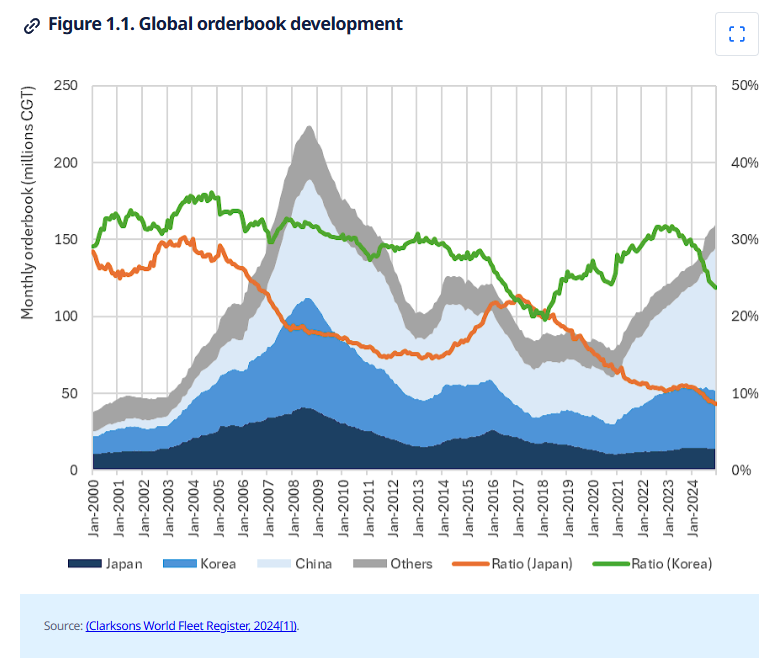
According to Xclusiv data cited by Lloyd’s List, approximately 1,375 bulk carriers were on order globally by late 2025, with Chinese shipyards accounting for around 68% of the total.
Japanese owners themselves had 96 bulk carriers on order in China, including 16 Handysize vessels. China’s competitive pricing, available berths, improving technology and expanding range of proven designs are increasingly influencing procurement decisions, including those of traditionally Japan-focused owners.
The shift is even clearer in new contracting. BIMCO data indicated that Chinese yards secured approximately 81% of new dry bulk orders by capacity in 2025, an increase of nine percentage points from 2024, largely at the expense of Japanese builders.
BIMCO’s market assessment also found that five-year-old bulk carriers were trading at an average of around 93% of newbuilding prices at the time. Elevated secondhand values are encouraging more owners to reassess the economics of ordering new ships.
Chinese yards are now competing directly in the 40,000-dwt Handysize segment.
In December 2025, Pacific Basin Shipping ordered four 40,000-dwt Handysize bulkers at Jiangmen Nanyang Ship Engineering for a combined $119.2m, equivalent to $29.8m per vessel. The ships, scheduled for delivery in the first half of 2028, will feature fuel-efficient designs, open hatches and log-carrying capability.
Pacific Basin subsequently added two more vessels, taking the series to six ships.
By comparison, disclosed Japanese contracts for 40,000-dwt Handysize bulkers have commonly been priced at around $33m per vessel in recent years. Seacon Shipping’s two vessels at Namura Shipbuilding were reported at a combined $66.96m, while two comparable ships ordered by Wisdom Marine were priced at approximately $33m each.
These contracts were signed at different times and involve different exchange rates, specifications and delivery schedules. They cannot be used to establish a fixed price differential between Chinese-built and Japanese-built vessels.
Uni-Asia has also withheld the price of its latest orders, making it impossible to determine whether it paid a premium for Japanese construction.
What the disclosed transactions do show is that Chinese shipyards are entering a segment previously dominated by Japan with competitive prices, available delivery slots and increasingly sophisticated designs.
Japan’s advantage remains, but the gap is narrowing
Uni-Asia’s two orders demonstrate that Japanese builders can still retain owners that place a high value on lifetime economics, fleet standardisation and secondhand market performance.
Uni-Asia has decades of experience operating Japanese-built Handysize vessels and already has the technical infrastructure required to manage them. Its investment model also places particular emphasis on exit values. For such an owner, proven designs, construction quality, integrated equipment supply and resale liquidity collectively strengthen the case for building in Japan.
The implications of this order should nevertheless be kept in perspective.
Global dry bulk contracting has shifted decisively towards China. Chinese yards are expanding beyond Ultramax, Kamsarmax and Newcastlemax bulkers and are now securing series orders for fuel-efficient, open-hatch and log-fitted 40,000-dwt Handysize vessels.
Japan is currently defending a segment where owners remain particularly sensitive to vessel quality, fuel performance, delivery reliability and residual value. As Chinese builders continue improving their designs, energy-efficiency technologies and secondhand market acceptance, those traditional advantages will face growing price pressure.
The final cost, detailed technical configuration and financing terms of Uni-Asia’s two vessels will be critical in determining whether these orders represent only a company-specific fleet renewal decision or a wider improvement in the appeal of Japanese-built Handysize tonnage.
Until those details become available, the more measured conclusion is clear: Japan still holds meaningful advantages in the high-specification Handysize market, but it no longer has the segment to itself.

READ MORE
 Shipbuilding
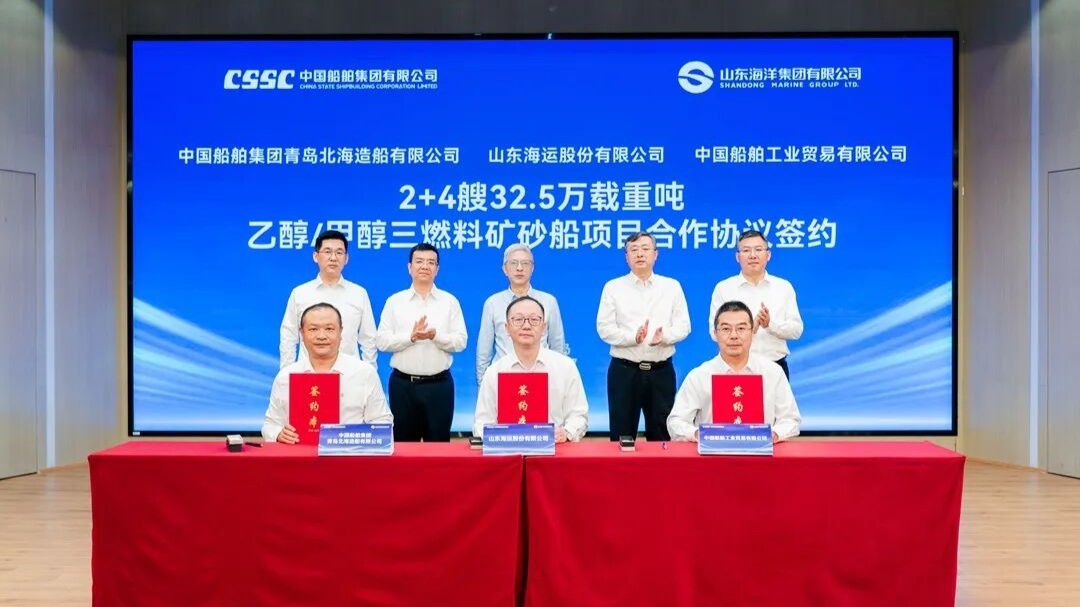
Shandong Shipping Signs Deal for 2+4 Ethanol/Methanol Tri-Fuel VLOCs
 Shipbuilding
Centrofin Makes First Move into Containerships With Two 6,000 TEU Newbuildings at Hengli
 Shipbuilding
A Small Chinese Private Shipyard Is Now Building 5,000 CEU PCTCs — China’s Car Carrier Capability Is Expanding Beyond Major Yards
 Shipbuilding
From LR2s to 3,200-TEU Boxships: Hengli Expands Its Greek Owner Footprint
 Shipbuilding
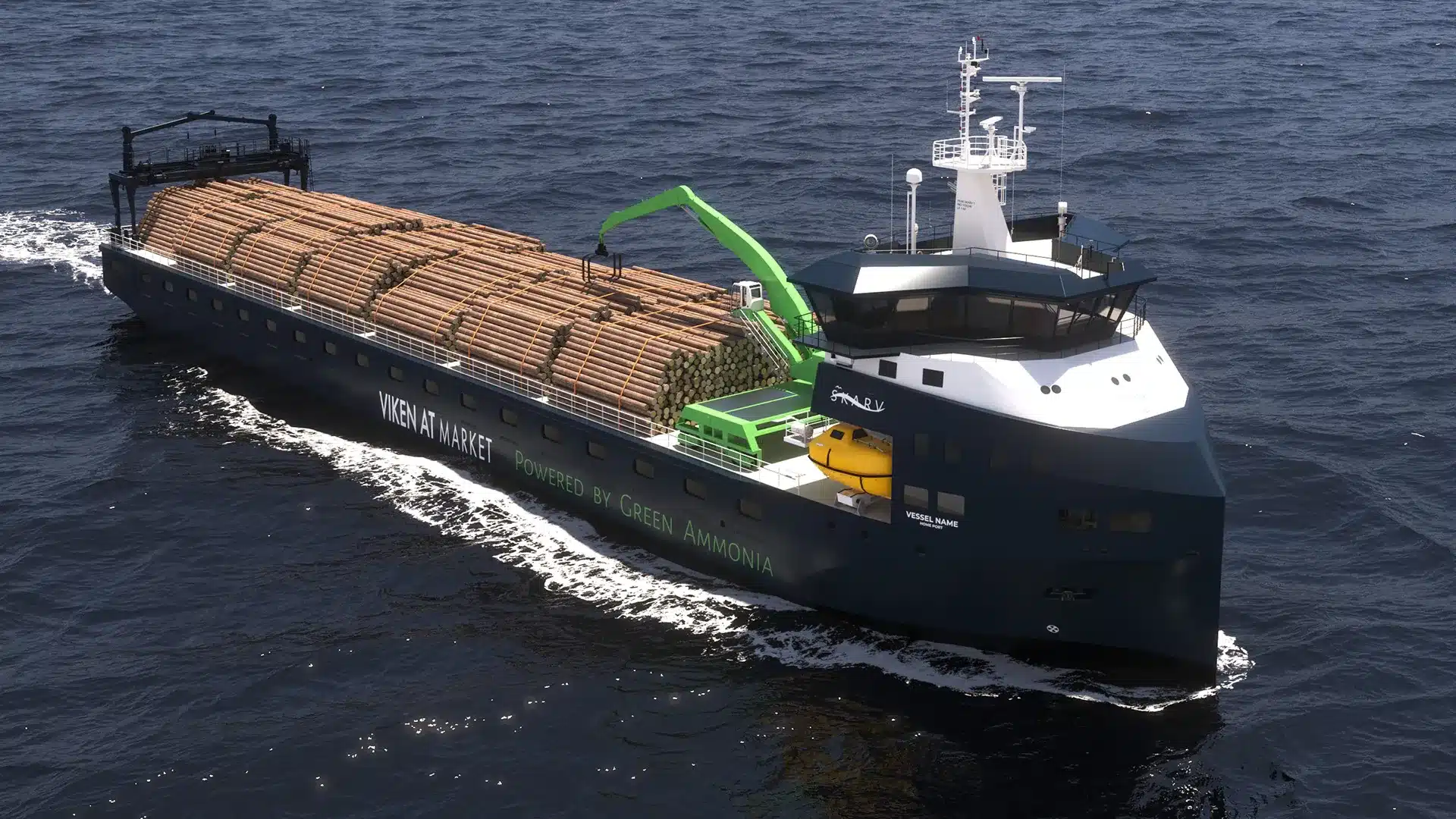
Chinese Shipyard Starts Work on First Wärtsilä 25 Ammonia Newbuild: Not Just “Ready”—It Will Run on Ammonia from Day One
 Shipbuilding
8 more!Wan Hai Steps Up Fleet Expansion with 50-Vessel Newbuilding Programme
 Shipbuilding
“The Whole World Is Asking for Chinese Cars”: Why PCTC Capacity Is Still Tight Despite Record Deliveries
 Shipbuilding
Up to $489 Million, 17 Yards in the Running: Why Norway’s High-End Wellboats Are Heading to China
 Shipbuilding
Can a Ship Be Sold in Pieces? A $1,000 Ticket to Becoming a Digital “Shipowner”
 Shipbuilding