


Centrofin Makes First Move into Containerships With Two 6,000 TEU Newbuildings at Hengli
The two conventionally fuelled, scrubber-fitted containerships are scheduled for delivery in 2028. Based on comparable newbuilding prices, the project could represent an investment of approximately $160 million to $180 million. More significantly, the order would extend Centrofin’s relationship with Hengli Heavy Industries from eight Kamsarmax bulk carriers into containerships, adding a third major shipping segment to the Greek family owner’s tanker and dry bulk portfolio.
Greek shipowner Centrofin Management is preparing to enter the containership market for the first time, with two 6,000 TEU newbuildings reportedly ordered from China’s Hengli Heavy Industries.
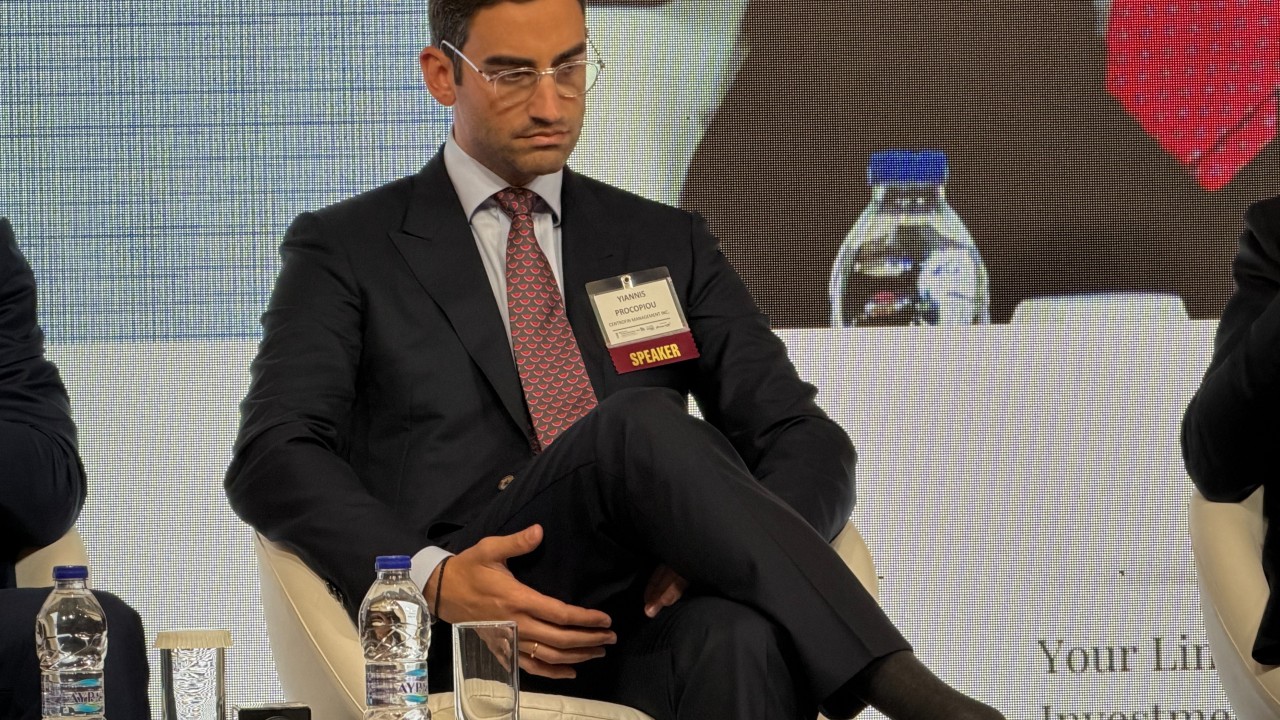
According to Issue 31 of the 2026 Alphaliner Weekly Newsletter, the Dimitris Procopiou-led company contracted the vessels earlier this summer, with delivery scheduled for 2028. The ships are expected to use conventional fuel and be equipped with exhaust gas cleaning systems, allowing them to consume high-sulphur fuel oil where regulations permit.
No LNG, methanol or ammonia dual-fuel capability has been reported, and it remains unclear whether the design incorporates any form of alternative-fuel readiness for future conversion.
As of August 20, neither Centrofin nor Hengli had issued a public announcement identifying the transaction, and the ships had yet to appear on Centrofin’s published fleet list. The contract price, classification society, flag, engine supplier, financing structure, legal purchasing entities and potential charterer also remain undisclosed.
Nevertheless, information released separately by Hengli and Alphaliner provides a degree of cross-confirmation that takes the project beyond an isolated broking rumour.
Two Industry Records Point to the Same Order
During Posidonia 2026, Hengli announced that it had secured 21 firm newbuilding contracts and four options covering 6,000 TEU containerships, Kamsarmax and Capesize bulk carriers, LR2 product tankers and Suezmax crude tankers. The combined value of the package was said to approach RMB15 billion, equivalent to more than $2 billion.
At the time, Hengli disclosed that a European liner company had ordered ships from its 6,000 TEU series and that a Greek owner had added further vessels of the same design. The shipyard did not identify the Greek buyer. Since other Greek-controlled companies, including Minerva Dry, have also been linked to 6,000 TEU orders at Hengli, that announcement alone was insufficient to establish Centrofin’s involvement.
Alphaliner subsequently placed Centrofin, Hengli, two 6,000 TEU ships, 2028 delivery and the conventional-fuel-plus-scrubber specification in the same order record, citing broking and market sources. The overlap between the two information chains provides stronger support for the reported deal, although formal confirmation and full contractual details are still awaited.
The price has also remained confidential. Minerva Dry’s four reported 6,000 TEU vessels at Hengli have been valued by market sources at around $80 million each, while other contemporary market assessments have placed the price of similar ships closer to $90 million. Allowing for differences in specification, equipment, delivery slots and negotiations, Centrofin’s two-ship programme can reasonably be valued at approximately $160 million to $180 million. This remains a comparative estimate rather than a disclosed contract price.
A Third Shipping Segment for a Traditional Tanker and Bulker Owner
Centrofin is a privately held Greek shipping group whose history dates back to 1974, while Centrofin Management was established in 1992. Its activities have traditionally concentrated on crude and product tankers and dry bulk carriers. Tanker technical management is conducted through Marine Trust Ltd, while Trust Bulkers Ltd handles the group’s dry bulk fleet.
Although one section of Centrofin’s website still refers to a fleet of 44 vessels, its more detailed fleet list contains 56 ships, including newbuildings. The list comprises 30 tankers and 26 bulk carriers, among them four 156,850-dwt Suezmax tankers under construction at Samsung Heavy Industries for delivery in 2028 and eight 82,000-dwt Kamsarmax bulk carriers ordered from Hengli.
A considerable proportion of the existing fleet was built between 2005 and 2011, making the group’s recent investment programme a combination of fleet renewal and overall expansion. Since late 2024, Centrofin has increased its Hengli Kamsarmax programme from six to eight ships. It reportedly paid approximately $143 million to acquire two modern LR2 tankers built in 2023 and 2024 from Enesel, while the four Samsung Suezmax newbuildings have been valued by market sources at around $83 million each, or approximately $332 million in total.
Centrofin also entered the resale market in 2026 to acquire the Chinese-built MR product tanker PSARA, valued at approximately $55 million. Chief executive Yiannis Procopiou has previously indicated that the group evaluates both newbuildings and resale opportunities capable of providing earlier delivery.
A further six 114,000-dwt LR2 product/crude tanker newbuildings announced by a shipyard controlled by Tianshun Wind Energy have also been linked by market sources to Centrofin. The contract was valued at approximately $420 million to $480 million, although the buyer was not named in Tianshun’s announcement. The connection should therefore continue to be treated as a market attribution rather than a confirmed Centrofin order.
If the LR2 buyer is eventually confirmed, Centrofin would have ordered, or been credibly associated with, 16 newbuildings at Chinese yards over the period: eight Kamsarmax bulkers, six LR2 tankers and two 6,000 TEU containerships.
The pattern is increasingly clear. Centrofin is renewing older tonnage, acquiring modern second-hand ships and building series of new vessels at the same time. Its asset exposure is also broadening from Suezmax, LR2, MR and Kamsarmax tonnage into the containership sector. Two ships will have only a limited immediate effect on group revenue, but they materially change the boundaries of its portfolio.
Why 6,000 TEU Ships Are Attracting Independent Owners
Centrofin’s choice of a 6,000 TEU design reflects the changing composition of the containership orderbook and the continuing shortage of modern midsized charter tonnage.
Alphaliner data showed that the global containership orderbook had reached 1,592 vessels totalling approximately 12.98 million TEU by June 2026, equivalent to 38.3% of the existing fleet. The headline orderbook is already substantial, although it contains a large number of previously contracted new-Panamax and ultra-large containerships.
More recent ordering has shifted towards smaller vessels. Around 74% of containership orders placed since July 2025 have been for ships below 6,500 TEU, reflecting renewed interest in feeder, regional and midsized tonnage after several years in which newbuilding investment was concentrated in larger segments.
A 6,000 TEU vessel occupies a commercially flexible position between traditional feeder ships and large mainline tonnage. It can be deployed on regional trunk routes, north-south services, secondary east-west trades and routes serving ports with infrastructure or draught restrictions. For an independent owner, the segment offers access to a comparatively broad charterer base, including major carriers seeking additional capacity for regional networks, fleet renewal or service restructuring.
The charter market has reinforced this investment case. Alphaliner reported at the end of June that immediately available ships above 3,000 TEU were particularly scarce, with modern vessels capable of securing employment for periods of up to approximately 24 months. One of the few reported fixtures in the 5,300–7,499 TEU segment involved the 6,078 TEU, 2000-built BZ Chongfu, which reportedly secured a charter of around two years to Pacific International Lines at close to $50,000 per day.
That fixture cannot be treated as a forecast for the earnings of a 2028-delivery newbuilding. It does, however, illustrate the lack of available midsized tonnage in the current charter market.
The ownership structure of the charter fleet has also tightened supply. Alphaliner data indicate that the non-operating-owner fleet in the core 700–9,000 TEU charter market declined by another 250,000 TEU during the 12 months to March 2026. Since the end of 2020, the segment has recorded a cumulative net reduction of approximately 2.3 million TEU, while only about 117,000 TEU of newbuildings were delivered to non-operating owners over the same recent period.
The market is therefore being shaped by two simultaneous forces: an historically large overall containership orderbook and a structural shortage of modern, independently controlled vessels in several small and midsized segments. Centrofin’s ships will not arrive until 2028, by which time freight demand, recycling of older tonnage, Red Sea routing patterns and the delivery of the existing orderbook may have significantly altered market conditions. Current charter rates should not be projected directly onto their delivery dates.
The Hengli Relationship Expands Beyond Dry Bulk
Centrofin’s selection of Hengli for its first containership project follows an established newbuilding relationship between the two groups.
Since 2024, Centrofin has placed eight 82,000-dwt Kamsarmax bulk carriers at the Chinese shipyard. On June 11, 2026, Hengli held a joint naming ceremony for three of the vessels—ULSAN, SHILLA and PACIFIC—attended by Centrofin chief executive Yiannis Procopiou.
That cooperation reduces the execution risk involved in moving into a new ship type. Through the Kamsarmax programme, Centrofin has already gained direct experience with Hengli’s design coordination, equipment procurement, construction quality, payment schedule and project management. Hengli, in turn, has become familiar with Centrofin’s technical standards, supervision procedures and decision-making structure.
The containership contract extends the relationship from bulk carriers into a vessel category with a different structural design, equipment package and supply chain. It also reflects Hengli’s rapid effort to establish itself as a series builder of midsized containerships.
Hengli’s orderbook for the 6,000 TEU platform is reported to be approaching 40 vessels. CMA CGM, Eastern Pacific Shipping and Minerva Dry have all been associated with ships of this size at the yard. Minerva Dry’s four vessels are reportedly scheduled for delivery between April and August 2028.
A long production series allows the yard to standardise design, procurement, block construction and commissioning. Owners can meanwhile select a vessel based on a more mature technical platform and established equipment supply chain. Centrofin’s decision to enter the sector through a standard 6,000 TEU design with a sizeable orderbook suggests a preference for commercially liquid tonnage rather than a highly specialised first project.
Charter Coverage Remains the Central Unknown
Centrofin does not operate a liner network, and its published structure does not identify a dedicated containership operating platform. Establishing liner services, container equipment pools, terminal agreements and global commercial networks for only two ships would be commercially unrealistic.
The most likely structure is therefore an asset-owning model under which individual special-purpose companies hold the vessels and charter them to an established liner operator on medium- or long-term time charters. Centrofin would retain responsibility for asset management, technical management or the coordination of third-party management services. This represents an industry-based assessment; no charterer or charter agreement has yet been disclosed.
The legal buyer named in the shipbuilding contract may also be a special-purpose company controlled by Centrofin rather than Centrofin Management itself. Financing could involve conventional mortgage debt, leasing finance, shareholder capital or a combination of equity and bank lending, but no financial institution or leasing company has been publicly connected with the project.
Several of Hengli’s other 6,000 TEU orders have reportedly been combined with long-term charter arrangements. Eastern Pacific Shipping’s vessels, for example, have been linked to employment with CMA CGM. That does not establish any connection between CMA CGM and Centrofin’s ships.
Charter coverage will have a decisive effect on the project’s risk profile. A long-term charter extending beyond delivery would provide greater visibility over cash flow and make financing easier to arrange. A speculative order without forward employment would expose Centrofin directly to the 2028 charter market, when a large share of the global orderbook will have entered service.
The charterer, charter duration and daily rate are consequently the three most important commercial details still missing from the transaction.
The conventional-fuel and scrubber specification represents another deliberate asset choice. It generally involves lower initial cost and less technical complexity than LNG- or methanol-capable propulsion, while preserving the option of consuming cheaper high-sulphur fuel oil where scrubber use is permitted. Future returns will nevertheless depend on the spread between high- and low-sulphur fuel, scrubber operating and maintenance costs, port restrictions and the rising cost of carbon emissions.
Whether the ships incorporate methanol-ready, ammonia-ready or other conversion provisions will be particularly important to their competitiveness after 2030. Without such features, their conventional propulsion could become a greater commercial constraint as liner companies face tighter emissions regulations and intensifying pressure to reduce the carbon intensity of chartered tonnage.
A Controlled Entry Into a New Asset Class
Centrofin remains fundamentally a tanker and dry bulk owner. Two 6,000 TEU ships will not immediately transform its earnings profile, although they provide exposure to a sector driven by a different combination of trade flows, charter cycles and asset values.
The wider strategy has the characteristics of portfolio investment. Centrofin is adding modern crude and product tankers in the Suezmax, LR2 and MR segments, building a series of Kamsarmax bulk carriers, and now entering the containership charter market. Since the earnings cycles of tanker, dry bulk and container shipping rarely move in complete alignment, a broader asset base can reduce dependence on the performance of a single market.
A two-ship order also provides a controlled point of entry. Centrofin can use the vessels to develop containership management expertise, build relationships with liner charterers and establish a financing record in the sector while retaining flexibility over future expansion. Strong operating performance under a high-quality long-term charter could support follow-on orders. A material weakening of the market before 2028 would leave the group with a more limited capital exposure than a large speculative programme.
Centrofin has already used eight Kamsarmax newbuildings to deepen its relationship with Hengli. Entrusting its first containership project to the same yard links fleet renewal, asset diversification and cooperation with Chinese shipbuilders within a single investment strategy.
The final economics will depend on details that remain undisclosed, particularly charter coverage, financing terms and the ships’ complete technical specification. The strategic direction, however, is already evident: Dimitris Procopiou’s Centrofin is preparing to expand beyond its traditional tanker and dry bulk foundations and establish its first position in the containership market.

READ MORE
 Shipbuilding
Chinese Shipyard Starts Work on First Wärtsilä 25 Ammonia Newbuild: Not Just “Ready”—It Will Run on Ammonia from Day One
 Shipbuilding
8 more!Wan Hai Steps Up Fleet Expansion with 50-Vessel Newbuilding Programme
 Shipbuilding
“The Whole World Is Asking for Chinese Cars”: Why PCTC Capacity Is Still Tight Despite Record Deliveries
 Shipbuilding
A Small Chinese Private Shipyard Is Now Building 5,000 CEU PCTCs — China’s Car Carrier Capability Is Expanding Beyond Major Yards
 Shipbuilding
Up to $489 Million, 17 Yards in the Running: Why Norway’s High-End Wellboats Are Heading to China
 Shipbuilding
Can a Ship Be Sold in Pieces? A $1,000 Ticket to Becoming a Digital “Shipowner”
 Shipbuilding
Hanwha Makes $1.2 Billion Bid for Austal USA in Major U.S. Naval Shipbuilding Push
 Shipbuilding
Why Uni-Asia Still Chose Japan for Its Return to Newbuilding
 Shipbuilding
Dynacom Orders Four More VLCCs at Hengli
 Shipbuilding