


Dajin Heavy Industry Builds a 23+1-Vessel Commercial Shipbuilding Orderbook Worth Up to RMB 11.9 Billion, Yet Its A- and H-Shares Remain Under Pressure
.
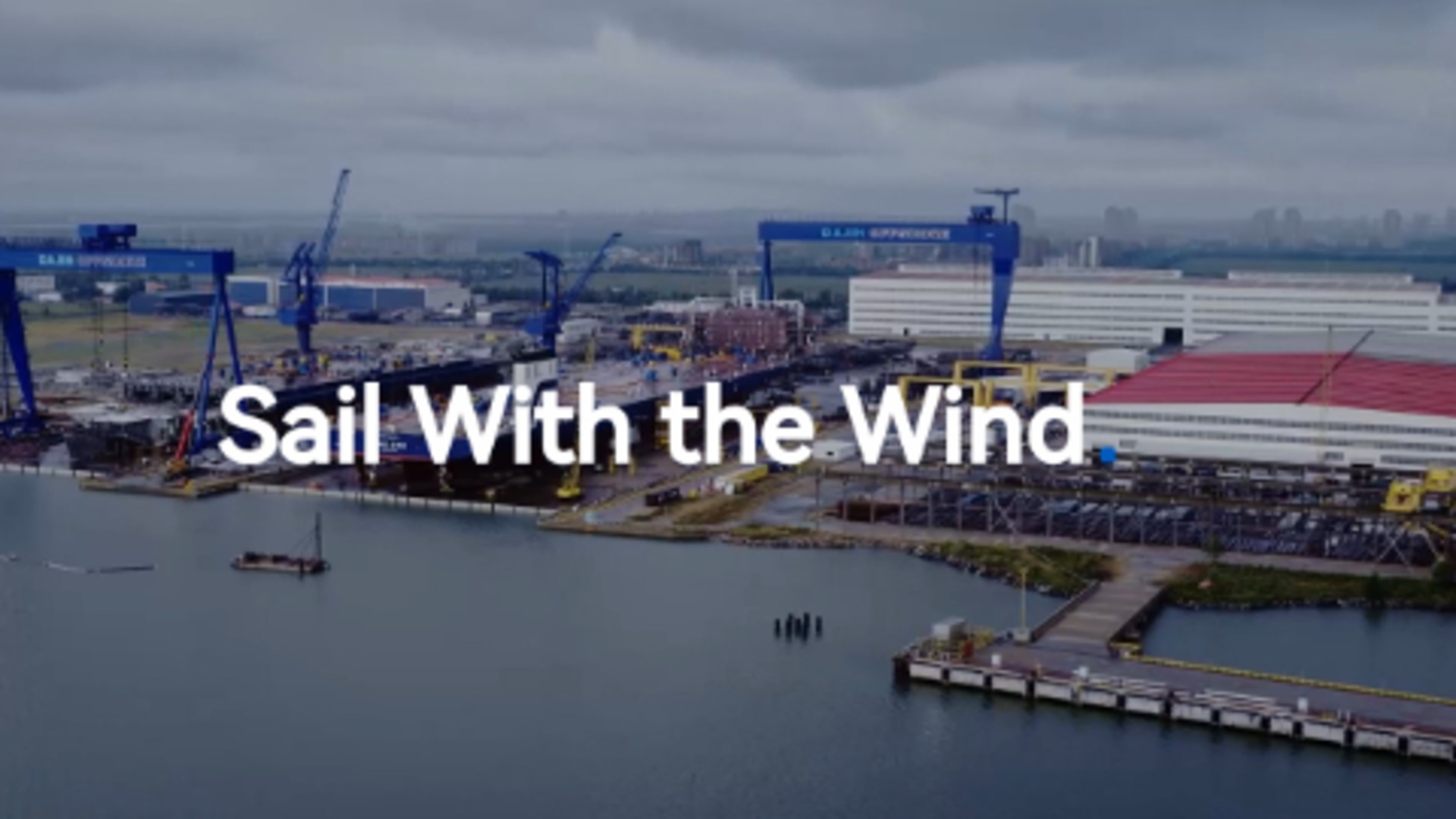

Having expanded from offshore wind equipment into the batch construction of Newcastlemax bulk carriers, Dajin Heavy Industry is developing a new growth engine. Capital-market attention is now shifting toward execution: whether the company can deliver the vessels on schedule and convert its expanding orderbook into revenue, cash flow and profit.
On 5 August, Dajin Heavy Industry Co., Ltd. announced that its subsidiary, Tangshan Dajin Offshore Engineering Co., Ltd., had signed contracts with a Norwegian shipowner for the construction of two 211,000-dwt bulk carriers.
The contracts are worth approximately RMB 1 billion in total, with the two vessels scheduled for phased delivery in 2029.
Each vessel will measure approximately 299.95 metres in length, 50 metres in breadth and 25 metres in depth. The ships belong to the Newcastlemax segment, one of the principal vessel classes used in the long-haul transportation of iron ore, coal and other major dry-bulk commodities.
Tangshan Dajin Offshore Engineering will be responsible for the complete engineering, construction, outfitting, sea trials and delivery process.
According to Dajin’s announcement, the Norwegian customer is an established international shipping company with businesses covering owned-fleet operations, newbuilding investment, secondhand vessel transactions, long-term chartering and offshore project development. Dajin also disclosed that it had conducted similar transactions with the same customer during the past three years.
Following the latest agreement, Dajin Heavy Industry’s publicly disclosed commercial shipbuilding contracts signed since the beginning of 2026 have reached:
21 firm vessels plus one buyer’s option, with firm contract value of approximately RMB 10.796 billion and potential value of RMB 11.321 billion if the option is exercised.
Including two specialised vessels contracted in 2025 and still awaiting delivery, Dajin’s publicly identifiable commercial shipbuilding orderbook now stands at:
23 firm vessels plus one option, with firm contract value of approximately RMB 11.381 billion and potential total value of RMB 11.906 billion.
These figures are based on publicly disclosed external commercial shipbuilding contracts and exclude vessels built for Dajin’s own offshore wind logistics system, as well as contracts for monopiles, jackets, floating foundations, offshore substations and other offshore wind structures.
21+1 Vessels Contracted in 2026
A review of Dajin Heavy Industry’s six shipbuilding contract announcements issued in 2026 shows that they cover eight separate shipowner order groups.
The 24 April announcement included independent orders from Norwegian and Greek shipowners, while the 1 June announcement also covered separate contracts involving Norwegian and Greek customers.
| Announcement date and reference | Shipowner | Vessel type | Quantity | Contract value | Delivery |
|---|---|---|---|---|---|
| 24 Apr 2026 / 2026-030 | Norwegian shipowner | 210,000-dwt bulk carrier | 4 | Approx. RMB 2.018bn | 2028–2029 |
| 24 Apr 2026 / 2026-030 | Greek shipowner | 210,000-dwt bulk carrier | 4 | Approx. RMB 2.040bn | 2028–2029 |
| 12 May 2026 / 2026-038 | Greek shipowner | 211,000-dwt bulk carrier | 2 | Approx. RMB 1.044bn | 2029 |
| 25 May 2026 / 2026-041 | Jumbo, the Netherlands | 25,000-dwt multipurpose heavy-lift vessel | 2 | Approx. RMB 1.069bn | 2028–2029 |
| 1 Jun 2026 / 2026-043 | Norwegian and Greek shipowners | 211,000-dwt bulk carrier | 4 | Approx. RMB 2.050bn combined | 2029 |
| 21 Jul 2026 / 2026-050 | Greek shipowner | 211,000-dwt bulk carrier | 3+1 | Firm vessels approx. RMB 1.575bn; option approx. RMB 525m | 2029–2030 |
| 5 Aug 2026 / 2026-056 | Norwegian shipowner | 211,000-dwt bulk carrier | 2 | Approx. RMB 1.000bn | 2029 |
On 24 April, Dajin signed contracts with Norwegian and Greek shipowners for four plus four 210,000-dwt bulk carriers. The two packages were valued at approximately $294 million and $297 million respectively, equivalent to a combined RMB 4.058 billion.
The agreements marked Dajin’s first batch entry into the construction of large Newcastlemax dry-bulk vessels.
On 12 May, the company secured another contract from a major Greek shipping and shipmanagement group for two 211,000-dwt bulk carriers. The package was worth approximately $153 million, equivalent to around RMB 1.044 billion.
The customer operates across the dry-bulk, container and tanker sectors.
On 25 May, Dajin signed contracts with Dutch heavy-transport and offshore engineering specialist Jumbo for two 25,000-dwt multipurpose heavy-lift vessels.
Each vessel will be equipped with two 1,200-tonne heavy-lift cranes, providing a combined lifting capacity of up to 2,400 tonnes. The vessels will be capable of transporting and installing offshore wind components, offshore oil and gas modules and large industrial equipment.
On 1 June, Dajin Heavy Industry and Tangshan Dajin Offshore Engineering signed further contracts with Norwegian and Greek shipowners for a total of four 211,000-dwt bulk carriers. The combined value was approximately $300 million, equivalent to about RMB 2.05 billion.
The announcement stated that Dajin had previously completed similar transactions with the Norwegian customer, while the Greek customer represented a new relationship. The four ships therefore constituted additional orders rather than a restatement of previous contracts.
On 21 July, Tangshan Dajin Offshore Engineering signed a further three-plus-one-vessel agreement with another Greek shipowner.
The three firm vessels were valued at approximately RMB 1.575 billion, while the buyer’s option was worth around RMB 525 million. The customer was granted a two-month period following contract signing to decide whether to exercise the option.
The latest order for two Norwegian-controlled vessels brings Dajin’s firm Newcastlemax contracts signed in 2026 to 19 ships.
Current Commercial Shipbuilding Orderbook Reaches 23+1 Vessels
Dajin also holds two external commercial shipbuilding contracts signed in 2025 that remain undelivered.
In August 2025, its Panjin facility signed a contract with a South Korean shipping company for one 23,000-dwt heavy offshore wind deck carrier. The contract was worth approximately RMB 300 million, with delivery scheduled for 2027.
The project represented Dajin’s first overseas contract for a heavy deck transport vessel.
In October 2025, Panjin Dajin signed a contract with a Norwegian shipowner for one 43,000-dwt non-propelled semi-submersible barge. The contract was valued at approximately RMB 285 million, with delivery also scheduled for 2027.
The barge will be approximately 150 metres long and 60 metres wide, with a maximum submergence draught of 32.5 metres. It will primarily serve the transportation and installation of large offshore structures.
Dajin’s publicly identifiable commercial shipbuilding orderbook therefore has the following composition:
| Vessel type | Firm vessels | Options |
|---|---|---|
| 210,000–211,000-dwt Newcastlemax bulk carriers | 19 | 1 |
| 25,000-dwt multipurpose heavy-lift vessels | 2 | — |
| 23,000-dwt heavy offshore wind deck carrier | 1 | — |
| 43,000-dwt non-propelled semi-submersible barge | 1 | — |
| Total | 23 | 1 |
Newcastlemax Becomes the Core Shipbuilding Product
The composition of the orderbook shows that Dajin’s commercial shipbuilding strategy is becoming increasingly clear.
Of the 23 firm vessels, 19 are Newcastlemax bulk carriers, representing approximately 82.6% of the firm orderbook by vessel count.
Among the 21 firm vessels contracted in 2026, Newcastlemaxes account for 19 ships, or more than 90%.
The vessel class, measuring around 300 metres in length and 50 metres in breadth, is primarily deployed in the long-haul transportation of iron ore, coal and other major commodities.
Compared with tankers, LNG carriers and ultra-large container vessels, the Newcastlemax segment is supported by a relatively mature technical platform. Hull structures and equipment configurations are more standardised, creating favourable conditions for series construction and efficiency gains in design, procurement and production.
A large number of sistership orders should help Dajin establish a stable design platform, supply-chain structure and production rhythm. It may also allow the company to spread first-of-class engineering, tooling and workforce-training costs across a broader series.
Large oceangoing merchant ships nevertheless require a different production and management system from offshore wind foundations.
The shipyard must establish integrated capabilities covering block construction, piping, electrical systems, machinery installation, outfitting, classification inspection, quayside commissioning and sea trials.
The 19 Newcastlemax contracts provide Dajin’s Tangshan facility with a long production run. They also create a substantial execution challenge, with deliveries concentrated between 2028 and 2030.
The two Jumbo heavy-lift vessels serve a complementary strategic role.
They are designed directly for offshore wind and large offshore project cargoes, creating synergies with Dajin’s established businesses in wind foundation manufacturing, offshore logistics and installation.
The contracts give Dajin exposure to both standardised large merchant vessels and higher-value specialised offshore ships.
Financial Performance Accelerates, While Shipbuilding Revenue Remains Back-Loaded
Dajin Heavy Industry has already entered a period of faster financial growth.
In 2025, the company reported revenue of RMB 6.174 billion, up 63.34% year on year. Net profit attributable to shareholders reached RMB 1.103 billion, an increase of 132.82%, while its overall gross margin rose to 31.18%.
In the first quarter of 2026, revenue reached RMB 1.907 billion, up 67.17% year on year. Net profit attributable to shareholders increased 88.19% to RMB 435 million.
Current profit growth remains driven mainly by offshore wind equipment and overseas projects.
Most of the newly contracted vessels are scheduled for delivery between 2028 and 2030, while the two specialised vessels signed in 2025 are due for delivery in 2027.
Under shipbuilding progress and revenue-recognition arrangements, the orderbook of more than RMB 10 billion will be converted into revenue and profit over several reporting periods.
Dajin has also warned in its announcements that the contracts have long execution cycles and are denominated in foreign currencies. Final revenue-recognition amounts and timing may therefore be affected by exchange rates, shipping and shipbuilding market conditions, and project execution progress.
A-Shares Remain Far Below Their Previous Peak
The rapid accumulation of shipbuilding contracts has not immediately reversed the correction in Dajin Heavy Industry’s Shenzhen-listed shares.
At the close on 4 August, ahead of the latest contract announcement, Dajin’s A-shares stood at RMB 41.57, giving the company a market capitalisation of approximately RMB 30.77 billion.
The stock had previously reached a high of RMB 94.18 before declining to a low of RMB 35.60.
At RMB 41.57, it remained approximately 55.9% below the earlier high, although it had recovered around 16.8% from the low.
The five-, 10- and 20-day moving averages stood at approximately RMB 40.40, RMB 39.74 and RMB 40.99 respectively, placing the share price close to its short-term averages.
The 60-day moving average remained considerably higher at RMB 57.69, indicating that the medium-term downtrend had yet to be fully repaired.
The share-price pattern suggests that new shipbuilding contracts have generated short-term reactions, but the impact of each announcement has been limited.
Investors continue to assess the quality of the orderbook, delivery capability, expected margins and the pace at which the new production capacity can be ramped up.
H-Shares Down Around 42% from the IPO Price
Dajin Heavy Industry’s H-shares were listed on the Main Board of the Hong Kong Stock Exchange on 5 June 2026 under the code 01081.HK.
The final offer price was HK$66.40 per share.
The company offered approximately 100 million H-shares globally, raising gross proceeds of about HK$6.64 billion and estimated net proceeds of approximately HK$6.465 billion after listing expenses.
On its first trading day, the stock fell as low as HK$59.05 before recovering to close at the offer price of HK$66.40.
By the close on 4 August, Dajin’s H-shares were trading at HK$38.58, up 1.26% on the day but down 32.79% over the previous month.
Compared with the HK$66.40 IPO price, the shares had declined by approximately 41.9% in the two months following the listing.
The trading range since the IPO was approximately HK$31.00 to HK$66.95. At HK$38.58, the share price had recovered around 24.5% from the low but remained substantially below the offer price.
Compared with the A-share market, price discovery in Hong Kong has been more concentrated.
The stock has had to absorb the additional supply created by approximately 100 million newly issued H-shares, while also being influenced by Hong Kong market liquidity, overseas renewable-energy valuations, offshore wind project schedules and general investor risk appetite.
Inclusion in Stock Connect did not immediately establish a sustained upward trend.
The H-shares briefly rebounded after the company announced the three-plus-one Newcastlemax order from a Greek shipowner in July, before falling back into a lower trading range.
Why Has the RMB 10 Billion-Plus Orderbook Failed to Lift the Shares?
The capital-market debate surrounding Dajin can be viewed through five main factors.
A Two-to-Four-Year Gap Between Contract Signing and Profit Recognition
Most Newcastlemax deliveries are scheduled for 2028–2030.
Although the aggregate contract value exceeds RMB 10 billion, revenue can only be recognised progressively through engineering, procurement and construction milestones.
The size of the orderbook therefore cannot be equated directly with near-term profit.
The Market Is Testing Dajin’s Large-Vessel Execution Capability
Dajin’s established strengths lie in offshore wind foundation manufacturing.
By entering the batch construction of 210,000-dwt-class oceangoing bulk carriers, the company must demonstrate that its engineering, procurement, production, quality-control, classification and sea-trial systems can operate reliably at commercial shipbuilding scale.
The first steel cutting, keel laying, launching, sea trials and delivery of the initial Newcastlemaxes will become important milestones for investors assessing the new business.
Contract Value Is Large, but Margins Remain Unproven
Shipbuilding contracts worth almost RMB 10.8 billion do not translate into an equivalent amount of incremental profit.
Steel, engines, equipment, labour, exchange rates, financing expenses and potential delay penalties will all influence final margins.
Series construction should improve efficiency, but the initial ramp-up of a new shipyard also brings workforce-training costs, equipment commissioning, supply-chain development expenses and first-of-class construction risk.
The Orderbook Is Concentrated in One Vessel Segment
Nineteen of the firm vessels are Newcastlemax bulk carriers.
This concentration supports standardised batch construction, while also increasing the company’s exposure to the large dry-bulk asset cycle and the investment decisions of major bulk-carrier owners.
Future orders for tankers, containerships, gas carriers or additional high-end offshore vessels would broaden both the product mix and customer base.
The Hong Kong Listing Has Created a New Valuation Benchmark
Dajin’s H-shares were priced at HK$66.40 and raised substantial capital.
The sharp post-listing decline indicates that international investors are reassessing the company’s offshore wind growth outlook, capital expenditure, shipbuilding execution risks and long-term cash-generation potential.
The A-share market is undergoing a similar valuation adjustment.
Together, the two markets indicate that order volume alone is unlikely to support valuation. Delivery progress, project margins, operating cash flow and capacity utilisation will become increasingly important.
From Offshore Wind Equipment Supplier to Integrated Marine Engineering Platform
With contracts for 19+1 Newcastlemax bulk carriers, two heavy-lift vessels, one deck transport vessel and one semi-submersible barge, Dajin Heavy Industry has established a tangible commercial shipbuilding orderbook.
Its development is advancing along three parallel tracks.
The first is standardised large merchant ship construction centred on the Newcastlemax platform.
The second is a specialised fleet portfolio serving offshore wind, offshore oil and gas, and heavy project cargoes through heavy-lift vessels, deck carriers and semi-submersible barges.
The third is the integration of offshore wind foundation manufacturing with marine transportation, port services and offshore installation.
Dajin has demonstrated its ability to attract batch orders from international shipowners.
Over the next two to three years, attention will focus on construction milestones, supply-chain organisation, margins and delivery performance.
The orderbook of more than RMB 10 billion gives the company a substantial new growth opportunity. The continuing weakness of both its A- and H-shares shows that investors are demanding clear evidence that those contracts can be converted into completed vessels, revenue, cash flow and profit.
Share-price data are based on the close on 4 August 2026 and are included solely to illustrate secondary-market performance.


READ MORE
 Shipbuilding
Chinese Shipyard Starts Work on First Wärtsilä 25 Ammonia Newbuild: Not Just “Ready”—It Will Run on Ammonia from Day One
 Shipbuilding
8 more!Wan Hai Steps Up Fleet Expansion with 50-Vessel Newbuilding Programme
 Shipbuilding
“The Whole World Is Asking for Chinese Cars”: Why PCTC Capacity Is Still Tight Despite Record Deliveries
 Shipbuilding
A Small Chinese Private Shipyard Is Now Building 5,000 CEU PCTCs — China’s Car Carrier Capability Is Expanding Beyond Major Yards
 Shipbuilding
Up to $489 Million, 17 Yards in the Running: Why Norway’s High-End Wellboats Are Heading to China
 Shipbuilding
Can a Ship Be Sold in Pieces? A $1,000 Ticket to Becoming a Digital “Shipowner”
 Shipbuilding
Hanwha Makes $1.2 Billion Bid for Austal USA in Major U.S. Naval Shipbuilding Push
 Shipbuilding
Why Uni-Asia Still Chose Japan for Its Return to Newbuilding
 Shipbuilding
Dynacom Orders Four More VLCCs at Hengli
 Shipbuilding