


Four LPG Carriers in Six Months: A New Shipowner Emerges in Greece
Adenac Ship Management expands with two 3,500-m³ LPG carriers from Exmar, combining secondhand acquisitions with secured employment
A new player is expanding rapidly in Europe’s small LPG carrier market.
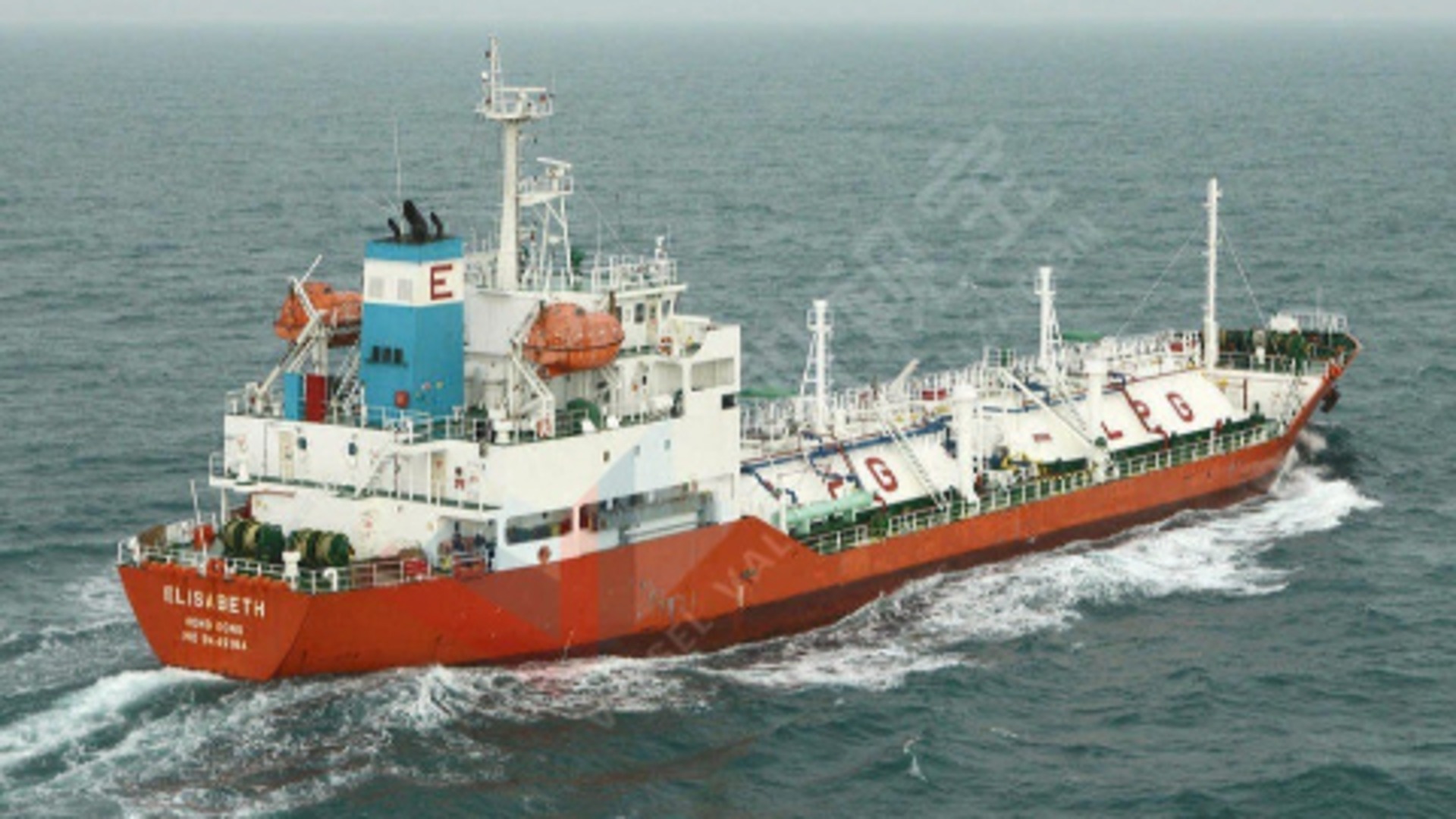
Athens-based Adenac Ship Management has announced the acquisition of two fully pressurised LPG carriers built in Japan in 2009, each with a cargo capacity of approximately 3,500 m³.
The vessels have been identified as JOAN and ELISABETH, previously controlled by Belgian gas shipping specialist Exmar. Both ships have already secured two-year employment arrangements.
With this transaction, Adenac has expanded its publicly disclosed LPG fleet from two vessels to four within only a few months of entering the sector. The company has also made clear that further acquisitions are likely, with its next phase of expansion expected to focus on younger and potentially larger LPG carriers in the secondhand market.
Exmar confirms the vessel sales
Exmar confirmed on 17 July that it had signed a series of vessel sale agreements covering three midsize gas carriers — KORTRIJK, WEPION and KRUIBEKE — together with the fully pressurised LPG carriers JOAN and ELISABETH.
The Belgian company said the ships would be delivered to their new owners between the second half of 2026 and the first half of 2027. The disposals form part of Exmar’s continuing fleet renewal strategy.
Exmar expects the five transactions to generate a combined capital gain of approximately US$35 million compared with the vessels’ book value, calculated according to Exmar’s ownership interests.
It is important to distinguish this figure from the purchase price paid by Adenac. The US$35 million represents the expected combined accounting gain from the sale of all five vessels. It is neither the acquisition price for JOAN and ELISABETH nor the profit generated by those two ships alone.
Neither Exmar nor Adenac has disclosed the individual sale prices of the two 3,500-m³ LPG carriers. Details of the financing structure, lending banks and charterers have also not been made public.
JOAN and ELISABETH were both built by Yamanishi Shipyard in Japan. The vessels are approximately 97 metres long and 16.5 metres wide and are classed by Bureau Veritas.
JOAN has a cargo capacity of 3,540 m³ and a deadweight of around 4,000 tonnes, while ELISABETH has a capacity of 3,542 m³ and a deadweight of approximately 3,996 tonnes. Both vessels were delivered in 2009 and currently sail under the Belgian flag.
Fully pressurised LPG carriers do not require large-scale low-temperature reliquefaction systems. Instead, their cargoes are maintained in liquid form under pressure. This design is widely used for the regional transportation of LPG, propylene, butadiene and other petrochemical gases.
Ships in the 3,500-m³ segment have relatively shallow draughts and can access a wide range of smaller terminals. They therefore continue to occupy an important position in short-haul and coastal trades across the Mediterranean, Black Sea, northern Europe and West Africa.
Securing cash flow before buying the ships
One of the most notable features of Adenac’s latest acquisition is that the vessels had already secured employment before entering the company’s fleet.
Adenac said that by combining selective acquisitions with secured employment, it could improve earnings visibility and build a more resilient portfolio of LPG shipping assets.
The company is therefore not pursuing a strategy based entirely on exposure to the volatile spot market. Instead, it is pairing ship purchases with medium- and long-term employment, using contracted charter revenue to support vessel ownership, debt servicing and future expansion.
The same approach was evident in Adenac’s first two LPG investments.
In early 2026, the company acquired the 2004-built semi-refrigerated, fully pressurised LPG carrier GAS VALERIE and secured five-year employment for the vessel.
At the same time, Adenac placed the 1999-built LPG carrier then known as GAS ZUMA on a three-year charter. That vessel now appears on Adenac’s official fleet list as GAS HELENA.
Adenac’s four publicly disclosed LPG carriers currently comprise GAS HELENA, built in 1999 with a capacity of approximately 3,690 m³; GAS VALERIE, built in 2004 with a capacity of around 2,963 m³; and the two 2009-built, approximately 3,500-m³ ships JOAN and ELISABETH.
According to the company, all four vessels are equipped with ballast water treatment systems.
The fleet structure reveals a relatively clear investment strategy. Adenac has used comparatively affordable secondhand LPG carriers to establish an initial market presence, while reducing earnings volatility through secured charter coverage.
Over time, the company may seek to sell its oldest tonnage and redeploy capital into younger vessels with broader commercial capabilities.
A company with Greek, Dutch and Turkish connections
Adenac is a very young shipping platform.
Riviera Maritime Media reported in April that the company had recently opened an office in Kifissia, in Greece’s Attica region, to develop LPG vessel investment and commercial management activities.
Adenac describes itself as the specialised commercial operating platform of Netherlands-based Vitamodo Scheepsbeheer B.V., responsible for the ownership, chartering and long-term operation of LPG carriers and containerships.
The company refers to this structure as a “Dutch-Greek Synergy”, combining a Netherlands-based asset platform with a Greek commercial shipping team.
Dutch corporate registration information shows that Vitamodo Scheepsbeheer B.V. is registered in Amsterdam under Chamber of Commerce number 98580353. Its stated activities include the chartering and leasing of ships and business consultancy.
Public registry information indicates that the company was incorporated on 15 October 2025, meaning that it is also still in the early stages of building its business.
One of Adenac’s managing partners is Onur Yalcin, who is also publicly associated with Vitamodo Scheepsbeheer and the Turkish shipping and petroleum trading company Bevon Denizcilik ve Petrol Ticaret Ltd.
Other publicly listed personnel connected with Adenac and Vitamodo include Berk Yalcin, who also has a Turkish business background. These links help explain why some international media have described Adenac as a shipowner with both Greek and Turkish foundations.
Publicly available information is not yet sufficient to establish the exact shareholding relationships between Adenac, Vitamodo and Bevon, or to identify the ultimate beneficial owners and their respective interests in individual vessel-owning companies.
What can currently be established is that Adenac has developed commercial and chartering capabilities in Greece, while Vitamodo appears to serve as the broader asset platform in the Netherlands. The management network also has clear links to Turkish shipping and commodity trading interests.
More than 20 years of LPG market experience
Adenac’s key commercial executive in Greece, Christos Triantafyllidis, brings more than two decades of experience in gas shipping.
Before joining Adenac, he was responsible for establishing Arrow Shipbroking’s LPG broking operation in Greece in 2022. Prior to that, he spent more than ten years with Greek gas carrier owner StealthGas.
His experience covers the LPG and petrochemical gas transportation markets, providing Adenac with a level of sector knowledge that is particularly important for a newly established platform.
The small LPG carrier market is highly fragmented. Vessel specifications, cargo compatibility, regional trading patterns and charterer credit quality vary considerably.
The ability to secure suitable employment before acquiring a vessel — while matching purchase price, vessel age, drydocking requirements and charter duration — is often central to the success of a secondhand gas carrier investment.
Adenac’s strategy of selective acquisitions combined with pre-arranged employment therefore reflects a relatively mature gas shipping and asset management approach.
Although the company has expanded rapidly, each publicly disclosed investment has been accompanied by charter coverage lasting between two and five years. This suggests that cash flow visibility remains a priority at the present stage of its development.
The publicly disclosed fleet has reached five vessels
In addition to its four LPG carriers, the wider Adenac platform also has exposure to the small containership market through VM VITA.
The vessel was built in 1996 by Germany’s Sietas shipyard. It sails under the Dutch flag, is classed by DNV, has a deadweight of approximately 8,912 tonnes and a nominal capacity of 749 TEU.
Adenac positions the vessel for regional container logistics services.
On this basis, the company’s publicly disclosed fleet has reached five vessels: four LPG carriers and one feeder containership.
The fleet, however, continues to display the characteristics of a secondhand asset platform.
As of 2026, JOAN and ELISABETH are approximately 17 years old, GAS VALERIE is around 22 years old, GAS HELENA is about 27 years old, and VM VITA has reached approximately 30 years of age.
Adenac’s stated ambition to build a “modern, scalable fleet” should therefore be understood as an ongoing renewal strategy rather than a description of the fleet’s current age profile.
The acquisition of two 2009-built ships represents a material improvement compared with the company’s earlier 1999- and 2004-built LPG assets. Nevertheless, the fleet remains some distance from what the market would ordinarily consider young tonnage.
A genuine operating platform that still requires observation
Based on the information currently available, Adenac is more than a newly registered corporate vehicle supported only by promotional statements.
The company has established an office in Greece, recruited executives with extensive LPG market experience, developed control or management relationships with identifiable vessels and completed an acquisition that has been independently confirmed by Exmar.
At the same time, the platform remains at an early stage of development.
Its public financial disclosures are limited. Vessel purchase prices, leverage ratios, financing banks, charterer identities and single-ship ownership structures have not been revealed.
The exact capital and management relationships connecting the Netherlands, Greece and Turkey also remain subject to further clarification through official corporate filings.
This does not undermine the conclusion that Adenac is a genuine shipping investment and operating platform. It does, however, mean that the company is currently more appropriately assessed as an emerging small shipowner than as an established member of Greece’s large traditional shipping community.
Adenac has already indicated that it will continue to target younger and potentially larger LPG carriers.
The next points to watch will include the formal delivery of JOAN and ELISABETH, whether the company decides to dispose of its 1999-built tonnage, and whether its next acquisitions move beyond the 3,000–4,000-m³ coastal segment into larger fully pressurised or semi-refrigerated gas carriers.
By combining secondhand acquisitions with medium- and long-term employment, Adenac is attempting to establish a clear growth model: controlling entry costs through used tonnage, stabilising cash flow through charter coverage, and gradually improving fleet quality through further asset transactions.
For a company that has only recently entered the public eye, the key question is whether this model can withstand changes in vessel values, interest rates, maintenance costs and LPG charter markets.
The answer will determine whether Adenac develops into a specialised gas carrier owner with a sustainable long-term position, or remains a relatively small asset platform built around one phase of the shipping cycle.

READ MORE
 Shipbuilding
14 Directly Controlled Newbuildings and Exposure to Eight More VLCCs: Scorpio Tankers Launches a Cross-Segment Expansion
 Shipbuilding
Nanjing Tanker places four MR tanker order at GSI amid fleet renewal push
 Shipbuilding
338 LNG Carriers Already on Order — Why Does GTT Still See Demand for Another 550?
 Shipbuilding
NYK Takes Full Control of Saga Welco and Its 48-Vessel Open-Hatch Fleet
 Shipbuilding
COSCO SHIPPING Development to Invest RMB 7.92 Billion in 15 Newcastlemax Bulk Carriers, Backed by 20-Year Charters
 Shipbuilding
Greek Shipowner W Marine Orders Three Ultramax Bulk Carriers at Dajin Heavy Industry
 Shipbuilding
COSCO SHIPPING Development Adds Four 210,000 DWT Newcastlemax Bulk Carriers
 Shipbuilding
Hengli Heavy Industries Secures Six VLAC Orders in One Week
 Shipbuilding
Sallaum Lines Adds 1+1 Large PCTCs at China Merchants Jinling, Taking Firm Newbuild Programme to Nine Ships
 Shipbuilding