


26-Year-Old Car Carrier Reportedly Sold for $42 Million as MSC-Owned GCC Also Showed Interest
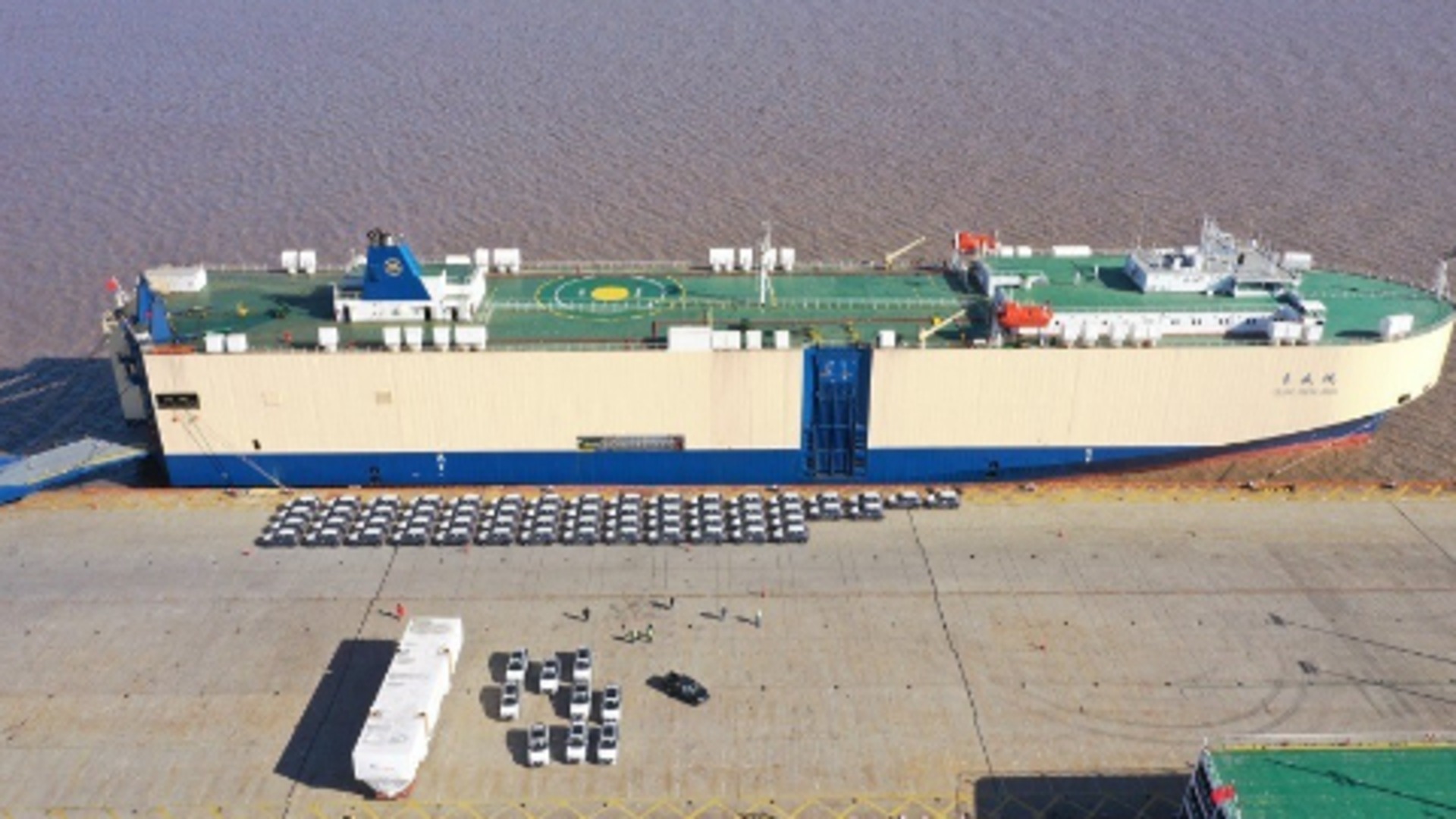

With a reserve price of RMB 95 million, the vessel reportedly fetched nearly three times that amount, highlighting renewed strength across the global car carrier market
A 26-year-old car carrier built in 2000 has reportedly been sold for about $42 million, nearly three times its official reserve price of RMB 95 million.
The price alone would have attracted market attention. The list of interested parties makes the transaction even more significant.
Xinde Marine News understands that Global Car Carriers, the MSC-owned vehicle carrier tonnage provider formerly known as Gram Car Carriers, was among the shipping groups that followed the sale and participated in the competition for the asset.
The high reported price, the involvement of major industry players and the timing of the transaction all point to the same conclusion: immediately available car carrier tonnage remains highly valuable.
China’s vehicle exports are rising rapidly, long-haul trades are absorbing more vessel capacity, charter rates remain firm and newbuildings ordered today will not arrive until the end of the decade. In that environment, even a 26-year-old medium-sized PCTC can become a fiercely contested asset.
Xinde Marine News has learned that Chang Sheng Hong, a 4,310-CEU car carrier owned by Shenzhen China Merchants RoRo Shipping, was sold through an auction held on July 21 for approximately $42 million.
International shipping media described the reported price as exceptionally high for a vessel of its age and capacity.
The Shanghai United Assets and Equity Exchange had previously listed the vessel under the project titled “Certain Assets of Shenzhen China Merchants RoRo Shipping Co., Ltd. — Chang Sheng Hong Ro-Ro Vessel.”
The official project number was GR2026SH1000785, with a reserve price of RMB 95 million.
The exchange listing confirms the seller, the vessel and the reserve price. However, China Merchants Energy Shipping and the Shanghai United Assets and Equity Exchange had not publicly disclosed the successful buyer or final transaction price at the time of publication.
The reported $42 million price should therefore still be attributed to shipping market sources rather than described as an officially announced transaction value.
A 26-Year-Old Vessel Worth More Than When She Was Two
The sale has drawn attention because Chang Sheng Hong has already reached an age at which many commercial vessels would normally face increasingly difficult questions over maintenance costs, regulatory compliance and remaining economic life.
The vessel, IMO 9177040, was built in 2000 by Croatia’s Uljanik shipyard. She has capacity for approximately 4,310 vehicles and features 10 vehicle decks.
Her former name was Dresden.
Historical transaction records indicate that the vessel was sold for around $35.4 million in 2002, when she was only two years old.
If the latest reported price of $42 million is accurate, the 26-year-old car carrier has now achieved a nominal selling price higher than the amount paid for her when she was nearly new.
The two prices cannot be compared directly without considering inflation, vessel upgrades, maintenance condition, class status, remaining survey life and the very different shipping markets prevailing at the two points in time.
Even so, the comparison remains striking.
A car carrier that has already been in service for more than a quarter of a century reportedly attracting a $42 million valuation shows how strongly available PCTC assets are being repriced.
For a buyer, ordering a replacement newbuilding would involve a delivery wait of several years. Acquiring Chang Sheng Hong could provide almost immediate access to operating capacity following delivery, inspection and any required repairs or upgrades.
When charter rates remain high, the value of entering the market immediately can outweigh the benefits of waiting for a newer and more efficient vessel.
From Domestic Ro-Ro Services to China’s Vehicle Export Trades
Chang Sheng Hong has played a visible role in the expansion of China’s international vehicle exports.
After joining the China Merchants RoRo fleet, the vessel served both domestic coastal trades and international routes.
On December 20, 2022, Chang Sheng Hong departed Shanghai carrying approximately 3,000 vehicles produced by Chinese brands including Chery, Geely, SAIC Motor, Changan and Yutong.
The vessel sailed for Jeddah in Saudi Arabia and Aqaba in Jordan, marking the launch of China Merchants’ Shanghai–Red Sea international ro-ro service.
At the time, Chinese vehicle exporters were facing severe shortages of specialist car carrier capacity. China Merchants upgraded existing ro-ro vessels, including Chang Sheng Hong, and deployed them internationally to help ease the export bottleneck.
In May 2024, the vessel carried another shipment of Chinese-brand vehicles from Shanghai to Jebel Ali in the United Arab Emirates.
The cargo originated from manufacturing regions including Hunan and Hubei, using a combination of inland waterways, the Yangtze River and deep-sea shipping to create an integrated river-sea-ocean logistics chain.
Chang Sheng Hong therefore participated directly in the transformation of China’s automobile industry from a mainly domestic production base into a major global exporter.
The decision to dispose of the vessel during a strong asset market also gives China Merchants RoRo an opportunity to realise value from an ageing ship and release capital for fleet renewal.
MSC-Owned GCC Was Also Interested
Xinde Marine News understands that the auction attracted the attention of Global Car Carriers and that the MSC-owned company was involved in the bidding process.
The identity of the final buyer has not been publicly confirmed, and no public information currently links GCC to the completed transaction.
Its interest is nevertheless significant.
Global Car Carriers is the new name of Gram Car Carriers, the Norwegian vehicle carrier tonnage provider acquired by MSC in 2024 for approximately $700 million.
The company invests in and owns PCTCs, which are then chartered to global and regional vehicle carrier operators under medium- and long-term agreements.
GCC currently has 20 vehicle carriers in operation and has assembled an orderbook of 12 LNG dual-fuel PCTCs at Chinese shipyards.
The newbuilding programme consists of eight 8,600-CEU vessels and four 7,000-CEU vessels scheduled for delivery between 2028 and 2030.
Six of the 8,600-CEU ships will be built at China Merchants Jinling Shipyard’s Yizheng facility. China Merchants Industry’s Weihai yard will construct two 8,600-CEU ships and two 7,000-CEU vessels, while Guangzhou Shipyard International will build the remaining two 7,000-CEU units.
The total investment in the 12-ship programme has been estimated at approximately $1.1 billion to $1.2 billion.
GCC’s interest in a 26-year-old secondhand vessel, while simultaneously investing heavily in large LNG dual-fuel newbuildings, illustrates how long-term fleet development and near-term capacity acquisition can operate in parallel.
The new ships support GCC’s strategy for the next decade. An existing vessel capable of entering service quickly can fill the capacity gap before those newbuildings are delivered.
Provided that technical condition, remaining service life, maintenance requirements and charter income support the economics, an older vessel can still offer considerable value.
Effective Car Carrier Capacity Remains Tight
The global PCTC fleet has entered a period of heavy newbuilding deliveries.
Around 12 PCTCs were delivered in 2023. The number rose to 46 in 2024 and approximately 75 in 2025.
A further 67 vessels are expected to be delivered in 2026, followed by about 50 in 2027 and 26 in 2028.
Despite this rapid increase in supply, charter rates have not collapsed.
Data from Veson Nautical show that global vehicle carrier fleet capacity expanded by approximately 3.3% during the first half of 2026.
Global car-mile demand increased by the same 3.3%.
The additional fleet capacity was therefore largely absorbed by rising demand, leaving the market in a persistent state of tight balance.
The geographical expansion of Chinese vehicle exports is also increasing the amount of vessel time required to move each unit.
Vehicles shipped from China to Southeast Asia consume far less capacity than those carried to Europe, Latin America, Africa or Oceania.
Longer voyages increase car-mile demand and reduce the number of round trips each vessel can complete in a year.
Red Sea diversions, geopolitical instability, port congestion and multiple-port itineraries are adding further pressure.
The car carrier market therefore cannot be evaluated only by counting how many additional CEUs are entering the fleet. The distance travelled and the time each space remains occupied are equally important.
New Vessels Command $90,000 Per Day
The charter market provides clear evidence of the value attached to available vehicle carrier tonnage.
VesselsValue’s one-year time-charter index for a 6,500-CEU car carrier has risen by approximately 45% since the beginning of 2026, reaching around $67,000 per day.
Lake Rotorua, a 7,060-CEU PCTC owned by Eastern Pacific Shipping, was delivered by China Merchants Jinling Shipyard’s Nanjing facility in April 2026.
The vessel was reportedly fixed to SAIC Anji Logistics in May at $90,000 per day.
That rate represented a premium of around 70% over the corresponding one-year 6,500-CEU index.
Older ships are also securing attractive employment.
SFL Composer and SFL Conductor, two 6,500-CEU car carriers built in 2005 and 2006 respectively, were fixed to COSCO Shipping Lines at approximately $40,000 per day for 34 months.
A modern vessel securing $90,000 per day and almost 20-year-old ships obtaining contracts approaching three years both show how strongly operators are competing for present and future capacity.
Veson has also estimated that the values of 10-year-old standard 6,500-CEU and 4,000-CEU vessels have increased by around 10.5% since the start of the year.
The simultaneous rise in charter rates and secondhand values provides the broader market context for the reported Chang Sheng Hong sale.
Newbuilding Orders Rebound From Nine to at Least 39
Strength in the secondhand market is being matched by a revival in newbuilding orders.
Clarksons contract data show that global PCC and PCTC orders reached approximately 83 vessels in 2023 and 73 in 2024.
The market then slowed sharply, with only around nine orders recorded in 2025.
Owners became increasingly cautious as the large backlog of earlier orders moved into the delivery phase. Concerns over fleet growth, weakening charter rates and potential asset-price corrections reduced investment appetite.
Activity has recovered quickly in 2026.
Veson recorded 29 confirmed vehicle carrier orders during the first half of the year, compared with only two in the same period of 2025, representing a year-on-year increase of 1,350%.
According to Xinde Marine News’ analysis of Clarksons contract dates, 37 PCC and PCTC orders had been recorded globally by July 16.
Bahri Line subsequently announced an order for two LNG dual-fuel RoCon vessels at China Merchants Jinling Shipyard, together with options for two additional ships.
Including Bahri’s two firm vessels, confirmed PCC, PCTC and RoCon orders in 2026 have reached at least 39 ships.
The total could rise to 41 if both options are exercised.
This new investment cycle remains selective.
MSC-owned GCC is the largest identified buyer, with 12 PCTCs. Eastern Pacific Shipping has been linked to six additional 7,050-CEU LNG dual-fuel vessels.
Hong Kong-registered Zhongnan Shipping has ordered four 5,700-CEU car carriers, while “K” Line subsidiary KESS is investing in four smaller LNG dual-fuel ships for its European short-sea network.
Most of these investors have established cargo sources, long-term charter arrangements, automotive customers or mature shipping networks.
The renewed orderbook indicates that owners are positioning for demand in the 2028–2030 period.
The high reported price achieved by Chang Sheng Hong shows that existing vessels capable of trading before those deliveries arrive are also attracting strong demand.
China’s Vehicle Exports Approach 10 Million Units
The demand foundation for the car carrier market continues to come from China’s rapidly expanding vehicle exports.
Data from the China Association of Automobile Manufacturers show that China exported 5.096 million vehicles during the first half of 2026, an increase of 65.3% year on year.
New-energy vehicle exports reached 2.355 million units, more than doubling from the previous year.
June exports alone reached 1.037 million vehicles, up 75.1%, marking the first time China’s monthly automobile exports exceeded one million units.
Veson has projected that China’s light vehicle exports could rise from approximately 1.6 million units in 2021 to around 10 million units in 2026 across all transport modes.
During the first five months of 2026, China exported approximately 4.06 million vehicles, up 63% year on year.
Chinese manufacturers are also adapting their destination markets.
Middle East tensions affected part of China’s export volumes, prompting manufacturers to redirect more cargo towards Brazil, the United Kingdom, Belgium, Italy and other destinations.
Brazil became one of the fastest-growing markets, while European demand for electric vehicles provided further support.
The combination of higher export volumes and longer average transport distances is increasing demand for vehicle carrier capacity.
More cars moving to distant markets means each vessel spends longer at sea and completes fewer annual voyages.
Around Two Million Cars May Move by Container
Specialist PCTC capacity may still be insufficient to absorb all the additional vehicle exports.
Veson estimates that more than one million cars were transported using alternative shipping methods in 2025, primarily containers.
That figure could rise to approximately two million vehicles in 2026.
Containerised vehicle exports are therefore becoming a structural component of China’s automotive logistics system.
Container shipping offers wider port coverage and more frequent sailings than specialist car carrier networks.
It is particularly useful for developing markets where cargo volumes are not yet large enough to justify regular PCTC calls.
Automakers can use container services to enter and test new markets, while connecting ocean transport with rail, road, overseas warehousing and final delivery.
Depending on vehicle size and loading equipment, a 40-foot container can generally accommodate two to four passenger vehicles.
If around two million vehicles are mainly transported by container, the trade could generate demand for several hundred thousand to almost one million 40-foot units.
This volume is unlikely to transform the entire container shipping cycle on its own, although it could provide meaningful support for outbound cargo demand on routes from China to Latin America, Africa, the Middle East and parts of Europe.
High Prices Do Not Eliminate Cyclical Risk
The reported $42 million sale of Chang Sheng Hong confirms that car carrier assets remain highly sought after.
It may also represent an important marker in the current market cycle.
A large number of PCTCs are scheduled for delivery between 2026 and 2028, while scrapping of older car carriers remains limited.
Continued deliveries combined with delayed vessel retirements will keep increasing net fleet capacity.
Red Sea diversions are currently absorbing a significant amount of effective tonnage.
If navigation through the Suez Canal normalises, shorter Asia–Europe voyages could quickly release capacity back into the market.
Chinese automakers are also investing in overseas manufacturing and knocked-down assembly plants.
As local production expands, some future growth in Chinese-brand sales will no longer translate into fully built vehicles shipped from Chinese ports.
For the buyer of Chang Sheng Hong, the reported $42 million price secures immediate capacity and access to the current strong charter market.
It also comes with exposure to ageing-related maintenance, environmental compliance costs, future survey expenditure and residual-value risk.
For China Merchants RoRo, disposing of a 26-year-old PCTC in a strong asset market creates an opportunity to realise substantial value and release resources for fleet renewal.
One Old Ship Reflects the Entire Car Carrier Market
The Chang Sheng Hong auction brings several major trends in the vehicle carrier market together in a single transaction.
The vessel was listed with a reserve price of RMB 95 million and reportedly sold for approximately $42 million.
Despite being 26 years old, she attracted interest from major industry participants, including MSC-owned Global Car Carriers.
Behind that valuation lies a market in which China exported more than five million vehicles during the first half of 2026, the one-year charter index for a 6,500-CEU ship reached $67,000 per day, a modern PCTC secured a $90,000-per-day fixture, and new orders rebounded from around nine vessels in 2025 to at least 39 in 2026.
Dozens of new ships are under construction, yet immediately available tonnage remains limited.
Rising vehicle exports, longer voyages, newbuilding lead times and demand for long-term charters are all supporting the near-term value of existing car carrier assets.
The reported sale of Chang Sheng Hong therefore leaves the industry with a revealing question:
If a 26-year-old medium-sized PCTC can still command approximately $42 million, how intense has the competition for available vehicle carrier tonnage become?


READ MORE
 Shipbuilding
China Captures 82.3% of Global Ship Orders as Shipbuilding Indicators Reach New Highs
 Shipbuilding
Dajin Heavy Industry Lands Newbuilding Contracts for 7 Commercial Vessels
 Shipbuilding
China’s Shipyards Capture the Lion’s Share of a $132.6 Billion Newbuilding Boom
 Shipbuilding
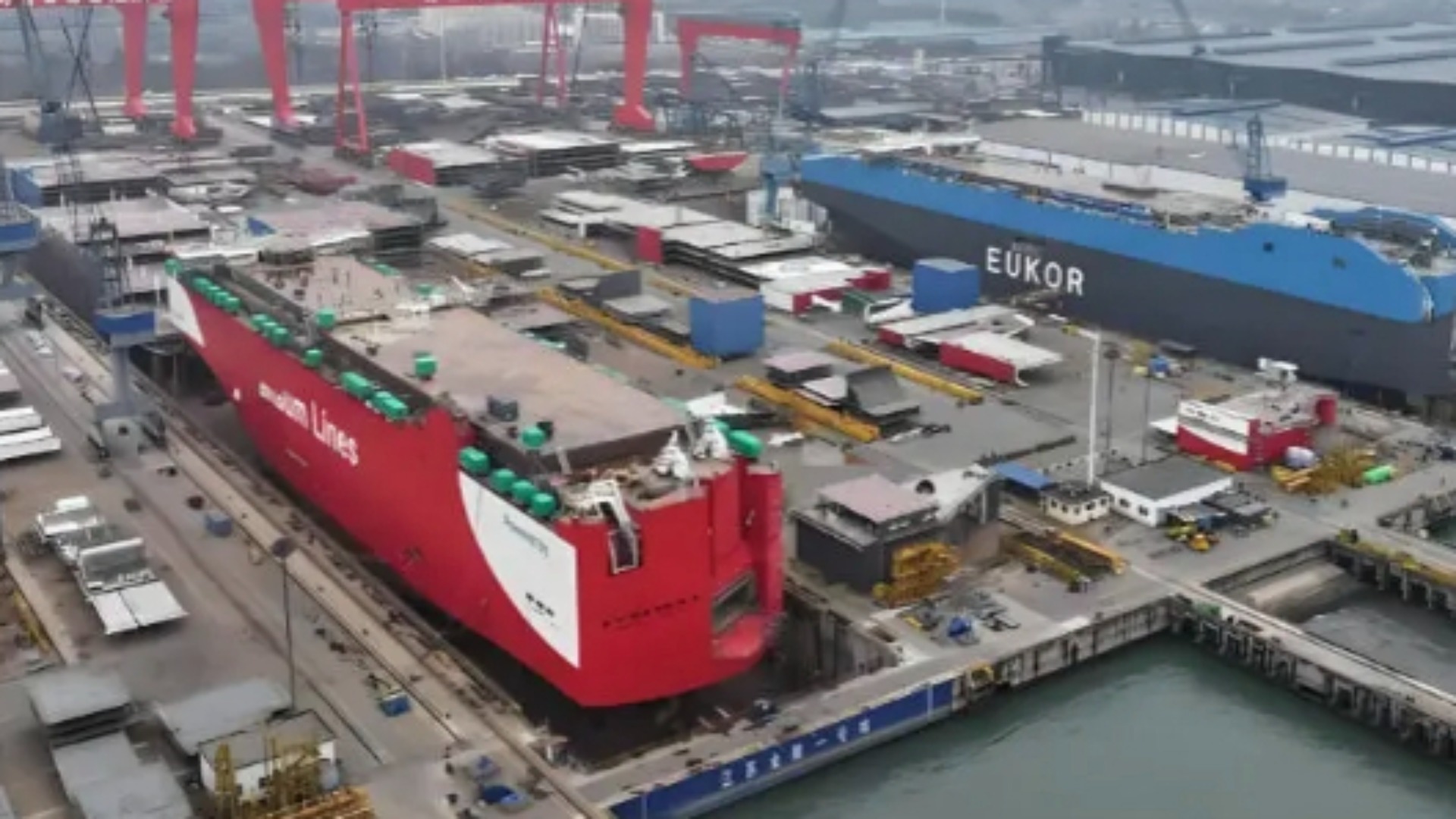
Bahri Line Orders LNG Dual-Fuel RoCon Vessels from China Merchants Jinling Shipyard
 Shipbuilding
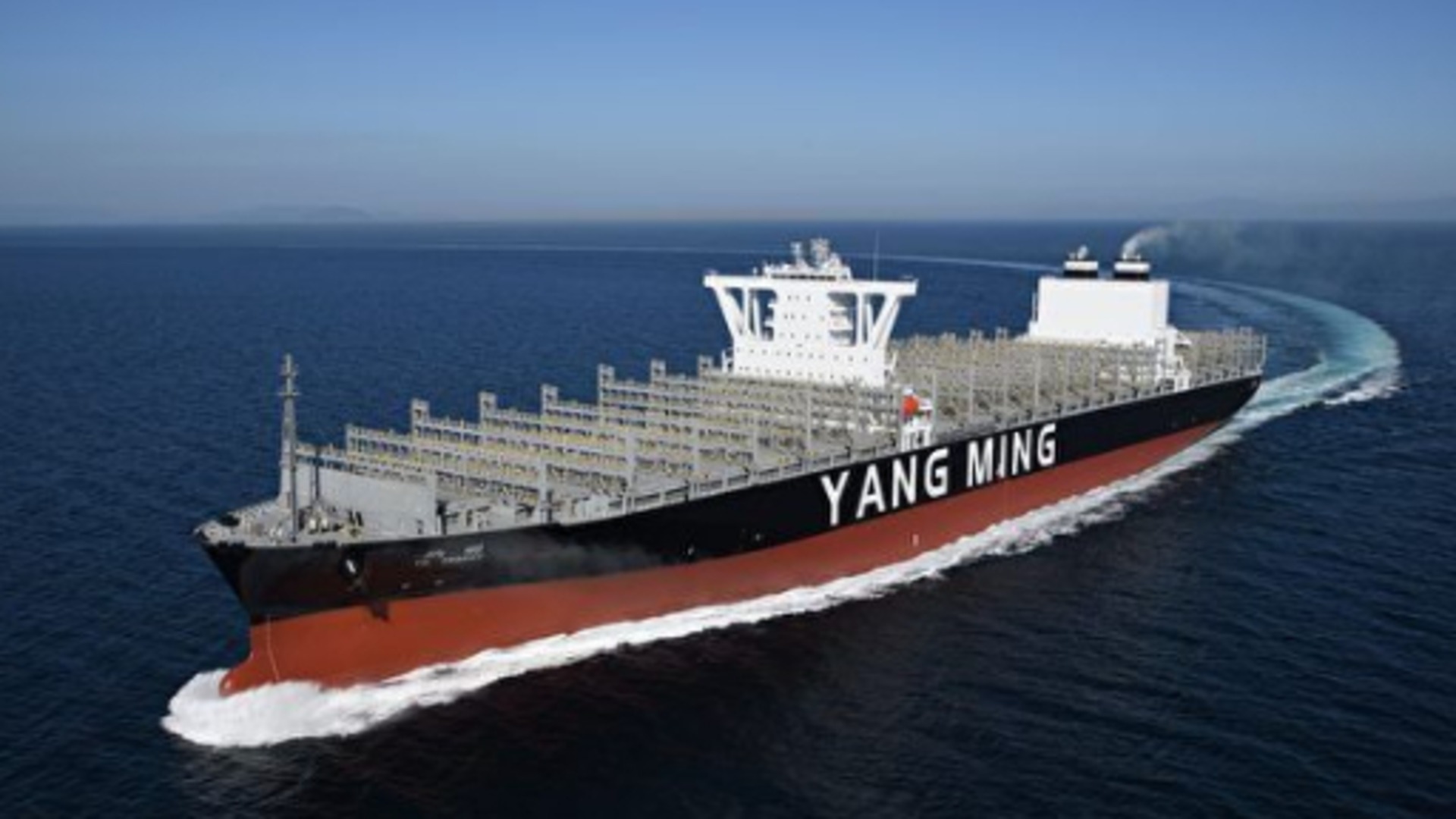
Yang Ming Marine Transport has confirmed an order for six 13,000-TEU LNG dual-fuel containerships at Hanwha Ocean, with a total contract value of between US$1.11 billion and US$1.224 billion.
 Shipbuilding
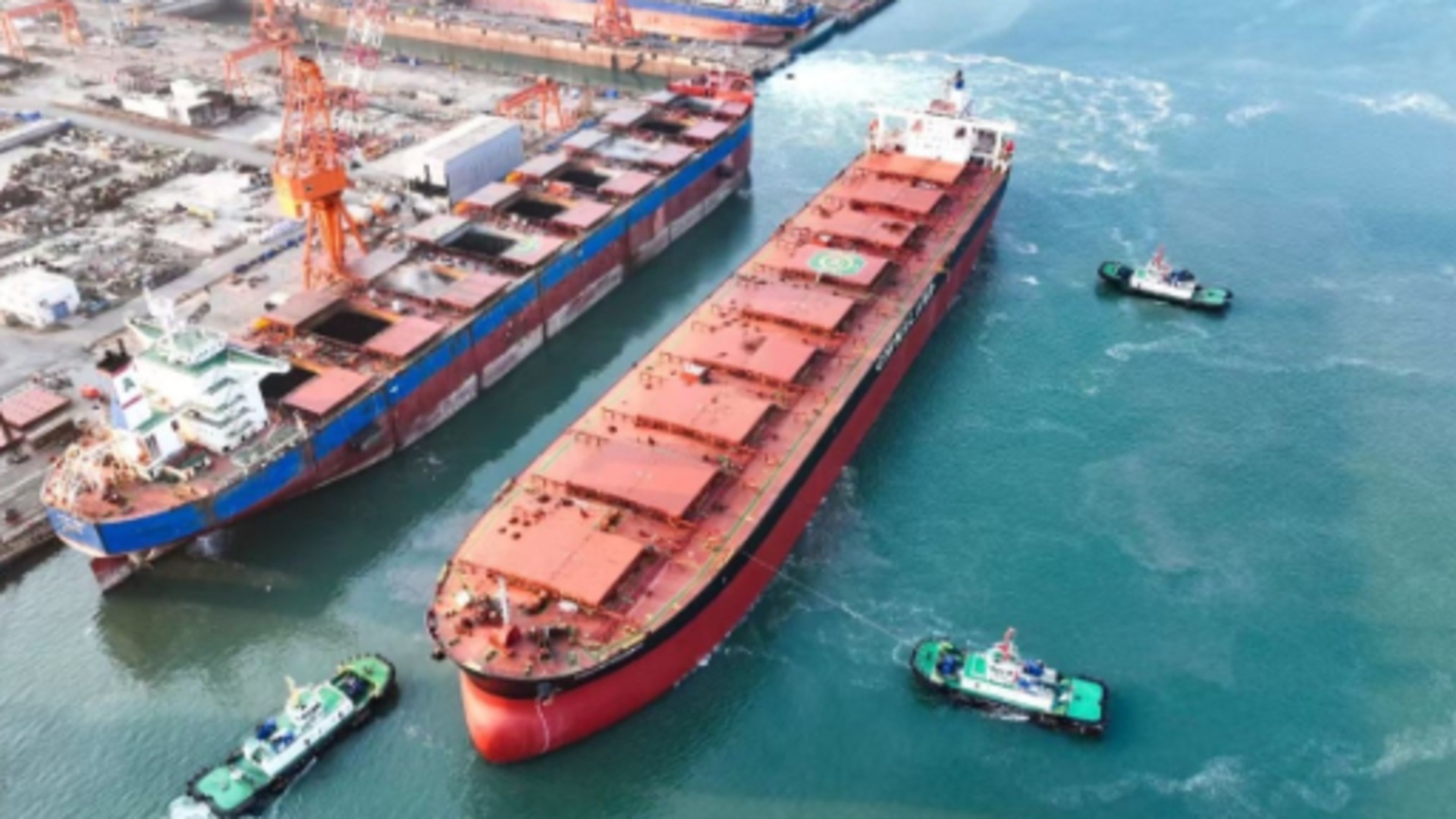
Greek Shipowner Orders 3+1 Newcastlemaxes at Dajin Heavy in US$309m Deal
 Shipbuilding
Wisdom Marine Cancels Plan for Two Japanese-Built Handysize Bulk Carriers
 Shipbuilding
China Merchants Nanjing Tanker Plans Four More MR Newbuildings as Its Fleet Renewal Pipeline Reaches 22 Vessels
 Shipbuilding
CMES Orders Six VLOCs for $727M in First Such Newbuilding Deal in 11 Years
 Shipbuilding