


In 3 Days,Both Maersk and CMA CGM Bunker 100% Ethanol on Large Deep-Sea Containerships
Two large containerships, two major ports and two commercial-scale bunkering operations within three days have pushed marine ethanol into a new phase. Maersk supplied 2,800 tonnes of bioethanol to the 16,592-TEU Antonia Mærsk in Barcelona, while CMA CGM followed with 500,000 litres for the 13,000-TEU CMA CGM IRON in Santos. The projects show how methanol-capable ships could gain access to a broader pool of alcohol-based fuels.
Ethanol’s move into deep-sea shipping accelerated sharply in July as Maersk and CMA CGM completed separate bioethanol bunkering operations involving two large dual-fuel containerships.
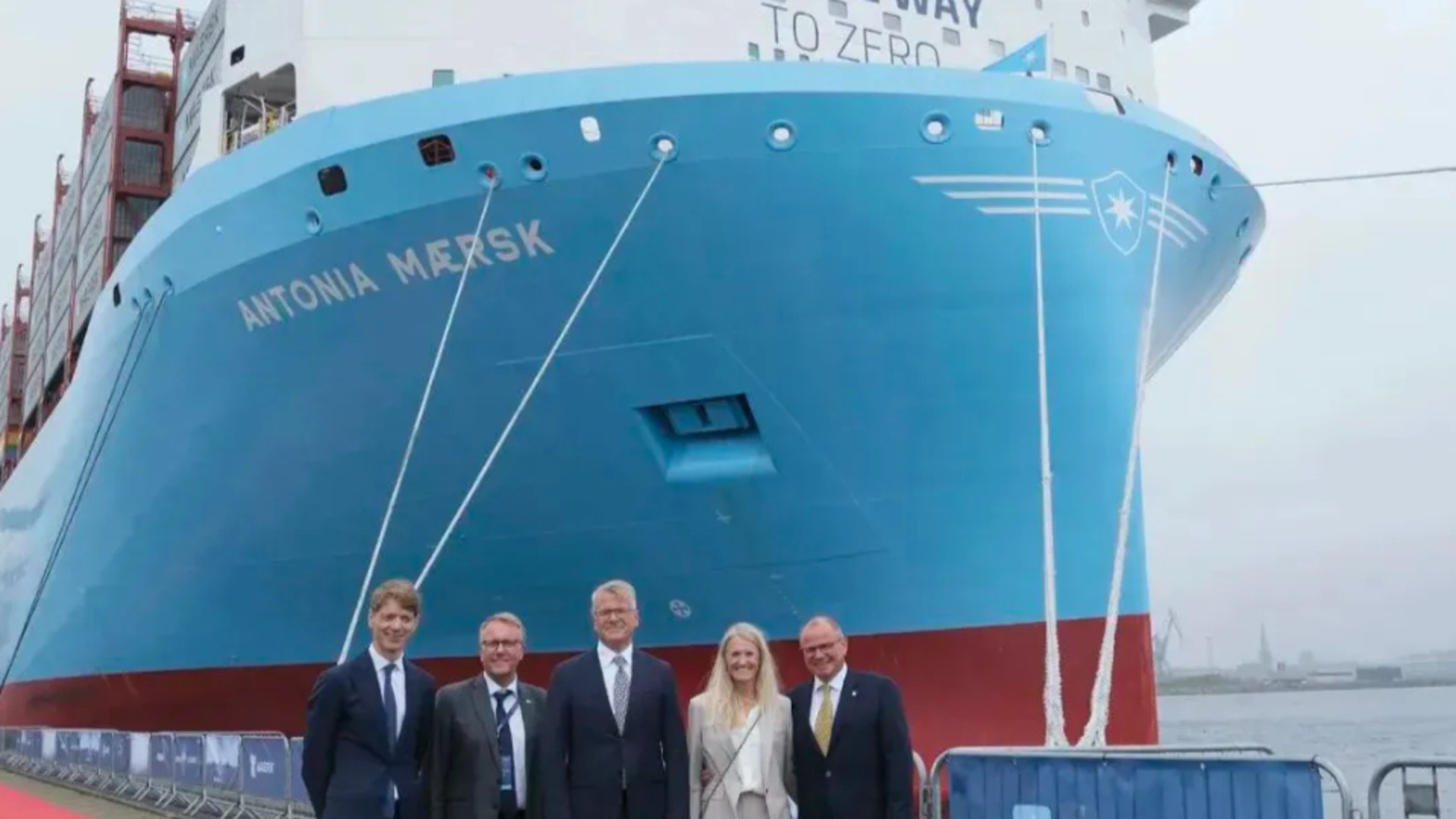
On 9 July, Spanish energy group Repsol supplied 2,800 tonnes of bioethanol to Maersk’s 16,592-TEU Antonia Mærsk at the Port of Barcelona. Three days later, CMA CGM’s 13,000-TEU CMA CGM IRON received 500,000 litres of anhydrous bioethanol at the Port of Santos in Brazil.
The two operations took place under different commercial and logistical arrangements. Barcelona demonstrated that thousands of tonnes of ethanol could be delivered to a large deep-sea vessel through an established European bunker network. Santos connected Brazil’s large bioethanol industry with an international container shipping service through dedicated storage and ship-to-ship delivery.
Together, they marked a substantial step beyond the smaller-scale engine tests and feeder-vessel trials that had characterised marine ethanol development until recently.
Maersk moves from feeder trials to a 16,592-TEU ship
The Barcelona operation was Maersk’s first ethanol trial aboard one of its large dual-fuel containerships.
Built by HD Hyundai Heavy Industries, the 350-metre Antonia Mærsk has a nominal capacity of 16,592 TEU and belongs to Maersk’s series of large vessels designed to operate on methanol and conventional marine fuel.
Repsol carried out the bunkering through the newly built supply vessel Bahía Candela, operated by Mureloil. The bunker tanker is designed to handle traditional marine fuels as well as lower-carbon energy products.
During the transfer, Bahía Candela used its onboard battery system, eliminating local emissions from its propulsion machinery during the bunkering operation.
The Port of Barcelona described the supply as its first marine bioethanol bunkering and one of the earliest commercial operations of its kind in the Mediterranean. The port also stressed that the project was completed under normal commercial conditions.
That distinction matters. The operation involved a commercially relevant quantity of fuel, a working bunker vessel and a large containership in regular service. It provided Maersk with experience covering procurement, delivery, safety procedures and the onboard use of ethanol at a scale relevant to mainline container shipping.
Maersk Energy Markets Vice President Emma Mazhari said the project would help the company assess ethanol’s potential as a scalable lower-emission fuel and build the operational knowledge required for wider use.
A step-by-step testing programme
Maersk has approached ethanol through a gradual testing programme.
The company began aboard Laura Mærsk, its pioneering methanol dual-fuel feeder vessel. The first phase involved an E10 blend containing 10% ethanol and 90% methanol. The ethanol share was later increased to 50%.
Those early trials focused on combustion performance, engine stability, fuel switching and the compatibility of ethanol with an existing methanol fuel system.
The programme then progressed to voyages using neat ethanol. A subsequent operation in Rotterdam tested the delivery of 100% ethanol by bunker barge and added practical experience in marine logistics and ship-to-ship transfer.
The move to Antonia Mærsk represents a significant increase in scale.
A vessel of more than 16,000 TEU requires much larger fuel volumes and a more demanding supply arrangement. The fuel must be available within the vessel’s operating schedule, meet consistent quality specifications and be supported by appropriate storage, transfer and emergency-response procedures.
The 2,800-tonne Barcelona delivery showed that these requirements can be addressed within an established commercial port environment.
CMA CGM builds a Brazilian ethanol supply chain
CMA CGM’s operation in Santos followed a different model.
The 13,000-TEU CMA CGM IRON received 500,000 litres of anhydrous bioethanol supplied by Brazilian sugar and bioenergy group Copersucar. Bunker One delivered the fuel ship-to-ship using its bunker barge DONA ISA.
CMA CGM described the project as Brazil’s first bioethanol bunkering operation for a deep-sea containership. Bunker One presented it as the first operation of its kind involving an ocean-going vessel in Latin America.
The project linked several parts of the value chain.
Copersucar arranged the certified bioethanol supply. AGEO Terminais provided liquid-bulk storage facilities in Santos. Santos Brasil coordinated terminal operations. Bunker One handled the marine delivery, while engine designer Everllence supported the technical use of ethanol onboard the vessel.
Before the transfer, DONA ISA underwent dedicated preparation for low-flashpoint alcohol fuel. The work included tank conditioning, new transfer procedures, emergency planning and specialised training for the crew, operational personnel and safety teams.
The Santos project therefore tested the wider infrastructure required to introduce ethanol as a marine fuel. It covered production, inland transport, port storage, barge loading, ship-to-ship transfer and onboard use.
After completing the operation, CMA CGM IRON departed Santos for Asia, with calls planned in Sri Lanka and Singapore before reaching China.
A broader role for methanol-capable engines
Both vessels were originally introduced as methanol dual-fuel ships.
This is central to the growing interest in ethanol.
Methanol and ethanol are liquid alcohol fuels with several common handling and combustion characteristics. Certain methanol engine platforms can be approved for ethanol after technical assessment and system validation.
CMA CGM IRON is powered by an Everllence-B&W G95ME-C10.5-LGIM main engine. CMA CGM now describes the vessel as having a certified tri-fuel capability covering conventional marine fuel, methanol and bioethanol.
The certification suggests that some investments made in methanol propulsion may support a broader alcohol-fuel strategy.
A shipowner may gain access to an additional fuel source without replacing the vessel’s complete propulsion system. Engine controls, fuel-supply equipment, seals, piping, tanks and safety arrangements still require detailed verification. Class and regulatory approval also remain essential.
The same principle underpins Maersk’s programme. The company is examining whether its growing methanol-capable fleet can use ethanol when the fuel is commercially and environmentally attractive.
This flexibility could become increasingly valuable as shipowners manage uncertainty over the availability, price and carbon performance of future fuels.
Why ethanol is gaining momentum
Supply is one of ethanol’s strongest arguments.
Brazil and the United States already operate large ethanol industries supported by established production, inland logistics, storage and export infrastructure. These systems were developed mainly for road transport, though they provide a foundation for marine demand.
Green methanol remains less widely available. Many announced projects are still under development, and large-volume supply at competitive prices remains concentrated in a limited number of locations.
Ethanol could help widen the geographical base of lower-carbon marine fuels. It may also reduce shipowners’ dependence on a single alcohol fuel and create additional competition between suppliers.
From an energy perspective, ethanol contains more energy per unit of mass than methanol, although both fuels remain less energy-dense than conventional fuel oil. Ships must therefore carry larger fuel volumes than they would for traditional bunkers.
The emissions case depends heavily on how the fuel is produced.
Sugarcane ethanol, corn ethanol and advanced ethanol produced from agricultural residues can have very different lifecycle carbon intensities. Farming methods, land-use change, processing energy and transport distance all affect the final result.
Fuel certification and lifecycle accounting will therefore determine whether a particular ethanol pathway delivers meaningful regulatory and environmental value.
Barcelona and Santos point to different regional models
The two July operations offer an early view of how marine ethanol supply could develop in different regions.
Barcelona relied on a major integrated energy company and an advanced bunker vessel able to supply both conventional and lower-carbon products. This model could be replicated in large European and Asian bunkering hubs where energy companies already control storage and delivery networks.
Santos drew directly on Brazil’s domestic ethanol industry. The project connected a major producer and trader with port storage, terminal operations and a specialist bunker supplier.
Brazil has a natural opportunity to become a marine ethanol supply hub because production sites, export infrastructure and international shipping routes are already closely linked.
Santos is especially important. The port handles large volumes of containers and commodities and sits close to the country’s core biofuel supply chains. CMA CGM’s ownership of Santos Brasil also gives the carrier a direct interest in developing the port’s low-carbon fuel capabilities.
Wider industry activity is building
Marine ethanol development now extends beyond Maersk and CMA CGM.
X-Press Feeders has tested an ethanol-methanol blend aboard a containership. Vale and Shandong Shipping are advancing two 325,000-dwt Guaibamax ore carriers designed to operate on ethanol, methanol and conventional fuel.
Those vessels are scheduled to enter service from 2029 under long-term arrangements supporting Vale’s iron ore trades.
WinGD has secured orders for ethanol-capable engines for the project, while Everllence is working separately with Vale on ethanol engine development.
The emerging market is taking shape through three routes.
Existing methanol-capable ships may gain approval for ethanol. Newbuildings may be ordered with engines designed around ethanol from delivery. Ports and bunker suppliers may establish dedicated storage and transfer capability.
Each route will contribute to the fuel’s commercial development.
Commercial-scale trials, with more work ahead
The Barcelona and Santos operations do not establish a global ethanol bunker market on their own.
Regular deep-sea use will require consistent specifications, recognised sustainability certification, long-term supply agreements and a wider port network. Shipowners will also need clarity over the treatment of different ethanol pathways under the IMO framework, FuelEU Maritime and other carbon regulations.
Price will be equally important. Marine fuels must compete on both energy cost and regulatory value. A fuel with attractive lifecycle emissions may still struggle without sufficient volume, predictable pricing and reliable delivery.
Even so, the July projects represent a clear change in scale.
Maersk has moved from ethanol blends and feeder-vessel tests to a 2,800-tonne supply for a 16,592-TEU ship. CMA CGM has connected certified Brazilian ethanol with a 13,000-TEU vessel operating on an intercontinental service.
Within three days, two leading container carriers placed neat ethanol aboard large deep-sea ships on opposite sides of the Atlantic.
Ethanol has entered the mainline shipping fuel debate. The next test will be whether producers, ports and bunker suppliers can turn these individual projects into a repeatable global supply network.

READ MORE
 Containers
Is Peak Season Really Over? Asia–U.S. East Coast Rates Reach $9,400
 Containers
Ningbo Containerized Freight Index Weekly Commentary Freight Rate Trends Diverged Across Routes; Composite Index Continued Its Upward Trend
 Containers
Gemini Expands Red Sea Comeback: More Maersk-Hapag Lloyd Services Return to Suez
 Containers
Ningbo Containerized Freight Index Weekly Commentary North America Freight Rates Rose at High Levels; Overall Divergence Pattern Remained
 Containers
COSCO, OOCL and ANL Launch New Weekly Qingdao–Australia East Coast Service
 Containers
Bernhard Schulte Shipmanagement has reached a new milestone, with its global managed fleet surpassing 700 vessels.
 Containers
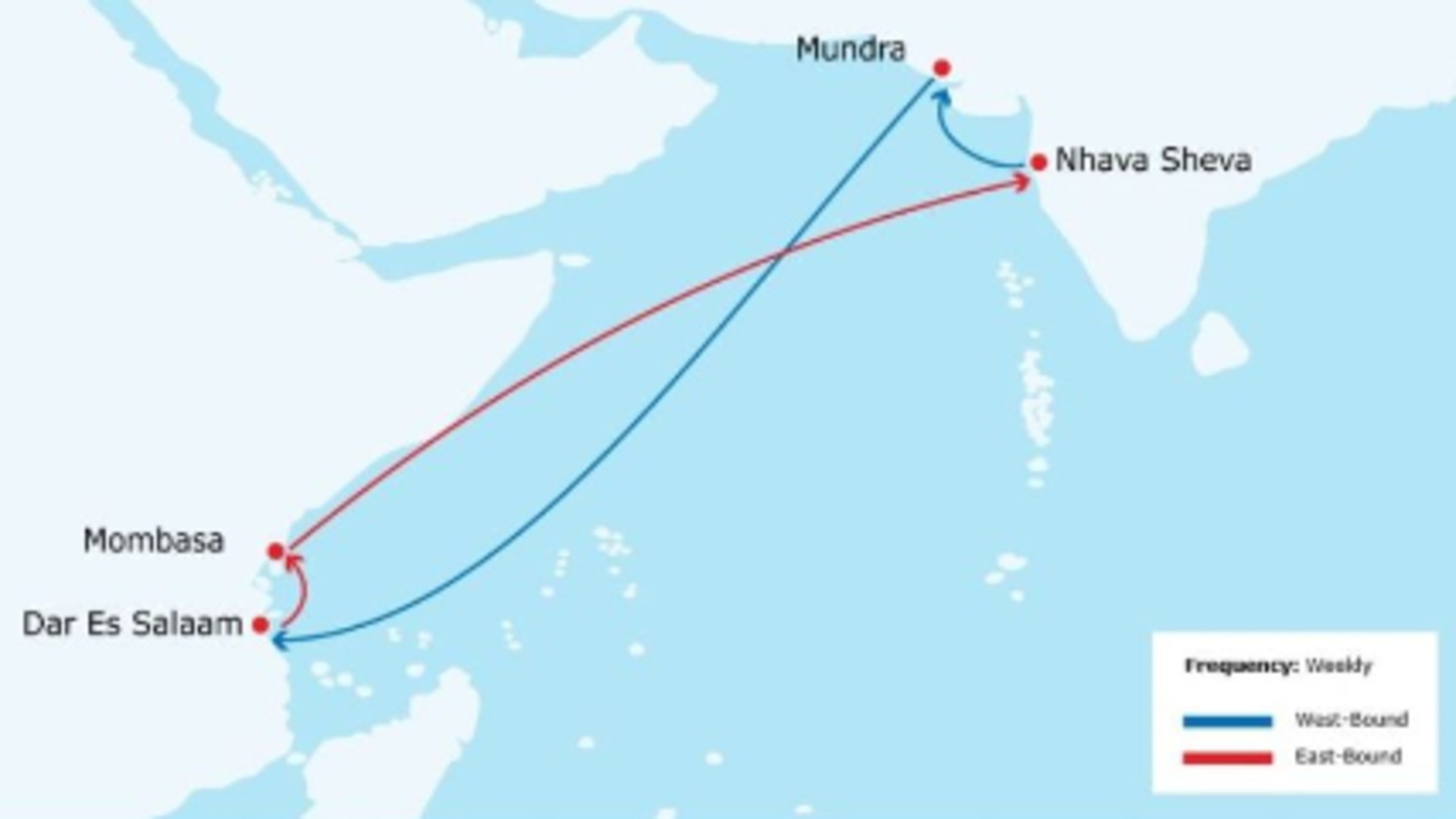
PIL strengthens India–East Africa connectivity with new Imara Express service
 Containers
Ningbo Containerized Freight Index Weekly Commentary Middle East Freight Rate Gains Widened; Composite Index Reversed Decline and Rose
 Containers
Evergreen Tightens Sanctions Compliance: Bans High-Risk Shipper-Owned Containers
 Containers