

Design Completed for 23,500 DWT Methanol Single-Fuel Electric-Propulsion Coastal Bulk Carrier
inland shipping
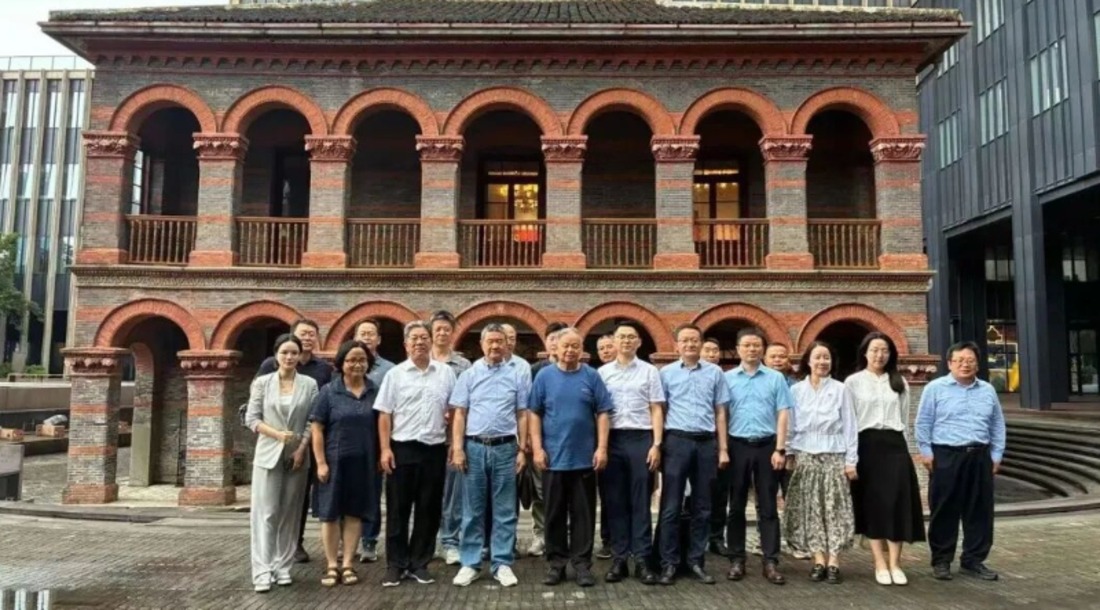

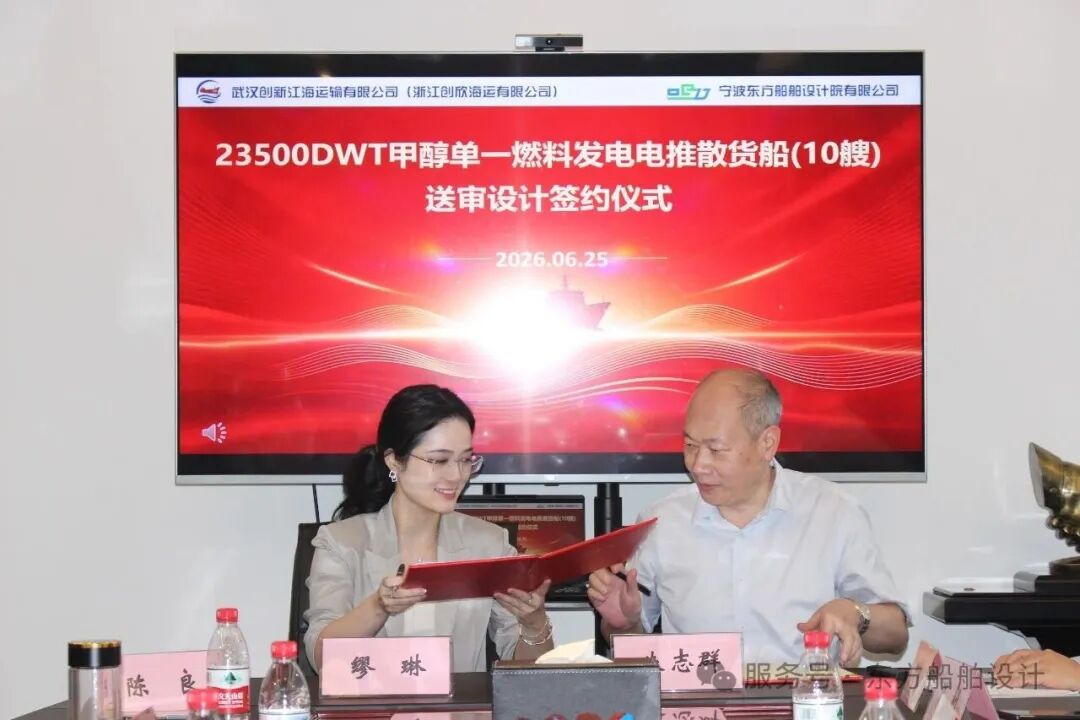
An approval design agreement has been signed in Ningbo for China’s first 23,500 dwt methanol single-fuel generator-electric coastal bulk carrier, marking the formal launch of design work for an initial series of 10 vessels.
The signing ceremony was recently held at Ningbo Oriental Ship Design Institute Co., Ltd. Representatives from Ningbo Port and Shipping Management Center, Ningbo Economic and Technological Development Zone Port Affairs Administration, Ningbo Beilun Port and Shipping Management Center, Shanghai Marine Diesel Engine Research Institute, also known as CSSC 711th Research Institute, Zhejiang Seaport Financial Leasing Co., Ltd., Donghai Marine Insurance Co., Ltd., Ningbo Association of Shipping Enterprise and Wuhan Chuangxin Jianghai Transportation Co., Ltd. attended the event.
The project is positioned as a new low-carbon solution for China’s coastal dry bulk shipping market, with a particular focus on short-sea trades in the Yangtze River Delta region.
At the ceremony, representatives from the shipowner and the design institute introduced the background of the green fleet plan and the customized vessel design. Local port and shipping authorities also outlined Ningbo’s policy support for green vessels. Experts from Shanghai Marine Diesel Engine Research Institute presented the domestic methanol engine technology route. Representatives from financial leasing, marine insurance and industry associations also shared views on financing, risk control and industrial-chain coordination.
The approval design agreement was formally signed by Zhu Zhiqun, General Manager of Zhejiang Chuangxin Shipping Co., Ltd., and Miao Lin, General Manager of Ningbo Oriental Ship Design Institute Co., Ltd. The signing means that the approval design work for the first 10 methanol-powered vessels has officially started.
The 23,500 dwt coastal bulk carrier is designed to meet the operational requirements of coastal dry bulk transportation in the Yangtze River Delta. The vessel will have a cruising range of around 3,000 nautical miles, which is expected to cover most regular coastal commercial routes in China. Its estimated service speed is also expected to be better than that of comparable conventional diesel-powered bulk carriers.
The vessel will adopt a methanol single-fuel generator-electric propulsion system. It will be fitted with four six-cylinder CS21M methanol single-fuel generator sets, each with a rated power of 1,130 kW.
The CS21M engine has been independently developed by Shanghai Marine Diesel Engine Research Institute and is described as China’s first marine medium-speed engine using in-cylinder direct methanol injection technology.
According to the project parties, the engine can achieve a methanol substitution rate of up to 90%. Around two tonnes of methanol can replace one tonne of diesel, while methanol slip can be kept close to zero. The engine is designed to meet IMO Tier II and China Stage II emission requirements.
If green methanol is used, the vessel is expected to reduce carbon dioxide emissions by more than 90%, nitrogen oxide emissions by 60% and sulphur oxide emissions by 99%, according to project estimates.
The future operation of the fleet is also expected to benefit from the existing methanol bunkering infrastructure around Ningbo-Zhoushan Port. This will provide practical support for the large-scale deployment of methanol-fuelled coastal vessels.
The signing creates a coordinated platform involving government authorities, research institutes, shipowners, design companies, financial institutions, insurers and industry associations. It also shows that methanol-powered vessel development in China is moving from inland waterway applications toward the coastal shipping sector.
Once the 10 vessels are built and delivered, the project is expected to form a scaled green coastal bulk carrier fleet. It will also support Ningbo’s ambition to build a national demonstration hub for methanol-powered shipping.
For China’s shipbuilding and shipping industries, the project represents another important step in the wider use of methanol as a marine fuel. Coastal dry bulk shipping offers a practical application scenario, as route patterns, bunkering arrangements and fleet deployment can be more clearly matched.

READ MORE
 Shipbuilding
Tianjin Revives Long-Idle Waterfront Site with RMB 1.05 Billion Offshore and Specialised Vessel Project
 Shipbuilding
World’s First Ammonia-Fuelled Oceangoing Vessel Loads First Ammonia Cargo in Nanjing, Bound for India
 Shipbuilding
Hengli Heavy Industry Posts Record-Breaking H1 2026: 207 Orders, 8 VLACs, and a Full-Spectrum Ship Portfolio
 Shipbuilding
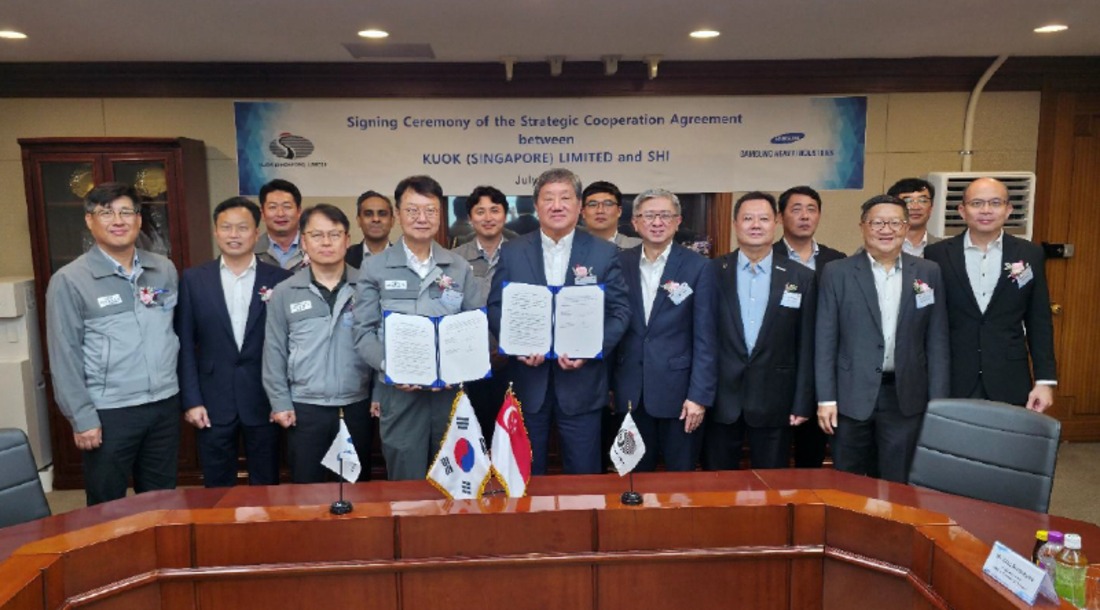
Kuok Singapore and Samsung Heavy Industries Sign Strategic Cooperation Agreement
 Shipbuilding
COSCO Shipping is reinforcing a capability that has long been underestimated: control over the ocean transport of key bulk commodities.
 Shipbuilding
A milestone delivery for both Trafigura and Hantong Shipbuilding.
 Shipbuilding
A New MR Tanker Pool Is Born: EPS and Champion Tankers Launch IMO II Platform
 Shipbuilding
COSCO SHIPPING Energy, Shell and Jiangnan Shipyard move ahead with four LNG carrier newbuildings
 Shipbuilding
Too Many Newbuilding Orders, but Not Enough Main Engines.....
 Shipbuilding