


Greek Shipping Minister: Whoever Controls the Seas Will Shape the World Order of the Next 25 Years
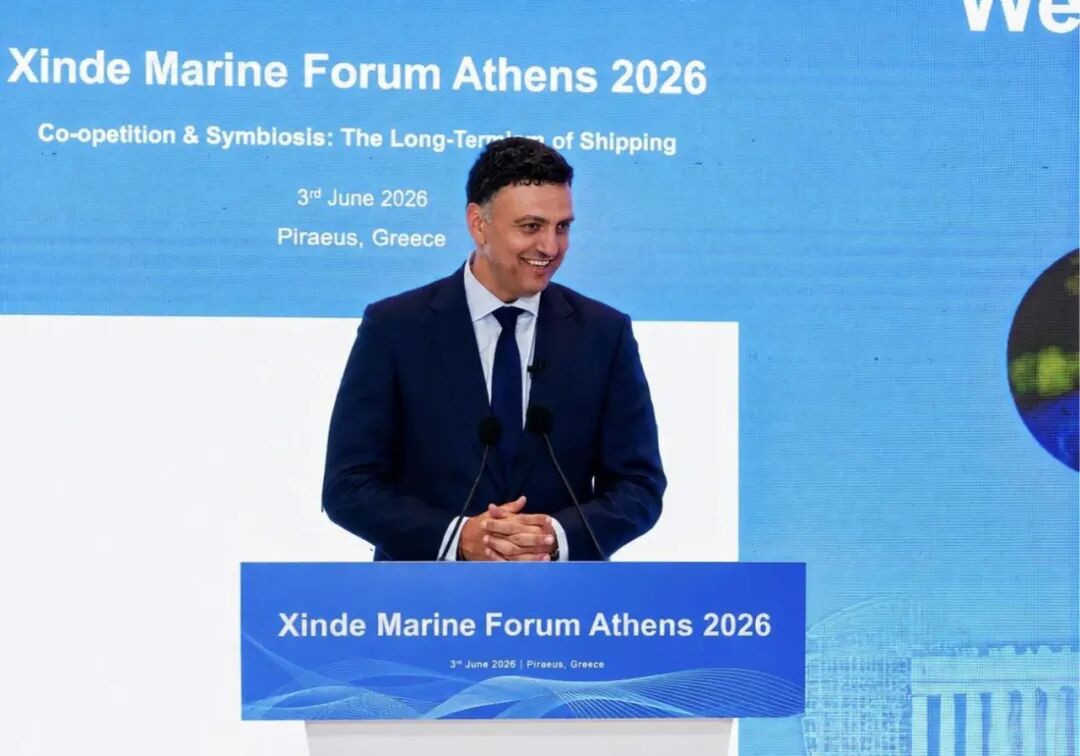
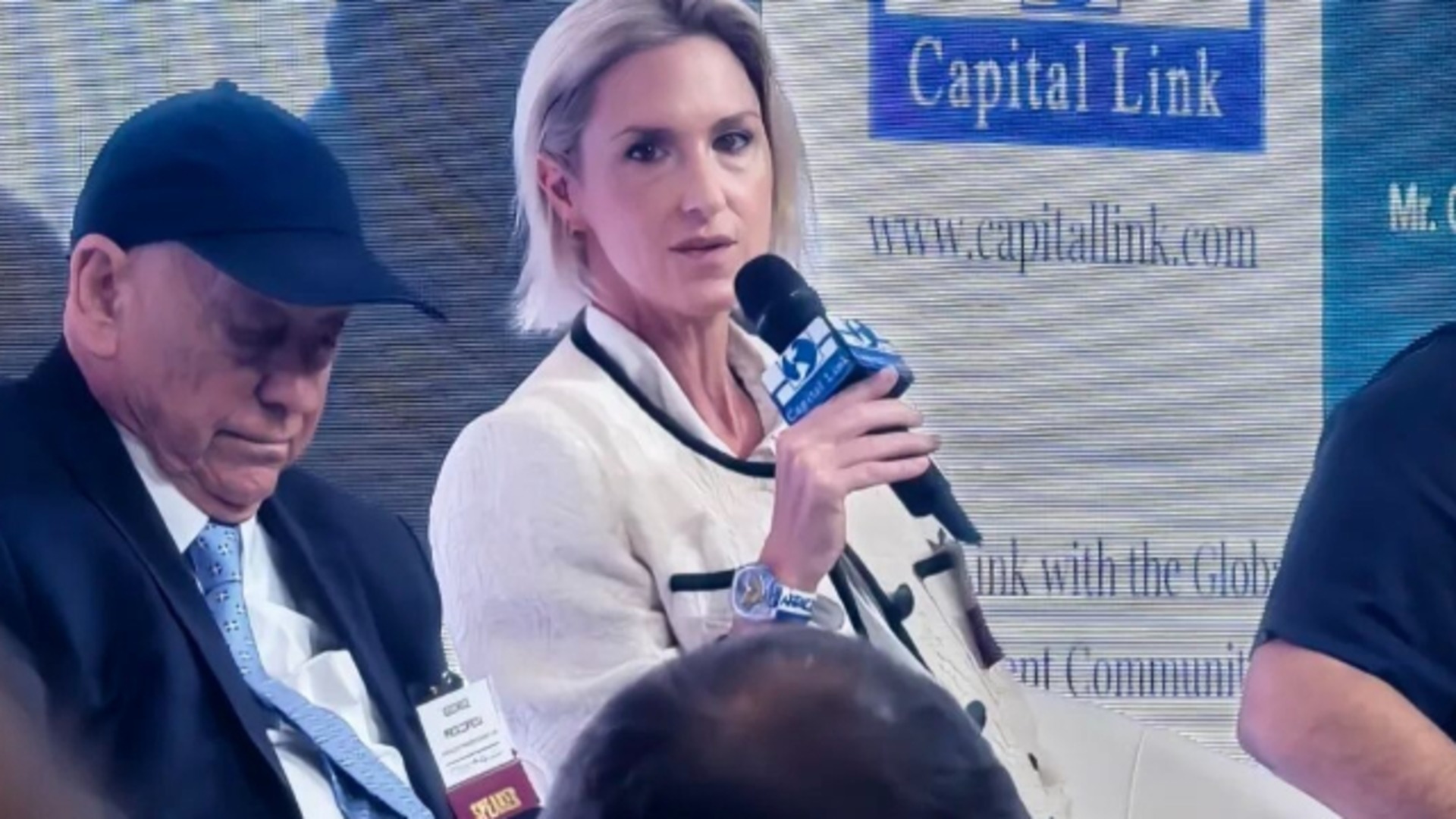
Xinde Marine News, Athens — During this year’s Posidonia week in Greece, Vassilis Kikilias , Minister of Maritime Affairs and Insular Policy of the Hellenic Republic, delivered two strong messages to the global maritime community: the world cannot bypass shipping, and shipping must not be drawn into war.
Speaking at the opening keynote of the 10th Capital Link Maritime Leaders Summit – Greece, and later at the Xinde Marine Forum, Kikilias addressed several issues central to the future of global shipping: Greece’s maritime leadership, the openness of global seaborne trade, seafarer safety, the role of the IMO, the reality of shipping’s green transition, and the direct impact of maritime costs on ordinary households.
Across both speeches, one theme was clear: shipping is no longer just a commercial sector operating in the background of global trade. The security, resilience and openness of maritime transport have become strategic requirements for the global economy and international stability.
In an era shaped by geopolitical conflict, energy volatility, chokepoint risks and regulatory pressure, Kikilias called on policymakers to respect industry realities, listen to the people who understand the sea, and put seafarer safety and social affordability at the centre of decision-making.
Greece sees shipping as one of its greatest national strengths
Kikilias said Greece may not be able to claim global leadership in every political or economic field. But in maritime affairs, Greece can speak with confidence.
Greek-owned shipping, he noted, represents roughly 2,800 vessels, accounting for around 19% to 20% of the global fleet and about 61% of the European-controlled fleet. For a country with a relatively small share of European GDP, this is a remarkable position.
According to Kikilias, this did not happen overnight. It is the result of Greece’s long maritime tradition, its island culture, its seafarers, captains, engineers, port communities, shipping offices and generations of Greek people who built their lives around the sea.
At the Xinde Marine Forum, he also stressed the importance of shipping to the Greek economy and employment. Shipping, ports, shipyards, maritime services and related industries support a wide economic ecosystem and provide high-quality jobs. The broader maritime sector, he said, supports around 200,000 well-paid jobs in Greece.
For Greece, shipping is therefore not just an industry. It is connected to national income, employment, island connectivity, port infrastructure, shipyard revival, tourism, energy supply and global trade.
Kikilias also spoke about the need to re-engage younger generations, both boys and girls, with maritime professions. Shipping, shipyards, ports, energy and marine services remain part of Greece’s future industrial competitiveness.
This message echoes a wider concern heard across many Posidonia and Capital Link discussions this year: the future of shipping will depend not only on ships, fuels and capital, but also on whether the industry can attract and retain the next generation of maritime talent.
Shipping cannot be taken for granted
One of Kikilias’s strongest messages was that the world can no longer take shipping for granted.
The pandemic, the war in Ukraine, the energy crisis, tensions in the Middle East and risks around major maritime chokepoints have all shown how deeply shipping is embedded in society and the global economy.
Seafarers, captains, marine engineers, shipowners, technical experts, traders and the wider maritime chain are not outside society. The decisions they make in difficult times have consequences for ordinary people.
Kikilias reminded the audience that around 80% to 90% of global trade moves by sea. Energy prices, supply-chain costs and the price of goods all eventually reach the table of the average family — in Greece, Europe, China, the United States, Japan and around the world.
That is why, in his view, policymaking cannot be detached from industrial reality.
Sometimes, he suggested, whether politicians like it or not, people who come from the sea understand reality better. It is wise to discuss maritime policy, fuel policy, environmental regulation and global trade rules with people who have practical experience of the industry.
At the Xinde Marine Forum, he also underlined the importance of free trade and freedom of navigation. The ability of ships, seafarers, captains, engineers and “people of the sea” to travel across the world is essential to global commerce.
Chokepoints show that the world cannot bypass shipping
Maritime chokepoints were another important theme in Kikilias’s remarks.
He said recent geopolitical developments around key straits have fundamentally changed the context of global shipping discussions. Previously, much of the industry debate focused on the IMO framework, emissions reduction, fuel transition and future technologies. But when chokepoint risks rise and energy supply chains are disrupted, the discussion moves to a much broader level: whether society can function normally and whether global trade can remain open.
Kikilias stated clearly that preserving the security, resilience and openness of international maritime transport is not only a maritime priority. It is a strategic imperative for the global economy and international stability.
This is a critical point.
Maritime openness is no longer only an issue for shipowners, charterers or port operators. It is now tied directly to energy security, economic security and social stability.
Kikilias urged all parties to keep shipping, global maritime transport and global trade out of the equation of any conflict or war. First, this is essential for seafarers and their wellbeing. Second, it is essential for society to continue receiving energy, food, commodities and basic trade services.
At the Xinde Marine Forum, he again placed safety at the top of the agenda, especially seafarer safety. The current situation in the Middle East, disruptions to energy supply and risks around maritime passages all show that if shipping is pulled into conflict, the consequences will go far beyond shipowners and cargo interests.
Greece supports the IMO, but rules must be realistic
On the green transition, Kikilias’s position was clear: Greece supports the IMO, supports a global framework, supports technological progress, digitalisation and emissions reduction. But rules must be realistic, relevant and implementable.
He said the shipping industry wants progress. It wants new technology and a better planet for future generations. But these goals must be pursued through practical steps. Society should not force the industry to accept decisions that cannot be implemented.
This statement is highly relevant to the current global debate over the IMO net-zero framework. Shipping does not reject decarbonisation. But the industry has serious practical concerns about fuel availability, infrastructure, cost transmission, fairness and global consistency.
Kikilias stressed that safety must come first. The industry should work under an integrated global framework before deciding which fuels and technologies can realistically be used.
He also made a notable comment on LNG. For Greece, he said, LNG is a fuel of the present. As for the fuels of the future, the industry must continue to observe and assess. On biofuels, he noted that their current share of global demand remains small, requiring caution.
This reflects a pragmatic Greek approach to shipping’s green transition: support the direction, but avoid rules that move faster than operational reality; support future-fuel discussions, but keep fuel availability, vessel technology and economic cost in balance.
Green transition cannot destroy the economy through inflation
Kikilias devoted significant attention to cost transmission.
He warned that additional taxes, compliance costs and fuel costs ultimately enter the trade chain. If a large tanker faces tens of millions of dollars in additional costs, or if the total cost base multiplies, owners will struggle to recover investment within a reasonable period.
To survive, shipowners pass costs to traders. Traders pass costs to the real economy. Ultimately, the burden reaches ordinary consumers and society.
If ordinary people cannot afford these costs, Kikilias warned, they will not continue to support or use the industry. The sector will also lose the capacity to invest in new ships, new fuels and new technologies.
This logic deserves close attention from both regulators and the maritime industry. The green transition requires capital investment, technological progress and social affordability. If regulatory costs move too quickly through the trade chain, they may weaken global trade efficiency, increase inflation and reduce the industry’s ability to invest in the next generation of technologies.
Kikilias did not dismiss future technologies. He mentioned biofuels, nuclear energy and other future options as subjects worth discussing at platforms such as Posidonia. Greece supports these discussions. But he called on the industry and policymakers to be realistic about both today’s challenges and long-term goals for 2050 and 2100.
His point was simple and important: if future goals are to be achievable, ordinary families and societies must first be able to survive to reach that future.
Shipping serves society, and depends on society
Throughout both speeches, Kikilias repeatedly returned to one word: people.
Shipping is a growing sector. It creates wealth. It is a strong industry. But everyone in this sector works for people, and everyone in this sector earns from people. Therefore, people must be the first priority.
That explains his focus on safety, cost and realistic regulation.
If seafarer safety is not protected, maritime openness has no foundation. If ordinary households cannot afford energy and goods, global trade loses social support. If rules exceed the industry’s ability to comply, owners cannot continue investing. If maritime careers cannot attract young people, Greece and the wider global shipping industry will face a weakening talent base.
At the Xinde Marine Forum, Kikilias specifically referred to the need to make young people understand the opportunities in the sea, ports, shipyards and maritime professions.
This has relevance far beyond Greece. Across the global industry, companies are discussing seafarer shortages, training, STCW reform, alternative-fuel competencies and onboard living conditions. Shipping’s long-term success will depend on whether young people still see maritime careers as meaningful and attractive.
The strategic value of Greek shipping is rising
Kikilias also delivered a broader geopolitical message: in the next 25 years, whoever dominates the seas will be able to influence the geopolitical and geostrategic balance of the world.
In today’s context, this statement is highly significant.
The Red Sea crisis, risks around Hormuz, Panama Canal constraints, the war in Ukraine, sanctions and the shadow fleet all point to the same reality: maritime routes, fleet capacity, port infrastructure, seafarer systems and ship management capabilities have become central to national and regional competitiveness.
For Greece, its shipowning community, maritime tradition, shipping services, port and shipyard revival, and dominant position within European shipping form a strategic national asset.
At the Xinde Marine Forum, Kikilias also referred to Greece’s ports, infrastructure, shipyards and services. Greece not only has a powerful fleet; it also wants to build a broader national maritime ecosystem around that fleet.
Maritime openness is becoming a strategic bottom line
Taken together, Kikilias’s two speeches reveal several core messages from the Greek government.
First, shipping is one of Greece’s most important national strengths. Greece controls around one-fifth of global shipping capacity and around 60% of the European-controlled fleet. That position is rooted in tradition, but it must be strengthened through youth engagement, ports, shipyards and maritime services.
Second, global trade depends on open shipping. Energy, food, industrial goods and consumer products all rely on seaborne transport. When sea lanes are disrupted, costs quickly reach ordinary households.
Third, shipping must be kept out of conflict. Seafarer safety, freedom of navigation and continuity of global supply chains should be protected as common international interests.
Fourth, shipping decarbonisation must be realistic. Greece supports the IMO framework, technological progress, digitalisation and the search for future fuels. But any rule must take into account fuel availability, owner investment capacity, social affordability and global consistency.
Finally, shipping ultimately serves people. Ordinary families, seafarers, shipowners, port workers, shipyard workers, companies and consumers are all affected by maritime policy and maritime business decisions.
That is the deeper importance of Kikilias’s remarks. He did not define shipping only as a Greek advantage, or only as a shipowners’ business. He placed shipping at the intersection of society, economy, geopolitics and global stability.
In an era of rising maritime risks, energy-security realignment and continuing regulatory debate, the value of shipping is being repriced.
The world cannot bypass shipping. It cannot bypass ships. For policymakers, the more realistic choice is to listen to the industry, respect the logic of the sea, and work with maritime stakeholders to create rules that can truly be implemented.

READ MORE
 People
Nick Potter appointed co-chair of the CEM-HUBS Steering Committee
 People
From a 500-DWT Steamer to 184 Ships: How Three Generations Built the Angelicoussis Shipping Group
 People
Nordseth Appointed Chair of Seatrade Maritime Crew Connect Global 2026
 People
Chen Shuai appointed Chairman of COSCO SHIPPING Specialized Carriers
 People
From ‘sci-fi’ to ‘lifeline’: how maritime connectivity has evolved from one generation to the next
 People
The Nautical Institute Singapore Conference 2026 toConvene Maritime Leaders on Seaworthiness andSeafarers in a Changing World
 People
Two New CEOs Take Over at ONE and ZIM as Container Shipping Faces Its Next Test
 People
Hafnia Changes CEO After 16 Years as Product Tanker Giant Enters New Phase
 People
Seacon Shipping refreshes board with next-generation executive and tanker veteran
 People