


COSCO to Build Another Major Shipyard in Tianjin for US$1.22 Billion

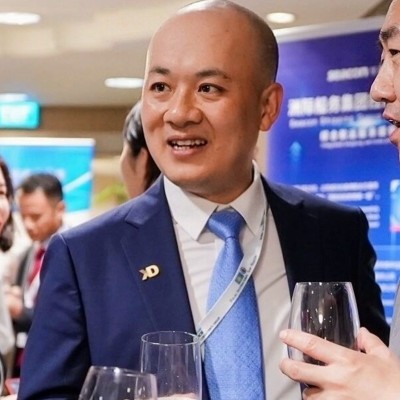
COSCO SHIPPING Group has secured a site for a new shipbuilding and offshore engineering base in the Lingang area of the Tianjin Port Free Trade Zone. COSCO SHIPPING Heavy Industry (Tianjin) won the land-use rights to roughly 146 hectares of industrial land on 16 November 2026 for RMB 572.4 million (about US$85.3 million). The group put total investment at about RMB 8.2 billion (US$1.22 billion) in an announcement on 18 November.
The plans call for two 300,000-tonne-class dry docks and three outfitting quays of the same class. The yard will focus on large bulk carriers, containerships and energy carriers, with first deliveries expected in late 2029. It will give COSCO another large-ship building site as the group places substantial orders for all three vessel types at yards across China.
From repair and conversion to newbuilding
COSCO SHIPPING opened its North China regional headquarters and the International Shipping Technology Center in Tianjin on 11 June 2025. That same day, COSCO SHIPPING Heavy Industry signed a framework agreement with the Tianjin Port Free Trade Zone covering the repair and conversion of large ships and offshore equipment. In September 2025, Xinde Marine News covered the Tianjin project alongside a separate development in Yangjiang, Guangdong. At that stage, the Tianjin base was expected to start with repair and conversion, with offshore assembly and green shipbuilding to be added later.
The free trade zone was still describing the project primarily in terms of ship repair and conversion in March 2026, when it put investment at RMB 8 billion (about US$1.19 billion). By June, preliminary documents listed several large merchant ship designs. A September tender plan for site investigations identified the development as a shipbuilding and offshore engineering base, listed two 300,000-tonne-class dry docks and put total investment at RMB 8.2 billion.
The November construction tender estimates RMB 3.258 billion for marine works, RMB 3.205 billion for onshore works and RMB 1.737 billion for other expenditure. The onshore works include steel processing, block welding, coating and outfitting shops. The tender puts total planned floor area at about 448,000 square metres and lists RMB 4.1 billion (about US$611 million) each in state investment and bank financing. The timing of the repair and conversion work envisaged in the original agreement remains to be disclosed.
Why two dry docks need six outfitting berths
The design tender specifies two dry docks, each 550 metres long and 14 metres deep, with widths of 80 and 72 metres. Ships can berth on both sides of each of the three outfitting quays, giving the yard six berths with a combined length of 3,120 metres. The project also includes a 10,000-tonne-class berth for incoming materials and berths for workboats. A July environmental assessment notice called for the third outfitting quay to be deferred. It remains in the overall plan, with its opening date dependent on the construction schedule.
The steel fabrication and block assembly workshops are designed to cover about 117,000 and 89,000 square metres, respectively, nearly half the building area specified in the design tender. Some piping and equipment can be installed on the blocks before they go into the dock for assembly. Once the hull floats out, installation and testing can continue at an outfitting berth while the dock takes the next set of blocks. The pace of fabrication and the availability of berths at float-out will help determine how many ships the two docks can turn out in a year.
A June public notice for the project’s social stability assessment listed very large crude carriers (VLCCs), 210,000 dwt bulkers and 12,000 TEU containerships as representative vessels. An August notice on the proposed environmental approval, reproduced by a Chinese tender information service, set out a design scenario of three LNG carriers and six containerships a year. The production mix will depend on the orders the yard secures. A series of sister ships would let the Tianjin team reuse production drawings and tooling, buy equipment in batches and use the hours recorded on the lead ship to schedule the rest of the series.
Why COSCO chose Tianjin
According to industry reports, COSCO SHIPPING Heavy Industry (Tianjin) was established on 25 December 2025 with registered capital of RMB 30 million (about US$4.5 million). COSCO SHIPPING Heavy Industry holds 80%. The remaining shares are split equally between Tianjin Jingang Industrial Development, wholly owned by Tianjin Port Group, and Tianjin Lingang New Kinetic Energy Economic Development, wholly owned by the free trade zone’s administrative committee. The site runs from Bohai 60th Road to the waterfront and carries a 50-year industrial land-use term.
The area already turns out large dual-fuel vessels. Dalian Shipbuilding Industry Co. (DSIC), part of China State Shipbuilding Corporation (CSSC), delivered the 16,000 TEU-class LNG dual-fuel MSC MARIANNA D XVI to Minsheng Financial Leasing from its Tianjin yard 135 days ahead of the contractual deadline. Offshore Oil Engineering and BOMESC also operate in Lingang. Tianjin has identified dual-fuel power systems, marine piping, communications and navigation equipment, and anchoring systems as areas in which it wants to attract suppliers serving the two shipbuilding groups. The local authorities expect the COSCO yard to support more than 5,000 jobs and generate about RMB 6 billion (US$894 million) in annual output at full production.
At the Tianjin international shipping expo in June 2025, Zhang Yong, then a deputy general manager of COSCO SHIPPING Group, cited the group’s participation in Tianjin Port’s zero-carbon container terminal and the direct service from Tianjin to the east coast of South America. The new yard extends the group’s Tianjin operations into large-vessel assembly in the Dagukou port area. COSCO SHIPPING Heavy Industry already has a shipbuilding and repair base in Dalian, where its enlarged floating dock handled a 300,000 dwt crude tanker as its first repair job after the upgrade in 2025.
The group’s other projects show how the sites are being used. Updated filings for Yangjiang in September 2026 retain a focus on ship and offshore equipment repair and conversion, with two dry docks and one floating dock. At Yangzhou, COSCO SHIPPING Heavy Industry is investing RMB 2 billion (about US$298 million) to expand fabrication, block assembly and coating at an existing yard, with expected capacity for 12 additional ships a year once the project is fully operational. Tianjin will build a complete production line around a new waterfront site, from steel fabrication through dry-dock assembly and outfitting.
Where Tianjin’s first orders could come from
On 9 November, COSCO SHIPPING Energy Transportation disclosed plans for ten VLCCs for its own fleet, six at COSCO SHIPPING Heavy Industry’s Yangzhou yard and four at DSIC. In a filing dated 12 November, China CSSC Holdings said DSIC and China Shipbuilding Trading had signed contracts for 20 VLCCs of 307,000 dwt. Four are for Hainan COSCO Energy and form part of the ten disclosed on 9 November. COSCO SHIPPING Development subsidiary Oriental Fleet International contracted for the other 16, which COSCO SHIPPING Energy’s Pan Cosmos Shipping & Enterprises has agreed to take on bareboat charter for about 20 years. The 20 tankers are scheduled for delivery in 2029 and 2030, subject to the required approvals for the contracts to take effect.
COSCO SHIPPING Development disclosed a July plan for 15 Newcastlemax bulk carriers of 210,000 dwt, with ten assigned to Shanghai Waigaoqiao Shipbuilding and five to Nantong Xiangyu Shipbuilding & Offshore Engineering. In August, a COSCO SHIPPING Holdings subsidiary signed contracts for 18 containerships. Waigaoqiao will build 12 LNG dual-fuel vessels of 22,000 TEU and CSSC Huangpu Wenchong will build six 3,200 TEU wide-beam vessels. Tianjin will give the group another yard to consider for future orders. The new yard’s ability to win those contracts will depend on the designs and delivery slots it can offer.
The Newcastlemax contracts provide for five instalments, with smaller sums due during construction and the bulk of the price payable in the final instalment after delivery. The builder has to pay for steel, main engines and subcontracted work as construction proceeds. For a new yard, the performance of the first series will affect both production costs and how long it takes to collect most of the contract price.
The timetable to late 2029
The first construction tender, issued on 2 November, covers a 7,304-square-metre training centre with a budget of RMB 43 million (about US$6.4 million). Work is scheduled to run from 25 December 2026 to 20 October 2027. The free trade zone published the site layout on 10 November. The tender schedules phased construction of the docks, quays and onshore production facilities from January 2027 through December 2028. Starting with the training centre gives the yard time to prepare welders, pipefitters and assembly workers while its production facilities are being built.
China’s Ministry of Industry and Information Technology reported that Chinese yards booked 175.29 million dwt of new orders in the first nine months of 2026, accounting for 81.8% of the global total. Their orderbook stood at nearly 400 million dwt at the end of September. On 21 November, Chinese financial news outlet CLS cited industry participants as saying leading yards were booked out to around 2030. Tianjin’s first deliveries are intended to fall within that window. As established yards work through their current orderbooks, the availability and price of slots for subsequent ships could change.
COSCO has yet to identify the buyer, vessel type or number of ships in Tianjin’s initial batch. The first public order will show which type of vessel the yard has chosen to build first. The dates for steel cutting, dock assembly, sea trials and handover will give prospective customers a record of how the yard performs against its schedule.
US dollar equivalents are based on the 20 November 2026 central parity rate of RMB 6.7131 per US$1, published by the China Foreign Exchange Trade System.


READ MORE
 Shipbuilding
A Frenchman's View of Chinese Shipbuilding: GTT's Adnan Ezzarhouni on a Decade in China
 Shipbuilding
40 VLCCs! COSCO SHIPPING Energy Unveils Mega Newbuilding Programme
 Shipbuilding
Global Shipping Briefing: COSCO Orders 16 VLCCs, Hapag-Lloyd Raises Earnings Outlook
 Shipbuilding
Really!!??Shipping's Upcycle Could Last Another Decade
 Shipbuilding
Chemnav Linked to Another Suezmax Pair at Jinglu
 Shipbuilding
Inside Waigaoqiao Shipbuilding: How China Is Building Its Cruise Ship Capabilities
 Shipbuilding
Asia Break Bulk Partners with Schoeller and Columbia on Four Heavy-Lift Newbuildings
 Shipbuilding
China Delivers Its Second Large Cruise Ship as 13-Year Development Programme Concludes
 Shipbuilding
China Merchants Advances Another Shipyard Revival in Quanzhou
 Shipbuilding