


Up to 34 Newbuilds: Why China Is Central to Venergy’s Expansion

Greek shipowner VENERGY Maritime is making Chinese shipyards, leasing institutions and long-term partnerships central to its expansion, as the wider Vasileiadis Group of Companies — V Group — develops a programme of up to 34 newbuildings across its tanker and feeder-container shipping platforms. That total includes options and vessels associated with affiliated container platform OceanV Maritime.
The geographical distinction is important. Based on the disclosed projects, the Chinese component comprises 24 firm newbuildings and two VLCC options, including OceanV’s eight feeder containerships. A further eight MR2 product tankers are being built at South Korea’s K Shipbuilding.
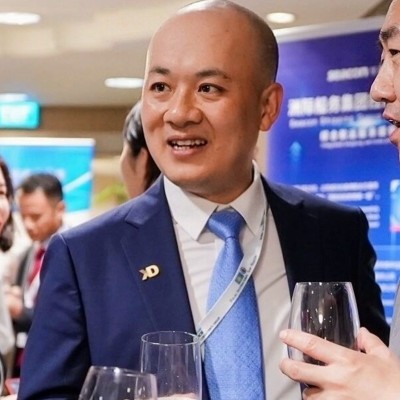
Speaking at the Marine Money China Ship Finance Forum in Shanghai on 3 November, Venergy Maritime Group Chief Financial Officer Andreas Giakoumelos explained the investment logic behind this rapid growth. In a discussion moderated by Alpha Shipping Advisors Managing Director Nick Daskalakis, he described Shanghai as increasingly feeling like a second home: it was his third visit to the city in eight months.
His account showed how shipbuilding capacity, financing structures and relationships are being brought together to establish a modern shipping business — and how the company intends to manage the commitments that come with that ambition.

An Industrial Foundation in Port and Environmental Services
Venergy’s expansion draws on the experience and resources of V Group, whose activities span environmental services, renewable energy, shipping and investments.
According to Giakoumelos, the group’s core environmental business, Antipollution, has a history approaching 80 years. Its operations include collecting waste from ships, transporting it to treatment facilities and processing it into alternative fuels. The group has also developed cooperation with the Suez Canal Authority and expanded into the United Arab Emirates.
This background provides an industrial foundation for the shipping investment programme. Giakoumelos identified the group’s experience, investment capacity and the ambitions of shareholder Vyron Vasileiadis as important factors behind the development of Venergy.
The relationship with China also predates the current newbuilding campaign. Through its activities at Piraeus, the group has established a longstanding business relationship with COSCO SHIPPING, he said. The subsequent investment in Chinese-built ships therefore developed alongside existing connections within the maritime industry.
Within the group’s shipping platform, Venergy Maritime focuses on tankers, while OceanV Maritime represents the expansion into feeder containerships. Their projects form part of the broader group strategy, although the two operating platforms and their respective orders need to be distinguished when assessing fleet size.
A Programme Extending from MR2s to VLCCs
Xinde Marine News has followed the development of the group’s Chinese newbuilding programme, including the December 2025 agreement for 2+2 vessels of Huangpu Wenchong’s 1,900 TEU feeder design.
The programme broadened further in April, when Shanghai Waigaoqiao Shipbuilding, Guangzhou Shipyard International and Huangpu Wenchong secured Suezmax and feeder containership projects associated with the group. These commitments established relationships across several Chinese shipyards and vessel segments.
Venergy’s published fleet list details three operating MR2 tankers, alongside eight MR2, six LR2 and eight Suezmax newbuildings. The MR2s are assigned to K Shipbuilding in South Korea, the LR2s to China’s New Times Shipbuilding, and the Suezmaxes to Shanghai Waigaoqiao, Guangzhou Shipyard International and Hengli Heavy Industries.
The latest reported step takes the company into the very large crude carrier segment. Market reports published on 28 October linked Venergy to two firm 306,000-dwt VLCCs at Hengli, with options for two additional vessels. Delivery was reportedly scheduled for the first quarter of 2029, while financial terms were not disclosed.
That agreement is separate from the four Suezmaxes already contracted at Hengli. Including the feeder programme and the outstanding VLCC options, the wider group’s newbuilding pipeline could reach 34 vessels.
The growing range of vessel types brings different delivery schedules, capital requirements, financing arrangements and employment decisions. Managing those differences is a central part of the CFO’s role, and explains why Giakoumelos repeatedly linked expansion with capital discipline.

The Investment Case for Newbuildings
Giakoumelos placed long-term fleet fundamentals at the beginning of Venergy’s investment rationale. In his assessment, the orderbook provides only part of the picture: fleet ageing and persistently low demolition activity also need to be considered when evaluating future supply.
The relative pricing of new and existing ships was another important consideration. When the company decided to invest, he said, some secondhand vessel values were relatively close to newbuilding prices. Under those conditions, Venergy preferred a new ship with its full operating life ahead to a vessel already five or seven years old.
Availability also influenced the decision-making process. Capacity at leading shipyards in China, South Korea and Japan is limited, so an owner needs to be ready to move and execute when suitable slots become available.
Giakoumelos also values the choices that a modern newbuilding can provide after delivery. A ship can be chartered out, refinanced or sold, while its age, design and efficiency can support its commercial appeal. Those choices, however, depend on the financial capacity to carry the investment through construction and into operation.
He said Venergy continually evaluates liquidity, time-charter coverage and downside market scenarios. The ability to secure attractive assets therefore sits alongside the need to manage instalments, debt service and the operating conditions that may prevail when those assets enter the water.
Shipbuilding Scale and Financing Capacity
China’s appeal rests on two closely connected capabilities in Giakoumelos’s assessment.
The first is shipbuilding. He believes Chinese yards have narrowed the gap with their Korean counterparts in technical capability, experience and expertise, while offering the industrial scale needed to support substantial investment programmes. For an owner developing a fleet across several tanker segments, the ability to accommodate a series of projects is commercially significant.
The second is the Chinese ship-leasing sector. Giakoumelos described leasing institutions as partners that understand shipping and the funding requirements of newbuilding projects. Their capacity to support large transactions, offer higher loan-to-value ratios and adapt financing structures to an owner’s requirements makes them valuable to a growing platform.
He particularly emphasised their willingness to understand Venergy’s plans and support the pace at which the company wants to develop. Financing capacity, structuring expertise and execution are closely linked: a large orderbook requires funding, construction schedules create payment obligations, and the owner’s commercial requirements need to be reflected in the transaction.
In that context, financing cost is one consideration among several. The ability to structure and deliver an arrangement that fits the project can be equally important.
“We build the future of Venergy,” Giakoumelos said of the company’s partnerships in China. His explanation centred on combining Greek shipping’s commercial experience and entrepreneurial approach with Chinese shipbuilding scale and financing resources.
Building Relationships Across More Than Ten Lessors
Giakoumelos said he had worked closely with more than ten leasing institutions over the preceding year. Each has its own internal policies, credit requirements, approval procedures and approach to risk. Understanding those differences requires time and effort from the owner.
Respect for an institution’s processes is therefore a practical part of building a relationship. A proposal needs to address the requirements of the particular lessor, and the owner must understand how decisions are made and what information is needed.
Transparency is another priority. Giakoumelos said that when difficulties arise, Venergy seeks to sit down with its financing partners, share information and find a solution together. Trust develops through the handling of those situations as well as through successful transactions.
Execution speed supports that approach. He said the company aims to respond quickly to information requests from credit and approval teams, in some cases providing what is required within a day. For a young platform still establishing its track record, the quality and availability of information help demonstrate its ability to manage a growing business.
Consistency then needs to extend beyond the negotiating table. Commitments and agreed terms must be honoured throughout execution.
The same principles inform Venergy’s approach to governance. Asked whether the privately owned company was being managed with the discipline associated with a listed business, Giakoumelos pointed to procedures, governance arrangements and the recruitment of experienced technical professionals. The objective is to retain the speed of private ownership while developing the organisational capability required for tanker operations, charterer scrutiny and continued growth.
Efficient Conventional Ships and Better Operating Data
Venergy’s current technical approach combines conventional fuels with modern, fuel-efficient designs and scrubber equipment. Giakoumelos said the company regards this combination as commercially attractive in the present uncertain environment, particularly when considering the requirements of the eventual charterer.
The approach places operating capability, efficiency and commercial flexibility at the centre of the investment decision. Modern vessels provide a foundation for the fleet, while individual technology choices need to be assessed against fuel availability, commercial returns and customer requirements.
Preparations for fleet management are also taking shape. A recently announced partnership with DeepSea Technologies provides for Venergy’s existing and future fleet to be integrated into its vessel-intelligence platform.
The intended functions include data cleansing, predictive vessel modelling and support for internal analytics covering hull and machinery condition, fuel consumption, emissions and fleet performance. The partnership is intended to strengthen the company’s operating infrastructure as vessels enter service; its practical results will emerge as the fleet develops.
For a rapidly expanding owner, that operating infrastructure matters alongside the ships themselves. Delivery brings the continuing task of managing performance, meeting charterer expectations and maintaining the standards on which future commercial relationships depend.
Turning Capital Commitments into an Operating Fleet
Giakoumelos identified three connected elements of financial resilience: liquidity, financing capacity and commercial flexibility.
Liquidity must cover operating expenses, debt service and unexpected requirements. Financing arrangements need to offer suitable costs, amortisation profiles and covenants. Commercial flexibility requires attention to how vessels are employed and how their earnings relate to the company’s commitments.
Venergy continues to assess both spot and time-charter opportunities as it develops a more diversified employment portfolio for its newbuildings. The task is to align deliveries with available funding, future cash flows and commercial arrangements, while preserving the ability to respond to changing market conditions.
Giakoumelos remains open to further expansion, new segments, joint ventures and other partnerships, but said the company would assess opportunities selectively. A substantial amount of work already lies ahead in the vessels to which it has committed.
Asked what he would like Chinese partners to say about Venergy in five or ten years, he hoped their assessment would be straightforward: “We made the right choice. We supported Venergy from the very beginning.”
For the coming phase, his immediate priorities are to secure employment for the arriving vessels and turn the existing investment commitments into a modern operating fleet.

READ MORE
 Shipbuilding
Yangzijiang Maritime Signs Another Four-Tanker Deal at Haifeng
 Shipbuilding
Maersk Reportedly Picks China’s Hudong-Zhonghua for Megaship Deal Worth Up to $5.8bn
 Shipbuilding
Jiahua Energy Plans $165m Gas Carrier at Jiangnan to Support Feedstock Imports
 Shipbuilding
Nanjing Tanker Proposes US$324 Million Investment in 14 Newbuildings
 Shipbuilding
Yingkou Huayin Opens Yard with 10-Ship Multipurpose Vessel Programme
 Shipbuilding
The Strategy Behind 18 Newbuilding Resales at Yangzijiang Maritime
 Shipbuilding
Pavimar Returns to Newbuilding Market After a Decade With Four Hengli Kamsarmaxes
 Shipbuilding
A New State-Owned Shipbuilding Group Is Born in China
 Shipbuilding
Breaking! Hengli Announces Deals for 52 Ultra-Large LNG Dual-Fuel Containerships
 Shipbuilding