


The Strategy Behind 18 Newbuilding Resales at Yangzijiang Maritime

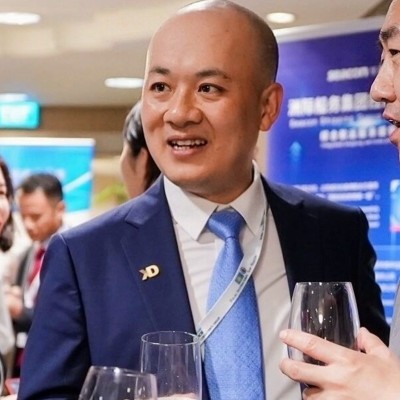
Yangzijiang Maritime Development Ltd. has signed contracts to sell 18 newbuildings for an aggregate US$805 million, following its latest US$308 million round of sales covering six medium-range (MR) tankers, announced on 26 October 2026. The transactions provide early evidence of how Executive Chairman and Chief Executive Officer Ren Yuanlin is putting the company’s “financial shipowner” model into practice. Three factors help explain its progress: his experience across shipbuilding and finance, the depth of China’s shipbuilding supply chain, and his conviction that fleet renewal can sustain demand well beyond the immediate market cycle.
Contracts that put the model into practice
The latest sales comprise two approximately 49,500-dwt MR tankers scheduled for delivery in 2026 and 2027, and four approximately 49,800-dwt MR tankers due in 2027 and 2028. Yangzijiang Maritime has not identified the buyers or builders. The contracts continue its practice of arranging vessel resales during construction, with capital recovered as transactions progress towards delivery.
The programme began with the announced sale of four 49,800-dwt MR tankers for US$180 million in November 2025. Another four MR tankers followed in April 2026, and four approximately 40,000-dwt bulk carriers in August. Including the latest contracts, the contracted sales cover 14 MR tankers and four bulk carriers. The first tanker from the November transaction was delivered to its buyer on 30 July 2026. These successive contracts, together with the first completed delivery, show the business moving from project origination into execution.
Shipbuilding experience informs capital allocation
Ren’s starting advantage is an understanding of what it takes to build a commercially competitive ship. He led Yangzijiang Shipbuilding for many years before handing over management to Ren Letian in 2020. He subsequently developed his interests in finance and maritime investment through separately listed businesses. Yangzijiang Financial Holding was spun off from Yangzijiang Shipbuilding in 2022, and Yangzijiang Maritime was spun off from the financial group and listed in Singapore in November 2025. That history combines decades of manufacturing experience with direct exposure to capital markets and maritime assets.
For a vessel investor, that experience informs decisions well before a resale is negotiated. A yard’s ability to accept an order must be assessed alongside its ability to complete a particular design, obtain equipment and deliver a ship acceptable to international customers. Judging the appropriate vessel type, achievable construction cost and level of technical support required can influence both the acquisition price and the eventual exit. Ren’s background gives the company a practical basis for making those assessments, although each project still depends on the builder’s execution.
The financing and employment arrangements extend this involvement beyond construction. Yangzijiang Maritime has used equity co-investment alongside debt financing in projects including VLCCs. It also retains the ability to earn income from chartering vessels: in April, it announced agreements covering 13 ships, with charter periods of one to eight years and an aggregate contract value of approximately US$89.8 million. At its 30 April annual general meeting, Ren described a “financial shipowner” model involving vessel construction, financing, asset management and eventual disposal. The investment decision therefore brings together construction economics, funding costs, charter earnings and resale value.
An investment model built on Chinese industrial capacity
This approach depends on access to an industrial system capable of turning investment decisions into deliverable ships. China’s shipbuilding sector provides a broad network of yards, design organisations, equipment suppliers, fabrication companies and engineering specialists. Their established working relationships allow projects to draw on capabilities beyond those held within any single shipyard. For an investor able to coordinate those resources, the wider supply chain expands the range of viable construction partners.
Yangzijiang Maritime’s 2025 annual report explains how it seeks to use that network. Cooperation with second- and third-tier Chinese yards can, in some cases, secure newbuildings at prices up to approximately 20% below prevailing first-tier yard quotations. The company supports projects through technical teams, established vessel designs and involvement in major-equipment procurement. The commercial value of a lower entry price consequently depends on technical supervision and procurement arrangements that help the yard meet the required specification and delivery schedule.
Ren has himself linked China’s shipbuilding competitiveness to the breadth of its supporting industries. In a March interview with National Business Daily, he said that building a ship required support from around 70 industries and that China possessed those industrial capabilities. His observation helps explain why this investment model can be pursued across a network of Chinese builders. The opportunity arises from a combination of shipyard capacity and the specialist suppliers, engineering knowledge and manufacturing resources available around it.
Nantong, a major shipbuilding centre in Jiangsu province, offers one illustration: its maritime industrial chain spans vessel assembly, core equipment, research and design, and repair services. Nationally, Ministry of Industry and Information Technology figures released on 23 October put China’s shares of global completions and new orders in the first nine months of 2026 at 63.6% and 81.8%, respectively, and its share of the global orderbook at end-September at 72.4%, measured in deadweight tonnage. Yangzijiang Maritime’s early progress thus also reflects capabilities accumulated across China’s wider industrial economy. Ren’s experience and the company’s ability to organise projects operate within that manufacturing base.
Backing a longer replacement cycle
Ren’s willingness to commit capital to future deliveries is supported by a consistently positive assessment of shipbuilding demand. In the March interview, republished by Xinde Maritime, he discussed the traditional five-to-eight-year industry cycle and described current conditions as the “summer” of shipbuilding. His reasoning brought together ageing vessels, environmental requirements, larger ship designs and geopolitical disruption. The argument focused on several sources of demand for new tonnage extending beyond the immediate level of freight earnings.
Xinde Maritime returned to his outlook in a report published on 18 September, following remarks at a business event in Nantong on 4 September. Ren argued that shipbuilding could enjoy another eight to ten strong years and expressed confidence in demand through 2035. Ageing-fleet replacement, energy transportation requirements and the effect of geopolitical disruption on shipping efficiency were central to his assessment.
He maintained that outlook at a Phillip Securities webinar on 14 October, according to a NextInsight report published on 26 October. Ren again pointed to replacement demand and heavily booked major shipyards. He also argued that the electricity requirements of artificial intelligence could support energy demand, including oil and gas, while longer voyages caused by geopolitical disruption would absorb effective fleet capacity. These are his expectations for the market forces supporting the investment programme.
The company’s commitments give practical expression to that view. In April, it announced investments in eight VLCCs and, separately, another ten newbuildings. In September, it added 24 firm vessels and 16 options, with the firm ships scheduled for delivery between 2028 and 2030. At the same time, it continued arranging resales of selected vessels under construction. Long-term investment and earlier exits can therefore coexist within the portfolio: a ship can be sold when pricing is attractive or retained for charter income. Shipyard availability, freight earnings, asset values and funding costs all influence that choice, and those factors can move at different speeds.
Connecting shipbuilding capacity with international demand
International buyers provide an essential route from newbuilding investment to completed asset sales. In November 2025, Scorpio Tankers disclosed the acquisition of four MR newbuildings at Jingjiang Nanyang Shipbuilding for US$45 million each. The number of vessels, aggregate price and delivery years match Yangzijiang Maritime’s first announced MR resale package, although the companies’ respective disclosures did not explicitly identify each other as counterparties. The transaction illustrates the wider commercial opportunity: an international operator can acquire vessels already under construction, while the earlier investor obtains an opportunity to realise its investment.
Yangzijiang Maritime’s role is to bring construction resources, technical supervision, financing and customer demand into the same projects. Its progress reflects both the judgement of an experienced shipbuilder and the industrial capacity that makes those investments possible. For international shipping, the model offers another way to connect fleet renewal requirements with Chinese building capacity. Its durability will depend on timely delivery, contractual cash recovery and the ability to repeat the process at attractive entry prices as market conditions change.

READ MORE
 Shipbuilding
A New State-Owned Shipbuilding Group Is Born in China
 Shipbuilding
Breaking! Hengli Announces Deals for 52 Ultra-Large LNG Dual-Fuel Containerships
 Shipbuilding
Global Newbuilding Orderbook Matches 2008 Peak as Clarksons Flags Faster Fleet Growth
 Shipbuilding
Pavimar Returns to Newbuilding Market After a Decade With Four Hengli Kamsarmaxes
 Shipbuilding
COSCO SHIPPING Bulk Leads Order for 16 New 87,000-DWT Multipurpose Grain Carriers
 Shipbuilding
MISC Signs for Five More LNG Carriers at Hudong-Zhonghua
 Shipbuilding
Another Chinese Bridge Builder Moves Into Shipbuilding
 Shipbuilding
Amid China’s Shipbuilding Boom, a State-Owned Yard Quietly Enters Liquidation
 Shipbuilding
Yichang Changyun plans RMB120m inland bulker programme
 Shipbuilding