


Yangzijiang Maritime Signs Another Four-Tanker Deal at Haifeng

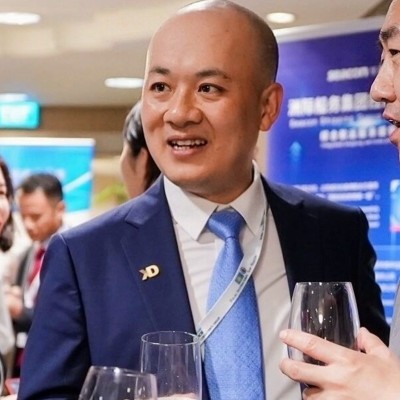
Yangzijiang Maritime Signs Four-Tanker Deal as Haifeng Construction Advances

Yangzijiang Maritime Development Ltd. and Jiangsu Haifeng Shipbuilding held a signing and keel-laying ceremony in Xiangshui, eastern China’s Jiangsu province, on 31 October 2026, according to reports from the event. The ceremony covered the signing of four 50,000-dwt product/chemical tankers and keel-laying work on 50,000-dwt MR and 114,000-dwt LR2 tanker projects. Executive Chairman and Chief Executive Officer Ren Yuanlin attended, as the company continued to develop a strategy combining vessel investment with direct involvement in shipbuilding.
The event brings together two aspects of that strategy: securing vessels through cooperation with Chinese yards and advancing construction so those assets can ultimately be delivered, sold or chartered. However, the available event report does not disclose contract prices or delivery dates for the four vessels, or clarify whether they represent entirely new commitments, option exercises or confirmation of previously announced arrangements.
A tanker programme expanding throughout 2026
Yangzijiang Maritime’s regulatory announcements show how quickly its wider newbuilding programme has developed. On 14 January, the company announced orders placed with three Chinese yards for six firm vessels and ten options. The tanker component comprised two firm 49,800-dwt MR product tankers plus six options, and two firm 114,000-dwt LR2 tankers plus two options, with scheduled deliveries extending from late 2027 into 2029. The announcement did not identify the individual builders.
On 27 April, the company disclosed another ten newbuildings: four approximately 114,000-dwt product/crude tankers, four approximately 49,800-dwt product/chemical tankers and two approximately 40,000-dwt bulk carriers. Deliveries were scheduled between 2027 and 2029. These orders were placed with independent third-party Chinese shipyards, but the announcement again did not allocate each vessel to a named builder. The corporate disclosures therefore establish the scale of the investment programme without supporting the attribution of every vessel to Haifeng.
The company’s 18 September announcement put its newbuilding portfolio at 98 vessels, including seven already delivered, 75 firm newbuildings under construction and 16 options. That portfolio also included ships contracted for resale. The same dated breakdown was referenced again in its 26 October release. It is an investment-portfolio measure containing several categories, rather than a count of vessels operating in its fleet. Without a reconciliation of contracts and options, the 31 October signing cannot simply be added to that figure to produce a new total.

Haifeng’s return to production
Haifeng provides a tangible example of the shipbuilding resources available outside the largest established yards. Founded in September 2007, the company is located on the southern bank of the Guanhe River estuary in Xiangshui. Its current corporate profile lists a site of approximately 106 hectares and 1,010 metres of waterfront, together with hull construction, outfitting, electrical, machinery and coating facilities. Its website also features 50,000-dwt MR and 114,000-dwt tanker designs.
The yard’s earlier production interruption is documented in local government records. A Yancheng municipal policy published in April 2016 included Haifeng among shipbuilders that had suspended production. By May 2026, a report published by the Xiangshui county government described Haifeng and other local shipyards as operating at full capacity. These records support the account of a yard returning to production after a prolonged interruption, although they do not establish an exact, uninterrupted ten-year shutdown.
For the current partnership, the commercial question is how effectively those physical resources can be organised into a reliable tanker-building programme. Waterfront, fabrication facilities and available space provide a starting point. Their investment value depends on the workforce, procurement arrangements, production management and quality control needed to turn that infrastructure into vessels acceptable to buyers and charterers.
Shipbuilding expertise as part of the investment
Yangzijiang Maritime’s 2025 annual report describes cooperation with second- and third-tier Chinese yards, supported by technical teams, repeat vessel designs and assistance with major-equipment procurement. Depending on market conditions, vessels can be pre-sold, resold or chartered. The approach combines competitive acquisition costs with several potential sources of return, while giving the investor a role in construction.
Ren’s background helps explain that approach. He joined the business that became Yangzijiang Shipbuilding in 1973 and worked across technical and production-management roles. Yangzijiang Maritime listed independently on the Singapore Exchange on 18 November 2025 following its spin-off from Yangzijiang Financial Holding. The platform combines a relatively recent corporate structure with leadership whose industrial experience spans more than five decades.
The investment logic is that construction knowledge can influence both entry cost and eventual asset value. Familiar designs, coordinated procurement and technical supervision can help turn available infrastructure into marketable vessels. Whether that potential produces attractive returns will depend on actual construction costs, delivery performance and the market available when each vessel is sold or chartered.

Resales connect newbuilding orders with capital recycling
The company’s recent sales programme shows how newbuilding investment fits into its wider business. On 26 October, Yangzijiang Maritime announced contracts to sell six MR newbuildings for an aggregate US$308 million. The package comprises two approximately 49,500-dwt vessels scheduled for delivery in 2026 and 2027, and four approximately 49,800-dwt vessels due in 2027 and 2028. This brought contracted newbuilding sales over a ten-month period to 18 vessels with a combined gross value of US$805 million. These are contracted sales values, with financial contributions subject to completion, delivery schedules and applicable accounting recognition.
As Xinde Marine News previously examined in its coverage of the 18-vessel resale programme, the company’s strategy connects industrial experience, vessel investment and the timing of asset sales. Construction expertise supports the acquisition and development of assets, while resale agreements provide a route towards recovering capital and reinvesting it in subsequent projects.
Viewed alongside those transactions, the Haifeng ceremony shows the construction side of the same business model. Sales contracts establish prospective buyers and proceeds; progress at the yard advances the assets towards the delivery obligations behind those agreements. Coordinating both sides will influence how quickly invested capital can become available for further deployment.
Delivery performance will determine the value
Keel laying marks progress in construction, while the larger commercial test remains ahead. For the Haifeng projects, that test will be whether the vessels meet agreed specifications, remain within the intended cost framework and arrive on schedule. Successful delivery would provide stronger evidence of the partnership’s effectiveness than the number of contracts signed.
For international shipowners, charterers and investors, the case offers a way to assess how industrial expertise and capital can bring additional yard capacity into use. The next evidence to watch will be construction progress, delivery performance and completion of the associated commercial transactions.



READ MORE
 Shipbuilding
Jiahua Energy Plans $165m Gas Carrier at Jiangnan to Support Feedstock Imports
 Shipbuilding
Yingkou Huayin Opens Yard with 10-Ship Multipurpose Vessel Programme
 Shipbuilding
The Strategy Behind 18 Newbuilding Resales at Yangzijiang Maritime
 Shipbuilding
Maersk Reportedly Picks China’s Hudong-Zhonghua for Megaship Deal Worth Up to $5.8bn
 Shipbuilding
Pavimar Returns to Newbuilding Market After a Decade With Four Hengli Kamsarmaxes
 Shipbuilding
A New State-Owned Shipbuilding Group Is Born in China
 Shipbuilding
Breaking! Hengli Announces Deals for 52 Ultra-Large LNG Dual-Fuel Containerships
 Shipbuilding
Global Newbuilding Orderbook Matches 2008 Peak as Clarksons Flags Faster Fleet Growth
 Shipbuilding
COSCO SHIPPING Bulk Leads Order for 16 New 87,000-DWT Multipurpose Grain Carriers
 Shipbuilding