


Maersk Completes First U.S. Ethanol Bunkering for a Deep-Sea Containership
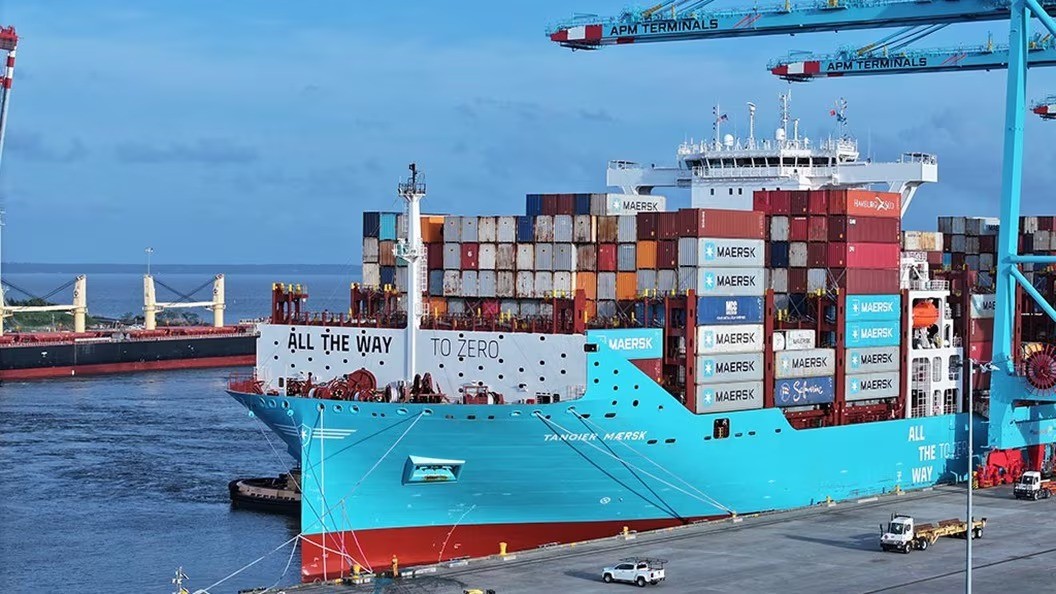
Maersk has completed what it describes as the first ship-to-ship commercial ethanol bunkering of a deep-sea containership in the United States, extending a series of trials that is bringing ethanol into practical use as a marine fuel.
Announcing the operation on 28 September, the company said its dual-fuel, alcohol-capable containership Tangier Maersk had received U.S.-produced corn ethanol. Fuel supplier POET confirmed that the operation took place in Houston and used 100% bioethanol.
The delivery follows ethanol trials aboard Laura Maersk and a 2,800-tonne bioethanol supply to Antonia Maersk in Barcelona. Together with a separate ethanol-methanol trial by X-Press Feeders in Rotterdam, these developments show the industry expanding its assessment beyond engine performance to fuel procurement, delivery and commercial operations.
Connecting U.S. ethanol production with ocean shipping
The Houston operation brought together participants across the fuel and maritime supply chains. POET supplied the bioethanol, Kirby Corporation supported fuel transportation and bunkering, and the Port of Houston provided coordination and infrastructure. The U.S. Coast Guard supported the regulatory requirements for the operation.
For Maersk, the exercise provided practical experience with the infrastructure, sourcing, handling and supply arrangements needed to use ethanol at sea. The company said wider deployment would depend on fuel availability, regulation and operational readiness across the maritime value chain.
The distinction between a completed commercial delivery and an established supply network remains important. The operation demonstrates that this supply chain can deliver ethanol to an ocean-going vessel, but regular procurement and repeated bunkering will be needed to establish its suitability for routine fleet operations.
Neither Maersk nor POET disclosed the quantity delivered in Houston.
From blended fuels to 100% ethanol trials
Maersk’s initial onboard work centred on Laura Maersk, a vessel originally designed to use methanol as its alternative fuel.
In October and November 2025, the ship tested a blend of 10% ethanol and 90% e-methanol. Maersk subsequently increased the ethanol share to 50%, with its 2025 annual report confirming trials of both blends during the year.
By July 2026, information published by the Port of Barcelona confirmed that Laura Maersk had also completed sailings using 100% ethanol.
Testing then expanded to a larger vessel. On 17 July, the Port of Barcelona announced that Repsol had supplied 2,800 tonnes of bioethanol to Antonia Maersk in the port’s first bunkering operation of this kind. Maersk described it as its first ethanol trial aboard one of its large dual-fuel vessels.
The progression from lower-percentage blends to neat ethanol, followed by larger vessel applications, has allowed Maersk to build operating experience in stages. The Houston delivery adds another production source and supply location to that work.
Rotterdam broadens the operational experience
Maersk is not the only container operator exploring ethanol.
On 26 May 2026, the Port of Rotterdam announced its first ethanol bunkering operation, involving X-Press Feeders’ Eco Levant. The vessel subsequently operated on a blend comprising 90% biomethanol and 10% second-generation ethanol, both ISCC EU-certified.
Tankmatch supplied the fuels using its bunker vessel MTS Experience. Methanol and ethanol were delivered separately and blended aboard the receiving ship under controlled operating conditions.
The operation illustrates how ethanol can be introduced through blending, allowing operators to assess fuel handling and onboard performance before considering higher concentrations.
Across Rotterdam, Barcelona and Houston, the projects are adding experience with different fuel blends, vessel sizes and delivery arrangements. That experience will be necessary if ethanol is to become a regularly purchased bunker fuel.
More options for alcohol-capable vessels
One reason ethanol is attracting attention is its potential compatibility with methanol propulsion technology.
DNV has indicated that methanol dual-fuel engines can be adapted to use ethanol through relatively minor modifications. This creates an opportunity for some existing investments in alcohol-fuelled ships to support a wider choice of fuels.
Compatibility still needs to be established for each application. Engine configuration, fuel systems and the relevant approvals must be assessed before a vessel switches fuels.
Development is also extending into large dry bulk shipping.
On 2 September 2026, Everllence announced that its ethanol-capable G80 engine had completed research and development testing at HD Hyundai Heavy Industries’ Engine and Machinery Division in South Korea.
The engine is intended for the third vessel in a series of 10 very large ore carriers ordered by Shandong Shipping for charter to Vale. That vessel is scheduled for delivery in early 2027.
According to Everllence, the engine can operate on fuel oil, methanol, ethanol, or blends of the two alcohol fuels. The project remains at the pre-delivery stage, but it points to a broader potential market beyond containerships.
In Xinde Marine News’ assessment, such developments strengthen the commercial case for fuel flexibility. Where ships can safely use several approved fuels, owners gain more scope to respond to changes in availability, supply locations and procurement costs.
Production scale must translate into sustainable supply
Ethanol enters the marine fuel discussion with an established production and distribution base.
POET says its network comprises 35 production facilities with annual capacity exceeding 3 billion U.S. gallons. Existing production, transport and distribution infrastructure provides a starting point for supplying shipping.
However, total production capacity does not establish how much fuel will be available to maritime customers or how much will meet their emissions and sustainability requirements.
In its earlier ethanol trial announcement, Maersk said the fuel should not contribute directly or indirectly to land conversion or deforestation, or compete with food and feed. Its assessment of crop-based fuels includes lifecycle greenhouse gas emissions, traceability, certification and responsible sourcing.
The term bioethanol alone therefore does not establish a fuel’s environmental performance. Feedstock, production methods and verifiable lifecycle emissions all matter.
Commercial adoption also requires consistent availability, reliable delivery and acceptable operating costs. A successful bunker operation provides useful evidence, while sustained use will depend on how these conditions perform over time.
The next test is repeatable commercial supply
The significance of the Houston operation is that ethanol is entering the procurement and delivery processes of deep-sea shipping.
Over the past year, projects have tested different ethanol concentrations, expanded from smaller to larger containerships, and involved supply chains in Europe and the United States. Engine development for very large ore carriers is progressing alongside this operational work.
The next indicators to watch are repeat bunker deliveries, longer-term procurement commitments and accumulated operating data.
For owners investing in alcohol-capable vessels, ethanol offers another potential fuel choice. Its lasting role in shipping will depend on whether established production capacity can support reliable marine deliveries, verifiable emissions reductions and commercially workable costs.

READ MORE
 Sustainability
IMO Chief Defends Net Zero Ambition in Shanghai as Shipping Awaits Clearer Rules
 Sustainability
Zhoushan Overtakes Fujairah to Become World's Third-Largest Bunkering Port
 Sustainability
Shiptec China 2026.10.28-10.30 |Invitation of Green Energy for a Smart Future – Forum on New Energy Ship Technology and Ecosystem
 Sustainability
MI and Green Marine Partner to Strengthen Methanol Safety and Crew Training
 Sustainability
EPS Secures First FEET Financing for Two Wind-Assisted Vessels
 Sustainability
Car Carriers Face Fuel Supply and Emissions Accounting Challenges
 Sustainability
5,000 Tonnes: Maersk Completes World’s Largest Ethanol Bunkering in Singapore
 Sustainability
PetroChina Expands Multi-Fuel Bunkering in Singapore
 Sustainability
MPA, CMA CGM and SLNG Join Forces on Bio-LNG Bunkering
 Sustainability