


“Replace the Race for Scale”: China Merchants’ Miao Jianmin on Shipping’s Next Competition

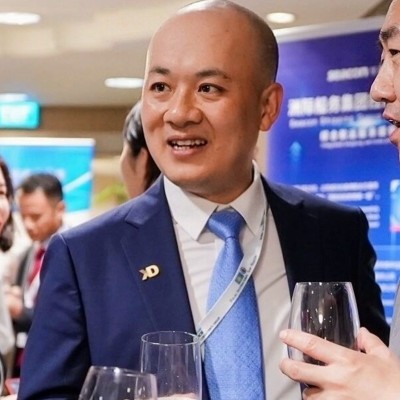
China Merchants Group Chairman Miao Jianmin has called on the shipping industry to “replace the race for scale with ecosystem building,” urging closer connections between vessel capacity, hubs, transport corridors, trade, finance and fuel. Speaking at the 2026 World Maritime Merchants Forum in Hong Kong on 16 November, he outlined an agenda linking resilient transport networks, green and digital innovation, and cooperation across the maritime supply chain.
Miao’s proposals address a central investment question for the industry: how to turn growing expenditure on ships, terminals and technology into reliable services and sustainable returns. Fleet size provides an important foundation. The value those assets generate also depends on access to cargo, infrastructure, energy, capital and partners capable of supporting operations across different markets.
In Xinde Marine News’s assessment, the significance of his message lies in this connection between investment and execution. Expanding a fleet creates additional transport capacity. Making that capacity commercially effective requires a network in which customers, ports, logistics providers, fuel suppliers, financiers and insurers can work together over the life of the service.
Three pressures converge on the same investment decision
Miao identified changes in geopolitics, technology and regulation, and market conditions as overlapping challenges. Disruption affecting the Red Sea and the Strait of Hormuz, together with extreme weather, has increased the importance of safe and resilient transport corridors. For an owner or operator, route availability influences voyage duration, fuel consumption, vessel deployment and the ability to fulfil customer commitments.
The energy transition adds uncertainty over the operating conditions of long-lived assets. The direction towards lower emissions is clear, but differences in regulation, developing technologies and uncertain fuel availability complicate investment decisions. Artificial intelligence introduces further opportunities to improve operations, while raising questions about data access, cybersecurity and the capabilities of participating businesses.
Market conditions interact with both. Miao highlighted fleet expansion, industry consolidation, potential overcapacity and freight-rate volatility. A vessel ordered during a strong market will enter an operating network whose cargo flows, infrastructure constraints and regulatory requirements may have changed by delivery. Investment therefore requires a view of the commercial arrangements that will support the ship throughout its working life.
This wider scope of competition is consistent with another assessment covered by Xinde Marine News. At the North Bund International Shipping Forum in Shanghai on 20 October, COSCO SHIPPING Chairman Wan Min identified persistent risk, competition across the entire supply chain, resilience as a priority, and green and digital transformation as defining industry characteristics. Both perspectives place greater weight on the ability to coordinate resources across the transport chain.
COSCO_Wan_Min_Four_Forces_Globa…
Resilience requires alternatives that can be used
Miao called for diversified, resilient international transport corridors and regular communication between port and shipping businesses. The commercial task is to develop alternatives that operators can activate when an established route or gateway becomes unavailable.
An alternative port needs suitable facilities and available handling capacity. Rail, road or feeder services must be able to move the cargo onwards. Warehousing, customs procedures, documentation and customer delivery arrangements must fit the revised transport plan. Contracts and insurance also need to accommodate the change. The usefulness of a second route depends on whether these elements can operate together when demand shifts.
A related argument emerged from CMA CGM Executive Vice President for Assets and Operations Christine Cabau Woehrel at the same Hong Kong forum. As previously reported by Xinde Marine News, she observed that building ships is easier and faster than developing new ports and terminals, and emphasised the need for alternative routes, transport modes and logistics nodes. She also connected physical infrastructure with the information required to identify disruption early and organise a response.
航运全链竞争与港口投资_深度中文稿_20261117
The investment implications are substantial. Reserve capacity, alternative gateways and partnerships carry costs even when the main network is operating normally. Those costs must be assessed alongside the consequences of interruption: missed production schedules, delayed replenishment, disrupted sales and lost customer confidence. Cooperation can make a network more dependable when the participants have prepared the operating arrangements in advance.
Six connected parts of the business
The six areas Miao identified—capacity, hubs, corridors, trade, finance and fuel—describe interdependent parts of shipping’s commercial model. Cargo commitments support vessel employment. Ports and inland corridors determine how efficiently that cargo moves. Financing terms affect the cost and flexibility of investment. Fuel availability influences where a vessel can operate and how it can meet emissions requirements.
For China Merchants, whose businesses include shipping, ports, logistics and shipbuilding, this approach also reflects the group’s industrial structure. Miao referred to its development of globally connected port, fleet and logistics networks, and its willingness to build closer partnerships around that foundation.
The relationship between China Merchants Port and CMA CGM through Terminal Link illustrates one form such cooperation can take. China Merchants Port acquired a 49% interest in Terminal Link in 2013. CMA CGM’s current corporate disclosures identify the shareholders as CMA Terminals Holding, with 51%, and China Merchants Port Holdings, with 49%. Terminal Link operates 21 terminals in 16 countries, connecting the two groups through a longstanding international investment platform.
The joint venture brings port investment and operating expertise into a continuing relationship with a major liner group. Its commercial value depends on how terminal services, capacity development and shipping networks support customer requirements and investment returns. Equity ownership establishes a structure for cooperation; management and execution determine the results.
Other arrangements can serve similar purposes, including long-term transport contracts, terminal service agreements, joint technology development and fuel procurement commitments. Each needs a workable allocation of responsibilities, costs and benefits. Expanding the scope of cooperation increases the importance of making those arrangements clear.
Green fuels need aligned demand, standards and finance
Miao called for shared technology development, mutual recognition of standards, deeper cooperation through the International Green Fuel Alliance and progress towards a unified global emissions-reduction framework. These proposals address several decisions that shipowners and energy suppliers must make together.
An owner investing in an alternative-fuel ship needs confidence in fuel availability, quality, pricing and certification along its intended routes. A producer considering a new facility needs credible demand, sales commitments and access to finance. Ports and bunker suppliers must assess the volumes that could justify storage and delivery infrastructure. Cargo customers, meanwhile, need clarity about the emissions reductions they are purchasing and the associated transport costs.
China Merchants Energy Shipping’s 2025 ESG report provides a practical background to Miao’s remarks. It disclosed participation in establishing the International Green Fuel Alliance and identified three bottlenecks: insufficient mutual recognition of standards, weak alignment between production and demand, and gaps in financing instruments. The alliance’s planned work included information exchange, demonstration projects, standards development and links between green finance and carbon markets.
Each obstacle affects the others. Uncertain certification can weaken a fuel’s commercial value. Uncertain demand can delay production investment. Delayed production can leave owners reluctant to commit vessels to a particular fuel. Financing becomes more difficult when lenders cannot assess future revenues or compliance value with sufficient confidence.
Cooperation needs to reach the contractual details that support investment: procurement periods, pricing formulas, delivery responsibilities, certification requirements and arrangements for recognising emissions reductions. A forum or alliance can bring the relevant parties together. Dependable supply and investable projects require those parties to agree how the business will operate.
Different vessel types and trading patterns will continue to face different fuel choices. Shared standards and coordinated projects can improve the conditions under which those choices are tested, financed and deployed.
AI’s commercial value depends on connected information
Miao also proposed exploring a smart shipping alliance, placing artificial intelligence alongside green development in the industry’s transformation agenda. His emphasis on shared technology and compatible standards points to the organisational work required to extend digital applications across business boundaries.
Voyage optimisation draws on information about vessel performance, weather, port conditions and cargo commitments. A revised arrival time becomes more useful when a terminal can adjust its berth plan and inland providers can respond. Trade and financing processes depend on trustworthy documents and records. The value of individual applications therefore grows when information can move reliably into the decisions made by other participants.
China Merchants Energy Shipping’s ESG disclosures describe digital trade initiatives intended to connect shipping documentation, business processes and related services. The Hong Kong forum also featured the release of the SeaTrust electronic logbook system and the launch of the ArcanniX ship intelligence ecosystem initiative, extending the discussion into shipboard records and cooperation on intelligent systems.
These developments require adoption by the businesses involved in the underlying transactions and operations. Digital documents need recognition and usable workflows among trading and financial counterparties. Vessel data must be accurate enough to support shipboard and shoreside decisions. Partners need agreements on access, confidentiality, security and responsibility for the information they exchange.
For shipping businesses, the practical measure is whether these tools improve execution: identifying disruption earlier, making a better deployment decision, reducing duplicated work or keeping cargo moving through a revised network. Shared development and standards can help individual applications become useful across the wider service chain.
Hong Kong connects the operating and commercial arrangements
Miao identified Hong Kong as a preferred location for exchanges, trust-building and deeper cooperation. Its relevance to his proposals lies in the services required to organise international business relationships over long periods.
Ships, terminals, fuel facilities and customers often operate in different jurisdictions. Their cooperation requires financing, insurance, contracts, settlement and dispute resolution alongside physical transport. Hong Kong’s financial, legal and maritime services, together with its connections to the Chinese Mainland and international markets, provide a base for arranging those relationships.
The initiatives announced on 16 November show how these functions can develop together. Hong Kong signed a memorandum of understanding with Hainan’s Yangpu Port to establish a partner-port relationship, another with Zhanjiang in Guangdong to develop its first Green Energy Corridor, and an agreement with the Port of Piraeus in Greece covering a Green Shipping Corridor and a partner-port relationship. The Hong Kong Shipowners Mutual Assurance Association also officially issued its first protection and indemnity insurance policy.
The same day, Hong Kong announced the formation of the Task Group on the Development of the Green Fuel Trading Platform. In his opening address, Hong Kong Chief Executive John Lee said the group would advise on strategic direction, infrastructure and operating rules as development of the platform proceeds.
These initiatives address different requirements within the network Miao described: port connections, fuel supply, trading arrangements and risk protection. Their subsequent value will depend on the transport services, supply commitments, commercial contracts and operating capabilities developed around them.
For the wider industry, Miao’s proposal creates a demanding test for future expansion. Additional vessels need customers and infrastructure that can support their employment. Cleaner ships need dependable fuel and recognised emissions accounting. Digital systems need partners able to exchange and act on information. Long-term investment needs contractual and financial arrangements that remain workable through market cycles.
The next stage of shipping competition will be shaped by how effectively businesses organise those relationships. Stronger connections across capacity, hubs, corridors, trade, finance and fuel can give asset owners a firmer basis for delivering the service they promise—and earning a sustainable return from the capital they commit.


READ MORE
 Containers
Ships Are Easier to Build Than Ports: CMA CGM Executive Makes the Case for Network Resilience
 Containers
CMA CGM Tops Maersk’s Q3 Revenue as Profit Hits $2.32 Billion and Volumes Rise 5.5%
 Containers
COSCO Chairman Wan Min Identifies Four Forces Reshaping Global Shipping
 Containers
COSCO, China Merchants, MSC, Maersk and CMA CGM Double Down on End-to-End Resilience
 Containers
Nearly $100 Million in Quarterly Profit: Why Global Ship Lease Is Backing 17 Mid-Sized Containerships
 Containers
Maersk: Why a Newbuilding Boom Has Not Ended Space Shortages and Rate Spikes
 Containers
1,023 Ships and Still Expanding: MSC’s CEO Sets Out the Next Priorities
 Containers
MSC Deepens Shanghai Port FC Sponsorship as Shipping Ties Extend Into Football
 Containers
No Boxship Delivered Yet, Already No. 2: How Hengli Is Reshaping Shipbuilding
 Containers