


COSCO Chairman Wan Min Identifies Four Forces Reshaping Global Shipping

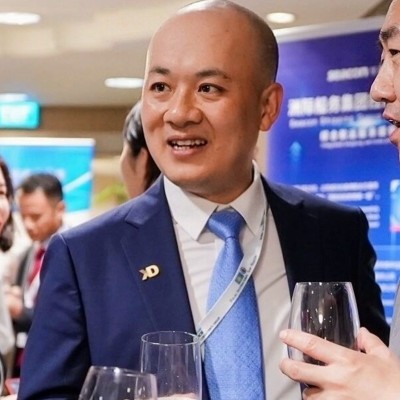
COSCO SHIPPING Chairman Wan Min has identified four defining shifts in the shipping industry: persistent risk, competition across the entire supply chain, resilience as a priority, and the combined advance of green and digital transformation. Together, they describe an operating environment in which a carrier's ability to deliver increasingly depends on the capabilities of its partners across the transport chain.

Wan outlined his assessment at the maritime main forum of the 2026 North Bund International Shipping Forum, held at Shanghai's World Reception Hall on 20 October. Hosted by COSCO SHIPPING and Shanghai International Port Group, the event brought together more than 500 industry representatives, with 12 keynote speakers from shipping, shipbuilding, ports, finance and international organisations.
Their presentations examined different parts of the industry, but the practical connections were clear. Alternative transport routes require ports and inland networks that can accommodate diverted cargo. Investments in cleaner ships require shipyard capacity, financing and dependable fuel supply. Artificial intelligence depends on sound processes, usable data and trained employees. Fleet deployment and investment decisions are also shaped by maritime security and the consistency of international rules.
The discussion pointed towards a broader measure of competitiveness: the ability to organise ships, infrastructure, energy, capital and people into a service that can continue operating through disruption.
Reliability is a shared responsibility across the transport chain
Wan proposed four approaches to strengthening resilience: closer coordination across the supply chain, broader global networks and transport corridors, green and digital innovation, and cooperation on rules and governance. His framework extends the responsibilities of a shipping business into ports, inland transport, warehousing, technology and the institutional conditions that allow international trade to function.
Drawing on COSCO SHIPPING's experience, he described how combinations of mainline shipping, bonded land bridges and feeder distribution can help maintain service when key routes are disrupted. The group is also continuing to develop its global network of hubs and corridors.
For cargo owners, the value of that network becomes particularly visible when an established route is unavailable. Cargo must be redirected, ocean and inland services must be reconnected, and information and documentation must keep pace with the revised transport plan. Each of those tasks affects whether the shipment ultimately reaches its destination as promised.
PSA International Group CEO Ong Kim Pong approached the same challenge from the perspective of a port operator. He grouped the pressures facing the industry into four areas: geopolitics, artificial intelligence, labour and the environment. PSA's response includes its "Node to Network" approach, connecting terminals, marine services, inland logistics and digital trade platforms. According to his presentation, the associated collaboration covered more than 20 nodes worldwide and involved 13 major shipping companies.
These connections bring ports further into the organisation of the whole cargo journey. Fast terminal handling needs to align with vessel arrivals, subsequent port calls and inland transport. Sufficient vessel capacity needs to be matched by the ability of other parts of the network to receive and move cargo.
Reliability therefore becomes something carriers, ports and logistics providers must deliver together. It also changes the economics of efficiency. Alternative routes, reserve capacity and additional network connections all carry costs, but they provide room to adjust when services are interrupted. Those costs need to be assessed alongside the operational and commercial consequences of losing the ability to deliver.
Strong earnings support investment but discipline shapes returns
Stephen Gordon, Managing Director of Clarksons Research, provided the market context. Shipping was generating substantial cash, he said, and owners were directing earnings into new ships. The global orderbook had reached an absolute size comparable with 2008, although it represented around 22% of the existing fleet, compared with approximately 52% at that earlier peak. As deliveries accelerate, annual fleet growth could rise to 5–6%.
The figures explain both the capacity to invest and the pressure that may follow. Strong earnings support fleet renewal and expansion, while changes in trade, voyage distances and the replacement of ageing vessels provide reasons to order. Once those orders enter service, their earning potential will also depend on route availability, port productivity and the retirement of older tonnage.
Semiramis Paliou, Director and Chief Executive Officer of Diana Shipping, addressed the issue from a shipowner's perspective. Referring to approximately 600 dry bulk vessel deliveries expected during 2026, she urged the industry to maintain investment discipline. Congestion and slower sailing can absorb capacity, but their effect can change. Longer voyages caused by geopolitical disruption also create the possibility of capacity being released if conditions ease.
She highlighted changes in cargo demand associated with the energy transition, including wind power equipment, electricity networks and minerals used in batteries. For dry bulk owners, the opportunities need to be assessed through specific commodities, trade flows and customer requirements, with fleet investment aligned accordingly.
Bing Chen, Chairman, President and Chief Executive Officer of Seaspan, described an investment model supported by long-term contracts. Seaspan avoids speculative shipbuilding, he said. Once its vessels under construction are delivered, fleet capacity will exceed 2.6 million TEU, with an average charter duration of more than 12 years and aggregate contracted charter revenue exceeding US$36 billion.
Chen also discussed the resources available through shareholders and joint-venture partners in shipbuilding, operations, retrofits and equipment. These capabilities support the provision of long-term capacity while giving customers options to adapt their fleets.
Taken together, the presentations connected market analysis with customer commitments and contractual structure. A view on supply and demand helps determine where to invest; the commercial arrangements determine how that investment can generate returns over time. Financing, maintenance, technical upgrades and operating responsibilities all require attention when a project is being developed.
Cleaner shipping needs technology and viable commercial arrangements
Speakers shared an interest in decarbonisation while offering different approaches to the decisions it requires. Their differences reflected the practical choices facing companies with varying fleets, contract structures and access to capital.
CMB.TECH Chief of Staff Jan De Beurme argued that long-term capital, cleaner fuel technology and the economic conditions for deployment were increasingly coming together. The task was to turn those elements into operating projects. Major industrial transitions, he suggested, require leaders to make responsible decisions before every uncertainty has been resolved.
Paliou emphasised improvements that can be made to existing operations. Voyage optimisation, digital planning and better management can deliver emissions reductions while owners assess future fuel choices. For companies seeking to preserve flexibility, improving the efficiency of current assets provides an immediate course of action.
Wang Guoqiang, President of China State Shipbuilding Corporation, outlined developments in alternative-fuel technologies and vessel designs, alongside work on both newbuildings and retrofits. He called for shipping companies, energy suppliers and ports to participate in the development of green fuel supply chains, with demonstration projects organised around specific routes. CSSC is also expanding services across the vessel lifecycle to support operations and subsequent upgrades.
Chen's discussion of conventional-fuel, methanol and LNG vessels, together with Seaspan's retrofit capabilities, illustrated the contribution of a specialist tonnage provider. Supplying ships over long periods requires attention to their future suitability for customers' businesses and emissions requirements. Technical support consequently becomes a continuing part of the chartering relationship.
Progress at sea also depends on investment ashore. Gordon noted that only around 5% of ports worldwide had the relevant alternative-fuel bunkering capabilities. Vessel technology must therefore develop alongside fuel production, storage, distribution and bunkering networks.
Coordinating these investments presents a commercial challenge. Owners need confidence that fuel will be available when ships enter service. Fuel producers need sustained demand before expanding production. Ports require expected throughput to justify investment in storage and bunkering facilities. Long-term charters, fuel procurement agreements and cooperation on individual routes can help connect these decisions into projects that participants are prepared to finance and operate.
Artificial intelligence must improve operating decisions
The forum's discussion of artificial intelligence extended into business processes, organisational readiness and the decisions made by operating teams.
At CMA CGM, these issues fall within the responsibilities of Mathieu Friedberg, the group's Executive Vice President for Transformation, whose remit includes AI, IT and cybersecurity. In his forum address, Friedberg stressed the need to establish sound processes before automating them. Applying automation to a flawed process can accelerate the mistakes it produces.
He described CMA CGM's focus on process standardisation and a common data foundation, together with the use of a digital twin of its shipping network to assess the potential effects of route closures, congestion and other disruptions.
This places technology directly within the daily work of managing a transport network. When a port or route becomes unavailable, an operator needs to identify affected cargo, assess alternatives and allocate resources. Earlier visibility of those consequences, followed by an executable response, gives digital investment practical value.
Wan discussed COSCO SHIPPING's work on AI-native technology architecture, intelligent vessels and digital global supply chains. Wang described autonomous navigation, shore-based operations and maintenance, and coordination between intelligent ships, ports and waterways. Across these applications, the ability to exchange data and connect business processes affects how much value individual technologies can deliver.
Friedberg also placed cybersecurity and workforce preparation within the same transformation agenda, outlining plans to provide AI-related training for more than 90,000 employees. As more equipment and systems become connected, access controls, security and governance require parallel attention. Employees also need the skills and judgement to use the tools effectively in routine operations.
Finance and legal services become part of long-term operations
Fleet renewal, cleaner fuels and digital systems all require capital. The terms on which that capital is supplied, and the allocation of risk between participants, influence how projects develop.
Ren Deqi, Chairman of Bank of Communications, outlined an approach to maritime finance covering the full investment cycle. He discussed green financing, shipping transition loans and services spanning vessel design, construction and delivery. Green shipping financing had accounted for more than 50% of BOCOMM Leasing's shipping leasing business over the preceding three years, he said.
The bank is also connecting cross-border settlement, trade finance and foreign-exchange risk management with information from electronic bills of lading and other digital trade processes.
These services extend a financial institution's involvement along the shipping value chain. Capital is required to acquire a vessel, while settlement, working capital and later upgrades remain relevant throughout its operation. Financing tenor, currency and repayment schedules need to fit the asset's use and contracted income. For investments involving new technology, lenders also need to understand how the expenditure will affect operating performance.
Chen described a recently delivered 13,000 TEU Seaspan containership for which construction, financing, charter-hire settlement and insurance-premium payments were all conducted in renminbi. He also discussed plans to introduce Shanghai arbitration clauses into relevant contracts and to pursue further renminbi bond financing.
The example connects shipbuilding, funding, insurance and dispute resolution within an international shipping project. For the customer and the owner, all of these arrangements influence whether a long-term contract can be executed smoothly. Their value depends on how effectively the different professional services work together throughout the relationship.
Consistent rules support investment decisions
John Denholm, Chairman of the International Chamber of Shipping, emphasised the importance of international conventions and a consistent regulatory framework for safety, environmental protection and technological progress.
On decarbonisation, he reaffirmed ICS's support for the goal of net-zero emissions by or around 2050, while drawing attention to the fuel production, technical rules and economic mechanisms needed to achieve it.
His concern was that failure to reach agreement globally could encourage further fragmentation in regional regulation. For ships operating across jurisdictions, such fragmentation affects long-term assumptions about technology, fuel and cost. Decisions made when ordering a vessel must account for the requirements it may face across different trading areas over many years.
Johannah Christensen, Chief Executive Officer of the Global Maritime Forum, focused on the trust and cooperation required to sustain international dialogue. In an environment of geopolitical conflict and trade friction, she argued, participants with different interests need channels for constructive engagement.
Green shipping corridors provide one such setting by bringing the maritime supply chain and the energy value chain together around specific transport demand. Christensen also discussed China's contribution through green methanol and ammonia production and its capacity to help coordinate participants. Wan and Wang described their companies' involvement in international standards research and proposals.
The practical value of rules and cooperation lies in their usability. Businesses need stable expectations for long-term investment, together with technical and commercial arrangements they can apply in daily operations. Differences in the capabilities and transition costs of participants also need to be addressed if global arrangements are to secure broad and sustained implementation.
Resilience depends on protecting and preparing people
David Loosley, Secretary General and Chief Executive Officer of BIMCO, brought attention to the human costs behind the continued movement of global trade. His presentation examined the price of resilience: longer voyages, higher costs and greater exposure for vessels and seafarers can remain largely invisible to the people receiving the cargo.
Seafarers are civilians carrying out essential work, he stressed. They must be protected from attacks and from becoming instruments of geopolitical conflict. Freedom of navigation, seafarer safety and respect for international maritime law require support from governments, international organisations and the industry.
Paliou also placed people among the industry's most pressing concerns. Experienced seafarers are retiring, recruitment remains challenging, and alternative fuels and intelligent systems create additional training requirements. She called for more young people, particularly women, to enter maritime careers, supported by cooperation between governments, maritime colleges, classification societies and shipowners to strengthen training.
These concerns belong within the same investment discussion as ships, networks and technology. Professional skills require sustained development. Safety, welfare and the attractiveness of a maritime career need continuing attention. The ability to maintain global transport services ultimately rests with people who are properly trained, supported and protected.
Cooperation must produce projects that can operate
The forum also produced initiatives intended to turn collaboration into practical work.
COSCO SHIPPING, the Maritime and Port Authority of Singapore, the Singapore Maritime Institute and the American Bureau of Shipping announced plans to jointly establish an international research centre for future maritime energy, supporting cooperation in maritime energy research.
A separate five-party initiative brought together COSCO SHIPPING Lines, Hainan Harbor & Shipping Holding, COSCO SHIPPING Ports, the Hainan Maritime Safety Administration and AD Ports Group to launch the Yangpu–Abu Dhabi green shipping corridor. Areas of cooperation include clean marine fuel supply and bunkering, green vessel operations, green ports and innovation in technology and equipment.
The results will depend on how research, fuel supply, port operations and commercial commitments are connected. Research needs routes into practical application; fuel projects need dependable customers; ships and ports need compatible operating arrangements. Each initiative will have to establish those connections through specific responsibilities, investment and delivery.
Across the 12 keynote presentations, the requirements for shipping businesses were closely linked: maintain discipline while investing, retain flexibility as technology develops, preserve service when routes are disrupted, and support the rules and people on which international operations depend.
Fleet scale and vessel performance remain fundamental. The ability to coordinate ships, networks, energy, capital, regulation and skills over the life of a service will increasingly determine what a shipping company can reliably promise its customers.


READ MORE
 Containers
Maersk: Why a Newbuilding Boom Has Not Ended Space Shortages and Rate Spikes
 Containers
1,023 Ships and Still Expanding: MSC’s CEO Sets Out the Next Priorities
 Containers
MSC Deepens Shanghai Port FC Sponsorship as Shipping Ties Extend Into Football
 Containers
Nearly $100 Million in Quarterly Profit: Why Global Ship Lease Is Backing 17 Mid-Sized Containerships
 Containers
No Boxship Delivered Yet, Already No. 2: How Hengli Is Reshaping Shipbuilding
 Containers
MSC and ZIM Add Capacity as the Transpacific Leads on Spot Revenue
 Containers
Hapag-Lloyd and Inmarsat Maritime: a case study in connected shipping
 Containers
Hapag-Lloyd CEO Calls for More Flexible Long-Term Freight Contracts
 Containers
X-Press Feeders Returns to Tankers With a US$320 Million Suezmax Order
 Containers