


Ningbo Ocean Shipping Officially Enters the Car Carrier Market
Chinese liner operator charters 7,000-CEU PCTC at $80,000 per day as CLEAN STAR loads more than 5,400 new energy vehicles for Europe
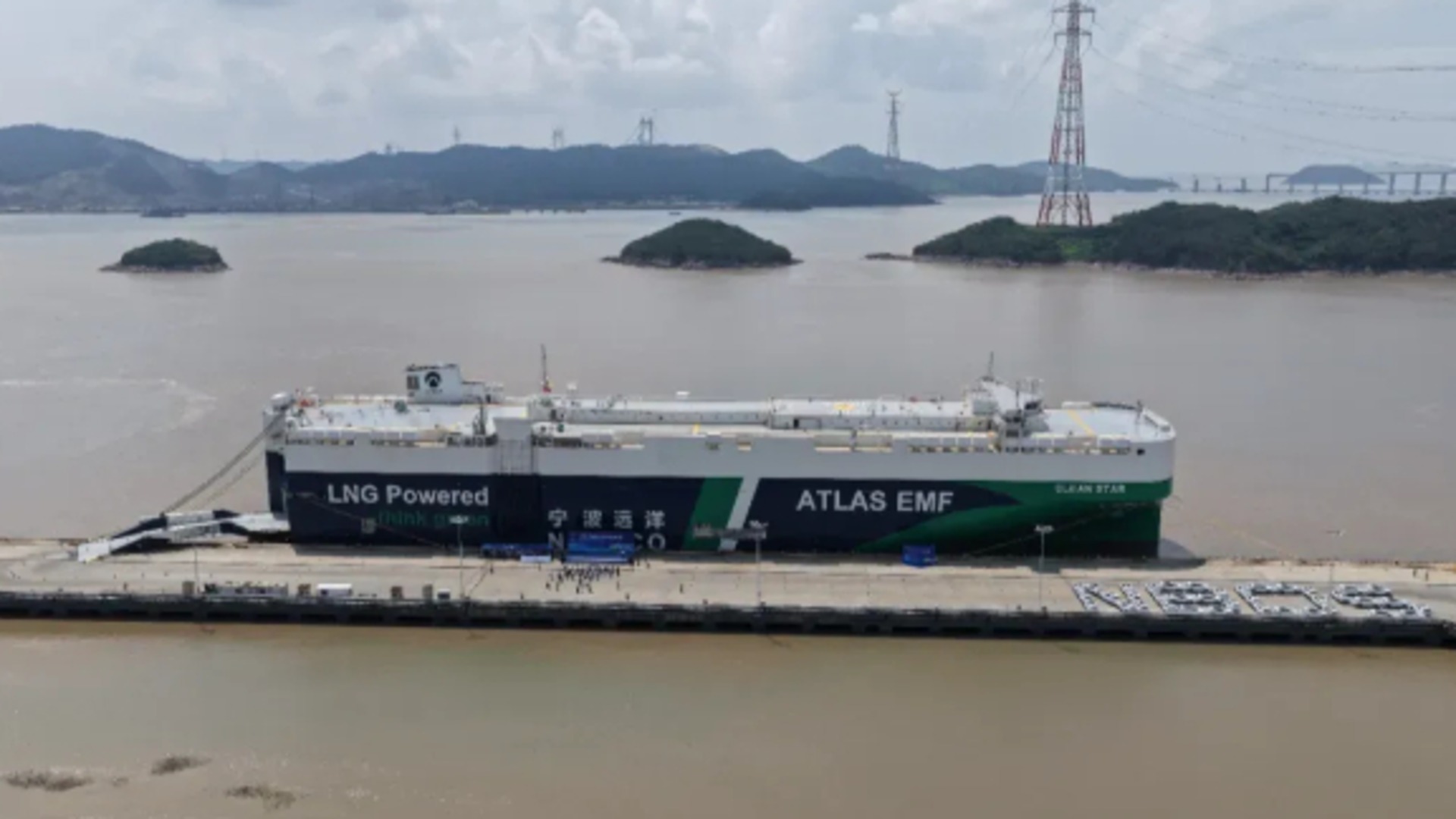

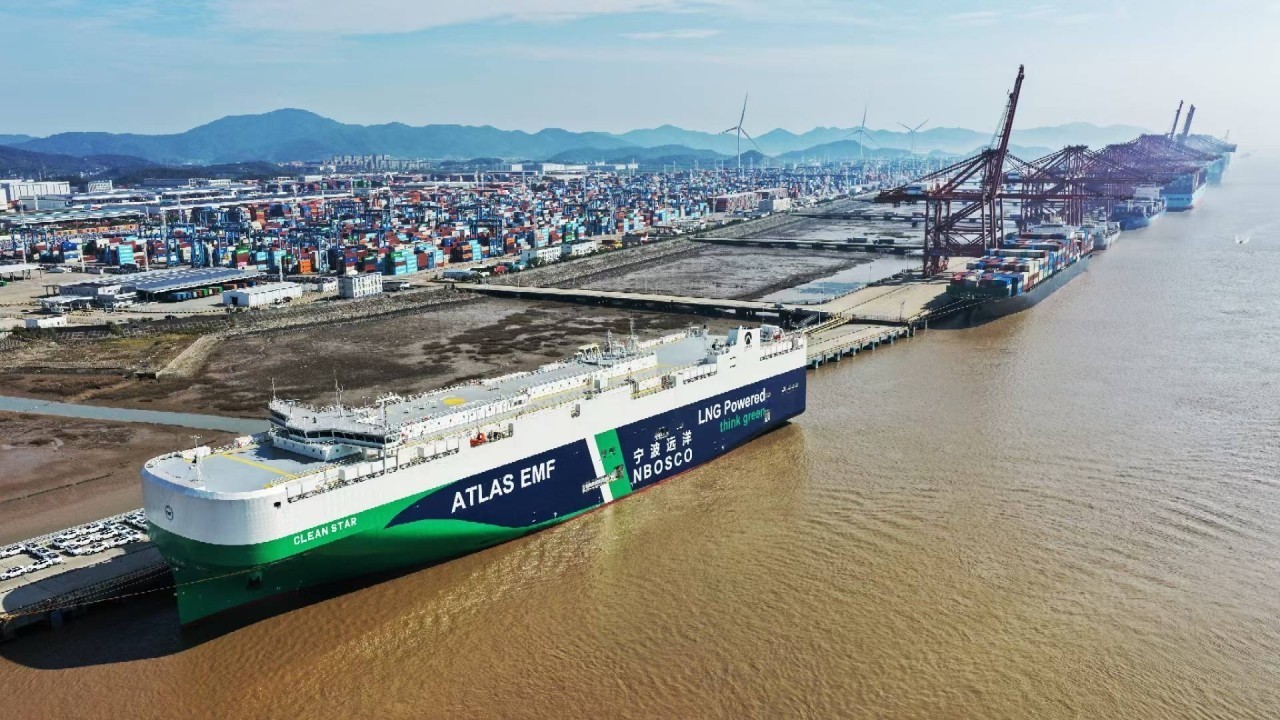
Ningbo Ocean Shipping Co., Ltd. has officially entered the car carrier market, launching its first ro-ro service from Ningbo-Zhoushan Port to Europe with the 7,000-CEU LNG dual-fuel PCTC CLEAN STAR.
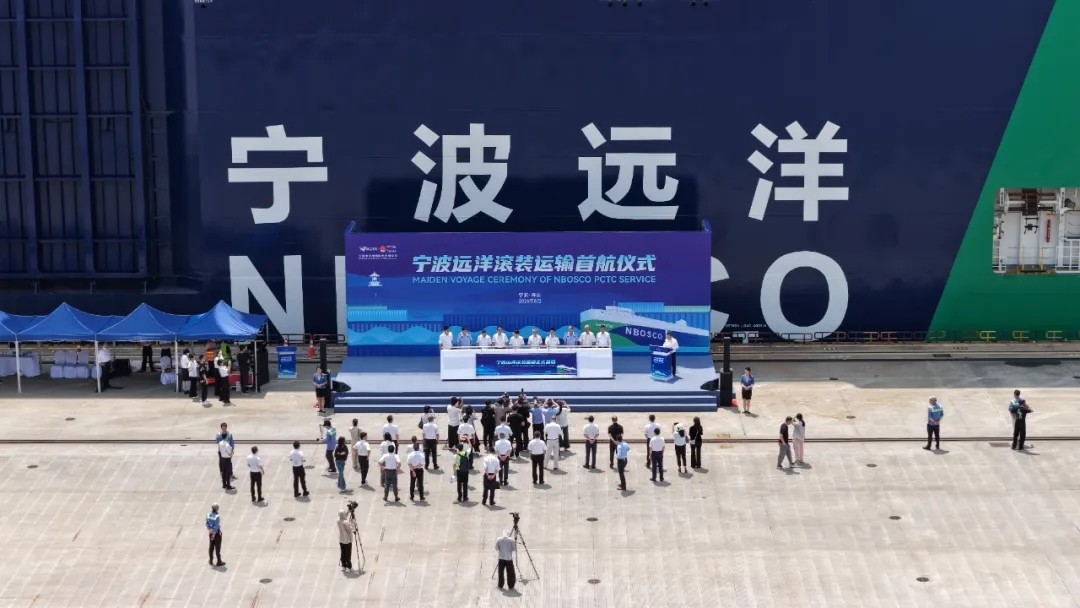
A maiden voyage ceremony was held on 5 August at the Meixi Ro-Ro Terminal in the Meishan port area of Ningbo-Zhoushan Port.
The vessel is scheduled to depart after loading more than 5,400 new energy vehicles. It will call at Gioia Tauro in Italy and Barcelona in Spain, delivering vehicles from eastern China to Mediterranean markets in Europe in approximately 20 days.
The service marks Ningbo Ocean Shipping’s formal entry into the vehicle and ro-ro transportation business. It also extends the company’s operating network to continental Europe for the first time, adding another long-haul market to its existing presence across Northeast Asia, Southeast Asia, South Asia, the Middle East, Africa and the Americas.
Two-year charter secured before delivery
CLEAN STAR is the same high-value newbuilding that Xinde Marine News previously reported had secured a long-term charter from a Chinese operator before its formal delivery.
European Maritime Finance, or EMF, earlier announced that the vessel, jointly financed with Greek shipowner Atlas Maritime, had been chartered for two years to a leading Chinese operator involved in the transportation of cars, trucks and heavy vehicles.
The charter rate is understood to be $80,000 per day, with expected total revenue of approximately $56 million over the contract period.
Xinde Marine News previously learned that the charterer was Ningbo Ocean Shipping. The maiden voyage ceremony at Ningbo-Zhoushan Port now confirms the company’s strategic move into the car carrier sector.
Built by Yantai CIMC Raffles, CLEAN STAR is an LNG dual-fuel PCTC with capacity for approximately 7,000 standard vehicles.
The vessel is nearly 200 metres long and 38 metres wide, with a maximum speed of around 19 knots. It has 12 vehicle decks, including four hoistable decks, allowing it to carry passenger cars, new energy vehicles, trucks, construction machinery and other high-and-heavy cargoes.
CLEAN STAR is powered by LNG and conventional marine fuel, is equipped for shore power and has received an ammonia-ready class notation, leaving open the possibility of a future fuel conversion.
Atlas Maritime and EMF previously disclosed that the first two vessels in the same series were priced at approximately $84.3 million each.
Based on expected charter revenue of $56 million, CLEAN STAR’s first two-year contract alone could generate gross income equal to roughly two-thirds of the vessel’s estimated construction cost.
For the owner and financial investors behind the project, the charter removes the need to seek employment in the spot market immediately after delivery and provides predictable cash flow for debt service, investor returns and future asset decisions.
For Ningbo Ocean Shipping, the $80,000-per-day commitment shows that its entry into the car carrier market is not a trial operation or short-term chartering exercise.
The company is using dedicated deep-sea tonnage and a long-term charter to establish a direct vehicle export corridor between Ningbo-Zhoushan Port and Europe.
Expanding beyond container shipping
Ningbo Ocean Shipping is the largest liner shipping company in Zhejiang province and a key shipping platform within the Ningbo-Zhoushan Port system.
The company currently operates around 120 vessels, with total capacity exceeding 1.9 million dwt and container capacity of more than 100,000 teu.
It ranks among the three largest mainland Chinese liner operators and is placed 23rd in Alphaliner’s global liner company rankings.
The company has steadily expanded its transport network from domestic coastal and short-sea services into cross-ocean and deep-sea markets.
Its container services cover Japan, South Korea, Taiwan, Southeast Asia, South Asia and the Middle East, while its wider operating network has also extended to the Americas.
In the dry bulk and breakbulk sectors, Ningbo Ocean Shipping has launched international services to Southeast Asia and West Africa, with cargo operations extending to markets including Nigeria and Mexico.
The company has also established Ningbo Ocean Shipping (Japan) Co., Ltd. and several Singapore-based investment and vessel-operating entities. Its new 2,700-teu and 4,300-teu container ship projects are being developed through Singapore-based subsidiaries.
The launch of the European car carrier service fills a major gap in its previous business portfolio.
Ningbo Ocean Shipping is now expanding beyond container, bulk and breakbulk transportation into the carriage of passenger vehicles, trucks and heavy ro-ro cargoes, creating a more diversified shipping platform.
Long-haul vehicle exports drive demand
The timing of Ningbo Ocean Shipping’s entry into the PCTC market is closely linked to the continued growth of Chinese vehicle exports.
According to the China Association of Automobile Manufacturers, China exported 5.096 million vehicles during the first half of 2026, an increase of 65.3% year on year.
Exports of new energy vehicles reached 2.355 million units, more than doubling from the same period a year earlier. Monthly vehicle exports exceeded 1 million units for the first time in June.
Chinese vehicle exports are also moving beyond traditional destinations such as Russia, the Middle East and Southeast Asia, with greater volumes heading to Europe, Latin America and Africa.
More vehicles directly increase demand for car carrier capacity, while longer sailing distances create an additional multiplier effect through higher vehicle-mile demand.
A PCTC operating between China and Southeast Asia can complete substantially more voyages each year than a vessel trading to Europe, Africa or South America.
Longer round voyages, Red Sea diversions, geopolitical disruption, port congestion and multiple-port itineraries all reduce the effective supply of available car carrier capacity.
As a result, even though a large number of new PCTCs are entering the fleet, modern vessels available for immediate employment remain highly sought after by vehicle manufacturers and logistics operators.
Veson Nautical data showed that global car carrier fleet capacity grew by approximately 3.3% in the first half of 2026, while vehicle-mile demand increased at almost the same rate, absorbing much of the additional tonnage.
The one-year time-charter index for a 6,500-CEU car carrier had risen by around 45% since the beginning of 2026 to approximately $67,000 per day.
CLEAN STAR’s charter rate of $80,000 per day is around 19% above that benchmark.
Its sister vessel ECO STAR was previously reported to have secured a one-year charter at approximately $53,000 per day. CLEAN STAR’s rate is therefore about 51% higher, while its charter period is twice as long.
In May 2026, the 7,060-CEU LAKE ROTORUA, owned by Eastern Pacific Shipping and built at China Merchants Jinling Shipyard’s Nanjing facility, was also reportedly chartered to SAIC Anji Logistics at $90,000 per day.
Modern large PCTCs are now securing rates of between $80,000 and $90,000 per day, while vessels approaching 20 years of age are still obtaining long-term employment.
The strong market has also reached the secondhand sector, where the 26-year-old CHANG SHENG HONG reportedly attracted several interested buyers and achieved a price far above its official listing floor.
Together, these transactions show that strength in the car carrier market has spread from freight rates into period chartering and asset values.
A new direct vehicle export corridor to Europe
The new service is also significant for Ningbo-Zhoushan Port.
Departing from the Meixi Ro-Ro Terminal, it provides a direct link between the Yangtze River Delta vehicle manufacturing base and the Mediterranean ports of Gioia Tauro and Barcelona.
The route reduces intermediate handling and improves the efficiency of Chinese vehicle exports to southern Europe.
Ningbo Customs, Ningbo Maritime Safety Administration and Ningbo Immigration Inspection authorities introduced a series of coordinated measures to support the maiden voyage.
Customs authorities implemented paperless declarations and automated cargo release procedures. Maritime officials conducted vessel suitability and vehicle-loading assessments through a combination of online pre-examination and on-site verification, while also strengthening emergency planning for potential new energy vehicle fires.
Immigration authorities used advance inspection and batch-clearance procedures to support round-the-clock vehicle export operations at the terminal.
For Ningbo Ocean Shipping, the service represents more than the addition of another cargo segment.
A 7,000-CEU PCTC, more than 5,400 new energy vehicles, a two-year charter worth approximately $56 million and a direct route from Ningbo to the European Mediterranean have brought together the company’s fleet expansion, overseas development and China’s growing vehicle export demand.
From coastal feeder services and Northeast Asian trades to Southeast Asia, the Middle East, Africa, the Americas and now the European car carrier market, Ningbo Ocean Shipping continues to expand the boundaries of its operations.
The maiden voyage of CLEAN STAR marks another important step in the company’s transformation from a regional container liner into a diversified international shipping services provider.

READ MORE
 Car Carriers
Ningbo Ocean Shipping Plans Two More PCTCs to Expand Its Car Carrier Fleet
 Car Carriers
Another Chinese Shipowner Enters PCTC Market — and Another Chinese Yard Moves into 5,000-CEU Construction
 Car Carriers
Up to 26 PCTC! Höegh Autoliners Signs 6 More Aurora Car Carriers with China Merchants
 Car Carriers
China Merchants Takes Delivery of Methanol Dual-Fuel Car Carrier CM WUHAN
 Car Carriers
917 Chinese Vehicles Arrive at Chancay as COSCO SHIPPING Expands Rack-Based Auto Logistics
 Car Carriers
BYD Orders Another 10 x 9,200 CEU-CEU Car Carriers?
 Car Carriers
Up to 14 More PCTCs: Höegh Doubles Down on China as Aurora Programme Could Grow to 26 Ships
 Car Carriers
PCTC Are Running Short: COSCO Moves 13,052 Chery Vehicles to Europe in Containers, Tapping Boxship and Multipurpose Vessel Networks
 Car Carriers