

BYD Orders Another 10 x 9,200 CEU-CEU Car Carriers?

Reports that BYD has ordered another 10 large 9,200-CEU pure car and truck carriers have circulated rapidly across the automotive and shipping markets in recent days. Some overseas media went as far as to state that “BYD orders 10 more vessels,” presenting the project as a confirmed newbuilding programme and attaching specific details including China Merchants Industry as the builder, 9,200 CEU as the vessel size and deliveries between 2027 and 2029.
Xinde Marine News has conducted further checks with industry sources and understands that the situation is more nuanced.
BYD is indeed considering another expansion of its PCTC capacity and has already been in contact with shipyards over potential newbuildings. However, the project remains under discussion and has not yet reached the point where vessel numbers, capacity, shipyard allocation or the final commercial structure have been fixed.
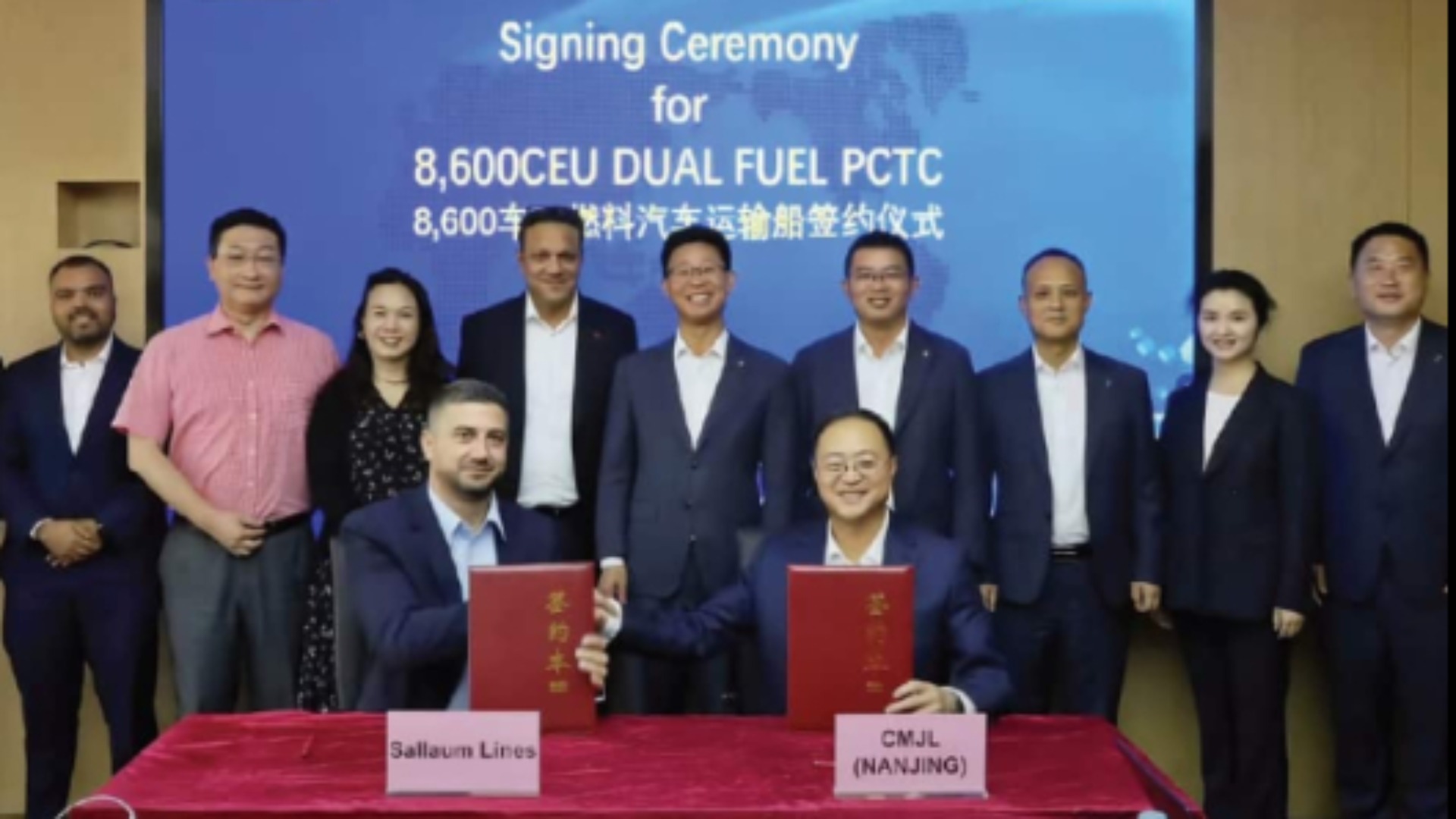
People familiar with the discussions told Xinde Marine News that several vessel configurations are being evaluated, including designs of around 8,600 CEU and 9,200 CEU. The final ship size has not been decided, nor has the number of vessels or the yard that would ultimately secure the order.
Another source familiar with the matter confirmed that BYD does intend to add more PCTC capacity and further expand its automotive shipping fleet, but stressed that the project has not yet reached an announcement stage. The widely circulated claims involving “10 vessels of 9,200 CEU” therefore do not represent a finalised BYD newbuilding order.
In other words, the market appears to have identified the broader direction correctly: BYD is preparing to add more ocean-going vehicle transport capacity. But some of the specific details now being reported have moved ahead of the actual decision-making process.
The “10 x 9,200 CEU” plan has not been finalised
The most eye-catching part of the recent reports is the claim that BYD has committed to 10 vessels of 9,200 CEU each.
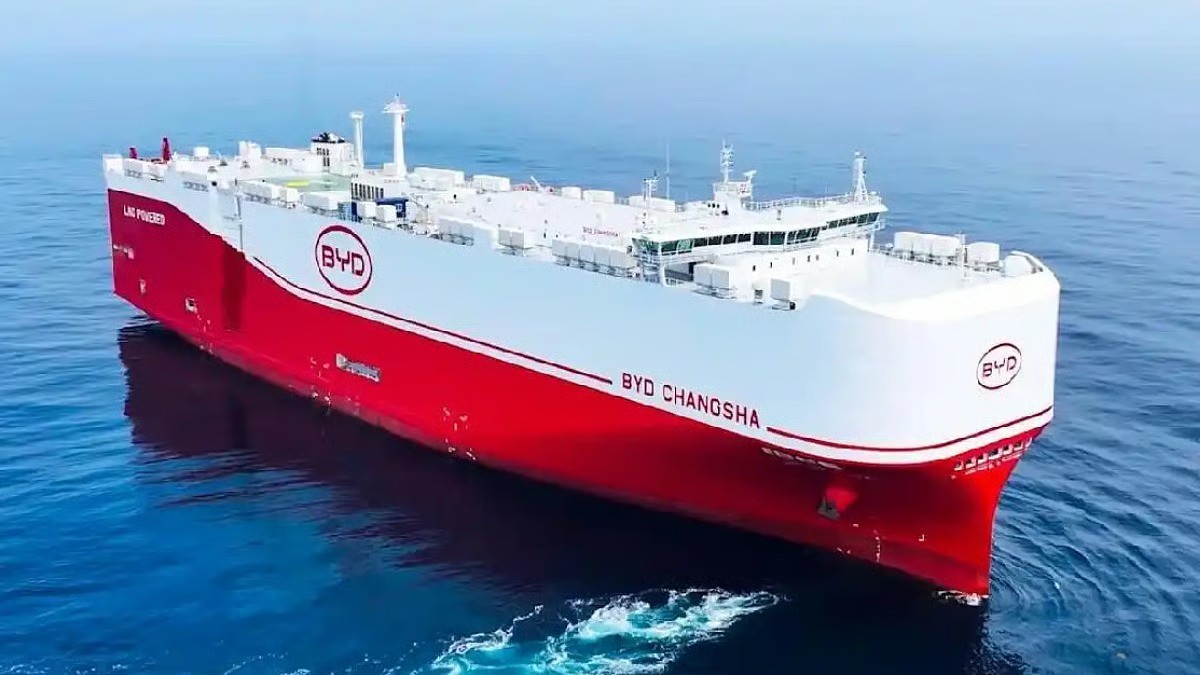
A 9,200-CEU PCTC is among the largest car carrier designs currently operating or under construction globally, and the specification would fit naturally with BYD’s existing fleet development. BYD has already worked with China Merchants Industry on 9,200-CEU LNG dual-fuel PCTCs, including large vessels such as BYD SHENZHEN and BYD XI'AN.
That existing relationship explains why a reported follow-on order of another 10 ships initially appeared plausible. The vessel size is familiar, the yard relationship already exists, and BYD’s rapidly expanding overseas automotive business provides an obvious commercial rationale for additional shipping capacity.
But a plausible project is not the same thing as a signed contract.
Xinde Marine News understands that BYD is still comparing different technical and commercial options. The 9,200-CEU design is one of those options, while an approximately 8,600-CEU configuration is also under consideration. The final fleet size has not been confirmed, and there is currently insufficient basis to conclude that the programme will ultimately consist of exactly 10 vessels.
The more accurate description at this stage is therefore that BYD is studying and advancing another round of PCTC fleet expansion, rather than that it has already ordered 10 9,200-CEU vessels.
This distinction matters in the newbuilding market. Large cargo owners and shipowners commonly approach several yards at the same time, compare different vessel capacities, propulsion systems, delivery positions and financing structures, and revise the number of vessels before contracts are signed. For a programme potentially involving several or even more than 10 large PCTCs, yard availability, vessel price, delivery slots and BYD’s future export volumes could all affect the final decision.
The 10 PCTCs at GSI are a separate order
The uncertainty has been compounded by another large 10-vessel PCTC deal that emerged at almost the same time.
Earlier this month, Guangzhou Shipyard International, together with CSTC, signed contracts for 10 LNG dual-fuel PCTCs of 8,200 CEU each. The total value of the contracts exceeds $1 billion, with deliveries expected between 2029 and 2031.
Those vessels are not direct BYD newbuildings. The shipowner behind the order is Israel’s Ray Car Carriers.
Because Ray Car Carriers has long operated a business model based on owning PCTCs and chartering them to major automotive and logistics customers, speculation subsequently emerged that the vessels could eventually be linked to BYD through long-term charter arrangements.
So far, however, there is no sufficient evidence to establish BYD as the ultimate charterer of the 10 GSI-built 8,200-CEU vessels.
Even if some or all of those ships were eventually chartered to BYD, that would still be fundamentally different from BYD directly ordering the vessels itself. In the former case, a specialist shipowner would invest in and own the ships while BYD secured long-term transportation capacity. In the latter, BYD itself would stand behind the newbuilding investment.
The GSI order for 10 8,200-CEU vessels should therefore be treated separately from the more recent market reports concerning 10 9,200-CEU vessels allegedly linked directly to BYD.
BYD does appear determined to expand its shipping capacity
While the details of the “10 x 9,200 CEU” story remain unconfirmed, the broader strategic direction is becoming increasingly clear.
BYD currently has eight roll-on/roll-off vessels in operation. As its overseas vehicle sales continue to expand, ocean transportation is becoming an increasingly important component of the group’s global supply-chain infrastructure.
Automotive shipping is structurally different from container transport. PCTCs are highly specialised assets with limited substitutes, while vessel availability, charter rates and route coverage can all change sharply through the cycle. Once an automaker’s overseas sales reach several hundred thousand units, or potentially more than one million vehicles annually, relying heavily on spot-market shipping capacity can make it difficult to control transport costs, sailing schedules and delivery times.
BYD has therefore gradually developed a dedicated vehicle shipping system serving its own exports. That capacity has come through a combination of directly associated newbuilding projects and vessels owned by specialist shipowners and employed for BYD under longer-term arrangements.
Such a structure allows BYD to secure greater control over ocean logistics without necessarily having to own every ship on its balance sheet.
The company’s next fleet expansion may also be more diversified than simply repeating the existing 9,200-CEU design. Europe, Latin America, the Middle East and Southeast Asia have different route lengths, port restrictions, cargo mixes and trade patterns. Evaluating both 8,600-CEU and 9,200-CEU designs would therefore be consistent with a broader effort to optimise vessel size against individual trade requirements.
How large does BYD’s fleet need to become?
That may ultimately be a more important question than whether the next order consists of exactly 10 ships.
Ten 9,200-CEU vessels would add 92,000 CEU of static carrying capacity in one move, effectively creating another sizeable car-carrier fleet on top of BYD’s existing shipping capacity. Even if the eventual order is smaller, the addition of several large PCTCs would still have implications for the global vehicle-carrier market.
Greater control of dedicated shipping capacity would reduce BYD’s dependence on traditional PCTC owners for spot and shorter-term tonnage. At the same time, if BYD continues to combine owned or directly controlled vessels with long-term chartered tonnage, its expansion could also generate further newbuilding demand from specialist owners such as Ray Car Carriers, Zodiac Maritime and others willing to invest against long-term automotive cargo commitments.
For Chinese shipyards, this also points to a structural shift in the source of PCTC demand. Large car-carrier newbuildings have traditionally been ordered by specialist shipping companies. As Chinese automakers expand internationally, vehicle manufacturers themselves are becoming more deeply involved in vessel design, charter structures and, in some cases, direct newbuilding investment.
BYD has already demonstrated that an automaker can treat ocean shipping capacity as part of its global supply-chain architecture rather than simply as a third-party transport service. If its next phase of fleet expansion proceeds, whether through 8,600-CEU ships, 9,200-CEU ships or a combination of different designs, it would further reinforce that trend.
For now, the most accurate conclusion on the widely circulated report is straightforward:
Ten vessels: not yet confirmed. 9,200 CEU: not yet confirmed. Shipyard: not yet confirmed.
But one point is becoming increasingly clear: BYD intends to keep expanding its automotive shipping capacity.
The next question is not whether BYD needs more ships, but how many, what size they will be, and whether the next tranche of capacity will be secured through direct newbuilding investment, long-term charters with specialist owners, or a combination of both.


READ MORE
 Car Carriers
Another Chinese Shipowner Enters PCTC Market — and Another Chinese Yard Moves into 5,000-CEU Construction
 Car Carriers
Up to 26 PCTC! Höegh Autoliners Signs 6 More Aurora Car Carriers with China Merchants
 Car Carriers
917 Chinese Vehicles Arrive at Chancay as COSCO SHIPPING Expands Rack-Based Auto Logistics
 Car Carriers
Ningbo Ocean Shipping Plans Two More PCTCs to Expand Its Car Carrier Fleet
 Car Carriers
Up to 14 More PCTCs: Höegh Doubles Down on China as Aurora Programme Could Grow to 26 Ships
 Car Carriers