


Another Veteran Greek Owner Turns to China with Two LR1 Tanker Orders
All eight tankers in Andriaki Shipping’s current fleet were built in South Korea. Its reported order at New Times Shipbuilding would mark the company’s first tanker newbuildings in China.
A Greek shipping company with more than seven decades of history, a current tanker fleet built entirely in South Korea, and no known newbuilding orders for nearly ten years is preparing to entrust its next generation of product tankers to a Chinese shipyard.
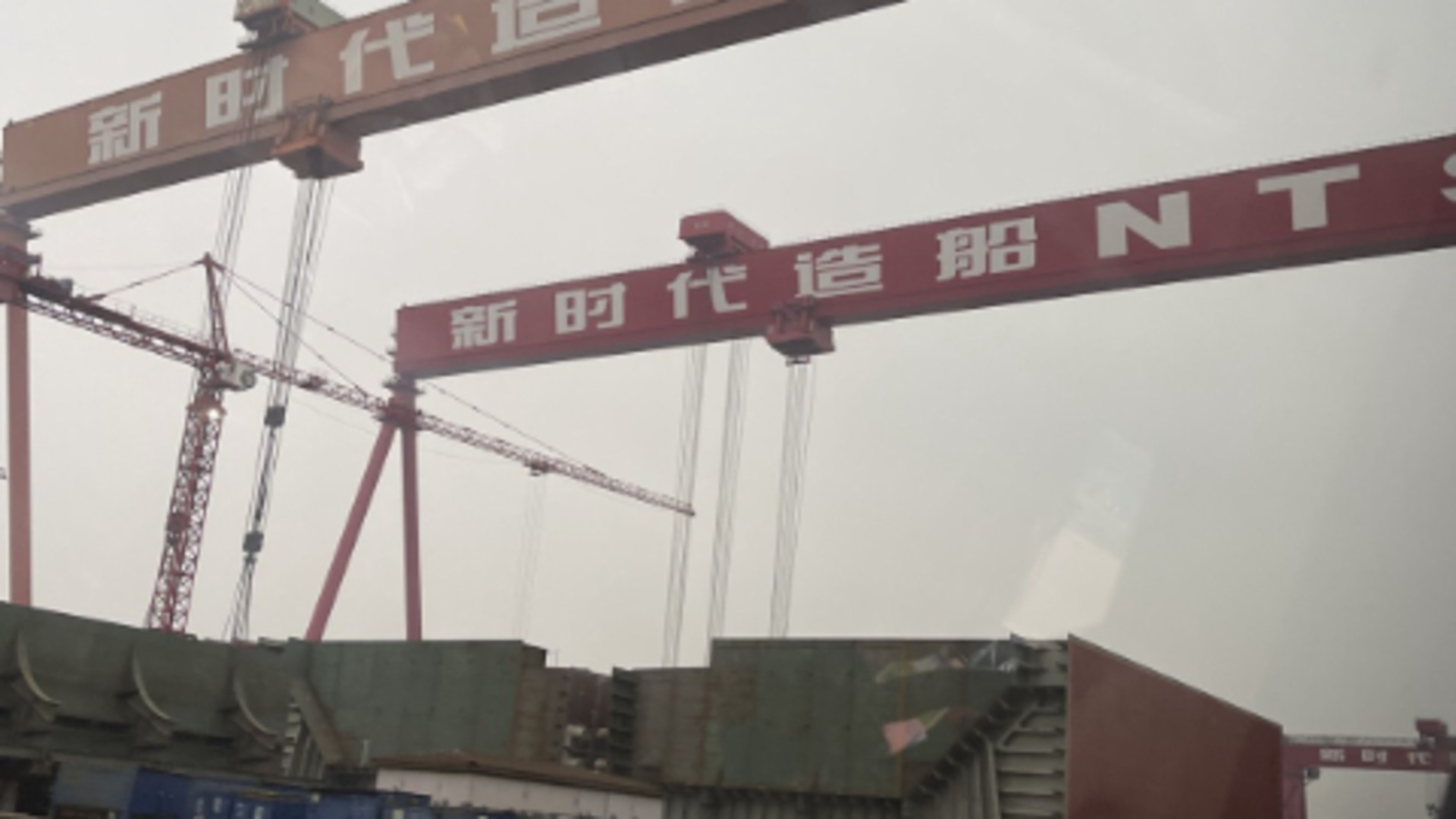
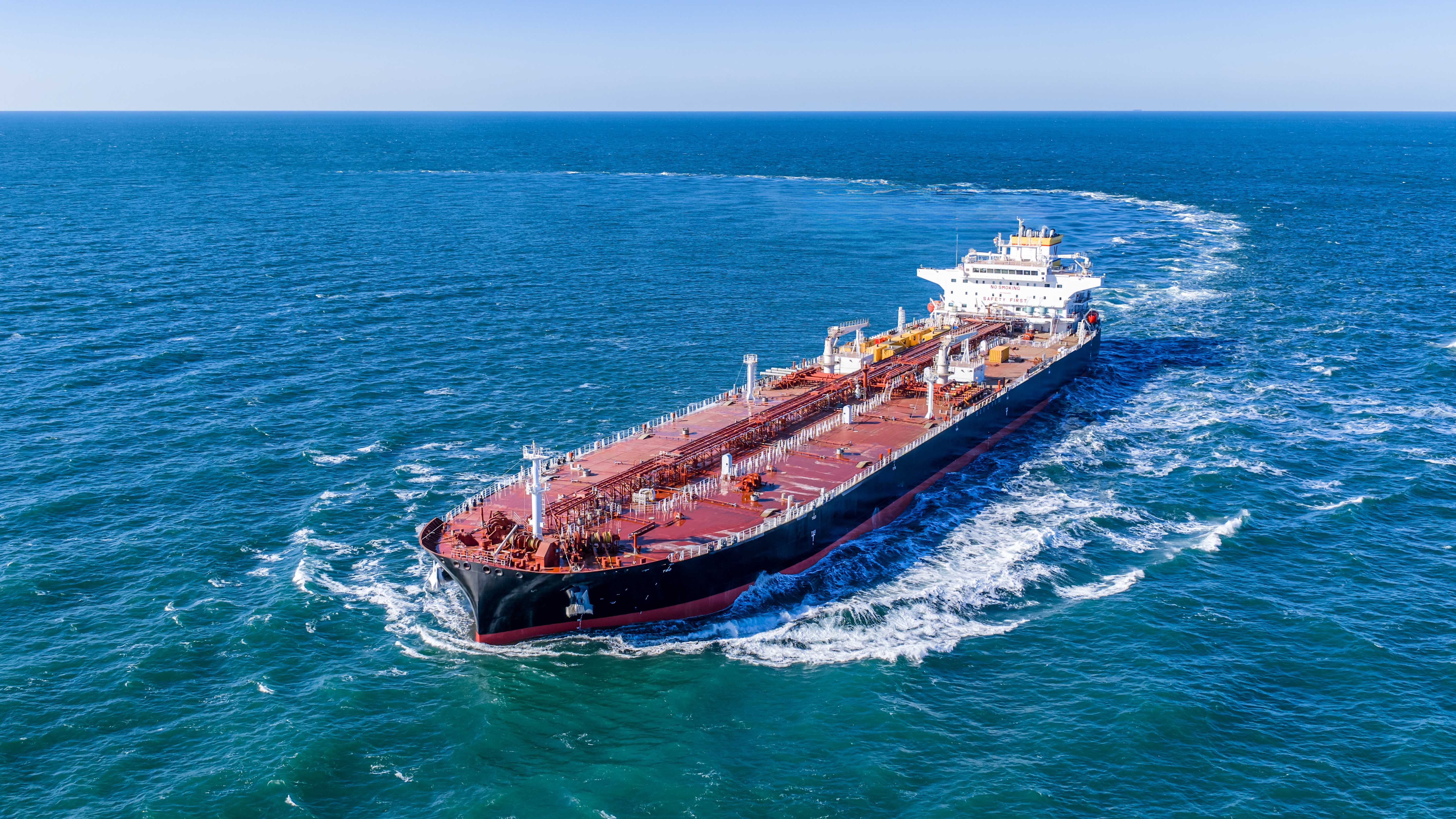
Athens-based Andriaki Shipping has reportedly placed an order for two 73,500-dwt LR1 product tankers at Jiangsu New Times Shipbuilding.
The vessels are expected to be equipped with exhaust gas scrubbers and are scheduled for delivery in 2030.
Pricing reported by shipbroking sources varies slightly. TradeWinds put the cost at around $54.8 million per vessel, while other market reports cited approximately $55.1 million each.
The difference is relatively small. On that basis, the two-ship contract is estimated to be worth about $110 million in total.
Neither Andriaki Shipping nor New Times Shipbuilding has formally announced the deal. Nevertheless, multiple shipping market sources have described the vessels as firm orders, suggesting that the project has moved beyond preliminary discussions and is now awaiting public confirmation.
First Newbuilding Order in Nearly a Decade
The transaction would mark Andriaki Shipping’s return to the newbuilding market after an absence of roughly ten years.
The company’s previous publicly reported newbuilding programme dates back to 2015, when it ordered two 74,000-dwt LR1 crude and product tankers at South Korea’s STX Offshore & Shipbuilding, together with options for two additional vessels.
The original price was reported at about $46 million per ship.
The programme eventually produced four sister vessels: Nicopolis, Persepolis, Neapolis and Antipolis.
They were delivered from the Jinhae shipyard in South Korea between 2017 and 2018 and continue to form an important part of Andriaki’s tanker fleet.
Measured from the signing of that contract, Andriaki has stayed out of the newbuilding market for about a decade. Measured from the delivery of its last new tanker, the company has gone more than eight years without taking delivery of a newly built vessel.
This cautious approach stands in contrast to the rapid and continuous fleet expansion pursued by several other Greek shipowners in recent years.
Andriaki has historically favoured controlled fleet growth, high operating standards and disciplined risk management. Its return to the market therefore deserves attention, especially because of its choice of shipyard.
First Tanker Order in China, Though Not Its First Chinese-Built Ships
The reported contract should not be described as Andriaki’s first-ever newbuilding project in China.
Public historical records show that the wider N.J. Goulandris shipping group previously ordered bulk carriers from a Chinese yard.
The 82,100-dwt bulkers Andros and Pella were delivered in 2010 from Tsuneishi’s shipbuilding facility in China.
However, based on the publicly available fleet and newbuilding history, the two LR1s at New Times Shipbuilding would be Andriaki Shipping’s first tanker newbuildings placed with a Chinese shipyard.
That distinction is important.
Andriaki had already accepted Chinese construction for dry bulk tonnage more than a decade ago. This time, it is reportedly assigning a tanker project—requiring stringent standards in cargo systems, safety management, coating quality and operational reliability—to a Chinese builder.
For a long-established Greek owner that has relied heavily on Japanese and South Korean shipbuilding, the shift carries significance well beyond the size of the order.
An Entirely South Korean-Built Tanker Fleet
Founded in 1953, Andriaki has managed more than 100 vessels of different types and sizes during its history.
Following changes in the wider group’s business structure, Andriaki now focuses on tanker management, while dry bulk vessels are managed separately by Hydroussa Navigation.
According to Andriaki’s website, its current fleet consists of eight Greek-flagged tankers, all built in South Korea.
Four are approximately 164,700-dwt suezmax tankers.
Violando was delivered by Hyundai Samho Heavy Industries in 2009, followed by Nicolaos in 2010. Ephesos and Militos were delivered in 2012.
The other four vessels are the 74,000-dwt LR1 crude and product tankers delivered by STX Offshore & Shipbuilding between 2017 and 2018.
Andriaki’s entire active tanker fleet therefore carries the “built in South Korea” label.
TradeWinds also noted that the reported New Times order would break with the owner’s decades-long preference for Japanese and South Korean shipyards.
For New Times Shipbuilding, this is therefore more than a routine two-vessel LR1 contract.
It would bring the Chinese yard into the core supplier network of a traditional Greek tanker owner and position it to participate in the renewal of a fleet historically built in South Korea.
Why New Times Shipbuilding?
The 73,500-dwt LR1 is already a proven tanker design at New Times Shipbuilding.
In June 2026, the yard delivered the 73,500-dwt crude and product tanker Modi to Greek owner Dynacom.
The vessel was built to New Times’ proprietary design and was developed to carry both crude oil and refined petroleum products, with an emphasis on cargo capacity, operational flexibility and environmental performance.
Beyond LR1 tankers, New Times Shipbuilding has continued to secure and deliver suezmax tankers, LR2s and LNG dual-fuel tankers.
The yard has also established relationships with several Greek owners, including Dynacom and Capital.
For a conservative owner such as Andriaki, an established operating record for the same vessel type can be more persuasive than an untested technical concept.
New Times has already delivered tankers of a similar size to other Greek clients. Andriaki can therefore assess real-world fuel consumption, speed performance, cargo capacity, equipment reliability and after-sales support before making its investment decision.
Operational references are highly influential within the Greek shipowning community.
A successful delivery and operating record for one owner often becomes an important reference for another. The repeat business secured by New Times from Dynacom and other Greek companies has likely reduced the perceived risk associated with Andriaki’s move to a Chinese yard.
Scrubbers Reflect a Conservative Technical Strategy
The available reports indicate that the two LR1s will be fitted with exhaust gas cleaning systems.
There has been no mention of LNG, methanol or ammonia dual-fuel propulsion.
The reported specification therefore points to a mature and commercially proven technical strategy, with a focus on fuel flexibility and operating certainty.
Scrubber-equipped vessels can continue to burn high-sulphur fuel oil while meeting sulphur-emission requirements, allowing owners to take advantage of the price spread between high- and low-sulphur fuels.
For LR1 tankers trading across a wide range of routes and bunkering locations, that flexibility can provide additional control over voyage costs.
The choice also appears consistent with Andriaki’s broader operating philosophy.
The company has generally favoured proven technology, efficient ship designs and disciplined cost management, while taking a cautious approach to alternative-fuel systems that still face uncertainty over availability, infrastructure and future residual value.
The 2030 delivery date is equally significant.
It reflects the extent to which delivery slots at leading Chinese shipyards have already been pushed into the later part of the decade. It also indicates that Andriaki is planning its fleet renewal well in advance.
By 2030, its four suezmax tankers will be between 18 and 21 years old, while its current LR1s will be approximately 12 to 13 years old.
The arrival of the new vessels would give the owner greater flexibility to sell older ships, adjust its fleet composition and maintain its commercial coverage.
What the Order Says About China’s Tanker-Building Market
Two LR1 tankers do not constitute a major order by current market standards.
The identity of the customer, however, makes the project noteworthy.
China’s recent gains in tanker construction initially came from owners seeking competitive pricing, available delivery slots and rapid fleet expansion.
As more Chinese-built LR1s, LR2s, suezmaxes and VLCCs have entered service, the market has accumulated a broader base of operating experience.
The profile of the customers choosing Chinese yards is now beginning to change.
A growing number of traditional shipowners with long-standing relationships in Japan and South Korea, strict internal technical standards and relatively infrequent ordering patterns are adding Chinese shipbuilders to their core supplier lists.
For these companies, price is only one part of the decision.
Design maturity, series-ship references, equipment selection, construction quality, delivery performance and long-term maintenance costs all carry considerable weight.
Andriaki’s reported choice suggests that Chinese shipyards’ competitiveness in the tanker sector is moving beyond attractive pricing and available berths.
It increasingly reflects their ability to win the technical confidence of conservative European owners.
Such customer breakthroughs can create a wider demonstration effect.
Greece remains one of the world’s most important centres of tanker ownership. While individual companies operate independently, information on shipyard performance, fuel consumption, equipment quality, warranty claims and delivery experience circulates rapidly within the Greek shipping community.
Winning one demanding, long-established owner can therefore help a shipyard attract others with similar fleet strategies.
For Andriaki, the two ships represent a carefully timed return to newbuilding investment.
For New Times Shipbuilding, they would represent access to a Greek tanker owner whose entire current fleet was built in South Korea.
For China’s shipbuilding industry, the deeper significance lies in the customer transition now taking place.
Chinese yards are no longer being judged only on whether they can build a competitive tanker.
They are increasingly being judged on whether owners that have trusted Japanese and South Korean builders for decades are prepared to place their next generation of core assets in China.

READ MORE
 Shipbuilding
8 more!Wan Hai Steps Up Fleet Expansion with 50-Vessel Newbuilding Programme
 Shipbuilding
“The Whole World Is Asking for Chinese Cars”: Why PCTC Capacity Is Still Tight Despite Record Deliveries
 Shipbuilding
Up to $489 Million, 17 Yards in the Running: Why Norway’s High-End Wellboats Are Heading to China
 Shipbuilding
Chinese Shipyard Starts Work on First Wärtsilä 25 Ammonia Newbuild: Not Just “Ready”—It Will Run on Ammonia from Day One
 Shipbuilding
Can a Ship Be Sold in Pieces? A $1,000 Ticket to Becoming a Digital “Shipowner”
 Shipbuilding
Hanwha Makes $1.2 Billion Bid for Austal USA in Major U.S. Naval Shipbuilding Push
 Shipbuilding
Why Uni-Asia Still Chose Japan for Its Return to Newbuilding
 Shipbuilding
Dynacom Orders Four More VLCCs at Hengli
 Shipbuilding
Just Sold Four, Now Ordering Six More: Ren Yuanlin’s Capital Recycling Model Gathers Pace
 Shipbuilding