


37 PCTCs Ordered in 2026 as Newbuilding Activity Rebounds
37 Car Carriers Ordered in 2026 as Newbuilding Activity Rebounds
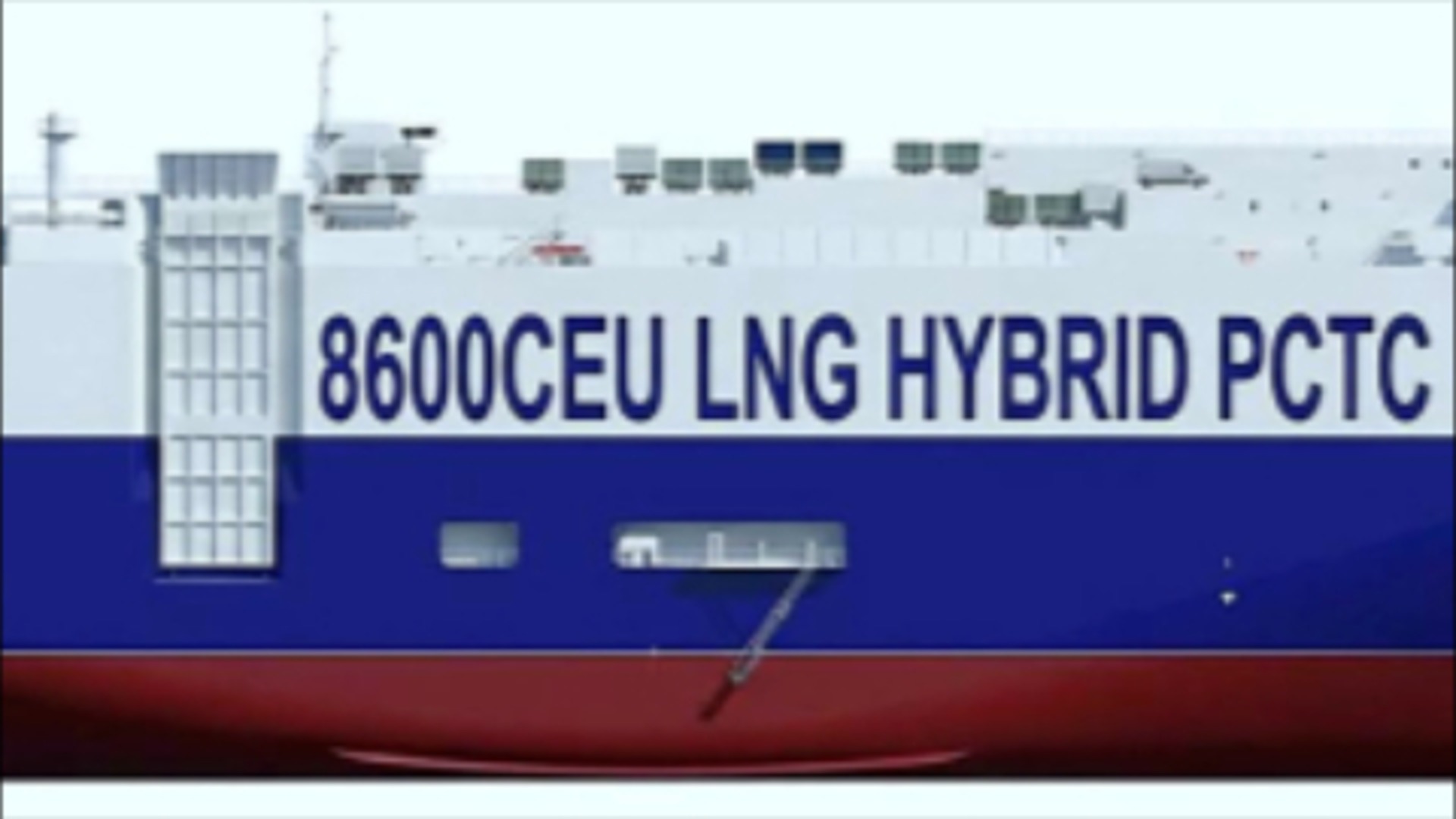
Newcomer Zhongnan Shipping and Idan Ofer’s Eastern Pacific Shipping have added 10 vessels to a renewed ordering wave, with Chinese shipyards securing 35 of the 37 car carriers contracted so far this year
The car-carrier newbuilding market is showing clear signs of recovery after contracting activity almost came to a standstill in 2025.
A Xinde Marine News review of Clarksons contract-date data shows that 37 pure car carriers and pure car and truck carriers had been ordered globally in 2026 as of July 16.
That compares with only nine vessels recorded for the whole of 2025. Clarksons data show that 83 car carriers were contracted in 2023 and another 73 in 2024, before owners sharply reduced newbuilding commitments as concerns grew over the heavy delivery pipeline.
The 37 ships ordered so far this year do not signal an immediate return to the extraordinary ordering boom seen between 2021 and 2024. However, they confirm that the market has moved beyond the near-pause of last year.
The latest additions include four 5,700-ceu car carriers ordered by newly established Zhongnan Shipping and six reported 7,050-ceu LNG dual-fuel PCTCs linked to Eastern Pacific Shipping.
Together, those two owners account for 10 vessels, more than one-quarter of the car carriers contracted in 2026.
Zhongnan Shipping makes its debut with four car carriers
The most recent order comes from Hong Kong-registered Zhongnan Shipping Co., Limited, which has contracted Jiangsu Runyang Shipbuilding to build four 5,700-ceu car carriers.
Two vessels are scheduled for delivery in 2028 and the remaining pair in 2029.
The car-carrier order forms part of a larger eight-vessel contract that also includes four 115,000-dwt LR2 product tankers. The tanker vessels will follow the same delivery pattern, with two due in 2028 and two in 2029.
The transaction as Zhongnan’s debut ship order and said Clarksons currently lists the eight vessels as the company’s entire owned fleet. The company was incorporated in Hong Kong in 2022 as a privately held business.
No contract prices have been disclosed.
Based on current market estimates cited by TradeWinds, a Chinese-built 5,700-ceu car carrier could cost between $80m and $90m. The four-car-carrier component could therefore be worth approximately $320m to $360m.
With Chinese-built LR2 tankers estimated at between $68m and $71m each, Zhongnan’s complete eight-vessel programme may have a value of around $600m or more.
The scale of the transaction is unusual for a company that previously had no owned ships recorded by Clarksons.
Zhongnan is not entirely new to vehicle logistics. The company has previously participated in organising Chinese vehicle exports to the Middle East, including a shipment of Chery vehicles from Fuzhou to Saudi Arabia.
Its move into owned car-carrier capacity therefore has a recognisable commercial foundation. The four LR2 tankers represent a less familiar business direction, with no financing structure, charter coverage or long-term cargo arrangements disclosed so far.
The order suggests that Zhongnan is developing into a broader shipping investment platform rather than remaining solely a vehicle-export logistics operator.
EPS reportedly adds six LNG dual-fuel PCTCs
Eastern Pacific Shipping is also reported to have quietly expanded its already substantial car-carrier orderbook.
The Idan Ofer-controlled company had ordered six 7,050-ceu PCTCs since the beginning of 2026, alongside seven 6,000-teu containerships. The 13 vessels were said to be worth approximately $1.2bn in total.
Clarksons data reviewed by Xinde Marine News indicate that three of the PCTCs have been assigned to China Merchants Jinling Shipyard in Nanjing, while three will be built at China Merchants Industry’s Weihai facility.
The six ships are scheduled for delivery during 2029.
The vessels are recorded as LNG-capable and fitted with battery-hybrid propulsion arrangements. The reported series consists of three ships from each yard, giving EPS a balanced construction programme across the two China Merchants Industry facilities.
EPS has not publicly announced the new contracts, meaning the orders should still be described as market-reported rather than formally confirmed by the owner.
Nevertheless, the contracts are consistent with the company’s long-standing strategy of building alternative-fuel vessels in China and securing charter employment before delivery.
EPS already has extensive experience with large LNG dual-fuel car carriers. Its earlier programmes included PCTCs built at China Merchants Jinling, Fujian Mawei Shipbuilding and Xiamen Shipbuilding Industry, with some ships chartered to major automotive logistics and liner groups.
The latest six vessels would further strengthen EPS’s position as one of the largest independent providers of modern PCTC tonnage.
MSC-controlled GCC accounts for the largest share
The biggest single buyer in the 2026 order data is Global Car Carriers, the former Gram Car Carriers platform now controlled by MSC.
Clarksons records 12 vessels for GCC this year, including eight ships of 8,600 ceu and four vessels of 7,000 ceu.
The ships are distributed among China Merchants Jinling Shipyard in Nanjing, China Merchants Industry’s Weihai facility and Guangzhou Shipyard International.
The 8,600-ceu vessels are recorded with LNG dual-fuel capability, battery-hybrid propulsion and ammonia-ready arrangements. The 7,000-ceu ships are also LNG-capable and ammonia-ready.
MSC acquired Oslo-listed Gram Car Carriers through its wholly owned subsidiary SAS Shipping Agencies Services in 2024. The company was subsequently renamed Global Car Carriers while retaining the GCC abbreviation.
GCC remains primarily a specialist shipowner and tonnage provider rather than a global vehicle-shipping operator. Its ships are generally placed with established car-carrier companies under charter arrangements, giving MSC exposure to the sector without immediately establishing a competing global PCTC network under its own brand.
The 12-vessel programme gives GCC the largest share of the 37 car carriers recorded as ordered in 2026.
Established operators are also returning to the market
Other orders recorded this year show that the recovery is not being driven by one type of buyer.
“K” Line European Sea Highway Services, or KESS, has ordered four 1,380-ceu LNG dual-fuel vessels from China Merchants Jinling Shipyard in Nanjing.
The smaller ships are designed for European short-sea services rather than deep-sea vehicle trades. Their specifications include Ice Class 1A and strengthened ramp capacity, reflecting the operating requirements of regional European automotive logistics.
United European Car Carriers has ordered two 3,000-ceu multi-fuel battery-hybrid vessels from the same yard for delivery in early 2028.
Zodiac Maritime has returned to CIMC Raffles in Yantai for another two 7,000-ceu LNG dual-fuel PCTCs, extending a substantial series of car carriers built by the Chinese yard for Eyal Ofer’s company.
Sallaum Lines has ordered two firm 8,600-ceu dual-fuel, ammonia-ready PCTCs from Xiamen Shipbuilding Industry, with options for two additional vessels.
The ships will be the largest ever commissioned by Sallaum Lines. They will feature five liftable decks and are designed to carry passenger cars, commercial vehicles, heavy rolling equipment and project cargo.
Clarksons also records two 5,700-ceu LNG-capable ships for Hainan Yanggang Hechuang Shipping at Yangzhou Guoyu Shipbuilding and one 7,000-ceu vessel for SFL Corporation at CIMC Raffles.
Two 7,300-ceu PCTCs ordered from HD Hyundai are the only vessels among the 37 assigned to a shipyard outside China. The undisclosed European buyer has been widely linked to Ray Car Carriers. HD Hyundai disclosed a contract value of approximately $269m for the pair, which are due for delivery by the end of the first quarter of 2029.
China takes 35 of the 37 orders
Chinese shipyards have secured 35 of the 37 car carriers ordered so far in 2026, equivalent to almost 95% of the recorded vessel total.
China Merchants Industry has obtained the largest share through its Jinling Nanjing and Weihai facilities, with orders connected to GCC, EPS, KESS and UECC.
CIMC Raffles has secured orders from Zodiac Maritime and SFL, while Jiangsu Runyang has entered the car-carrier segment through Zhongnan Shipping’s four-vessel project.
Xiamen Shipbuilding Industry, Yangzhou Guoyu and Guangzhou Shipyard International have also added vessels to their orderbooks.
China’s dominance is not confined to orders placed this year. AXSRoRo data previously reviewed by Xinde Marine News indicate that 219 of the 276 PCTCs delivered or scheduled for delivery between 2023 and 2028 are being built at Chinese yards, representing almost 80% of the global total.
The concentration reflects China’s established experience in series construction, competitive pricing, available delivery positions and growing capability in LNG dual-fuel, battery-hybrid and future-fuel-ready PCTCs.
It also reflects the relationship between Chinese shipbuilding and the country’s expanding vehicle-export supply chain. Owners serving Chinese automakers increasingly require ships designed around new-energy vehicle safety, High & Heavy cargo, flexible deck arrangements and lower-emission propulsion.
A recovery, not another unrestricted boom
The return of contracting activity comes despite a substantial volume of new capacity entering the fleet.
Global PCTC deliveries increased from 12 vessels in 2023 to 46 in 2024 and a record 75 in 2025. A total of 133 ships, representing close to 1m ceu of capacity, entered service over those three years.
A further 67 PCTCs are scheduled for delivery in 2026, followed by 50 in 2027 and 26 in 2028. Scrapping has remained minimal, increasing the risk that fleet growth could outpace cargo demand.
This supply outlook explains why the 2026 orders should not be interpreted as the start of another indiscriminate shipbuilding boom.
The current projects appear more selective than those placed at the peak of the previous cycle.
KESS and UECC are investing in ships tailored to established European short-sea networks. Sallaum Lines is adding capacity around its existing global automotive services. GCC and EPS are building vessels that can be chartered to major operators. Zhongnan’s car carriers are linked to its earlier involvement in Chinese vehicle-export logistics.
Several contracts are also believed to have charter arrangements or defined employment behind them.
Technical requirements have become more demanding. LNG dual-fuel systems, battery-hybrid propulsion, shore-power connections, ammonia-ready notation and flexible decks now feature across much of the 2026 orderbook.
Owners are therefore investing in fleet quality, fuel flexibility and customer-specific capability rather than simply adding the maximum possible number of car spaces.
The market has started ordering again
The progression from 83 orders in 2023 and 73 in 2024 to just nine in 2025 showed how abruptly the PCTC investment cycle slowed.
The recovery to 37 vessels by mid-July 2026 indicates that the pause has ended.
The arrival of Zhongnan Shipping brings a new owner into the market with four car carriers, while EPS’s reported six-vessel programme demonstrates that established asset players remain willing to expand where chartering and employment opportunities can support the investment.
The supply risk remains significant, and the sector still has to absorb a historically large delivery pipeline.
Yet the latest contracts show that demand has not disappeared. The PCTC newbuilding market is returning on more disciplined terms, led by owners with defined cargo strategies, charter coverage, regional service requirements or direct exposure to the continuing expansion of global vehicle exports.
For Chinese shipyards, the message is even clearer: the next phase of car-carrier investment remains overwhelmingly centred in China.

READ MORE
 Shipbuilding
8 more!Wan Hai Steps Up Fleet Expansion with 50-Vessel Newbuilding Programme
 Shipbuilding
“The Whole World Is Asking for Chinese Cars”: Why PCTC Capacity Is Still Tight Despite Record Deliveries
 Shipbuilding
Up to $489 Million, 17 Yards in the Running: Why Norway’s High-End Wellboats Are Heading to China
 Shipbuilding
Chinese Shipyard Starts Work on First Wärtsilä 25 Ammonia Newbuild: Not Just “Ready”—It Will Run on Ammonia from Day One
 Shipbuilding
Can a Ship Be Sold in Pieces? A $1,000 Ticket to Becoming a Digital “Shipowner”
 Shipbuilding
Hanwha Makes $1.2 Billion Bid for Austal USA in Major U.S. Naval Shipbuilding Push
 Shipbuilding
Why Uni-Asia Still Chose Japan for Its Return to Newbuilding
 Shipbuilding
Dynacom Orders Four More VLCCs at Hengli
 Shipbuilding
Just Sold Four, Now Ordering Six More: Ren Yuanlin’s Capital Recycling Model Gathers Pace
 Shipbuilding