


China’s Largest Hydrogen-Powered Vessel, Yuntao No. 1, Launched
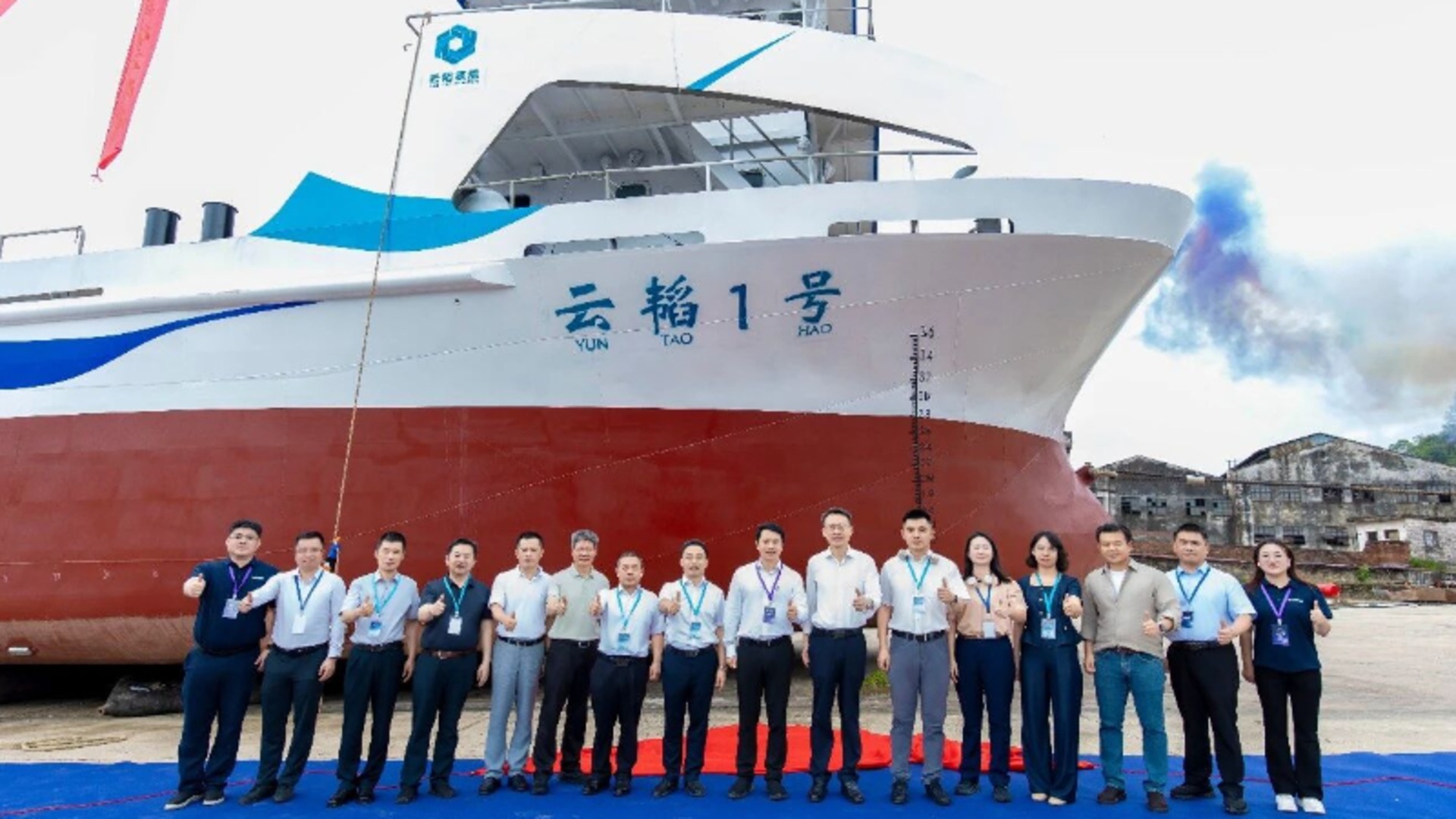

China’s largest hydrogen-powered vessel, the 2,000-dwt multipurpose cargo ship Yuntao No. 1, was successfully launched on July 16, marking new progress in the development and demonstration of large hydrogen fuel cell-powered cargo vessels for inland waterways.
Yuntao No. 1 was jointly developed by Yuntao Hydrogen Energy and relevant units under China State Shipbuilding Corporation. Designed from the outset for commercial operation, the vessel is intended primarily for the long-distance transportation of bulk commodities along major inland waterways. It is capable of carrying both containers and dry bulk cargoes.
The vessel is equipped with domestically developed hydrogen fuel cell propulsion systems and other core equipment. Key technologies include coordinated multi-source power management, an integrated hydrogen safety protection system and intelligent adaptation to different waterways and operating conditions.
According to technical data released by Yuntao Hydrogen Energy, the vessel has a designed range of approximately 760 kilometres and consumes around one kilogram of hydrogen per kilometre. It is designed to operate throughout China’s Class A inland navigation areas.
Under comparable route and cargo conditions, the developer estimates that the vessel’s fuel operating costs could be 25% to 30% lower than those of a conventional diesel-powered ship. The hydrogen fuel cell system produces no direct carbon dioxide or conventional pollutant emissions during operation, with water as its primary by-product.
Yang Qiang, chairman of Yuntao Hydrogen Energy, said Yuntao No. 1 had been developed as a commercially deployable vessel rather than solely as an experimental project.
The company plans to promote standardised hydrogen-powered vessels across the Pearl River network and aims to put 100 such vessels into operation within four years. It also intends to develop supporting waterside hydrogen refuelling infrastructure and targets commercially sustainable hydrogen vessel operations without subsidies by 2028.
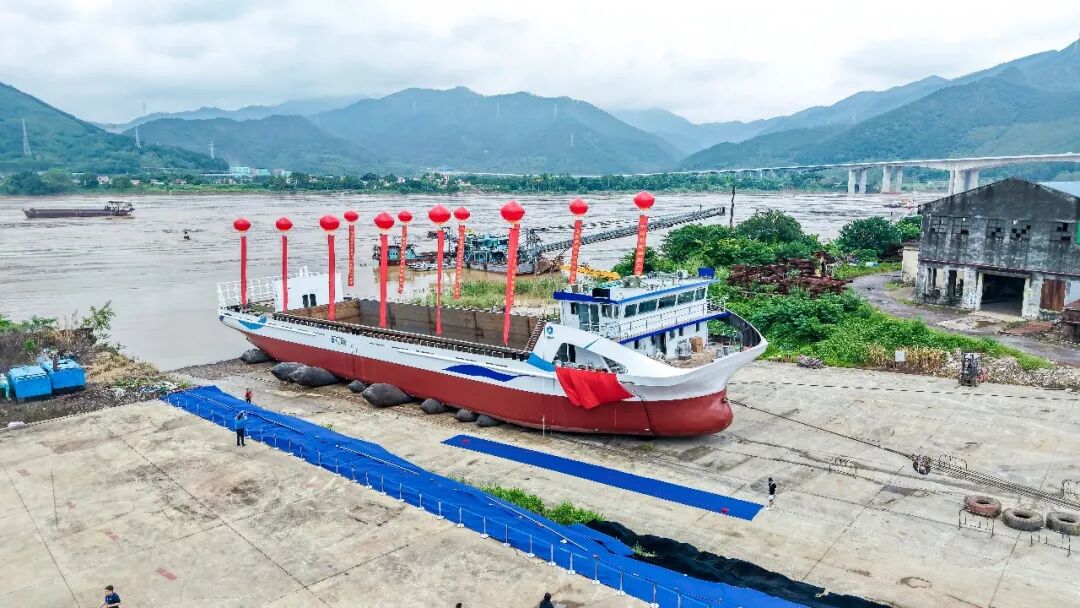
Wang Xuejun, deputy party secretary and general manager of CSSC Guangzhou Shipbuilding Industry Co, said the project had been developed in response to demand for greener vessels in the Guangdong-Hong Kong-Macao Greater Bay Area.
He noted that participating organisations had worked jointly on vessel design, construction, propulsion systems and safety controls. The successful launch will allow the project to proceed to outfitting, commissioning and operational demonstration.
Pu Bing, deputy general manager of the Guangzhou branch of China Classification Society, said hydrogen-powered vessels were moving from technical verification towards accelerated demonstration and application.
He added that safety standards, fuel supply systems, port infrastructure and commercial operating capabilities would need to develop in parallel. The Yuntao No. 1 project is expected to provide practical operational experience for the low-carbon transformation of inland shipping in Guangdong.
The China Hydrogen-Powered Vessel Industrial Innovation Consortium was also established during the launch ceremony. Its initial membership includes nearly 40 companies involved in ship design, hydrogen equipment, vessel operations and other parts of the value chain.
Shipping companies also signed letters of intent to trial Yuntao No. 1, opening the way for the vessel to enter actual cargo operations and supporting the transition from technology development to commercial application.
In addition to the 2,000-dwt vessel, Yuntao Hydrogen Energy is developing a 5,000-dwt hydrogen-powered ship. The company plans to establish a broader product portfolio covering cargo vessels, passenger and tourism vessels, and public-service ships.
The replacement of conventional marine fuels with lower-carbon alternatives is gathering pace across China’s inland shipping sector. Hydrogen fuel cells offer the potential for zero-carbon vessel operations, although large-scale adoption will continue to depend on the cost and availability of green hydrogen, onboard storage technology, safety regulations, refuelling infrastructure and stable cargo demand.
The operational demonstration of Yuntao No. 1 will provide a new reference point for evaluating the technical performance, operating economics and commercial viability of large hydrogen-powered inland vessels in China.

READ MORE
 Sustainability
First public appearance of Shandong Shipping’s new-generation 325,000-dwt Guaibamax
 Sustainability
Port of Hamburg Moves Closer to Ammonia Bunkering Readiness
 Sustainability
U.S. DOT and Port of Long Beach Sign Agreement to Explore Nuclear-Powered Shipping
 Sustainability
Chinese Mooring Rope Maker Joins UN Global Compact in ESG Push
 Sustainability
Onboard carbon capture wins EU ETS deduction
 Sustainability
Shanghai Bunkers Locally Produced Green Methanol for the First Time
 Sustainability
Richard Liu's Sea Expandary Docks in Qingdao with Bold Plan for $14,000 Electric Yachts
 Sustainability
CMA CGM Conducts Brazil’s First Bioethanol Bunkering for a Deep-Sea Container Ship
 Sustainability
Ships Are No Longer Just Ships
 Sustainability