


CMA CGM Conducts Brazil’s First Bioethanol Bunkering for a Deep-Sea Container Ship
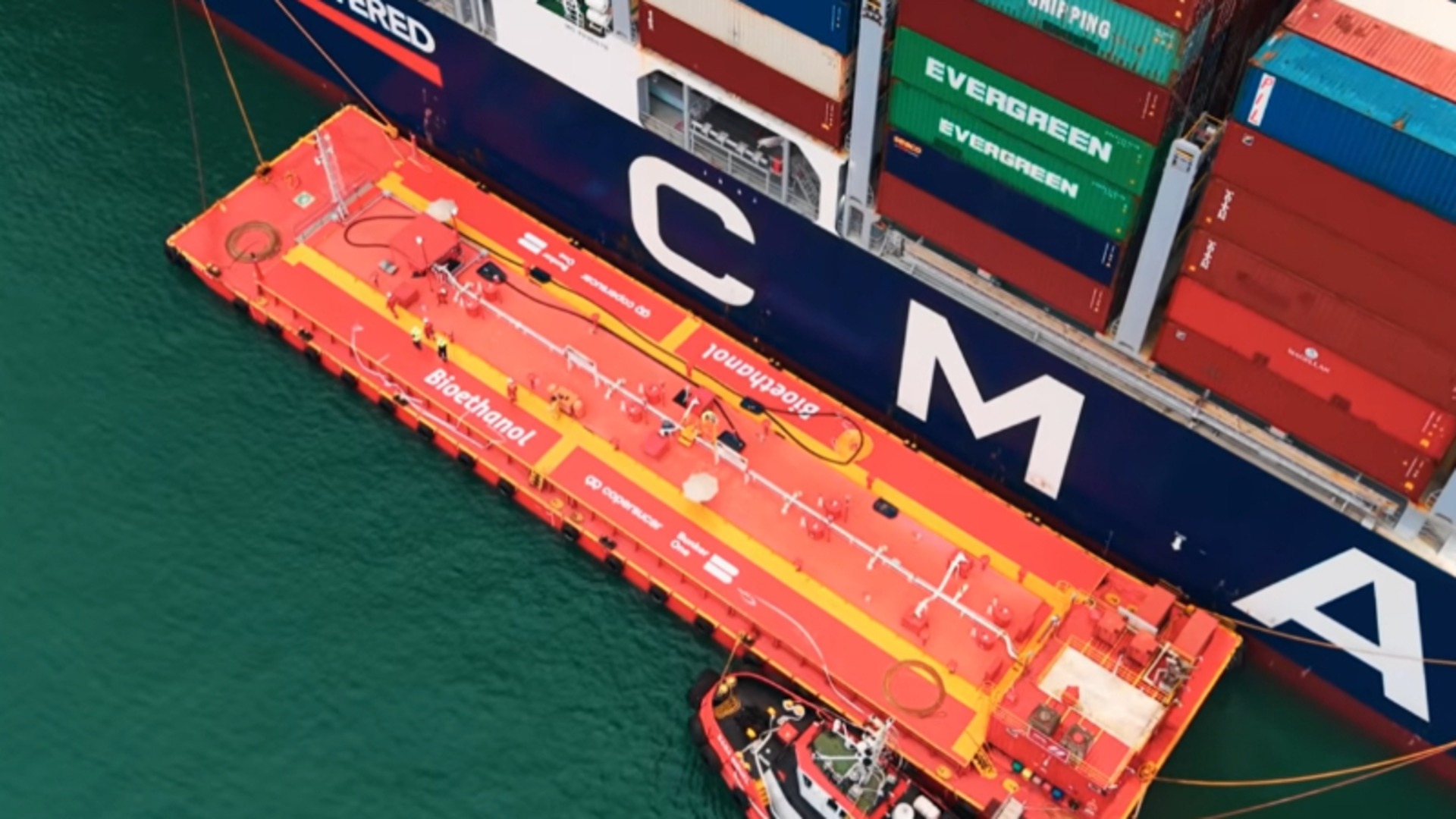

French shipping group CMA CGM, Brazilian sugar and bioethanol trader Copersucar, and marine fuel supplier Bunker One have announced the successful bunkering of bioethanol on board the CMA CGM IRON at the Port of Santos on 12 July.
The operation marked the first time a deep-sea container vessel had been bunkered with bioethanol in Brazil, bringing locally produced renewable ethanol into the commercial operation of a large ocean-going containership.
Following the bunkering operation, the CMA CGM IRON departed Santos on 14 July carrying a range of containerised cargoes. The vessel is scheduled to call at ports in Sri Lanka and Singapore before continuing to China.
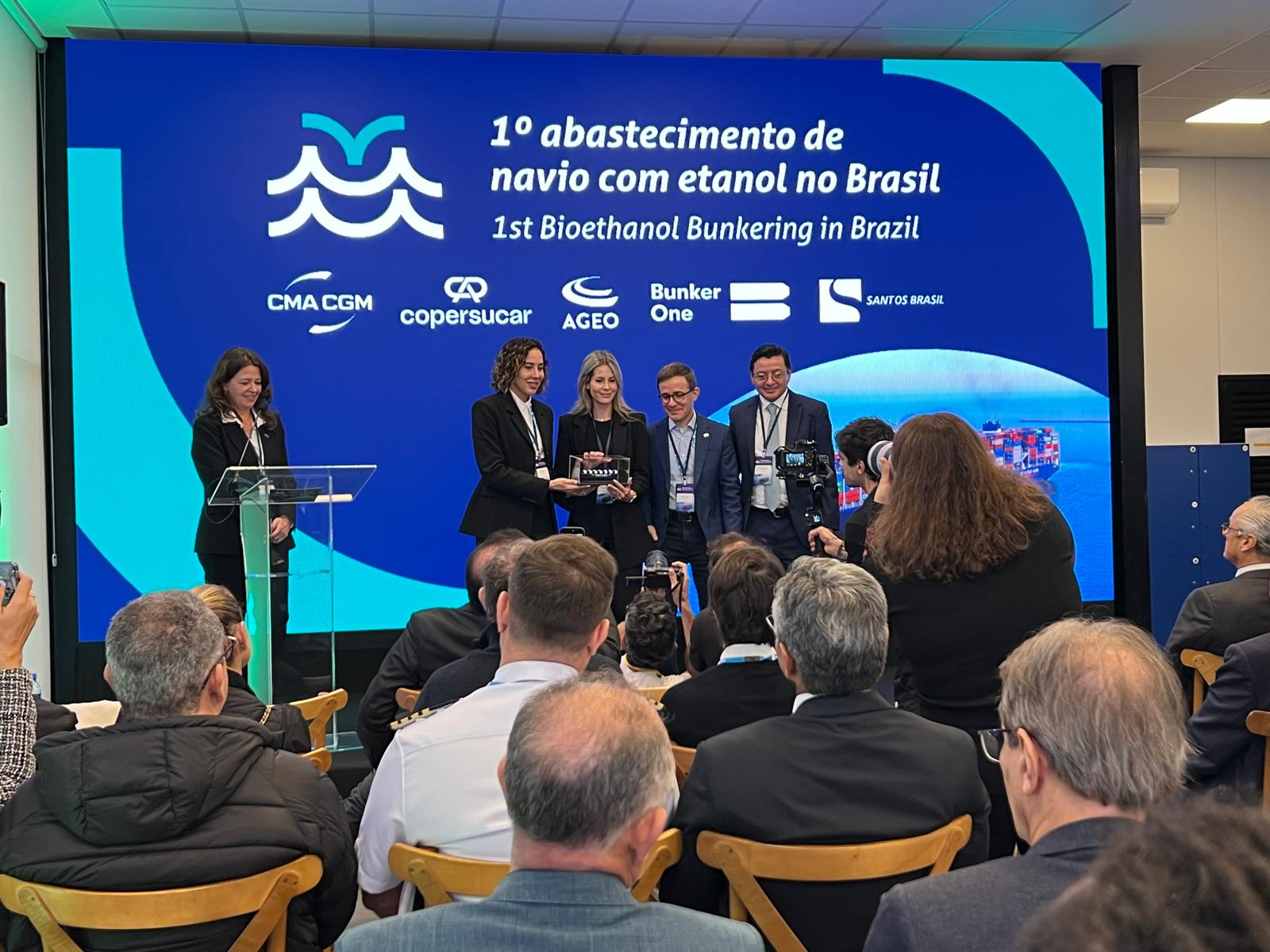
The project involved CMA CGM, Copersucar, Santos Brasil, AGEO Terminais, Bunker One and marine engine manufacturer Everllence.
Copersucar supplied the bioethanol, while AGEO Terminais provided storage infrastructure for the fuel at the port. Santos Brasil coordinated the terminal operation, Bunker One managed the fuel supply and ship-to-ship bunkering, and Everllence provided technical support for the use of ethanol in the vessel’s propulsion system.
The supply process included transporting the bioethanol to Santos, storing and preparing the fuel at dedicated facilities, and subsequently transferring it to the vessel through a specialised bunkering barge.
Brazilian port, maritime, regulatory and operational authorities were also involved in confirming that the transportation, storage, handling and onboard use of the fuel complied with applicable safety requirements.
Built by HD Hyundai Samho in South Korea and delivered in 2025, the approximately 13,000-TEU CMA CGM IRON is the first of 12 methanol dual-fuel containerships of the same class ordered by CMA CGM.
The vessel is powered by an Everllence B&W G95ME-C10.5-LGIM main engine. According to the latest project information, the engine has received certification for operation on bioethanol, enabling the ship to use conventional marine fuel, methanol and ethanol.
Everllence has previously conducted ethanol trials on its ME-LGIM engine platform. The engine manufacturer said the tests confirmed the technical feasibility of operating the platform on ethanol and established a basis for expanding the fuel flexibility of vessels already fitted with methanol-capable LGIM engines.
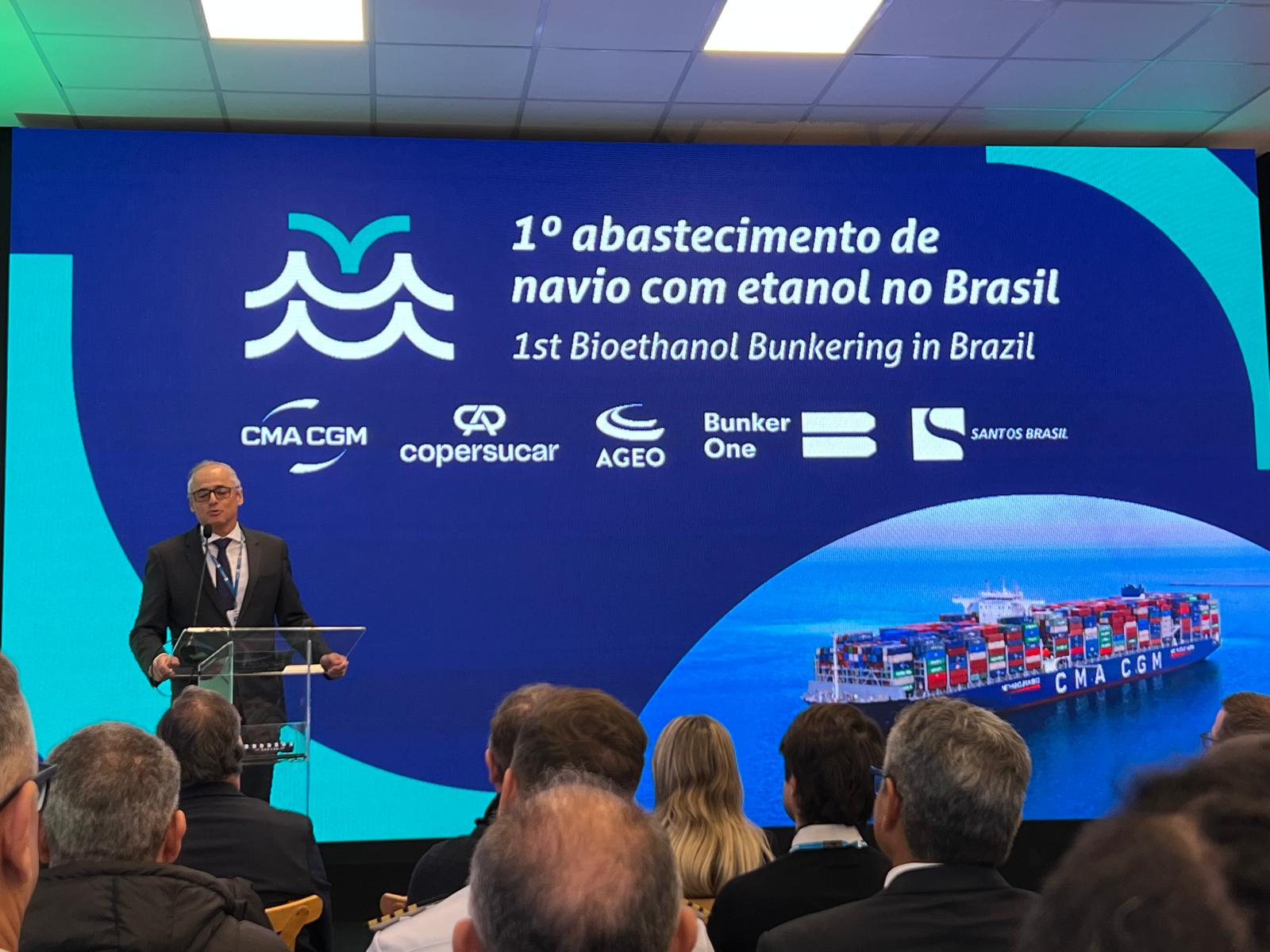
The Santos operation represents the first commercial voyage during which one of CMA CGM’s methanol dual-fuel vessels has used Brazilian bioethanol.
CMA CGM expects to operate approximately 200 container vessels capable of using low-carbon energy sources by 2031 as part of its fleet renewal and energy transition strategy.
The bioethanol used in the operation was supplied by Copersucar through an existing certified Brazilian supply chain.
Brazil’s RenovaBio programme regulates biofuel production, lifecycle carbon intensity and sustainability. The framework also includes land-use and zero-deforestation requirements intended to improve the traceability and environmental integrity of biofuels.
Brazil is one of the world’s largest ethanol producers. Its industry has traditionally been dominated by sugarcane ethanol, while corn-based ethanol production has expanded rapidly in recent years.
During the 2025/2026 crop season, ethanol production in Brazil’s south-central region reached approximately 33.72 billion litres, including about 9.19 billion litres of corn ethanol. Corn-based production therefore accounted for more than 27% of the region’s total ethanol output.
Most Brazilian ethanol is currently consumed in the domestic road transport market. Supplying the international shipping sector requires a separate system covering marine fuel specifications, port storage, quality control, certification, bunkering procedures and safety management.
The Santos project completed the entire operational chain, from fuel production and supply to port storage and delivery into the fuel system of a deep-sea vessel.
The Port of Santos is Brazil’s largest port and one of South America’s most important gateways for containers, agricultural commodities and other bulk cargoes.
CMA CGM completed its acquisition of Santos Brasil in 2025, expanding the group’s direct involvement in Brazilian container terminal and logistics infrastructure.
The shipping group said it intends to make further use of Santos’ container terminals, liquid bulk facilities and access to Brazilian renewable energy resources to develop low-carbon marine fuel supply capabilities.
Brazilian companies outside the container shipping sector are also advancing the use of ethanol in ocean transport.
In April 2026, Brazilian mining company Vale signed long-term charter agreements with Shandong Shipping for an initial two 325,000-dwt Guaibamax ore carriers. Scheduled for delivery from 2029, the vessels are designed to operate on ethanol, methanol and conventional marine fuels.
Related technical work conducted within the International Maritime Organization in May 2026 assigned Brazilian second-crop corn ethanol a default lifecycle greenhouse gas intensity of 20.8 grams of CO₂ equivalent per megajoule.
The reference greenhouse gas intensity for conventional fuels used in international shipping is approximately 93.3 grams of CO₂ equivalent per megajoule.
Actual emissions reductions will vary depending on factors including the ethanol feedstock, production energy, land use, transport distance and the energy efficiency of the vessel.
The bunkering of the CMA CGM IRON demonstrates that Brazil’s large-scale ethanol industry can be connected with deep-sea shipping through a coordinated port and marine fuel supply chain. Future expansion will depend on the availability of certified fuel, internationally recognised regulatory treatment and the development of reliable bunkering infrastructure at major ports.

READ MORE
 Sustainability
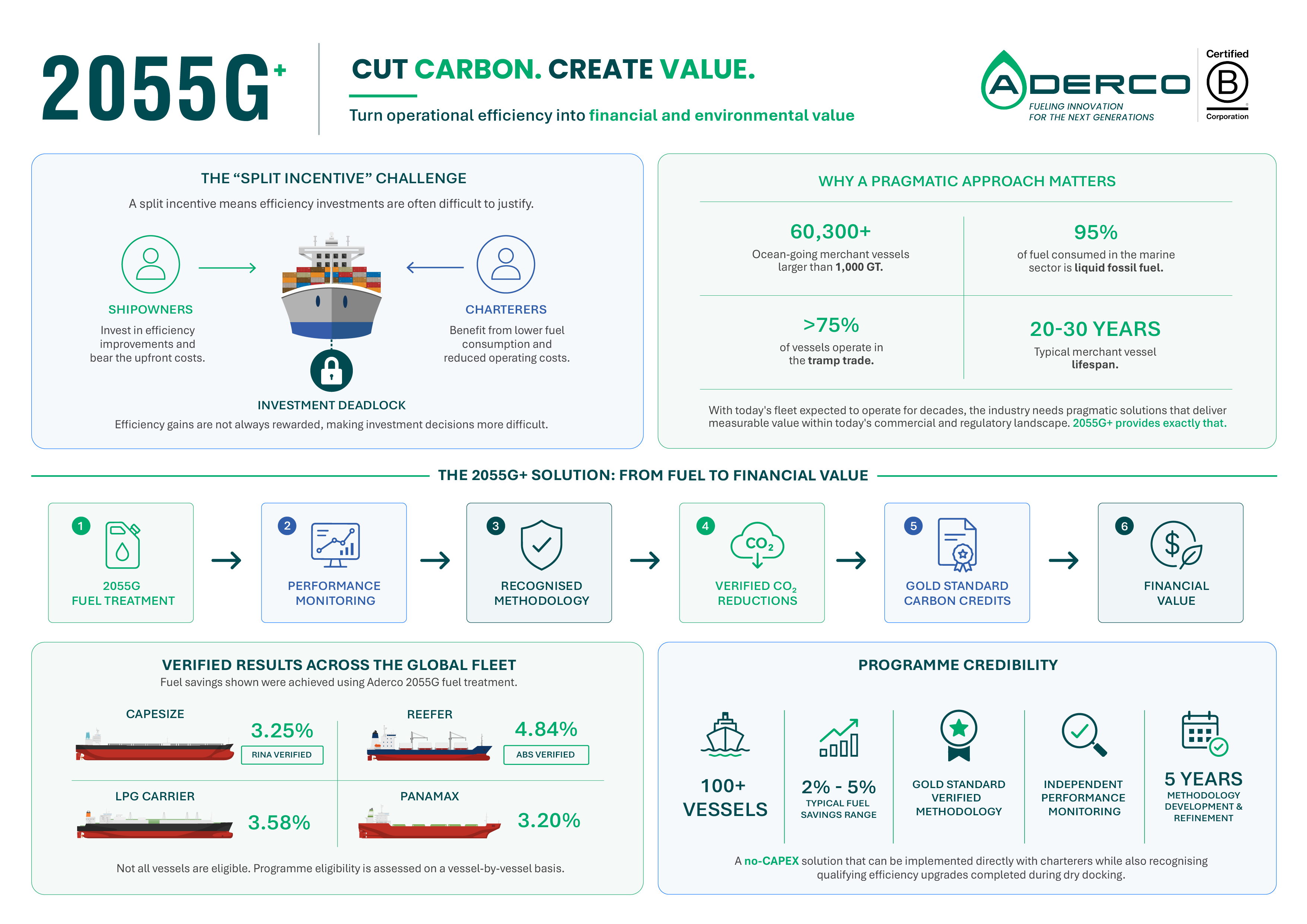
Beyond Fuels: The Efficiency Battle Inside the Engine Room
 Sustainability
Replacing debate on emissions performance with shared, verifiable data
 Sustainability
Up to $380 per Tonne of CO₂e: Four Rival IMO Proposals Raise the Stakes for Chinese Shipping
 Sustainability
Another Chinese Chemical Shipping Company Moves into Singapore as GGT Launches Regional Platform
 Sustainability
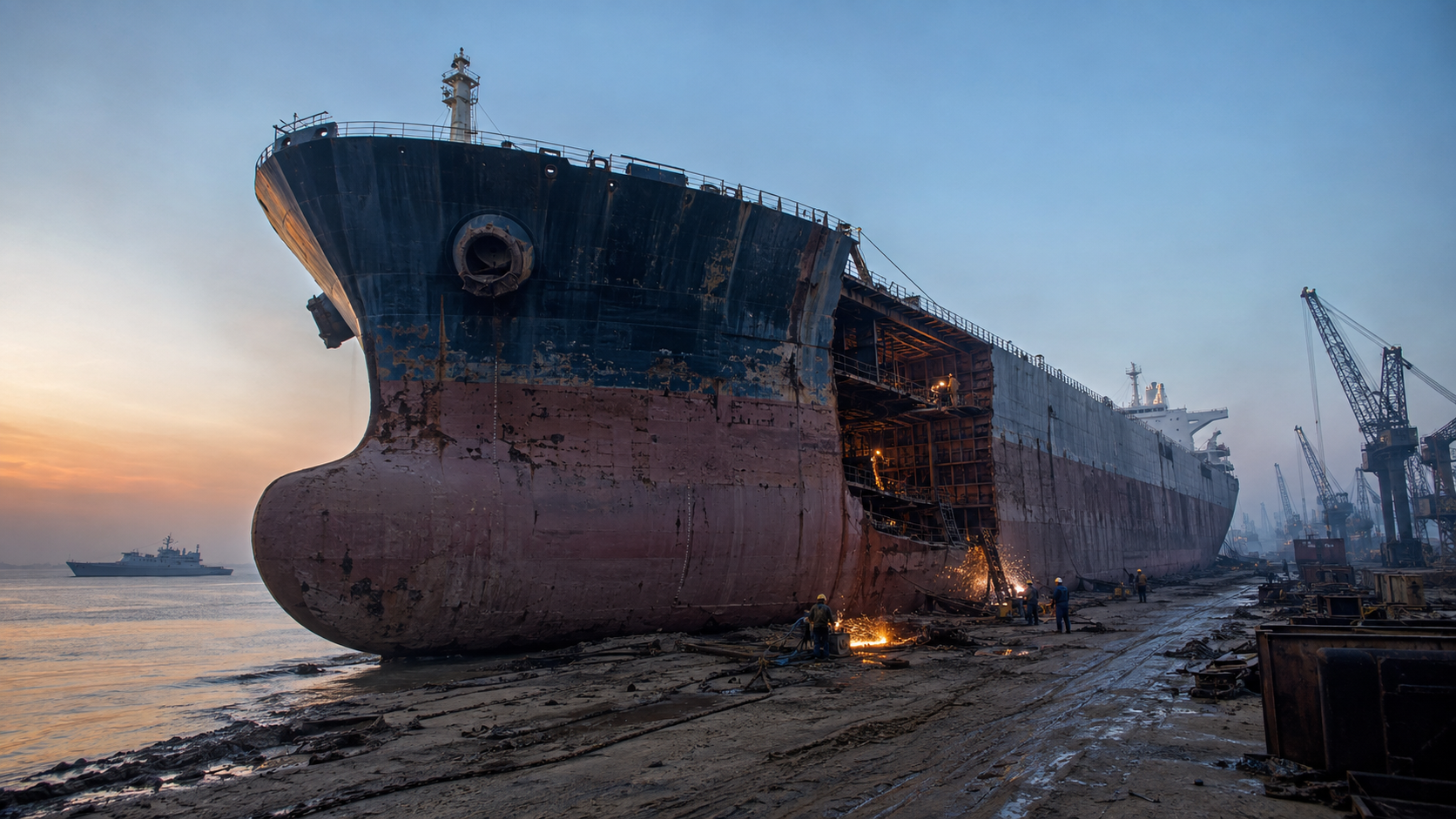
US Begins to “Dismantle” the Shadow Fleet as Seized Tankers Head for Scrap
 Sustainability
Chinese Mooring Rope Maker Joins UN Global Compact in ESG Push
 Sustainability
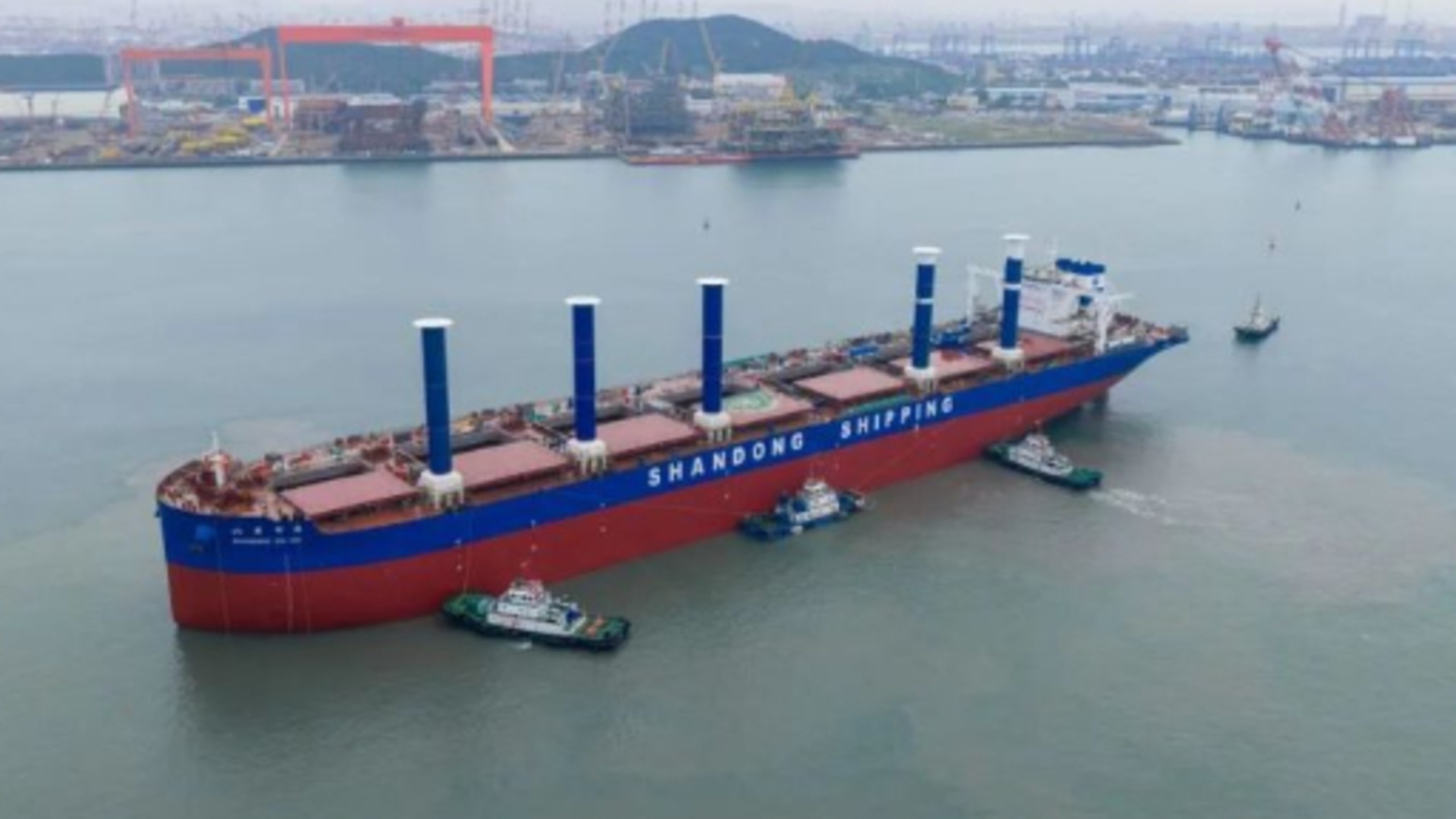
First public appearance of Shandong Shipping’s new-generation 325,000-dwt Guaibamax
 Sustainability
Port of Hamburg Moves Closer to Ammonia Bunkering Readiness
 Sustainability
U.S. DOT and Port of Long Beach Sign Agreement to Explore Nuclear-Powered Shipping
 Sustainability