


China’s Reusable Rocket Breakthrough Has a Surprising Link to This Shipyard: GSI
A former unpowered barge rebuilt by CSSC Guangzhou Shipyard International has become China’s first class-certified offshore rocket recovery platform—and has now helped complete a world-first mission.
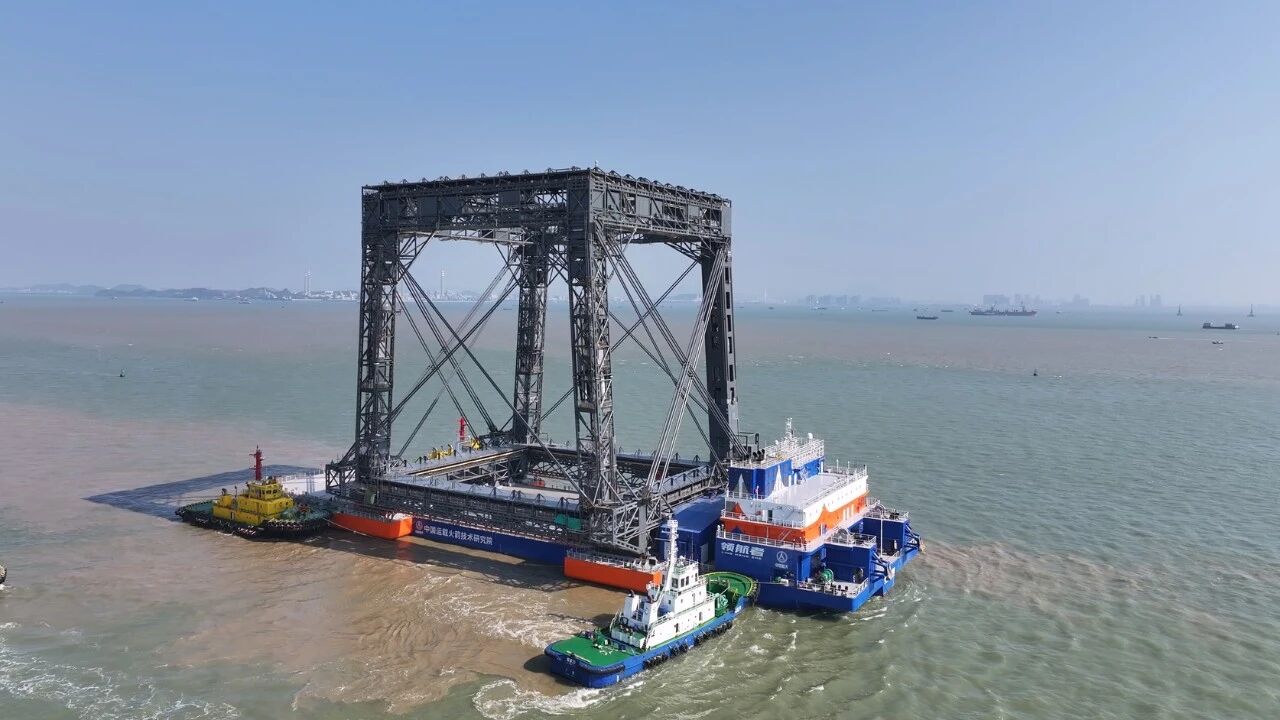

On 10 July, China’s Long March 10B launch vehicle lifted off from the Hainan Commercial Space Launch Site and successfully placed its payload into orbit.
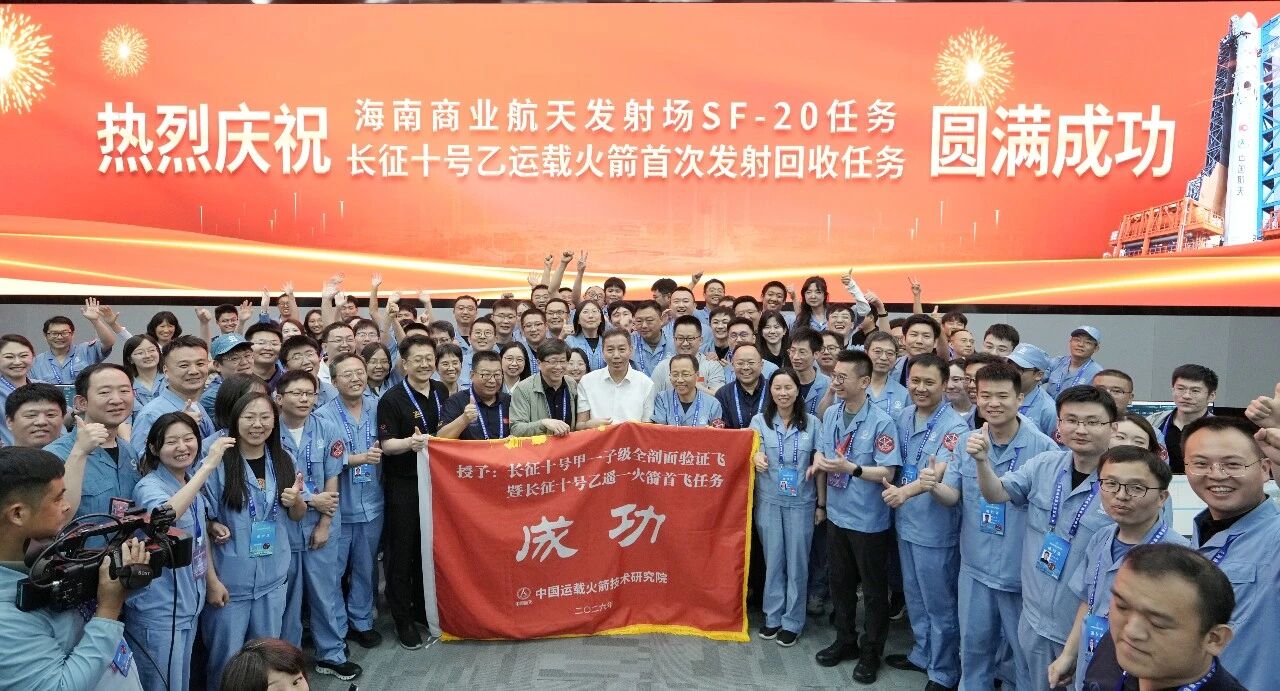
source:CASC
Around six minutes after separation from the second stage, the first stage began its controlled return. It reoriented itself, reignited its engines and descended vertically towards an offshore recovery platform.
Instead of landing on conventional legs, the stage was captured by a large flexible net system installed on the platform Linghangzhe, or Navigator.
The mission marked China’s first successful controlled recovery of an orbital-class launch vehicle stage and the world’s first sea-based net capture of such a rocket stage.
Behind this aerospace milestone was a major piece of marine engineering.
The recovery platform was converted by CSSC Guangzhou Shipyard International, or GSI, in cooperation with the Institute of Deep-sea Science and Engineering under the Chinese Academy of Sciences, for the China Academy of Launch Vehicle Technology.
Shortly after the successful capture, He Guangwei, chief designer of Linghangzhe and deputy chief engineer of GSI, wrote in the company’s internal WeChat group:
“Our recovery vessel was rock-steady.”
The comment was subsequently disclosed in official materials released by GSI.
From an unpowered barge to a floating rocket catcher
Before conversion, Linghangzhe was an unpowered barge.
Transforming it into a platform capable of catching a returning rocket required much more than installing a large net on deck. The existing hull had to be integrated with dynamic positioning, remote control, communications, monitoring, structural reinforcement and a specialised rocket-capture system.
Project studies began in September 2024. The overall design was finalised within approximately three months, and conversion work formally started at GSI’s Wenchong repair and conversion facility in April 2025.
The project was completed in around seven months. Following commissioning, sea trials and system verification, the platform was named and delivered at the end of November 2025.
The converted platform is 144 metres long, has an overall width of 50 metres, a draught of 5.5 metres and a full-load displacement of approximately 25,000 tonnes.
It is equipped with a DP2 dynamic positioning system, allowing it to maintain position and heading under changing wind, wave and current conditions. It also carries remote-control and rocket-recovery support systems specifically developed for the mission.
The platform received classification and statutory certification from China Classification Society, becoming China’s first officially classed offshore rocket net-recovery platform.
In February 2026, Linghangzhe participated in a low-altitude demonstration flight involving the Long March 10 series. Operating without personnel on board, the platform maintained dynamic positioning in sea state five and helped guide the rocket stage to a controlled splashdown approximately 200 metres from the designated position.
That test verified the platform’s positioning capability, vessel–rocket data exchange and offshore support systems ahead of the July recovery mission.
A rocket had to find a moving ship
Catching a rocket at sea is a complex vessel–aerospace coordination problem.
The returning stage moves in six degrees of freedom, while the offshore platform is simultaneously affected by waves, wind and current. The vessel can roll, pitch, yaw and drift, while the rocket continues to adjust its own position and attitude during the final descent.
The rocket and platform must therefore exchange position and attitude data in real time and compensate for movements caused by the surrounding environment.
As the stage approaches the capture area, lidar and other sensing systems installed on the recovery structure measure its position and orientation. A high-strength net arranged in a grid pattern is then adjusted to receive the descending stage.
Hooks or capture devices deployed from the rocket engage with the net. Hydraulic damping and flexible restraint systems absorb the remaining energy before securing the stage.
For the vessel, maintaining position alone is not sufficient. It must also control its motion within a narrow operating envelope so that the capture system remains correctly aligned.
Conventional merchant-vessel dynamic positioning designs are often optimised around specific operating headings, particularly head-sea conditions. Linghangzhe needed to maintain accuracy under a much wider range of wave directions, including oblique and beam-sea conditions.
This required fast propulsion response, precise control algorithms and close integration between the platform’s positioning system and the rocket recovery system.
A major structural challenge
The recovery system also created an unusual structural-engineering problem.
Four large foundations secure the capture installation to the deck, concentrating substantial loads into limited areas of the hull structure. When the rocket enters the net, impact forces are transferred through these foundations into the platform.
The tall recovery structure further raises the vessel’s centre of gravity.
According to publicly released technical information, the complete recovery tower is approximately 67 metres high, while the associated equipment weighs around 5,400 tonnes.
The conversion team therefore had to reinforce and redesign large sections of the deck, analyse the hull’s response to concentrated and dynamic loads, and optimise the platform’s ballast and weight distribution.
The project also required stability calculations covering the high centre of gravity, wind loading on the tower, different sea states and the momentary loads generated during capture.
Installation accuracy was equally important. The large net-system foundations, sensors and control equipment had to be positioned precisely so that the vessel, capture system and rocket could operate as one coordinated system.
GSI worked with aerospace institutes, equipment suppliers and China Classification Society throughout the design, conversion, testing and verification process.
Why catch a rocket with a net?
The best-known reusable rocket recovery method relies on a powered vertical landing.
Under that approach, a returning rocket stage performs a controlled descent and lands on deployable legs, either on land or on an offshore platform.
China’s net-capture system follows a different engineering logic during the final recovery phase.
The rocket still has to turn around, re-enter the atmosphere, restart its engines, reduce speed and descend vertically. However, it does not carry conventional landing legs. Instead, the final support, energy absorption and restraint functions are transferred to the offshore platform.
The Long March 10B first stage uses a lightweight capture mechanism that interacts with the flexible net installed on Linghangzhe.
Removing heavy landing legs can reduce the mass of the rocket stage. The saved weight can potentially be allocated to payload or other mission requirements.
A large flexible net may also offer a wider capture envelope than a fixed landing point. This gives the recovery system greater tolerance for small deviations in the stage’s final position, an important consideration when operating above a moving sea surface.
The net and damping system also absorb part of the landing energy, reducing peak structural loads on the stage and potentially limiting damage and metal fatigue.
This could become increasingly important if China moves towards high-frequency reusable launch operations, where inspection time, refurbishment requirements and turnaround costs will directly influence commercial viability.
A shipyard enters the aerospace supply chain
The success of Linghangzhe demonstrates how capabilities developed in shipbuilding and offshore engineering can be transferred into the commercial space sector.
GSI has extensive experience in complex vessel construction and conversion, including ro-ro ships, vehicle carriers, semi-submersible vessels and specialised offshore units.
The rocket recovery platform brought together many of the same core competencies: hull engineering, structural reinforcement, dynamic positioning, system integration, stability management, remote operation and the delivery of a highly specialised vessel within a compressed schedule.
The project also points towards a potentially new market for the maritime industry.
As reusable launch vehicles move from experimental programmes towards regular commercial operations, demand may grow for offshore recovery platforms, rocket transport vessels, tracking ships, floating launch infrastructure and supporting port facilities.
Shipyards may consequently become increasingly important participants in the space economy, particularly where launch and recovery activities are conducted offshore.
The Long March 10B programme is expected to continue testing first-stage reuse. The recovered stage will need to undergo inspection, maintenance and technical assessment before any subsequent flight.
That process will determine whether the sea-based net-capture approach can deliver the reliability, low refurbishment cost and short turnaround time required for regular commercial use.
A rocket launched from Hainan returned from the edge of space only minutes later.
It was ultimately caught by a recovery system mounted on a vessel rebuilt in a Chinese shipyard.
China’s reusable rocket breakthrough is therefore also a story about shipbuilding—and about how marine engineering is beginning to extend far beyond the traditional boundaries of shipping.


READ MORE
 Technology
Shiptec China 2026.10.28-10.30 | The Green and Intelligent Ship Water - pump Solution of Beijing Tanxianda Pump Technology Development Co., Ltd.
 Technology
Amazon Leo Moves Into Shipping, Opening a New Front in Maritime Satellite Connectivity
 Technology
GTT Marine Lands Flagship Digitalisation Project for PETRONAS’ Chartered LNG Fleet
 Technology
Shipping’s AI Future Will Still Depend on People, Says Dr.Martin Stopford
 Technology
Air Lubrication Moves into the Mainstream as Silverstream Passes 160 Ships in Service
 Technology
Air lubrication delivers at scale as Silverstream surpasses 160 installations
 Technology
Shiptec China 2026 | South Korean Marine Equipment Suppliers to Make a Major Group Debut, Bringing Core Equipment to Dalian for the First Time
 Technology
Worried Yet? Mandatory AI Monitoring Is Coming to China’s Domestic Fleet
 Technology
China and Thailand Sign MoU to Strengthen Industrial and Supply Chain Cooperation
 Technology