


A $7 Million Premium for Prompt Delivery. Can a Bulker Earn It Back?

By Chen Yang, Xinde Marine News
A Japanese-built Ultramax available for prompt delivery was being marketed at about US$47 million, according to shipbroker BRS’s November report. A comparable newbuilding at a Japanese yard was quoted at about US$40 million for delivery in 2030. The US$7 million gap gives shipowners a way to put a price on time. How much can the first ship earn before the second one arrives? How much of that work could already be covered with chartered tonnage?
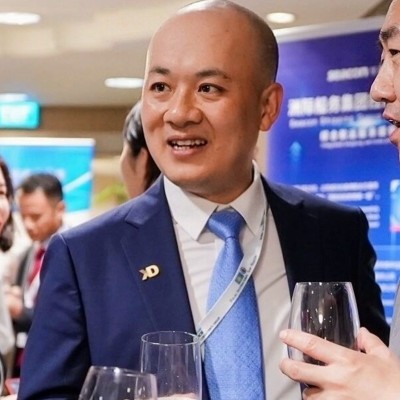
At the opening panel of the 2026 TradeWinds Shipowners Forum, held at the Grand Hyatt Hong Kong on 18 November, KC Maritime Chairman Gautam S. Chellaram recalled two deals struck at similar prices. One lost money. The other made money. Faced with the same price again, he would start with the cash flow he could secure and the protection a long-term charter could offer. Pacific Basin Shipping was ordering ships and exercising purchase options on vessels it had already chartered. Fujian Highton Development was still looking at secondhand bulkers it could put to work quickly. The Caravel Group had deployed some of its capital in listed shipping shares.

What does a two-year head start have to earn?
Waiting for a cheaper ship can be expensive in its own way. Chellaram described the choice facing an owner who decides to wait a year for a correction and then still has to wait for a yard to deliver. KC Maritime’s fleet illustrates the timing problem. Its 63,000-dwt-class Darya Maya was built in 2012. The similarly sized Darya Radhe and Darya Rani were built at COSCO Shipping Heavy Industry’s Zhoushan yard in 2023 and 2024. If several older ships come due for major dockings before their replacements arrive, maintenance bills and fleet renewal spending can come due at the same time.
The BRS quotes offer a starting point for testing the economics. Assume 350 revenue days a year and operating expenses of US$4,790 per calendar day, the average Pacific Basin reported for its owned Handysize and Supramax vessels in the first half of 2026. With three additional years in service, the ship available now would need to average about US$11,700 a day in time charter equivalent (TCE) earnings to recover the price gap from operations. With two years, the figure rises to about US$15,000 a day.
Pacific Basin’s reported Supramax earnings show how easily the calculation can swing. Apply its first- and third-quarter TCE levels to the same two-year scenario and the operating surplus changes by about US$2.8 million.

At the first-quarter rate, the owner would come up about US$720,000 short of the price gap, even before financing. At the third-quarter rate, the ship would earn about US$2.1 million above the gap on the same operating assumptions. The investment comparison also depends on when the buyer pays for each ship and what each will be worth in 2030. A secondhand buyer generally settles the balance at delivery. Pacific Basin, for instance, paid about US$17.9 million in initial instalments in the first half of the year on six Handysize newbuildings costing a combined US$178.8 million. By the time the 2030 ship enters service, the first ship will already have several years of trading behind it.

An owner with a firm cargo programme can put the prompt ship straight to work and save the hire it would otherwise pay on a chartered-in vessel. A buyer starting with an empty cargo book has to allow for idle time and ballast legs. The bank has its own calculation. If freight earnings and ship values fall together, a loan-to-value covenant can require an owner to put up more security or repay part of the loan just as operating cash is getting tighter. The volume committed under a cargo contract, the duration of the charter cover and the counterparty’s ability to pay all affect how much debt the ship can carry.
Why Highton still sees value in 57,000-dwt ships
Caleb Cheng, Commercial Director at Fujian Highton Development, singled out the 57,000-dwt Supramax when discussing secondhand purchases. The type remains central to Highton’s fleet. Common equipment helps the operator source spares and manage maintenance across multiple ships. Onboard cranes and relatively modest draught give those vessels access to cargoes and ports where shore gear or water depth can limit the alternatives. At its August earnings briefing, Highton said its own calculations at prevailing prices pointed to a higher return on equity for secondhand ships than for newbuildings. For heavier project cargo, Highton secured capacity on seven multipurpose heavy-lift newbuildings in the first half through finance and operating leases.

The orderbook shows how far new orders have shifted up in size. BRS counts 2,140 Supramaxes of 50,000 to just under 60,000 dwt, with only 15 on order. In the 60,000 to just under 68,000-dwt Ultramax segment, 540 ships are on order against an existing fleet of 1,899, a ratio of 28.4%. Much of the capacity aged 20 years or more across the two segments is in the smaller Supramax range. Almost all the ships on order across those segments are Ultramaxes.

An Ultramax can spread voyage costs over more tonnes on a route where it can load a full parcel of grain or ore. At a draught-restricted port or on a smaller parcel of cargo, part of that extra capacity can go unused. The value of a 57,000-dwt secondhand ship therefore depends on where the owner can still send it, which customers will accept its age and how many revenue days it stands to lose at its next docking.
Charter first and decide on ownership later
Pacific Basin CEO and Executive Director Martin Fruergaard said there are times when holding off on a deal is the right decision. A listed shipowner’s management still has to explain to the board why it can afford to wait. Pacific Basin has used purchase options to keep ships working while it makes that decision. In December 2025 it exercised an option to buy a Japanese-built Ultramax that was already on long-term charter. The ship joined the owned fleet in January, and Pacific Basin reported US$19.3 million in capital expenditure for the vessel. In the first half of 2026 it also agreed to charter in a new 64,000-dwt Ultramax on a long-term basis, with the ship due in 2027. The deal gives Pacific Basin a fixed-rate extension option and a fixed-price purchase option.
In the third quarter, Pacific Basin acquired another Japanese-built Handysize that it had been chartering and completed the sale and delivery of two Supramaxes. At the end of September its operating fleet comprised 258 vessels, including 106 owned ships, 13 long-term chartered vessels and 139 short-term chartered vessels. It still had 11 purchase options on long-term chartered ships already in operation, exercisable from 2027 to 2031. In the same quarter, the business that matches customers’ spot cargoes with short-term chartered tonnage earned an operating margin of US$2,190 a day across roughly 6,610 operating days.
Long charters bring obligations of their own. Based on the commitments disclosed at midyear, Pacific Basin put the average cost of its long-term Supramax charters in 2027 at about US$14,660 a day. Hire remains payable when spot rates fall. An operator relying on short-term tonnage can face an expensive fixture when a cargo is ready to load and the list of suitable ships nearby is thin. A purchase option gives the operator another point at which to compare costs. By then it can set the agreed purchase price against current secondhand values, the cost of the remaining charter and what it has learned about the vessel’s actual fuel consumption and maintenance.
Cargo cover gets thinner further out
As of 12 October, Pacific Basin had covered 76% of committed fourth-quarter vessel days in its Supramax core fleet at an indicative TCE of US$18,960 a day. For 2027, it had covered 19% at an indicative US$15,590 a day. Newbuilding instalments come due against a construction schedule. The cargoes a new ship will carry after delivery are usually booked on a different timetable.
Even in a strong week, the position in which a voyage leaves the ship can matter as much as the headline hire. The Baltic Exchange’s 20 November report recorded two 64,000-dwt vessels fixed from North China to West Africa at US$25,100 to US$25,250 a day. Two 60,000-dwt ships were fixed from North China to the US Gulf at around US$19,000. The fixtures differed in vessel size, voyage length and redelivery position. Pacific Basin’s own Supramax TCE came in about US$300 a day below the relevant spot index in the third quarter, partly because it was sending ships back to the higher-paying Atlantic market ahead of the fourth quarter. A lower-earning leg can put a ship in position for a better cargo next.
Fruergaard observed that some customers were diversifying their sources of supply. Angad Banga, Group CEO of The Caravel Group, added that carrying more stock ties up money, giving buyers a reason to spread their sourcing and stagger shipments. Pacific Basin reported lower seaborne minor bulk volumes year on year in the third quarter, with tonne-mile demand broadly unchanged. Lower Arabian Gulf fertiliser exports coincided with changes in trade flows that lengthened some voyages. When congestion clears or a diversion ends, ships can return to the market sooner. When a buyer shifts its sourcing for good, the operator has a new loading port to serve and a new return leg to fill. In Capital Meets Cargo, a report published by The Caravel Group during Hong Kong Maritime Week, Fruergaard said Pacific Basin was carrying substantially more steel out of China as Chinese exports rose. A steel parcel booked on the return leg can turn an otherwise empty passage into a paying voyage.

Four firm orders and an option for two methanol ships
As previously reported by Xinde Marine News, Pacific Basin reshaped its Japanese newbuilding programme in April. It terminated its 2024 agreements for four 64,000-dwt methanol dual-fuel Ultramaxes and ordered four fuel-efficient conventional-fuel ships of the same size, to be built by Imabari Shipbuilding. The four were ordered for a combined US$156.8 million, with delivery expected from 2028 through mid-2029. An option under its agreement with Mitsui & Co. covers two methanol dual-fuel Ultramaxes at US$91 million in total. Pacific Basin has until the end of February 2027 to exercise the option, with delivery expected between April 2030 and March 2031 if it goes ahead. It also raised its order for 40,000-dwt open-hatch, log-fitted Handysizes at Jiangmen Nanyang Ship Engineering from four to six.
At US$39.2 million per conventional ship and US$45.5 million per methanol ship under the option, the difference is US$6.3 million per vessel across two different delivery windows and sets of terms. Pacific Basin said the switch reduced near-term capital spending while global decarbonisation rules were still being negotiated. The fuel decision also depends on where an operator can bunker low-emissions methanol, how long the cargo customer will commit and how much of any fuel premium the contract will cover.
Cheng joked that his chartering team had become bunker traders on days when they waited for a steer from Singapore’s bunker market before quoting freight. On a voyage charter, the owner typically pays for bunkers and captures the direct saving from burning less fuel. On a time charter, the charterer typically buys the fuel, so the owner’s share of the savings has to come through hire or other terms. The International Maritime Organization’s Marine Environment Protection Committee is scheduled to meet from 30 November to 3 December as discussions on the IMO Net-Zero Framework continue. The outcome will be one of the developments Pacific Basin can consider before its February option deadline.
What Caravel bought in the equity market
Banga recalled that Caravel disposed of some of its own bulkers in 2025 while buying shares in listed shipping businesses. Looking at the market today, he said the group might have been happier had it kept those ships. He also pointed to the gap that can open between a listed shipowner’s market capitalisation and its net asset value based on market ship prices. A shipowner can decide where to deploy a vessel and when to fix it, and is responsible for its dockings, debt and ballast days. A shareholder’s return also depends on the fleet’s charter commitments, future newbuilding bills, distributions and the price at which the shares can be sold.
Caravel reported in January that it had raised its Pacific Basin holding to about 20.06%, retaining its position as the largest single shareholder. In February, Banga and Caravel founder and Executive Chairman Harindarpal S. Banga joined Pacific Basin’s board. Under the shareholder agreement, Caravel can nominate one non-executive director at a holding of at least 10% and two at 15% or more. The agreement also sets conditions on further stakebuilding and takeover proposals. An investment in shares gave Caravel a seat in discussions on fleet investment and capital allocation.
Pacific Basin generated US$143.5 million in operating cash flow in the first half, spent US$57.3 million on capital expenditure and ended June with US$157.2 million in net cash. On 23 and 24 November it bought back 6.141 million shares for about HK$19.8 million, or US$2.53 million at the 24 November European Central Bank cross-rate of HK$7.842 per US dollar. Cash returned to shareholders in November came alongside a newbuilding programme with payments spread over several years and charter purchase options running through 2031.
For the buyer looking at the US$47 million quote, the decision comes back to which cargoes need a ship before 2030. A firm programme can turn prompt delivery into years of avoided charter hire. A suitable vessel already on charter can keep those cargoes moving while ownership waits until the option date. Once the cargoes, loading ports and shipment dates are on the schedule, the owner can put a value on the years that US$7 million would buy.


READ MORE
 Dry Cargo
How COSCO Sent More Than 4,000 Cars to Europe on an 80,000-DWT Grain Carrier
 Dry Cargo
Wisdom Marine Approves Up to $84 Million for Two Tsuneishi Bulkers as Nine-Month Profit Jumps 259%
 Dry Cargo
China Is Making Less Steel. Why Are Big Bulker Owners Looking to Guinea?
 Dry Cargo
Star Bulk's Profit Jumps 666%. Why Is It in No Rush to Buy More Ships?
 Dry Cargo
Profit Up 125%: Costamare Bulkers Positions for Expansion With $142 Million in Net Cash
 Dry Cargo
Another $264 Million: Seanergy's Fleet Programme Reaches 12 Ships as Hengli Advances First Delivery
 Dry Cargo
Smaller Bulkers Outearn Panamaxes: What Is Driving the Earnings Reversal?
 Dry Cargo
Shipping Number of the Week Dry bulk ship recycling falls 36% to 18-year low
 Dry Cargo
From Mines to Factories: What China’s Investment Shift in Africa Means for Shipping
 Dry Cargo