


Shipowners Are Making Money. Are Seafarers Safe? Caravel's Angad Banga Questions Shipping's Resilience

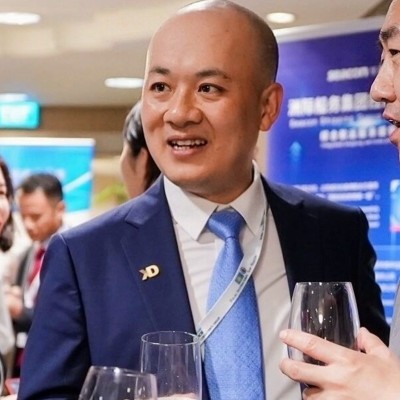
Cargo is still moving and shipowners are making money. For Angad Banga, Group Chief Executive Officer of Hong Kong-based The Caravel Group, neither is sufficient evidence that global shipping has become resilient. Speaking at the third Hong Kong Global Maritime Trade Summit on 16 November, Banga set out three tests: can cargo move, can it be financed and insured, and are the seafarers carrying it safe? His arguments, considered alongside Caravel's investments in ship management, maritime education, shipping equity and LNG bunkering vessels, raise a wider question: how can the industry turn commercial opportunities into operating capabilities that endure through successive crises?
Rerouting Cargo Does Not Resolve Every Risk
The summit, held under the theme "Navigating Risk – Partnering for Resilience", brought Banga together with Lloyd's Register CEO Nick Brown, International Transport Workers' Federation General Secretary Stephen Cotton and Mitsui O.S.K. Lines Executive Officer Sakura Kuma. Financial Times World Trade Editor Peter Foster moderated the discussion on geopolitics and trade realignment.
Foster opened with an apparent paradox. International trading rules are under pressure and ships face physical threats, yet trade continues and parts of the shipping industry remain highly profitable. Rerouting vessels, changing supply sources and adjusting fleet deployment demonstrate commercial adaptability. Banga questioned whether those responses, by themselves, justify describing the supply chain as resilient.
He grouped recent disruptions into three broad categories: public-health emergencies such as COVID-19; macroeconomic and national-policy changes; and geopolitical events affecting areas including the Red Sea, Black Sea and Strait of Hormuz. His assessment placed cargo movement, financing and insurance, and seafarer safety within the same framework. Finding another route answers only part of the problem. An industry that depends on people to move ships and cargo still has work to do if those people remain exposed.
That distinction also changes how freight earnings should be interpreted. Longer voyages absorb vessel capacity, while uncertainty and tighter availability can support rates. Across the wider transport system, however, additional revenue can coincide with higher costs, greater pressure on crews and increased risk. A company's ability to find opportunities in volatility and the trading system's ability to function safely are separate measures of success.
Where the Profits Go Matters
Banga extended his argument to the distribution of earnings within shipping. When some parts of the value chain generate substantial profits, how much of that income supports vessel quality, crew competence and safety?
He highlighted the uneven distribution of profits and the continuing pressure to compete on cost. Chartering demands, alongside differences between commercial decisions and vessel-vetting assessments, can influence which ships secure employment. His concern was that vessels with shortcomings in quality or crewing could still attract business, leaving operational risks with the ships and the people carrying out the voyage.
The underlying commercial problem is familiar. Charterers seek competitive freight, owners seek returns on assets, managers organise operations and personnel, and seafarers encounter the conditions at sea. Each participant can improve its own financial outcome without necessarily producing the most robust result across the chain. Safety spending is particularly vulnerable to short-term scrutiny: the expense is visible immediately, while much of its value lies in incidents that never happen.
Banga argued that the industry needs to examine how earnings reach the ships and people sustaining trade. He did not present a finished mechanism for redistributing profits. He raised a question about incentives: if low prices win business while sustained investment in maintenance, training and crew welfare receives insufficient commercial recognition, companies maintaining higher standards face persistent pressure.
Foster challenged the practical implications. Higher standards can mean higher costs; in a competitive market, what enables companies to sustain them? The discussion offered no complete solution. It nevertheless identified where the issue must be addressed—in procurement, chartering choices, management budgets and the terms of long-term commercial relationships.
A Perspective Shaped by Capital and Operations
Banga's career spans investment and maritime operations. He began in investment banking at J.P. Morgan before working at KKR from 2009 to 2013 in private equity and Asian capital markets. He joined Caravel at its establishment in 2013, served as Chief Operating Officer from 2016 to 2025, and became Group Chief Executive Officer in January 2026. His responsibilities include business performance, capital allocation, strategy and investments. His father, Caravel founder Harry Banga, continues as Executive Chairman.
Headquartered in Hong Kong, Caravel operates across maritime services, commodities and investment management. Its maritime activities include third-party ship management, commercial management and chartering, vessel ownership and related investments. Its commodities business covers raw materials including iron ore, coal and coke. The group consequently has exposure to several connected parts of trade, from cargo and transport to assets and finance.
Fleet Management Limited is one of its principal operating businesses. According to the company's website, its technical-management services cover more than 650 vessels, supported by approximately 27,000 seafarers and 1,200 shore-based colleagues. At that scale, maintenance, qualifications, crew changes and information flows repeatedly influence the outcome of individual voyages.
Banga's emphasis on people therefore has a direct operating context. Ships can be acquired through transactions. Reliable cooperation between ship and shore, a dependable supply of skilled personnel and trusted management systems require sustained investment. Those capabilities help determine whether a manager can maintain service quality when regulatory changes, fuel transition and geopolitical disruption occur together.
Bringing Maritime Education Closer to Fleet Operations
Caravel made a substantial commitment to training when India's International Maritime Institute (IMI) became part of the group in 2025. Xinde Marine News previously reported the acquisition. Subsequent developments show an emphasis on connecting education with practical ship operations.
In its March 2026 update marking the first anniversary of the acquisition, Fleet Management said IMI had welcomed more than 400 new pre-sea cadets over the preceding year and supported cadets beginning seagoing careers within its operations. The institute also upgraded simulator training and digital-learning resources, adding material on alternative fuels, emissions awareness and digital navigation.
The commercial logic is straightforward. Large ship managers need a continuing intake of qualified personnel, while maritime colleges need to understand changing equipment, customer expectations and regulatory requirements. A closer relationship allows operating experience to inform teaching and creates a clearer pathway from the classroom to shipboard training and employment.
Training investment becomes part of the organisation's long-term development rather than a response made only when shortages emerge. It cannot, however, resolve every issue Banga identified. Competence, safe routing, reasonable working arrangements and adequate operating budgets must reinforce one another. Investing in seafarers involves both preparing them for new technology and giving them dependable professional support.
An AI Use Case That Starts With Crew Changes
During the audience discussion, Swire Shipping CEO Jeremy Sutton asked for examples of AI applications already being used inside companies. Banga described a practical approach focused on making employees' work easier, more effective and more accurate, with potential applications across shipboard duties, technical support and vessel accounting.
His crewing example combined optical character recognition, PDF parsing and AI to allow seafarers to upload documents from home, with systems assisting in validation and qualification checks. Information about when people are available—and when they want to return to sea—can then help optimise crew-change plans, locations and travel arrangements.
The benefits he described concerned both cost and experience. Processing documents earlier can reduce repetitive administration. Better planning can reduce last-minute mobilisation. He criticised arrangements in which a seafarer receives only a short period of notice to travel to another city before continuing to an overseas port.
This is a useful extension of his resilience argument. Digital systems that reduce uncertainty in personnel planning can improve readiness and coordination between ship and shore. Their relevance lies in the operating conditions they help create. The discussion did not provide verified figures for savings or improvements in crew-change efficiency; those outcomes remain to be assessed through operating data.
A Larger Role in Pacific Basin's Long-Term Development
Alongside its investment in management and people, Caravel has expanded its exposure to shipping through equity ownership. On 23 January 2026, the group disclosed that, following the completion of share purchases, it held approximately 1.036 billion Pacific Basin shares, equivalent to about 20.06% of the issued capital at that date. It remained the company's single largest shareholder.
On 16 February, Pacific Basin announced the appointment of Harry Banga and Angad Banga as Non-executive Directors. It also entered into a shareholder agreement with Caravel and related entities, affirming Pacific Basin's position as an independent global shipping company and including certain ownership restrictions and standstill provisions.
The investment gives Caravel board-level participation in the long-term governance of a listed dry bulk owner and operator. Viewed within the group's portfolio, it broadens its participation in shipping operations and returns, while giving Banga's discussion of profits, costs and investment a further dimension of shareholder responsibility.
Pacific Basin retains its own management and ship-management capabilities. Its fleet, orders and operating decisions remain those of an independently run company.
Extending a Management Partnership Into LNG Bunkering
Caravel has also committed capital to fuel infrastructure through an LNG bunkering vessel joint venture with Celsius. Announced in 2025, the venture placed firm orders within the China Merchants Industry group for two 20,000-cubic-metre LNG bunkering vessels, with delivery scheduled at announcement for the third and fourth quarters of 2027.
According to Caravel, the project marked the partners' first joint vessel-ownership initiative after more than a decade of cooperation in ship management and newbuilding supervision. Celsius would lead commercial strategy, drawing on its LNG chartering relationships, while Caravel would provide strategic capital and operating expertise.
The initiative extends an established service relationship into asset ownership and fuel-supply support. Alongside the IMI acquisition, it illustrates investment in two complementary requirements: the people capable of operating increasingly complex vessels and the infrastructure needed to support changing fuel use. Each carries its own commercial risks, investment horizon and execution demands.
Together, these developments give a practical context to Banga's remarks in Hong Kong. Shipping businesses need profits, and they need those earnings to sustain capabilities whose value may not be fully captured in short-term financial results. Maintenance, training, crew support and respect for operational risk assessments influence whether a company can deliver reliably when the next disruption arrives.
For Caravel, its maritime institute, ship-management operations, shipping investments and bunkering projects provide concrete developments against which to assess that approach. For the wider industry, Banga's question remains immediate: when cargo keeps moving and parts of shipping remain profitable, are the people carrying the risk receiving the investment and protection they need?

READ MORE
 Safety
Anchoring in Heavy Weather: Do Not Exceed the Design Limits of Anchor Equipment
 Safety
Tanker Strikes Docked Riverboat in New Orleans; 32 Taken to Hospital
 Safety
Iran Says Gas Carrier Hit Naval Mine and Exploded East of Strait of Hormuz
 Safety
Why Seafarers Matter: Safe, Reliable Shipping Underpins Energy, Food and National Security
 Safety
Another Exit for Sanctioned Ships? Best Oasis Announces OFAC Licence
 Safety
Xinde Shipping Briefing: Hormuz Tanker Attacks, VLCC Rate Correction and China's Newbuilding Deals
 Safety
Maersk Hit by Another Cyberattack: Data Extracted from Legacy System
 Safety
Breaking News: Strong Winds Force 23,000‑DWT Bulk Carrier to Drag Anchor and Run Aground
 Safety
All 14 Crew Rescued as Chinese Bulk Carrier Sinks in Yellow Sea Amid Cold Wave
 Safety